- 6 min read
- 05.06.2026
- by Silke Bender
Philippine Leroy-Beaulieu: “I wish I could have enjoyed that moment sooner.”

Issue
03/26
Location
Paris, France
Photography
Pomellato, Netflix
Thanks to the popular Netflix series “Emily in Paris,” French actor Philippine Leroy-Beaulieu is currently at the peak of her success. The global brand ambassador for Pomellato talks about the joys of a late-life career and jewelry as a symbol of emancipation.
The Art of Reinvention
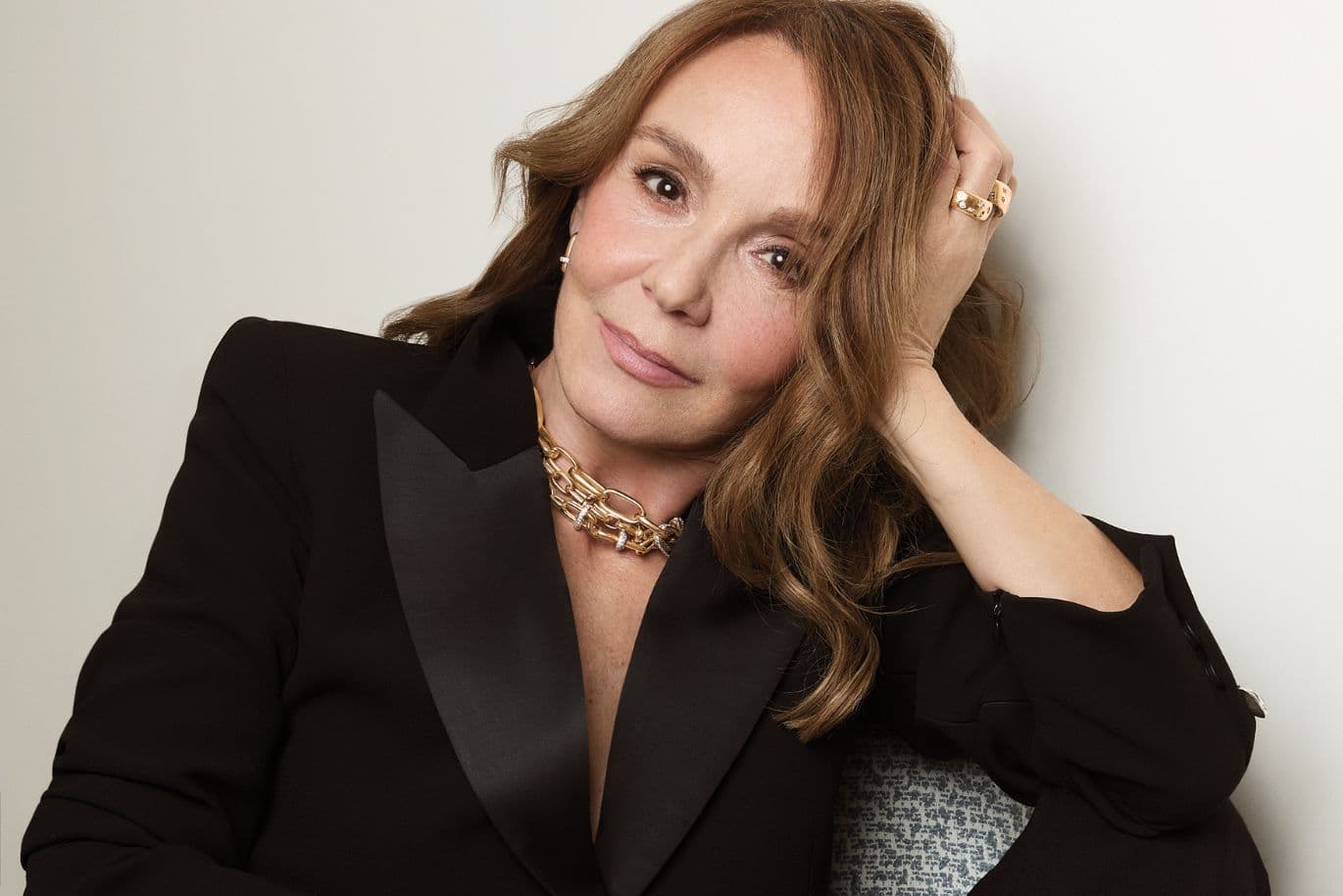
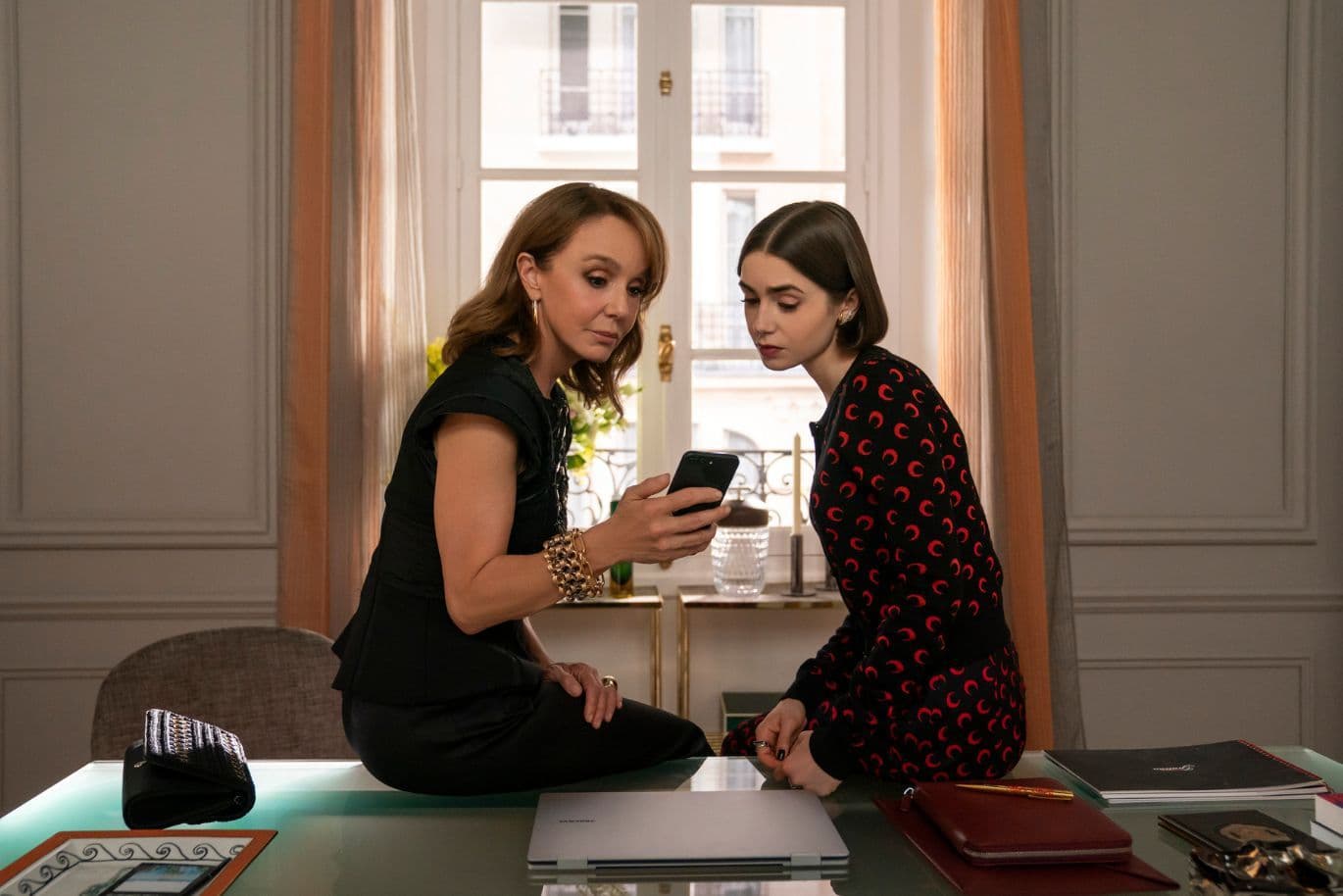
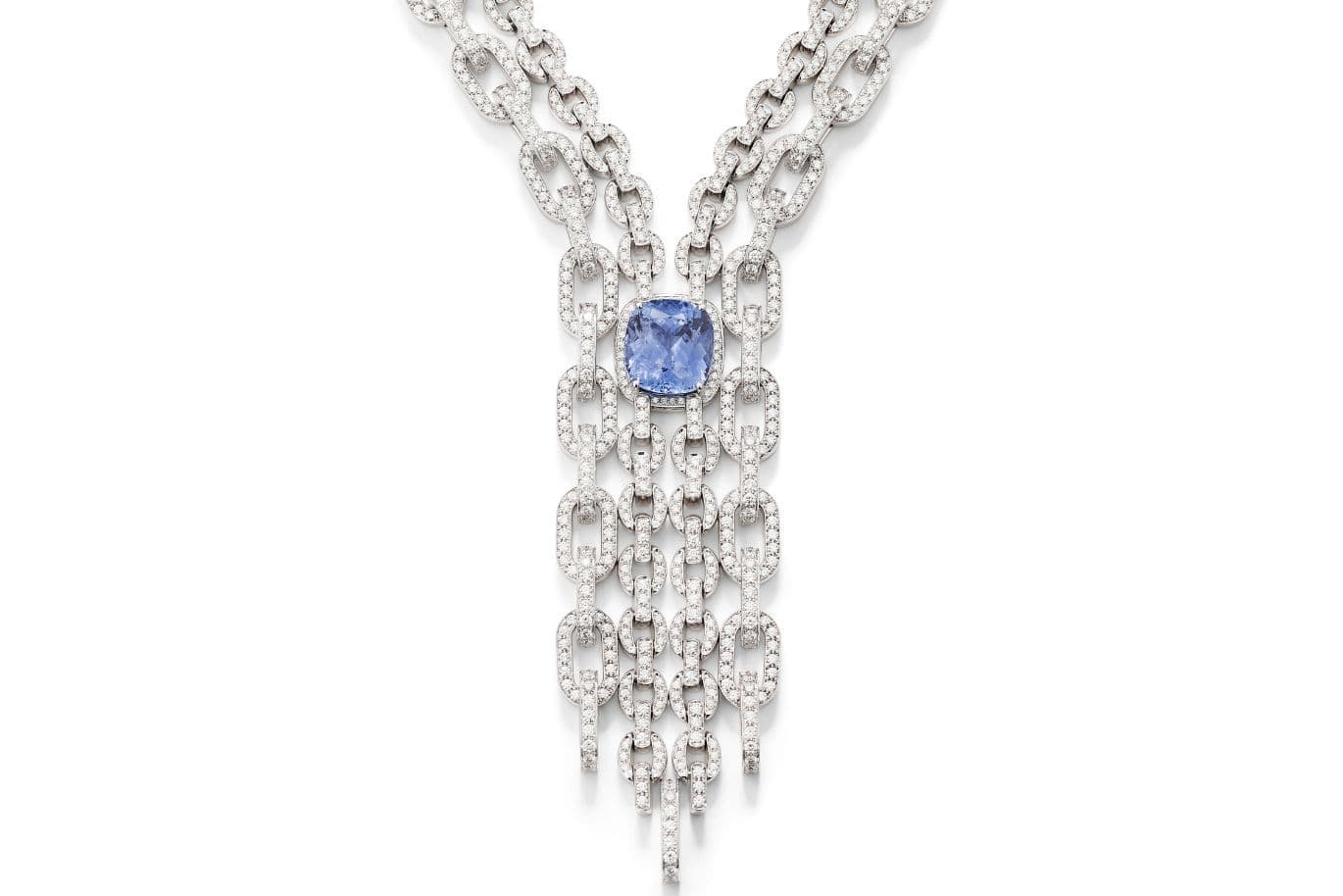
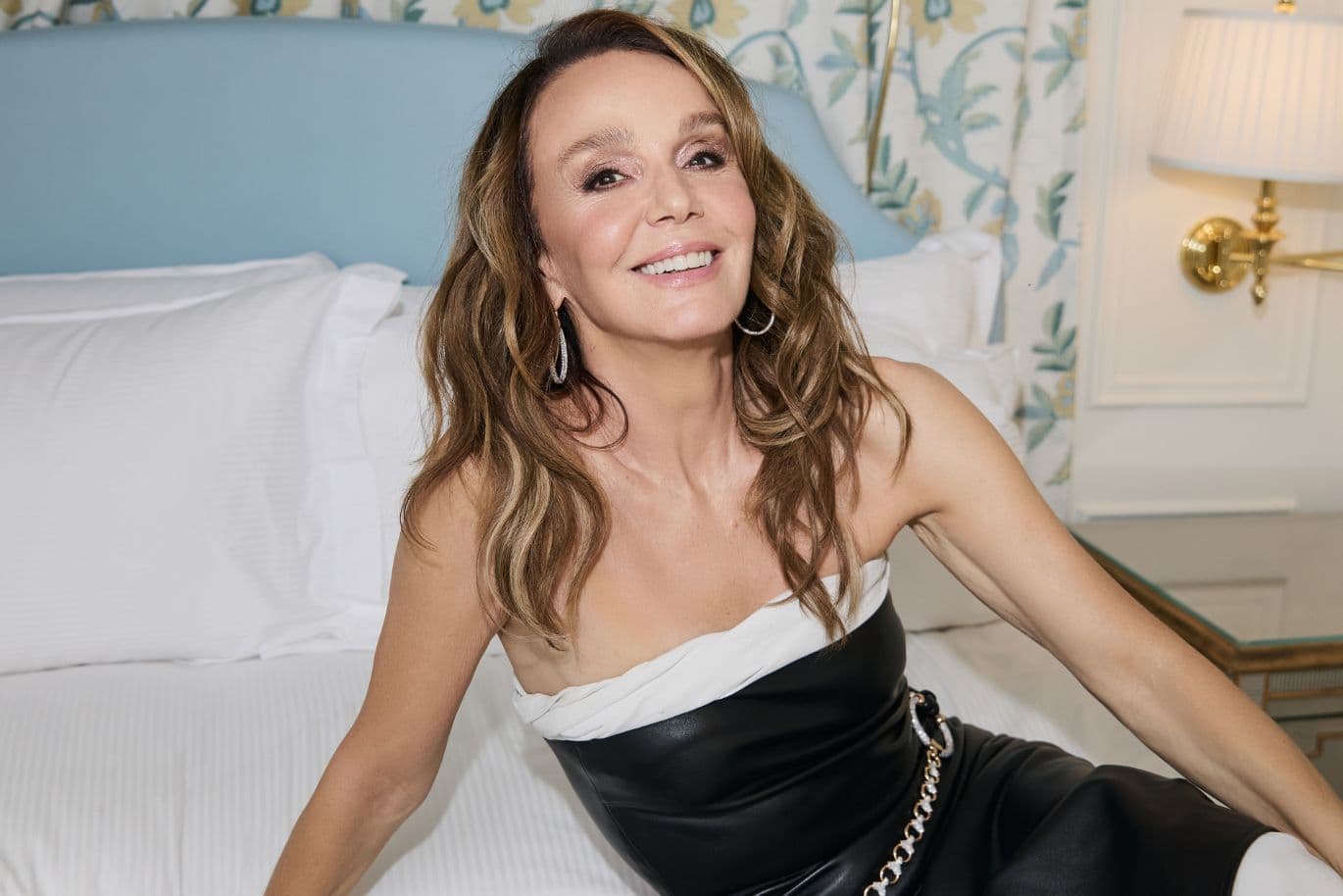
Whether it’s at an Oscar after-party where, this year, she appeared wearing a Balenciaga gown and the spectacular high jewelry necklace Blue Chain Cascade from Pomellato, or as a star guest sitting in the front row at the most important fashion shows in Paris or Milan – Philippine Leroy-Beaulieu is always at the epicenter of the flashing camera bulbs. The only thing more blinding is her smile. In fact, she appears to be practically basking in the attention. As PR executive Sylvie Grateau in the hit series “Emily in Paris,” her personification of a mature woman has acquired a cult following. What began as a caricature of a cool, detached and very French businesswoman in the luxury goods sector has become, with every new season, an increasingly complex, stronger and more likeable character who reveals not only a sense of humor but, little by little, more warmth.
At 63, the official retirement age in France, Leroy-Beaulieu has turned the tables and is forging ahead with her career. She travels the world as brand ambassador for the Italian jewelry house Pomellato as well as for the cosmetics brand and global market leader L’Oréal Paris. In the French capital and in Greece, filming has begun for the sixth season of “Emily in Paris,” which is due to start streaming in late 2026 or early 2027. When she’s finished with that, the actor wants to introduce a new chapter in her professional life as a film producer. In the fall, shooting begins in Morocco for an action thriller in which Leroy-Beaulieu will play one of the main roles. Through her company, Mariri Productions, she intends to develop projects that feature strong, mature female protagonists, something that is very much an exception in today’s cinema and in the action genre in particular.
The late breakthrough
The daughter of a designer and an actor who is very well known in Italy, Leroy-Beaulieu spent the early years of her upbringing in Rome and later attended drama school in Paris. In 1985, she landed her first big cinematic success with the French comedy “Three Men and a Cradle,” for which she was nominated for a French César prize for best supporting actor. But although she made a number of other films, sometimes even working with famous directors, her breakthrough never came. Then, at 57, she was offered the role of a lifetime. Darren Star, the creator and showrunner of “Emily in Paris,” even rewrote the character for her, since he had originally visualized Sylvie Grateau as a far younger woman.
The popular Netflix series, which has created an unprecedented tourism boom in Paris, is now in its sixth year. At the close of the fourth season, it looked for all intents and purposes as if the next installment would be called “Emily in Rome,” but the French president Emmanuel Macron personally advocated for the show to remain in the French capital.
A career in the arts isalways a roller-coaster ride, but that’s a good thing. It keeps you on your toes.
Philippine Leroy-Beaulieu
For you, Rome was something of a home advantage. Were you able to incorporate your personal experience of having lived there into the script?
It was funny: Already in season 2, Darren Star wanted me to speak Italian because he knew I was fluent. He had Sylvie Grateau say that a person’s personality changes when they speak a different language – a smart observation, incidentally. That was a hint. But when I followed up by asking him if he was planning to take the show to Italy, he dismissed the question, laughing it off and saying “mais non, non, non.” In retrospect, I think he was planting a seed. Rome may have had something to do with me, but I had nothing to do with the direction the script would be taking. Darren Star remained the creative captain at the helm.
Jewellery as a statement
Last year, you – a French Italophile – became the new face of Pomellato, the Milan-based jewelry brand founded in 1967, the same year that women’s liberation and student movements were emerging in Italy. What does the brand represent to you personally?
I only became aware of it later, in the 1970s, because of what my mother wore. She loved jewelry that was modern, expressive and out of the ordinary. Pomellato’s designs introduced a disruptive element into the jewelry world, which she liked. The first Iconica rings I ever saw were the ones she was wearing. She had large, strong hands, and seeing those voluminous gold rings on them was impressive. Incidentally, after separating from my father, my mother worked as a jewelry designer for more than 20 years, including for Dior in Paris.
You’ve often talked about your simple, straightforward tastes in fashion, but what is your personal taste in jewelry?
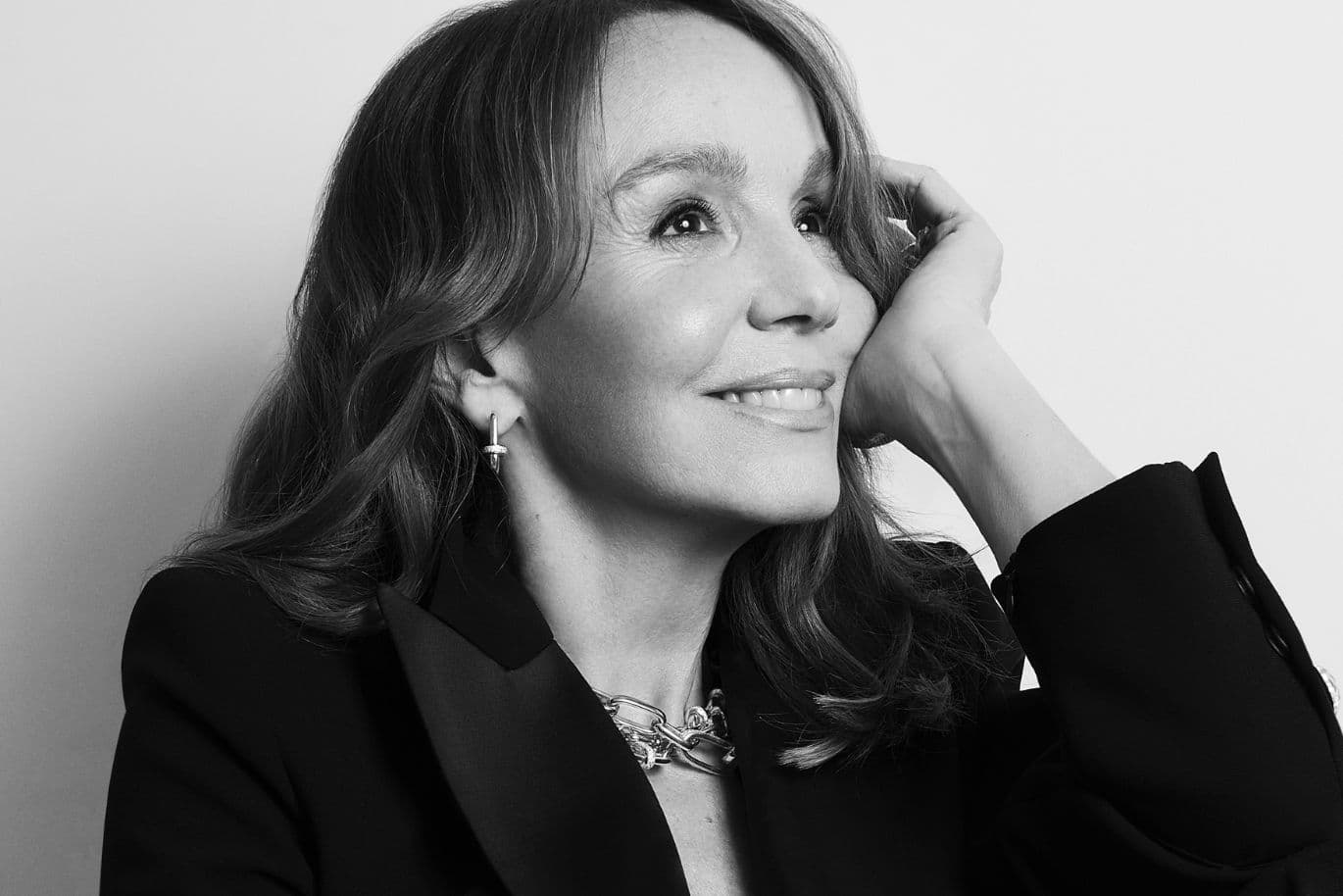
I have never been a great jewelry buyer (she laughs). I was always given jewelry, primarily by my mother, who worked in the business, and by my grandmother. But I almost always wear rings and never leave home without at least one Iconia – a ring that goes with everything. I tend to wear earrings on special occasions because they create lovely patterns of light on your face.
At 63, you’re at the top of your career. Does success feel any different from the way it does when you’re in your mid-20s?
You feel more humility when you’re my age. And the success doesn’t go to your head to the same degree. You’re also more aware that things can change again quickly and that nothing ever stays the same. That makes me appreciate the joy of the moment all the more. But if I’m honest, I wish I could have enjoyed that moment sooner (laughs).
It wasn’t easy to be constantly comparing your self-image with a photo, a film scene or what you saw in the mirror.
Philippine Leroy-Beaulieu
Follow your heart
You speak candidly about the difficult stages you went through in your professional life – financial challenges and lack of recognition. How did you manage to remain optimistic during those periods?
I didn’t! There were absolutely times when I lay curled up in my bed, weeping. But since I’m a person who lives very much in the present, I was able to accept those storms of desperation regardless how distressing, grim and difficult the struggle was because I knew that they too would eventually pass. You just have to stay strong! I always tell my daughter: All these storms aren’t there to break us, they’re there to help us grow. A career in the arts is always a roller-coaster ride. But that’s a good thing, because it keeps you on your toes. Now, I’m very thankful for all the trials I went through because they’ve shaped me, opened my eyes and made me a more loving and more appreciative person. I like to say that I’m lucky to have stayed hungry for so long.
Practically speaking, how did you survive those hunger periods?
By working as a translator under a pseudonym. I speak five languages fluently. And by accepting roles that I didn’t really want and which I’m not proud of having taken. I learned how to get by on a shoestring. Incidentally, I still rent the same apartment that I lived in before “Emily in Paris.”
In 1990, five years after your first big, successful film, you, a single mom, strapped your infant daughter to your back and emigrated to Brazil. What made you decide to do that?
I felt a strong urge to leave Paris at the time and to put some distance between myself and my job. Many people tried hard to dissuade me because they thought I would soon be completely forgotten – and they were right! Personal freedom has always been very important to me. Complete freedom is an illusion, of course, but within the limits of what’s possible, I always try to make decisions that allow me to follow my heart. After making that film, I had put aside a little money, and so I thought to myself: Now, or never! The money lasted for six months, and when it was gone I returned to Paris. I never forgot that time in Brazil, and it remained an anchor in my life for a long time. My daughter, long grown now, of course, still thanks me for the experience of having gone there with me as a child. I don’t regret a single day of it.
The Many Faces of Sylvie
What similarities do you share with your character, Sylvie, in “Emily in Paris”?
None whatsoever – she’s not anything like me, even if I’ve lent her a few aspects of my personality, just a very few. The truth is, she reminds me a lot of the women I met through my mother when she was working for Dior. Those strong, uncompromising women of the ’80s and ’90s whose aloof attitude actually concealed deep insecurities. After all, the fashion world was one of the first areas where women had begun to fight for a more significant role in the workplace. As a teenager, that whole scene turned me off, even though my mother’s tastes and her sense for beauty shaped me more than I was willing to admit. When I tried out for the role of Silvie during casting, I immediately thought: Funny, this woman seems familiar. I wanted to imbue her with a certain spitefulness, Bette Davis-style. We women aren’t just angels, we’re devils too.
Do you like Sylvie today?
I love her! And best of all: Scriptwriter Darren Star loves her too. She’s someone who appears on the scene enclosed in thick armor, only to have it peeled off like an onion each season, layer by layer, to reveal a surprising new side. I’m deeply impressed by how well Star understands women, how he’s able to create, with wit and respect, the most complex female characters in cinema today. Like Samantha in “Sex and the City,” for instance. Or the ’90s series “Melrose Place,” which I watched for the first time recently. It’s incredible how he turned a soap opera about ordinary people in a house with a swimming pool into a monster show. First, he takes audiences out for vanilla ice cream, then he dumps them into a cesspit of deprivation. I have mixed feelings about the kind of ending I’d like to see for Silvie when the show finishes – which it will, even though season 6 is already a certainty. The meaner a character becomes and the lower she sinks, the more interesting it is for an actor. But as a friend, I wish Silvie only the best.
How do you explain Silvie’s extraordinary success? After Emily, she’s one of the most popular characters on the show.
That surprised me too. It was only in the second season that I noticed how well-loved she was, particularly among the younger generation. Maybe it has something to do with the complexity of her character, the fact that she’s never quite what you expect. Perhaps this is what makes her interesting, makes people feel they want to like her because they can sense something deeper, something that only reveals itself little by little. Let’s just say it’s a mystery to me and leave it at that.
Beauty redefined
The show’s biggest critics are the Parisians themselves. Why?
Because they’re all snobs! (she laughs). In the beginning, I thought they just didn’t get the joke. But now it’s clear that they just have no sense of humor. They’re so fixated on their own self-image and irritated at being made fun of that they don’t even notice that “Emily in Paris” is poking fun at Americans too. They only see the polished surface, the bizarre clothes, the lighthearted, playful side to things, and think: How tacky is that. In Anglo-Saxon culture, it’s almost always the subtext that speaks to people, creating a meta-level that the French don’t seem to be able to follow. Not all of them, thank goodness. I know many smart Parisians who actually like the series.
You’re in the limelight at an age when most women are withdrawing from public scrutiny so as not to be continually reminded that they’re getting older …
It wasn’t easy to be constantly comparing your self-image with a photo, a film scene or what you saw when you looked in the mirror. Nobody likes to lose their looks and get old. But I’m now able to distance myself more from that sort of thing. This is what I look like, period. In fact, it’s actually liberating to watch myself age. I think it’s great to be able to demonstrate that beauty isn’t only a matter of a smooth face and body, but the message I as a woman am carrying out into the world. Is it presumptuous of me to see this as the beginning of the end of the uniform Instagram beauty standard? Perhaps it is. I take care of myself as best I can and my good genes enable me at least to stay slim, even if other parts of my body are aging more or less well. It forces me to confront this reality every day. And that’s a valuable thing.
Luxury properties in Paris
A dream location in the City of Love
- New
- New
- AI
You may also be interested in
 Beaded Beauty – an interview with Marijke de Cock
- 2 min.
- 05.06.2026
 Going deep – an interview with freediver Guillaume Néry
- 2 min.
- 5.6.2026
 Mariko Mori – The Visionary of Light
- 8 min.
- 05.06.2026
 Francis Kéré – What really matters
- 9 min.
- 16.06.2026
 The fashion label Zeus+Dione: Threads of Force
- 5 min.
- 26.05.2026
 The Hand of the Visionary – Designer Kelly Wearstler
- 5 min.
- 14.04.2026
 Art in Karat – Up-and-coming goldsmith Luca Sonnentag on his passion
 Art on the floor – Carpets by cc-tapis
- 4 min.
- 05.03.2026
GG Magazine exclusive content
GG is an independent magazine at the highest level. Exploring the world of architecture, lifestyle, design, fashion, yachting, luxury living and travel. We seek out the most exciting topics and personalities for you and invite you to get to know them from a fresh new angle. In GG, you will meet successful architects, interesting designers and exciting artists who are the talk of the town from London to New York and Berlin to Hong Kong.