Aurach bei Kitzbühel, Tyrol, Austria
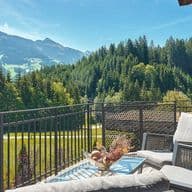
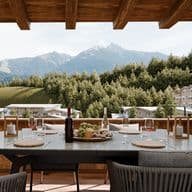
Exclusive country estate in Kitzbühel – your private oasis of retreat
Price on request
- 11 Bedrooms
- 11 Bathrooms
- ~1,195 m² Total surface
- ~3,770 m² Plot surface
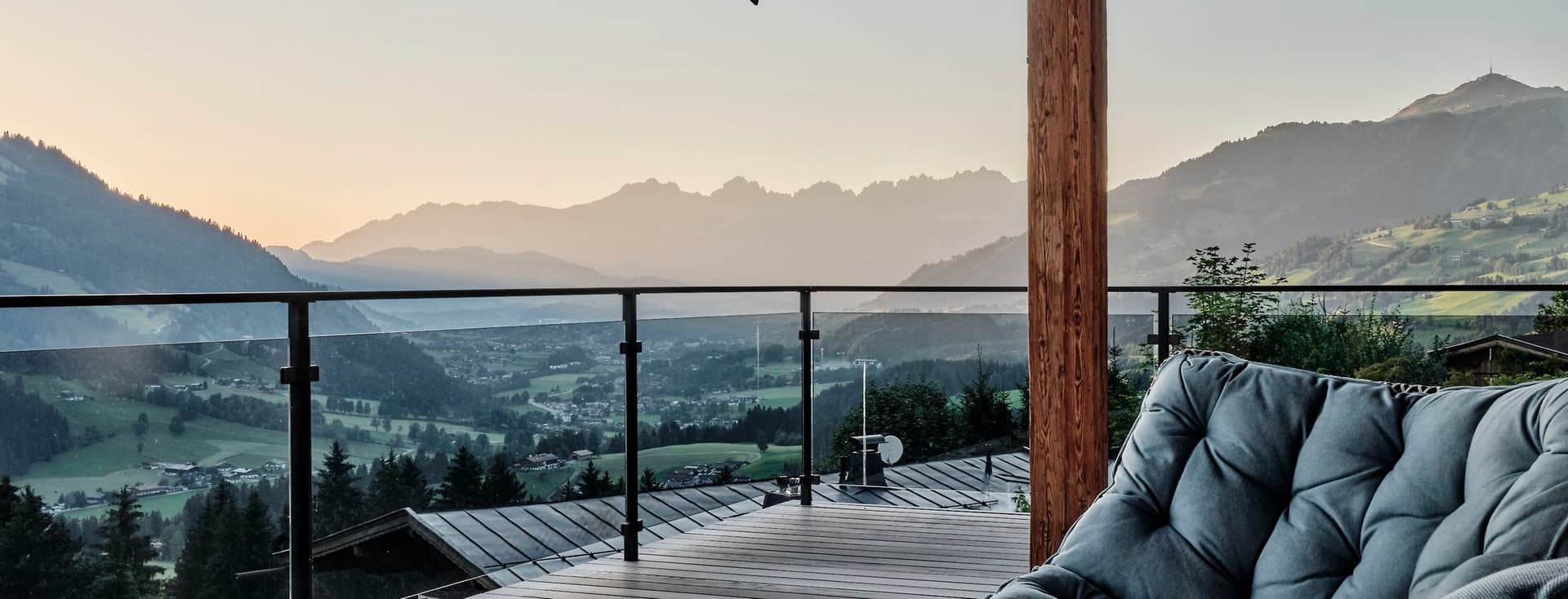
The Kitzbühel district, with a population of 66,371 across 20 municipalities, is at the heart of Tyrol’s premium Alpine property market. It encompasses Kitzbühel itself as well as Kirchberg, Reith, Aurach and Jochberg, extending to St. Johann in Tirol, Fieberbrunn, Kössen and the municipalities of the Brixental valley.
According to the current Engel & Völkers Market Report 2026, detached houses in prime locations achieved prices of between €8.5 million and €30 million in 2025, while properties in more modest locations ranged from €1.35 million to €3 million. The average transaction price was approximately €2.2 million, representing an increase of 0.8% compared with 2024.
For apartments, the median price per square metre fell to just under €6,400 in 2025 (–20.1%). Despite this correction, the district remains one of Tyrol’s highest-priced residential property markets. At the same time, the number of house transactions increased by approximately 23%.
This article puts the latest figures from the Market Report 2026 into context and examines how prices, demand and investment prospects vary across the Kitzbühel district.
Table of Content
Key Facts – Region & Infrastructure
Key Facts – Prices & Market 2025
Why This Region?
Property Market
Market Dynamics 2025/2026
The Kitzbühel District in Comparison with Other Tyrolean Districts
Residential Areas
Special Features
Special Considerations for International Buyers
Investment Potential
Expert Opinion
| Category | Details |
|---|---|
Federal State / District | Tyrol, Kitzbühel District |
Municipalities in the District | 20 (1 town, 3 market towns and 16 municipalities) |
District Population (2026) | 66,371 (+2.6% compared with 2021) |
District Area | 1,163.30 km² |
Accessibility | 94 km to Innsbruck, 123 km to Munich |
Golf Courses in the District | 9 |
Total Ski Slopes in the District | 1,027 km, including 234 km in the KitzSki area (Kitzbühel–Kirchberg–Jochberg) |
Major Events | Hahnenkamm Races (January), Generali Open (July) |
| Category | Details |
|---|---|
Highest Price per m² for an Apartment (2025) | €17,319/m² |
Highest Price for a Detached House (2025) | 20.500.000 € |
Average Price for an Apartment (2025) | €6,433/m² (–20.1% compared with 2024) |
Average Price for a Detached House (2025) | €2,198,240 (+0.8% compared with 2024) |
Transactions: Detached & Semi-Detached Houses (2025) | 128 (+ approximately 23% compared with the previous year) |
Transactions: Apartments (2025) | 318 (– just under 14% compared with the previous year) |
Overnight Stays: Winter 2024/25 | 2.976.181 |
Overnight Stays: Summer 2025 | 3.044.860 |
Source: Engel & Völkers Market Report 2026. The price ranges apply to the entire Kitzbühel district; within each location category, prices vary further depending on the municipality, plot size and condition of the property (see Section 8).
The Kitzbühel district is far more diverse than the international reputation of Kitzbühel itself might suggest. It stretches from the Alpine heartland around Kitzbühel, Kirchberg, Reith, Aurach and Jochberg, through the quieter Pillersee Valley with Fieberbrunn, St. Ulrich am Pillersee and Waidring, to the Kaiserwinkl around Kössen, close to the Bavarian border, and the communities of the Brixen Valley surrounding Westendorf and Hopfgarten. As the district's most populous municipality, St. Johann in Tirol serves as an important economic and infrastructure hub. This diversity means that buying property in the Kitzbühel district is not simply about choosing a location, but about selecting from several distinct sub-regions, each with its own character and price structure.
What all 20 municipalities share is an exceptional range of leisure and recreational infrastructure: 1,027 kilometres of ski slopes across several ski areas, nine golf courses, and a year-round network of hiking and cycling routes. Kitzbühel, Kirchberg and Jochberg are connected through KitzSki, one of Austria's largest interconnected ski areas. St. Johann in Tirol, Fieberbrunn, Going and the communities of the Brixen Valley also provide access to some of the Alps' most extensive skiing areas, including the SkiWelt Wilder Kaiser–Brixental.
This geographical and infrastructural diversity is complemented by a common regulatory factor affecting the entire district: Tyrol strictly limits the creation of new leisure residences, regardless of which of the 20 municipalities a property is located in. As a result, properties that already hold an official leisure residence designation represent a scarce and potentially value-resilient asset throughout the district.
On the demand side, the entire region benefits from its strategic location between the major urban centres of Munich, Salzburg and Innsbruck. From Kitzbühel, Innsbruck is approximately 94 kilometres away and Munich around 123 kilometres; from northern municipalities such as Kössen or Waidring, Munich is often even closer. This accessibility makes the district one of the Alps' most convenient locations for international buyers from Germany, the Benelux countries, Scandinavia and English-speaking markets. Its appeal is further strengthened by the international profile of the Hahnenkamm Races each January, which bring the region to the attention of a global audience.
Aurach bei Kitzbühel, Tyrol, Austria
Price on request
Jochberg, Tyrol, Austria
Price
€19,900,000
Jochberg, Tyrol, Austria
Price
€16,900,000
Kitzbuhel, Tyrol, Austria
Price on request
Kitzbuhel, Tyrol, Austria
Price on request
Aurach bei Kitzbühel, Tyrol, Austria
Price
€16,200,000
Kitzbuhel, Tyrol, Austria
Price on request
Kitzbuhel, Tyrol, Austria
Price
€15,000,000
Kitzbuhel, Tyrol, Austria
Price
€14,900,000
The property market in the Kitzbühel district differs significantly in its structure from other regions in Tyrol. According to Engel & Völkers, Kitzbühel will remain Austria's leading premium Alpine property market in 2026, although the market is currently becoming increasingly divided: average properties or those requiring renovation, without clear distinguishing features, tend to have longer marketing periods and require more realistic pricing. By contrast, properties offering panoramic views, proximity to the slopes, privacy or an official leisure residence designation continue to attract strong demand and demonstrate long-term value stability.
| Location Quality | 2025 | 2026 (Forecast) |
|---|---|---|
Prime Location | €8,500,000–€30,000,000 | €7,500,000–€28,000,000 (stable) |
Good Location | €5,000,000–€12,500,000 | €5,000,000–€10,500,000 (stable) |
Average Location | €2,500,000–€5,000,000 | €2,000,000–€5,000,000 (stable) |
Secondary Location | €1,350,000–€3,000,000 | €900,000–€2,200,000 (slightly declining) |
| Location Quality | 2025 | 2026 (Forecast) |
|---|---|---|
Prime Location | €22,000–€30,000/m² | €22,000–€30,000/m² (stable) |
Good Location | €16,000–€22,000/m² | €15,000–€22,000/m² (stable) |
Average Location | €10,500–€14,500/m² | €10,500–€14,500/m² (stable) |
Secondary Location | €6,500–€10,000/m² | €5,000–€10,000/m² (slightly declining) |
Source: Engel & Völkers Market Report 2026. The price ranges apply to the entire Kitzbühel district; within each location category, prices may vary significantly depending on the municipality, plot size and condition of the property (see Section 8).
The market for detached and semi-detached houses saw a significant recovery in 2025. Following declines in transaction activity over the previous two years, the number of sales increased by approximately 23% to 128 transactions. The average sale price remained broadly stable at around €2.2 million (+0.8% compared with 2024), while individual trophy properties achieved prices of more than €20 million.
The market for apartments, by contrast, showed a different trend. The number of transactions fell by just under 14% to 318, while the average price per square metre declined by 20.1% to approximately €6,433. Despite this correction, Kitzbühel remains one of Tyrol's most expensive districts in terms of apartment prices. Engel & Völkers does not interpret this development as a market reversal, but rather as a period of consolidation following several years of dynamic growth. Buyers have become more selective and price expectations more realistic, while properties with genuine distinguishing features continue to benefit from limited supply.
For 2026, Engel & Völkers expects prices in prime and good locations to remain broadly stable. Only in secondary locations are modest price corrections considered likely.
Compared with the other districts of Tyrol, the distinct position of the Kitzbühel property market becomes particularly clear.
With an average price of around €2.2 million for detached houses, the Kitzbühel district achieves a level more than twice as high as any other district in Tyrol. Even Innsbruck City reaches only around 41% of this level. In terms of average prices per square metre for apartments, Kitzbühel remains among Tyrol's leading districts despite the significant decline recorded in 2025. Notably, several districts saw double-digit price increases for apartments during 2025, while Kitzbühel was the only district in this comparison to record a double-digit decline. This suggests that, following years of substantial growth, the already high price base in the premium segment moved towards more realistic price levels in 2025 – without threatening Kitzbühel's fundamental position at the top of the market.
Across Tyrol, the residential property market is entering a period of what Engel & Völkers describes as sustainable consolidation. Following the dynamic market phases of recent years, buyers are once again acting with noticeably greater confidence, while remaining selective and highly focused on quality. Demand is increasingly driven by owner-occupation rather than purely investment purposes, with energy efficiency and the principle of quality over size becoming increasingly important.
As a significant expansion of new housing supply is not expected in the near future, limited availability in the most sought-after locations remains the primary driver of prices. Against this backdrop, Tyrol continues to be positioned as a market offering strong long-term value stability.
Within the Kitzbühel district, five distinct sub-regions can be identified, each with its own character and appeal:
| Sub-Region | Municipalities | Character |
|---|---|---|
Kitzbühel Core Region | Kitzbühel, Kirchberg in Tirol, Reith bei Kitzbühel, Aurach bei Kitzbühel, Jochberg | International premium market, the district's highest concentration of high-value properties, access to the KitzSki area |
Wilder Kaiser Corridor | St. Johann in Tirol, Oberndorf in Tirol, Going am Wilden Kaiser, Kirchdorf in Tirol | The district's economic hub, family-oriented living, access to the SkiWelt area |
Brixen Valley | Westendorf, Hopfgarten im Brixental, Brixen im Thale, Itter | Part of the SkiWelt Wilder Kaiser–Brixental, offering attractive value for money |
Pillersee Valley | Fieberbrunn, St. Ulrich am Pillersee, Hochfilzen, St. Jakob in Haus, Waidring | A quieter, more authentic Alpine setting, its own ski area and growing demand |
Kaiserwinkl | Kössen, Schwendt | Close to the Bavarian border, rural in character, with convenient access to Munich |
Within the Kitzbühel core region – by far the district's highest-priced market segment – property values vary significantly between individual residential locations:
| Location | Key Value Driver | Preistreibender Faktor |
|---|---|---|
Bichlalm (Kitzbühel) | The highest price level in the district | Secluded setting, maximum privacy and unobstructed views of the Kitzbüheler Horn and Wilder Kaiser |
Kitzbühel Town Centre | Very high, with extremely limited supply | Walking distance to the historic town centre, restaurants and lift stations |
Sonnberg (Kitzbühel) | High | Sunny hillside setting and generous plot sizes |
Lebenberg (Kitzbühel) | High | Elevated position with panoramic views over the town and surrounding mountains |
Kirchberg in Tirol | Upper to high, with a broad price range | Independent town centre, golf and family-friendly amenities, with direct access to KitzSki |
Kochau (Kitzbühel) | Upper market, more moderate than the town centre | Village-like character within easy reach of the town centre |
Steuerberg (Kitzbühel) | Upper market | Established residential area with mature development |
Aschbachbichl (Kitzbühel) | More moderate than prime locations close to the centre | Quiet edge-of-town setting with attractive value for money |
Reith bei Kitzbühel | More moderate than Kitzbühel town centre | Family-friendly setting with good public transport connections to the centre |
Aurach bei Kitzbühel | More moderate, offering more space for the budget | The most rural part of the core region, with larger plots |
Jochberg | The broadest price range within the core region | Generous, unspoilt plots and access towards the Pinzgau via the Pass Thurn |
These classifications represent relative market trends rather than fixed price levels. Within each location, achievable prices can vary considerably depending on factors such as plot size, infrastructure and the condition of the property.
For the district's four outer sub-regions – the Wilder Kaiser corridor, Brixen Valley, Pillersee Valley and Kaiserwinkl – equally granular location-specific price data is not yet available. Based on market experience, property prices in these areas generally fall within the mid-range to upper market segment.
Detailed descriptions of residential locations within the Kitzbühel core region, along with currently available properties, can be found on our Luxury Real Estate in Kitzbühel and Buy a Chalet in Kitzbühel pages.

The property market in the Kitzbühel district has several distinctive characteristics that directly influence pricing.
One of the most important factors is the regulation governing leisure residences. In municipalities where the proportion of leisure residences has reached the relevant legal threshold, new leisure residence designations are generally no longer permitted. This framework applies across all 20 municipalities in the district. As a result, a property with an existing official leisure residence designation can command a distinct premium over a comparable property without this designation, regardless of which sub-region it is located in. Further information on the legal framework – including quotas, exceptional approvals and permitted use – can be found on our Buying a Leisure Residence in Tyrol page.
The district also benefits from an exceptionally dense leisure infrastructure. With 1,027 kilometres of ski slopes, nine golf courses, and a year-round network of hiking and cycling routes, properties in the Kitzbühel district offer appeal far beyond the winter season. According to Engel & Völkers, year-round lifestyle and recreational opportunities are becoming an increasingly important factor in buyers' purchasing decisions.
Architecturally, the entire district demonstrates a deliberate balance between tradition and modernity. Characteristic Alpine chalets with timber façades and pitched roofs are increasingly combined with contemporary architecture, expansive glazing and energy-efficient building technology. According to the 2026 Market Report, heat pumps, photovoltaic systems and high-quality insulation have become key features actively sought by buyers, as predictable running costs and long-term usability continue to gain importance. Well-renovated existing properties with high energy standards can therefore achieve similar prices per square metre to new-build homes, whose availability remains structurally limited by the scarcity of building land.
Discretion is another defining feature of pricing in the most exclusive locations. A significant proportion of high-value transactions are not marketed publicly, but are instead handled through personal networks and specialised estate agents. This means that the actual prices achieved for trophy properties in prime locations are often not fully reflected in publicly available market statistics.
Finally, the town's two major international events – the Hahnenkamm Races in January and the Generali Open in July – also influence seasonal demand for properties that are available at short notice across the wider district.
Purchasing a property in Austria follows a clearly regulated process that applies equally across all 20 municipalities in the Kitzbühel district. For buyers primarily interested in property prices, in
Citizens of EU and EEA countries are largely treated in the same way as Austrian citizens when purchasing property in Tyrol. For nationals of non-EU countries, however, acquiring property in Tyrol is generally subject to official approval. The competent Property Transfer Authority reviews the proposed acquisition, particularly with regard to public and state interests.
This approval process can take several weeks or even months and should therefore be taken into account from the outset when structuring the purchase agreement. In such cases, seeking legal advice at an early stage from a solicitor or notary specialising in Austrian property transfer law is essential.
The Kitzbühel district is one of the few property markets in Austria whose long-term value development has been structurally supported by a persistent shortage of supply rather than being driven primarily by short-term economic cycles. The Engel & Völkers Market Report 2026 identifies three key drivers across Tyrol that are particularly pronounced in the Kitzbühel district.
First, a rapid expansion of new-build supply is unlikely. High construction costs, continued financing costs for developers, limited availability of building land and complex approval procedures are all constraining new development. As a result, valuable existing properties with potential for further development – for example through refurbishment, increased density or additional storeys, subject to planning permission – are becoming increasingly important for both owner-occupiers and investors in 2026.
Second, international demand for the Kitzbühel brand remains strong. As the district comparison in Section 7 demonstrates, no other district in Tyrol comes close to its price level for detached houses. The combination of world-class winter sports, fine dining, convenient access from Central Europe and a historic townscape gives the core region a level of global recognition shared by only a select number of Alpine destinations, such as St. Moritz and Gstaad in Switzerland.
Third, the size and diversity of the district allow buyers to diversify within the same property market. Those seeking maximum discretion and proximity to the town centre may focus on Kitzbühel or Kirchberg, while buyers looking for more space for the same budget may find suitable opportunities in Jochberg, the Brixen Valley or the Pillersee Valley.
For most buyers, however, ongoing rental income is of secondary importance. A significant proportion of properties are acquired as leisure residences for personal use, while tourist letting is subject to legal and planning restrictions that must be assessed individually before purchase. The investment rationale therefore lies less in a traditional yield calculation and more in long-term capital preservation and the scarcity premium associated with a structurally supply-constrained market.
For investors seeking an income-generating use, hospitality businesses, serviced apartments and properties designated for tourist accommodation represent the more relevant categories. These are subject to their own legal and regulatory frameworks, which differ from the rules governing private leisure residences and should be reviewed separately before making an investment.
In 2026, Kitzbühel remains the international premium segment of the Alpine residential property market. Exclusive locations, architectural quality and discreet luxury continue to command top prices. Buyers have become more selective, but properties with distinctive qualities – panoramic views, proximity to the slopes, privacy or an official leisure residence designation – remain highly sought after and retain their long-term value.

In the same report, Maria Rauscher and her Managing Director, Florian Hofer, offer a broader perspective on the Tyrolean property market. They note that the recovery phase of recent years has transitioned into a more stable market environment, with prospective buyers once again approaching the market with greater confidence. For 2026 and 2027, both expect a continued, gradual normalisation. A rapid expansion of new-build supply is not anticipated, meaning that limited availability in the most sought-after locations will remain the key driver of prices. Future growth, they believe, will be driven primarily by quality and sustainability rather than additional floor space.
For buyers in the Kitzbühel district, this means that the days when almost every property found a buyer quickly, regardless of its condition or location, are over. Instead, the combination of location quality, energy efficiency and architectural substance is becoming increasingly decisive in determining both the marketing period and the achievable price – across the Kitzbühel core region as well as the district's four surrounding sub-regions.
Anyone looking to make a well-informed purchase in this market environment will benefit from locally rooted advice with a detailed understanding of both the subtle price differences between the individual sub-regions and the specific legal requirements governing property transactions in Tyrol.
The Kitzbühel district comprises 20 municipalities across five distinct sub-regions: the Kitzbühel core region (Kitzbühel, Kirchberg, Reith, Aurach and Jochberg), the Wilder Kaiser corridor around St. Johann in Tirol, the Brixen Valley around Westendorf and Hopfgarten, the Pillersee Valley around Fieberbrunn, and the Kaiserwinkl around Kössen.
According to the 2026 Market Report, detached houses in 2025 ranged from approximately €1.35 million in secondary locations to up to €30 million in prime locations. The average sale price was around €2.2 million. Apartments ranged from approximately €6,500 to more than €30,000 per square metre, with an average of just under €6,400 per square metre.
The Market Report interprets this as a period of consolidation following several years of dynamic growth, rather than a market reversal. Buyers have become more selective and price-conscious, while the Kitzbühel district continues to maintain one of the highest property price levels in Tyrol.
Generally, yes. Kirchberg and Reith tend to be more moderately priced than Kitzbühel town centre, while Jochberg has the widest price range within the core region – from relatively moderate entry-level properties to some of the area's largest country estates.
The Kitzbühel core region – comprising Kitzbühel, Kirchberg, Reith, Aurach and Jochberg – represents the district's highest-priced market segment. The Wilder Kaiser corridor, Brixen Valley, Pillersee Valley and Kaiserwinkl generally fall within the mid-range to upper market segments of the district-wide price structure.
With an average price of around €2.2 million for detached houses, Kitzbühel is priced at more than twice the level of any other Tyrolean district. Despite the decline in 2025, average apartment prices per square metre in Kitzbühel also remain above those in Kufstein, Schwaz, Landeck, Reutte, Imst and Lienz.
Key factors include the limited availability of building land due to the Alpine topography, strict regulations governing leisure residences across the district, and the internationally recognised Kitzbühel brand, built on its combination of sport, tradition and Alpine lifestyle.
Anyone purchasing property in Tyrol may need to involve the Property Transfer Authority (Grundverkehrsbehörde). The applicable procedure depends on the buyer's nationality and the type of property being acquired.
Austrian citizens and nationals of EU and EEA countries are generally treated equally, while Swiss nationals are largely treated in the same way. For the acquisition of building plots, a declaration to the relevant authority is usually sufficient for these groups. Non-EU/EEA nationals, including British citizens since Brexit, generally require a separate approval, which is granted only if specific requirements are met. Agricultural and forestry properties are subject to stricter regulations for all buyers.
The purchase agreement can be signed by any buyer. However, the acquisition only becomes legally effective once the relevant administrative requirements have been completed, and registration in the Austrian Land Register (Grundbuch) can generally only take place thereafter. This step can therefore have a significant impact on the overall timeline. Experienced solicitors or notaries take this into account from the outset, for example by incorporating appropriate conditions into the purchase agreement and arranging for the purchase price to be handled through an escrow arrangement.
Regardless of nationality, buyers should also clarify at an early stage whether the property may legally be used as a leisure residence. Tyrol imposes strict restrictions on this form of use.
This information is provided for general guidance only and does not constitute legal advice for an individual transaction.
A leisure residence is a property that is not used to meet an owner's year-round primary residential needs. As new leisure residence designations are extremely limited across the district, properties with an existing official designation can command a significant premium compared with similar properties without this status.
The highest price levels are generally found in Bichlalm and Kitzbühel town centre, followed by Sonnberg, Lebenberg and selected areas of Kirchberg. Reith and Aurach tend to be more moderately priced, while the district's four outer sub-regions generally fall within the mid-market segment.
The process typically begins with defining your requirements and budget and reviewing any applicable property transfer regulations. This is followed by a purchase offer, preparation of the purchase agreement, escrow handling where required, any necessary official approvals, registration in the Austrian Land Register, and finally the handover of the property.
In addition to the purchase price, buyers generally pay 3.5% property transfer tax, approximately 1.1% for Land Register registration, as well as estate agency and legal or contract preparation costs. In total, buyers should generally budget for around 10–12% of the purchase price in additional acquisition costs, depending on the individual transaction.
For many buyers, the investment case lies less in generating ongoing rental income and more in long-term capital preservation, supported by structural scarcity and sustained international demand. Tourist letting is subject to separate legal and planning restrictions and should always be assessed individually before purchase.
In 2025, the number of house transactions increased by approximately 23%, while the average sale price remained broadly stable. For apartments, transaction volumes declined by just under 14% and the average price per square metre fell by 20.1% – although prices remained high compared with other districts in Tyrol.
The Hahnenkamm Races, held each January, significantly strengthen the international visibility of Kitzbühel and the wider district. They can also increase seasonal demand for properties available at short notice, although they do not fundamentally alter the market's underlying price structure.
Yes, in principle. However, Austrian banks may apply stricter equity and lending requirements to international buyers. It is therefore advisable to speak with a financing partner experienced in working with international property purchasers at an early stage.
Depending on the location, plot size and specification, chalets typically range from several million euros to almost €30 million in absolute prime locations. Some of the largest plots in the core region can be found in Jochberg. Further information on Alpine architecture and chalet properties can be found on our Buying a Chalet in Kitzbühel page.
For a standard purchase for consideration, Austrian property transfer tax is generally 3.5% of the purchase price.
According to the 2026 Market Report, features such as heat pumps, photovoltaic systems and high-quality insulation have become important buying criteria. Well-renovated existing properties with high energy standards can therefore achieve prices comparable to those of new-build homes.
As a locally established leader in the luxury property market, Engel & Völkers Tyrol combines international reach with detailed knowledge of all five sub-regions within the Kitzbühel district. In addition to publicly marketed properties, our network can also provide access to selected discreet and off-market opportunities across the region.
You may also be interested in


&w=1920&q=75)





Contact provider
Page content provided by: Engel & Völkers Kitzbühel GmbH
License partner of Engel & Völkers Franchise and Trademark GmbH