- 5 min read
- 17.07.2025
- by Steffi Kammerer
The Secret of Famous Gardens
Issue
03/25
Shaped over decades – and in some cases, centuries – each of the lush sanctuaries tells a story as unique as its landscape. Yet they all share a common thread: Each one was born from the vision and passion of a singular individual or family
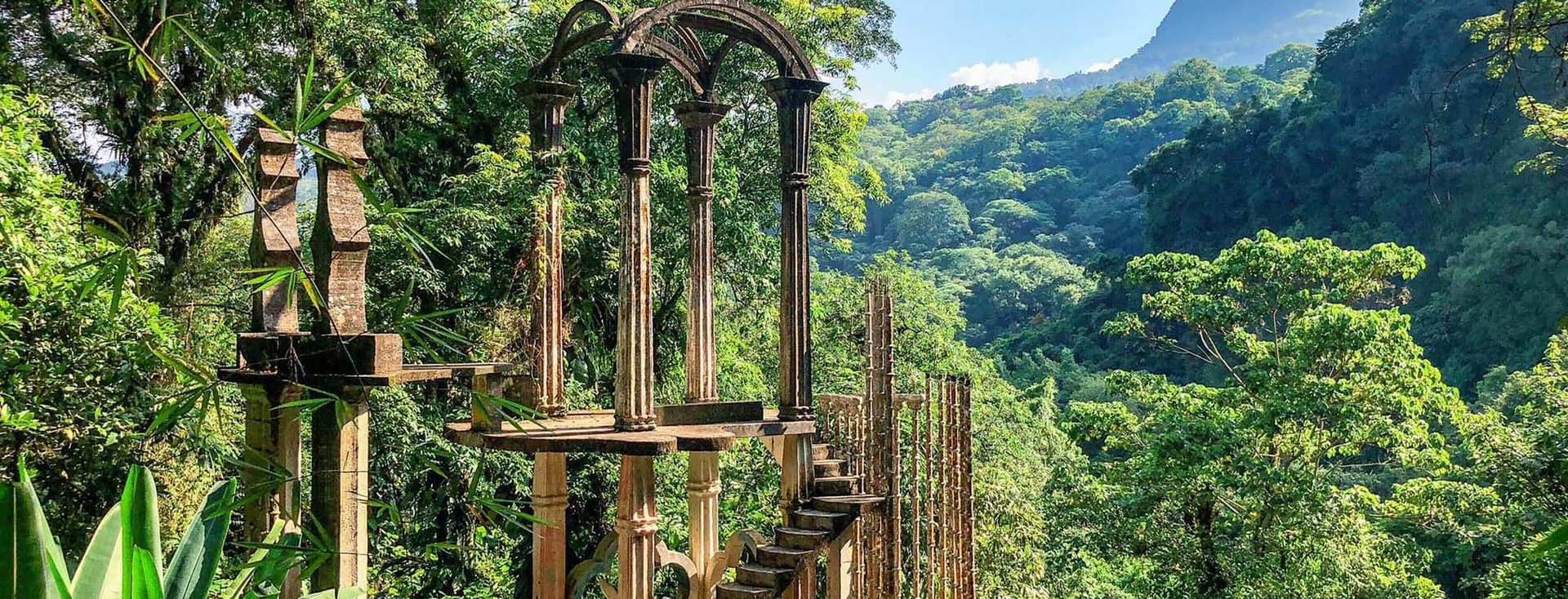
Las Pozas, Mexico
Set in tropical rainforest 610 meters above sea level, the enchanted sculpture garden Las Pozas is located roughly seven hours by car north of Mexico City. It is the peculiar legacy of the British poet and arts patron Edward James, a friend of Salvador Dalí and René Magritte, who took surrealism into the jungle. In this very remote spot, he built spiral staircases, towers, bridges and lofty stone sculptures, some of them moss-covered and overgrown, their shapes reminiscent of plants. There’s a river with waterfalls, and some small lakes. This is the kind of garden that invites you to lose yourself in it, a place where fantasy and reality merge. Las Pozas has been open to the public since 1991. Edward James discovered the piece of land in the 1940s and began building the first structures on it in 1949. He continued to work feverishly until his death in 1984.

Longwood Gardens, USA
One of the world’s most famous gardens is located in Pennsylvania, in the borough of Kennett Square: Longwood Gardens. Last year alone, it was admired by 1.6 million visitors. Spread over an area of more than four square kilometers, Longwood boasts over 10,000 species and varieties of plants. The gardens were conceived by Pierre Samuel du Pont, industrialist, philanthropist and scion of one of the wealthiest and most influential families in the U.S. He bought the land in 1906 with the initial goal of saving a historic stand of trees intended for the sawmill. But soon, following his family’s love of gardens and magnificent parklands, and tradition of gardening, he traveled to Italy to learn about Renaissance gardens. Duly inspired, he returned home to create an unparalleled place of splendor and diversity, complete with symmetrical axes, splashing fountains, illuminated fountain displays and a spectacular greenhouse. To get a proper sense of this masterpiece of garden design, which Pierre du Pont opened to the public more than a century ago, visitors to Longwood Gardens should plan to spend the entire day.
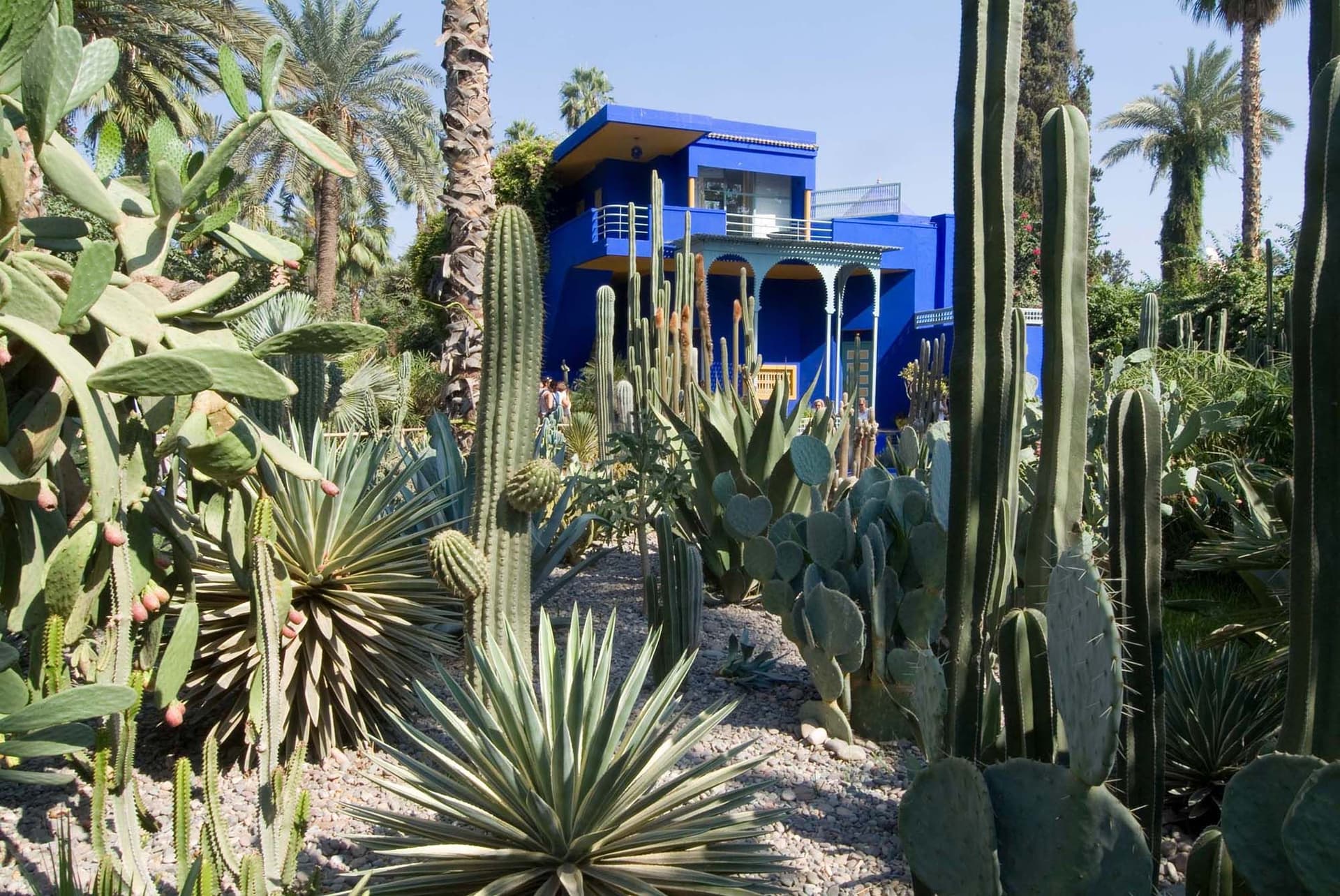
Jardin Majorelle, Morocco
This beautiful garden in Marrakesh is more than a hundred years old. It was created over the course of nearly four decades by the French painter Jacques Majorelle, who was fascinated by the shapes and colors of Islamic culture. In 1917, he traveled to Morocco, then a French colony, where he built a house and began to lay out a garden containing exotic plants from around the world. He painted his walls a shining cobalt blue that later became known as Majorelle Blue. After the painter’s death, the garden was abandoned until the 1980s, when Yves Saint Laurent and his partner Pierre Bergé rediscovered it and had it restored. The fashion designer took inspiration from the garden, and the striking blue color appeared repeatedly throughout his collections. After he died, his ashes were strewn in the Rose Garden, but while still alive, he and Pierre Bergé established a foundation to preserve the garden for posterity.
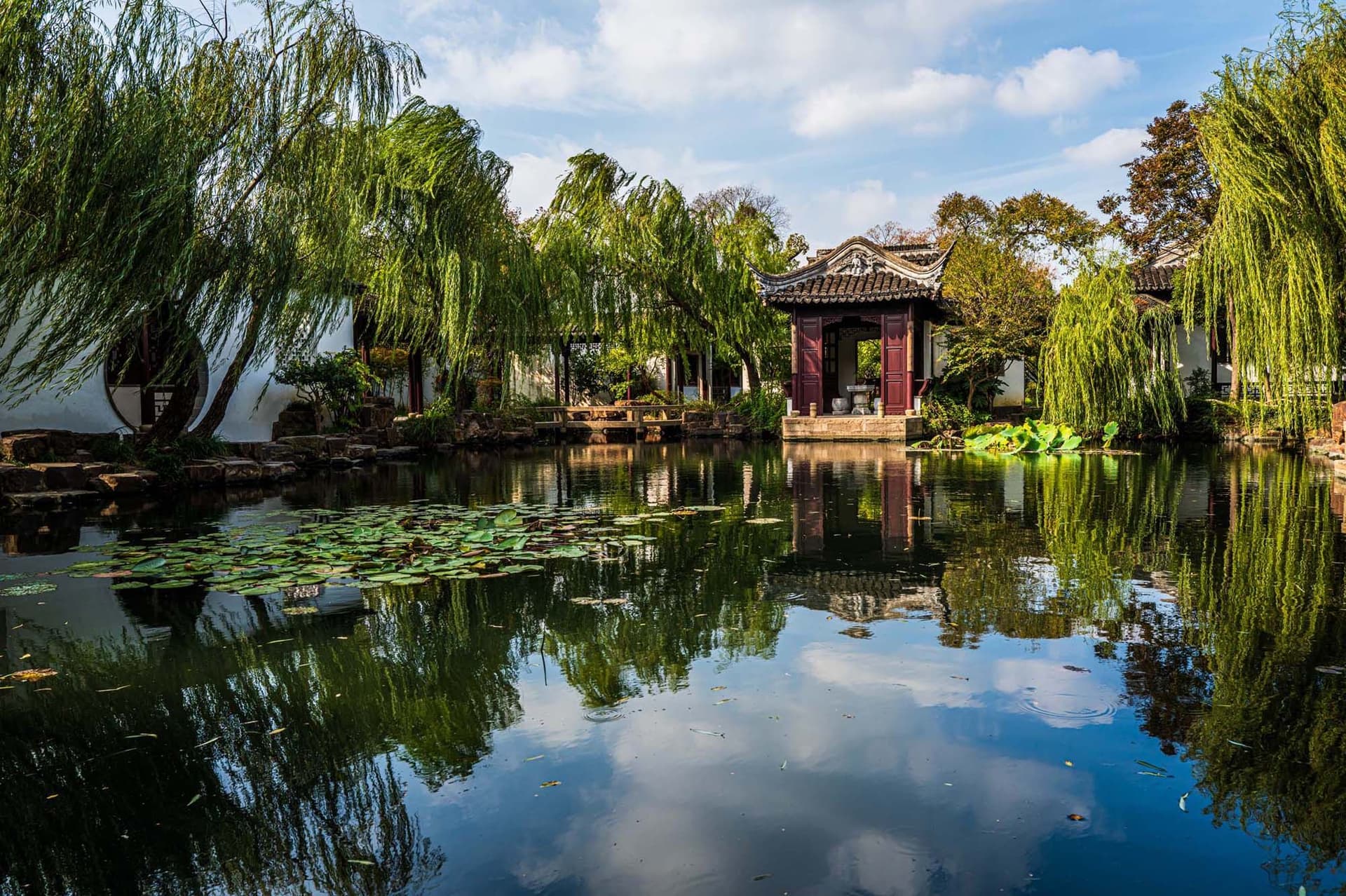
Classical Gardens of Suzhou, China
The classical gardens of Suzhou, situated in eastern China, were built between the 11th and the 19th century. Nine of them were named UNESCO World Heritage Sites in 1997, including the well-known Humble Administrator’s Garden, pictured here, which covers an area of 5.2 hectares and is the largest. Wang Xianchen, an imperial envoy, began creating this particular garden in 1509 after he was dismissed from his post. The name of the garden, Zhuōzhèng yuán, was taken from a verse praising the simple life by a famous poet from the Jin Dynasty. Water, boulders, plants and buildings interact harmoniously in the retired official’s impressive garden, an outstanding example of Chinese landscape design. By 1949, when the People’s Republic of China was founded, the garden was no longer intact, but it was subsequently rebuilt and has been accessible to the public ever since.
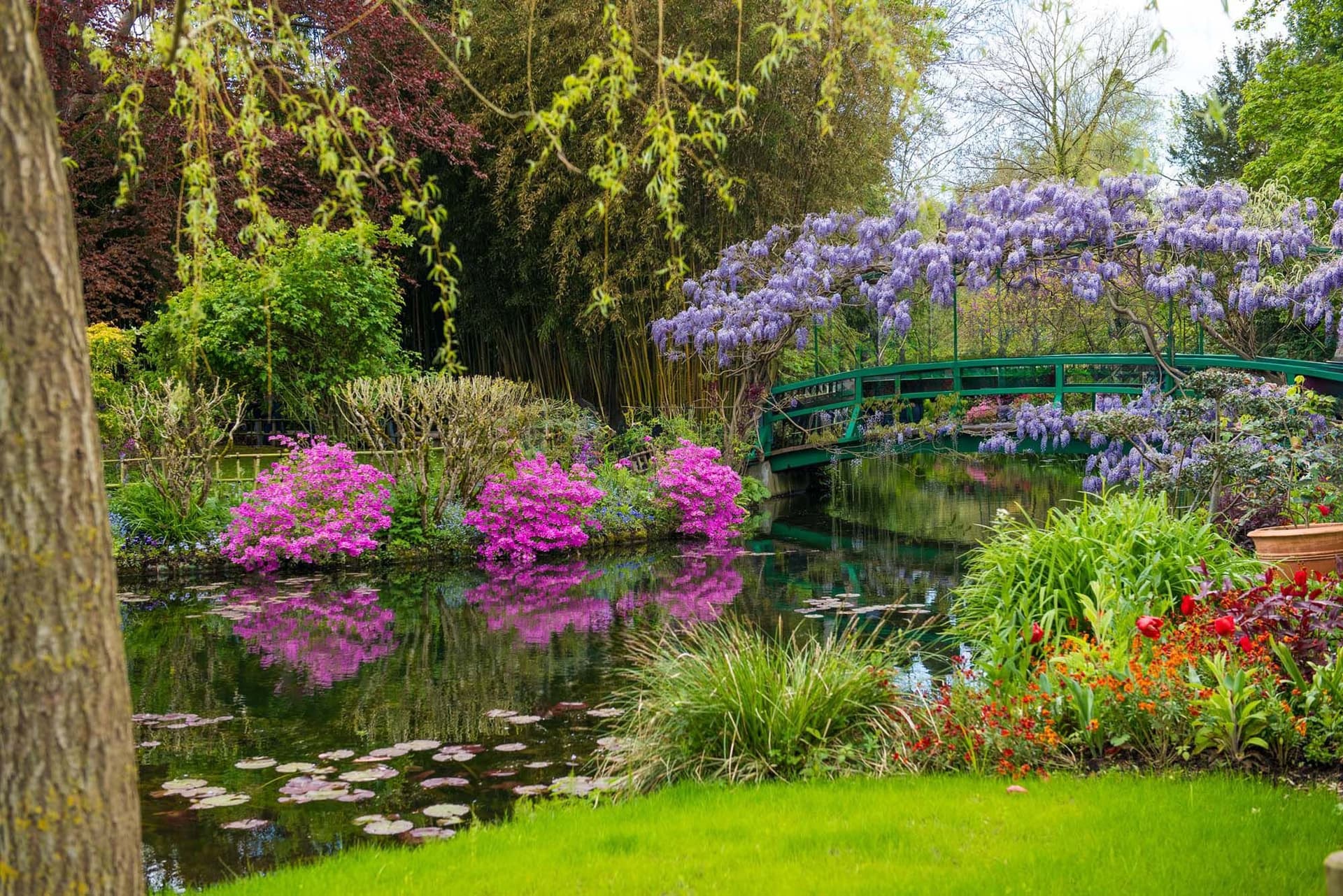
Monet's Garden, France
Strolling through Claude Monet’s garden in France is like submersing yourself in a painting or entering a continuous déjà-vu. The garden is so beautiful that he used it as a model for his most famous paintings. Every day, the artist spent time there planting flowers and studying the cycle of nature and the interplay of light and shadow. Monet’s house and garden are in Giverny, the village in Normandy where Monet settled with his family in 1883. There are two parts to it: an incredibly lush flower garden on one side of the street and a Japanese-inspired water garden on the other. This is where you will find the famous bridge, the one he immortalized in the iconic painting that hangs in the Metropolitan Museum of Art, and the water lilies that will forever be associated with Monet. They were the inspiration for the roughly 250 water lily paintings that the artist created over the course of his life.
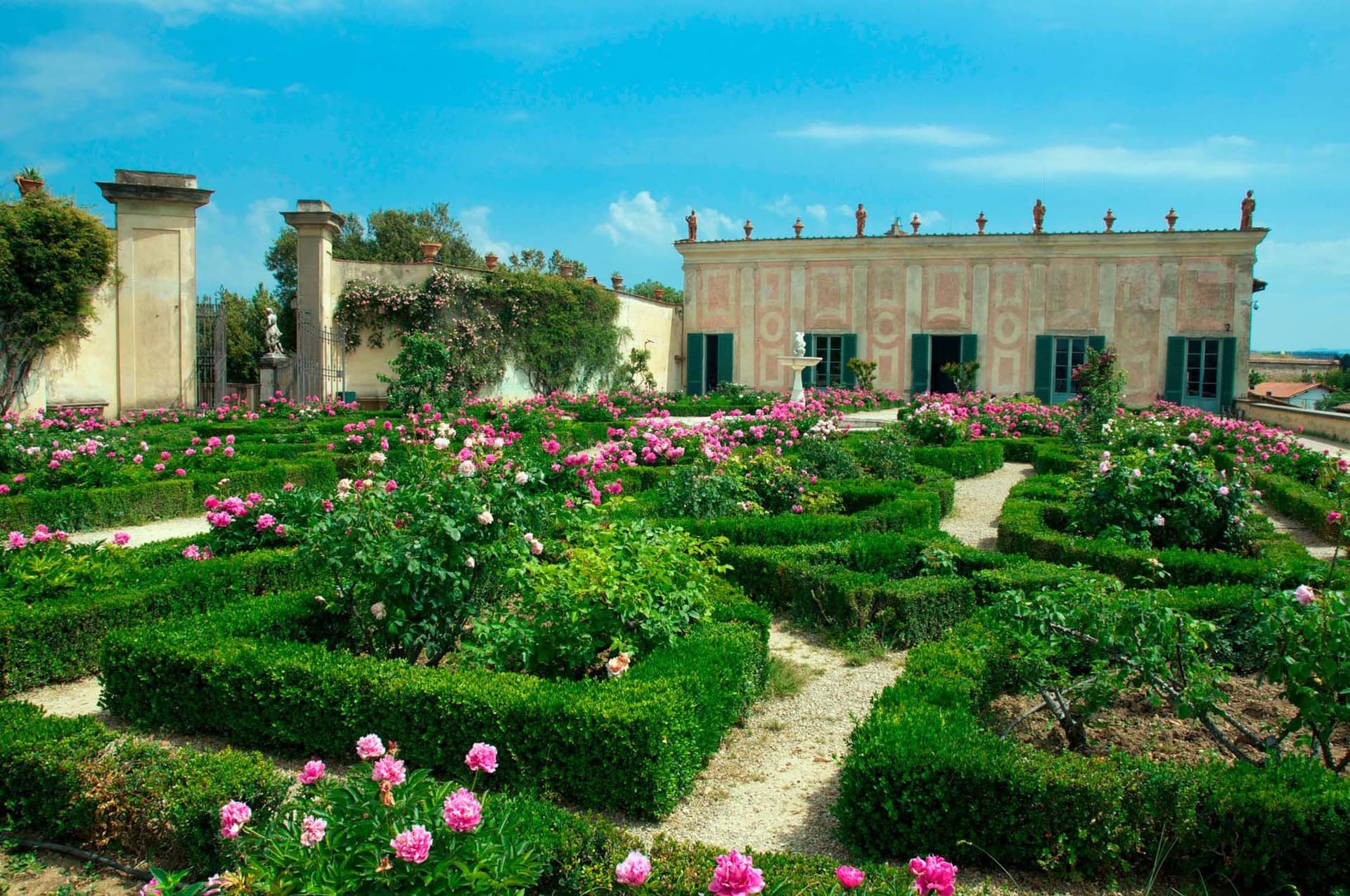
Boboli Gardens, Italy
The epitome of Italian garden design with an incredible view: The Boboli Gardens in Florence are a UNESCO World Heritage Site and closely connected with the Medici family. They were created by Eleonora von Toledo, the wife of Cosimo I de’ Medici, the wealthiest man in Florence at the time, and already ranked among Italy’s most famous gardens in the 16th century. Laid out at the center of the city, the Boboli Gardens stretched south of Palazzo Pitti, the family’s main residence. The grounds contain 288 sculptures, some of them antique, as well as fountains, grottos, an Egyptian obelisk, a giant amphitheater, a historic orangery and countless hedges and cypress trees. Expanded in several phases, this elegant oasis reached its current size (4.5 hectares) in the 17th century. Today, it is one of the city’s most popular attractions and draws roughly a million visitors each year.
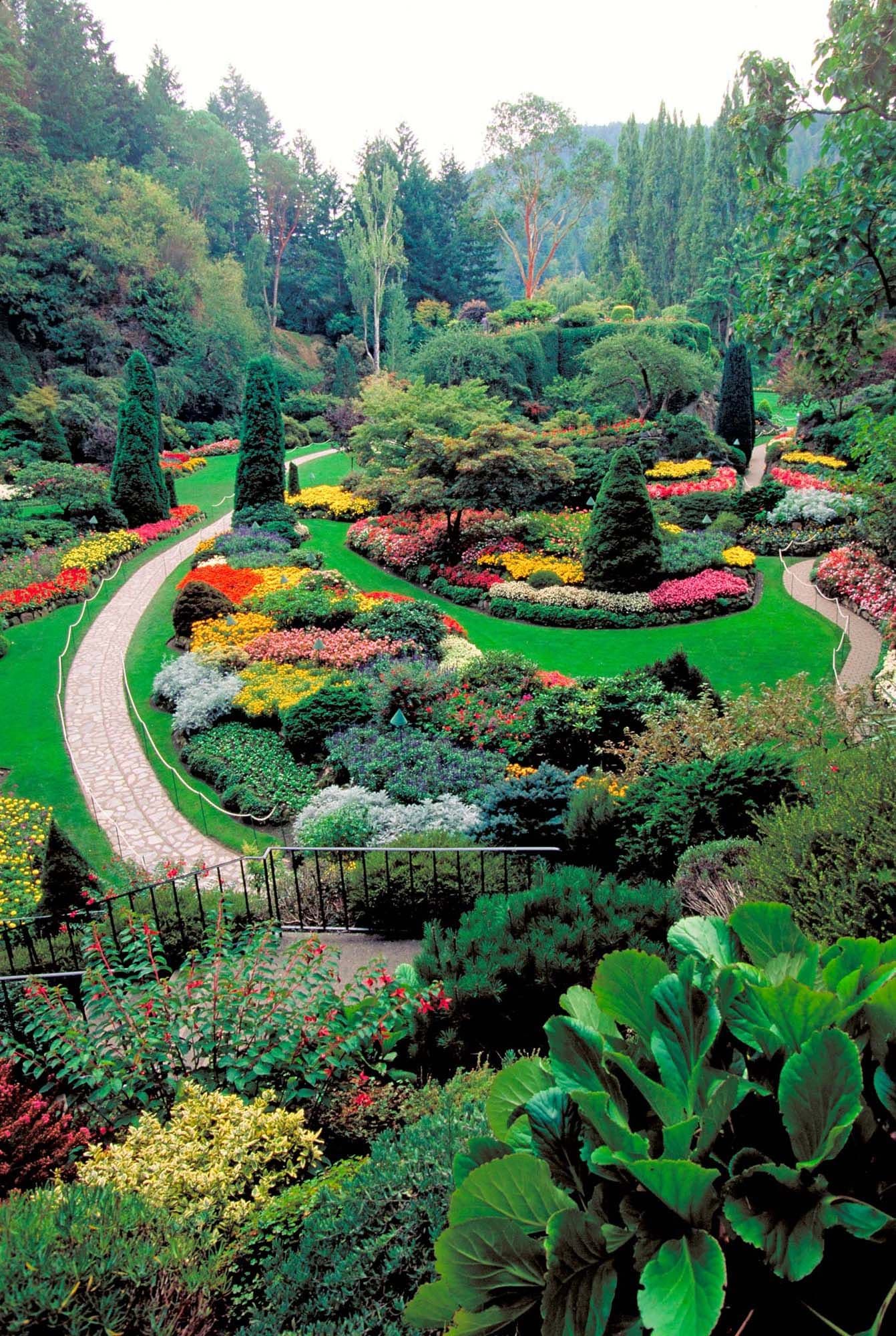
The Butchart Gardens, Canada
A botanical sensation awaits visitors to Vancouver Island off Canada’s Pacific coast. The Butchart Gardens were created in 1904 by Jennie Butchart, who didn’t have much gardening experience at the time. Her goal was initially to hide an ugly quarry that her cement-maker husband had abandoned, by replanting it. This eventually gave rise to the Sunken Garden, the gorgeous centerpiece of the Butchart Gardens today. Over the years, the gardens were steadily extended to include theme gardens with plants and flowers from all over the world, spread out over 22 hectares. In 2004, the Butchart Gardens were declared a National Historic Site of Canada. Still owned by the Butchart family, the gardens are now managed by Jennie Butchart’s great-granddaughter.
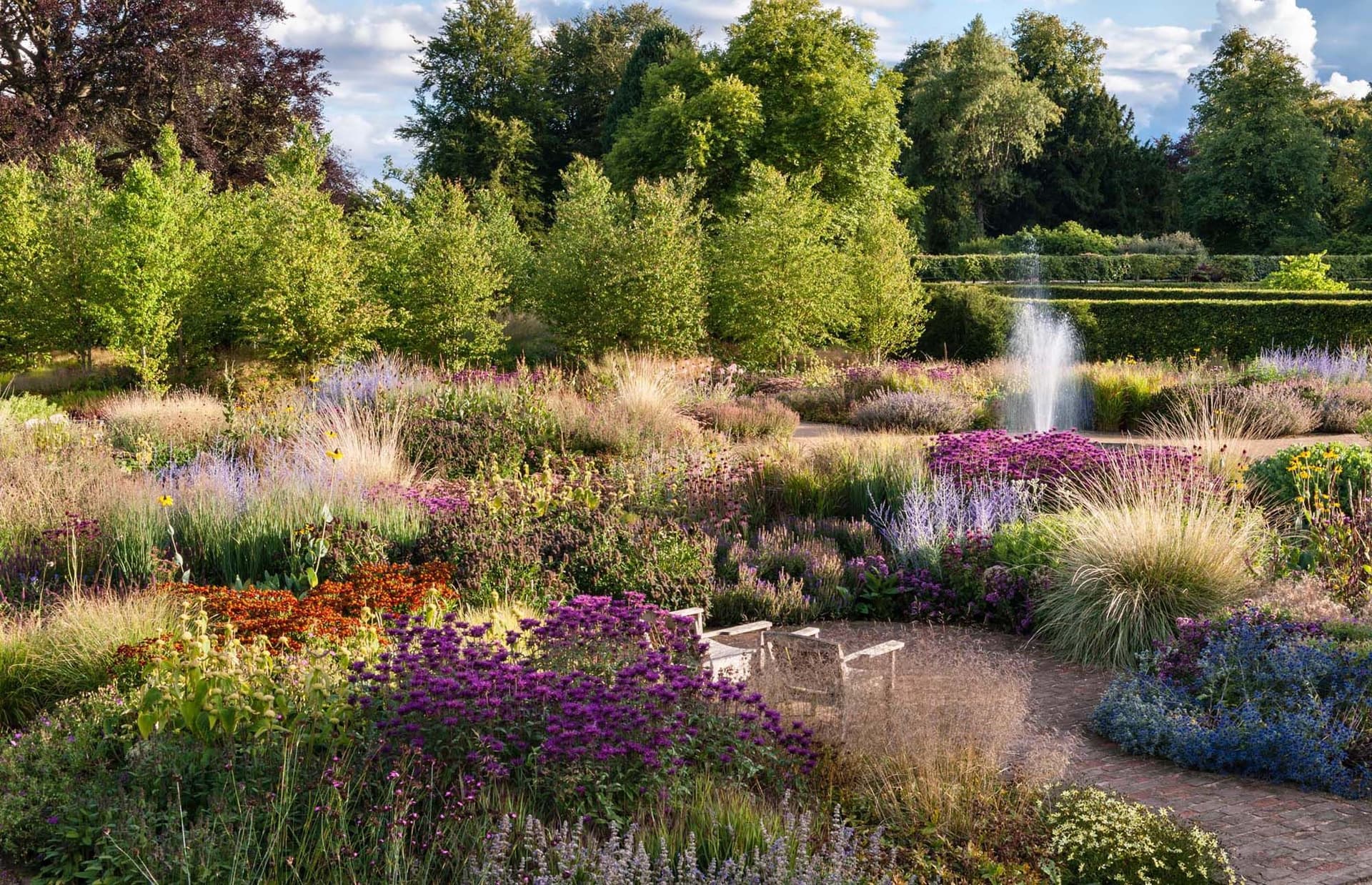
Scampston Parkland & Walled Garden, UK
At the historic Scampston Hall estate in North Yorkshire, which has been owned by the same family for decades, the grounds feature the designs of not one but two world-famous landscape gardeners. Back in the 18th century, Lancelot “Capability” Brown, who is regarded as one of England’s greatest landscape designers, created the parkland surrounding Scampston Hall. The gentle hills and broad grassy areas interspersed with lakes and streams, so typical of Brown’s work, can be admired to this day. Directly adjacent to the estate is a historic walled garden, originally created as a kitchen garden to provide the family with vegetables and fruit. The contemporary gardening superstar Piet Oudolf was commissioned to redesign it. The Dutch landscape architect is well-known for his ecologically sustainable aesthetic and masterful use of perennials. The grasses and shrubs change their appearance through the seasons, making the garden a beautiful sight at any time of year. The combination of Oudolf’s very modern approach and Brown’s timeless legacy at Scampston make the estate a popular and attractive destination for gardening fans.
You may also be interested in
 A winter Fairytale – Chesa Bellaria in Silvaplana
- 3 min.
- 8.12.2025
 Family Offices: Where discretion meets strategic asset management
&w=1920&q=75) Where the Last Swan Resides – Villa Schwanenhof on Schwanenwerder
Where the Last Swan Resides – Villa Schwanenhof on Schwanenwerder&w=1920&q=75) Building Green Pays Off in the Long Run – Sustainable Homes
Building Green Pays Off in the Long Run – Sustainable Homes- 2 min.
- 11.08.2025
 Timeless Investments
- 3 min.
- 11.05.2025
 Emerald Standard – Villa on the Costa Smeralda in Sardinia
- 3 min.
- 22.05.2025
GG Magazine exclusive content
GG is an independent magazine at the highest level. Exploring the world of architecture, lifestyle, design, fashion, yachting, luxury living and travel. We seek out the most exciting topics and personalities for you and invite you to get to know them from a fresh new angle. In GG, you will meet successful architects, interesting designers and exciting artists who are the talk of the town from London to New York and Berlin to Hong Kong.