
Philippine Leroy-Beaulieu: “I wish I could have enjoyed that moment sooner.”
Issue
03/26
Location
Miyako Island, Japan
Photography
Yoshihiro Makino, Richard Learoyd, Jason Wyche, Kazuyoshi Shimomura
The artist herself is a vision in white. Her organic, futuristic works also radiate light. Japanese artist Mariko Mori has been exploring the essence of human existence for more than thirty years. She builds bridges between the natural and the supernatural, between modern technology and spirituality. A conversation in search of inner light.
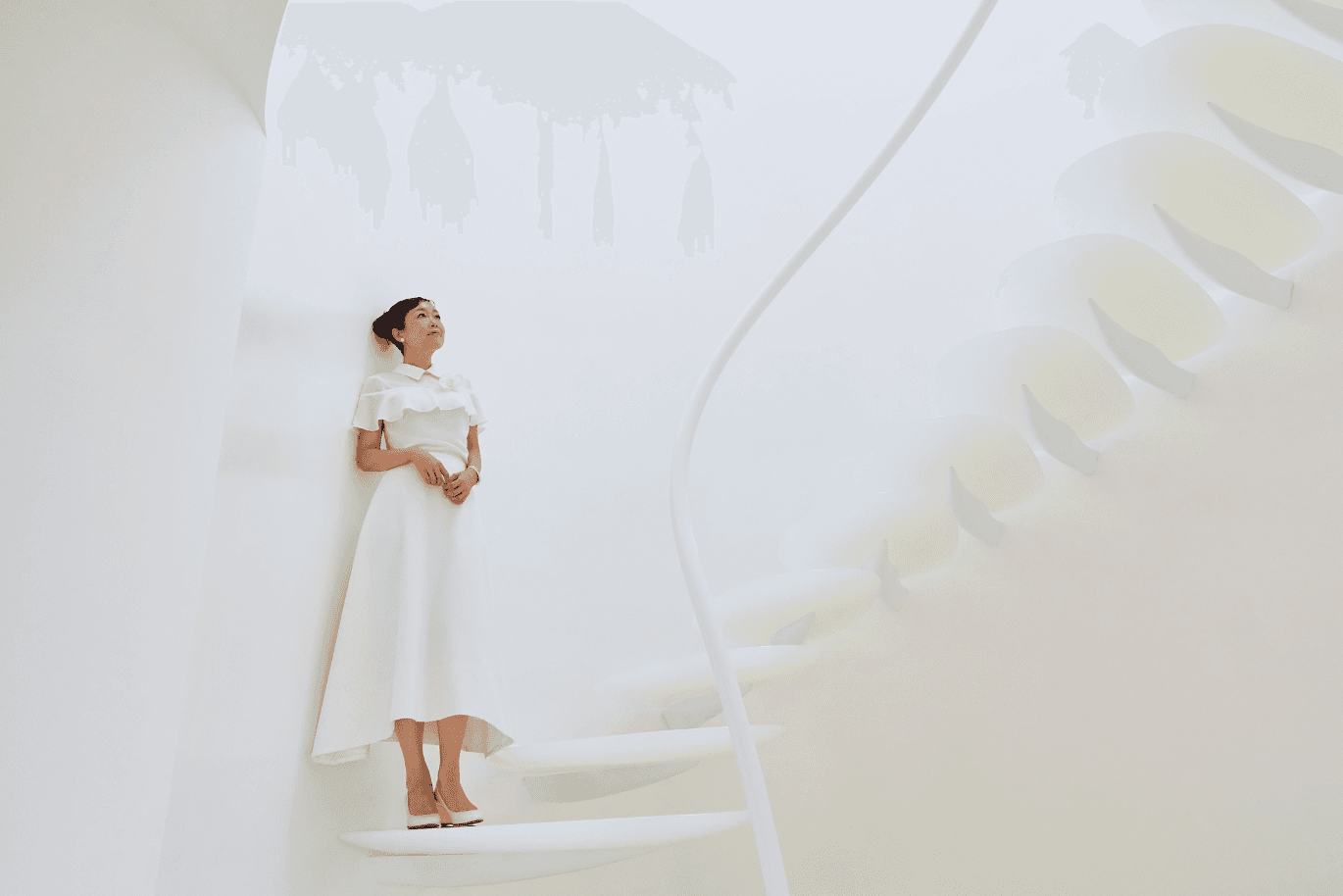
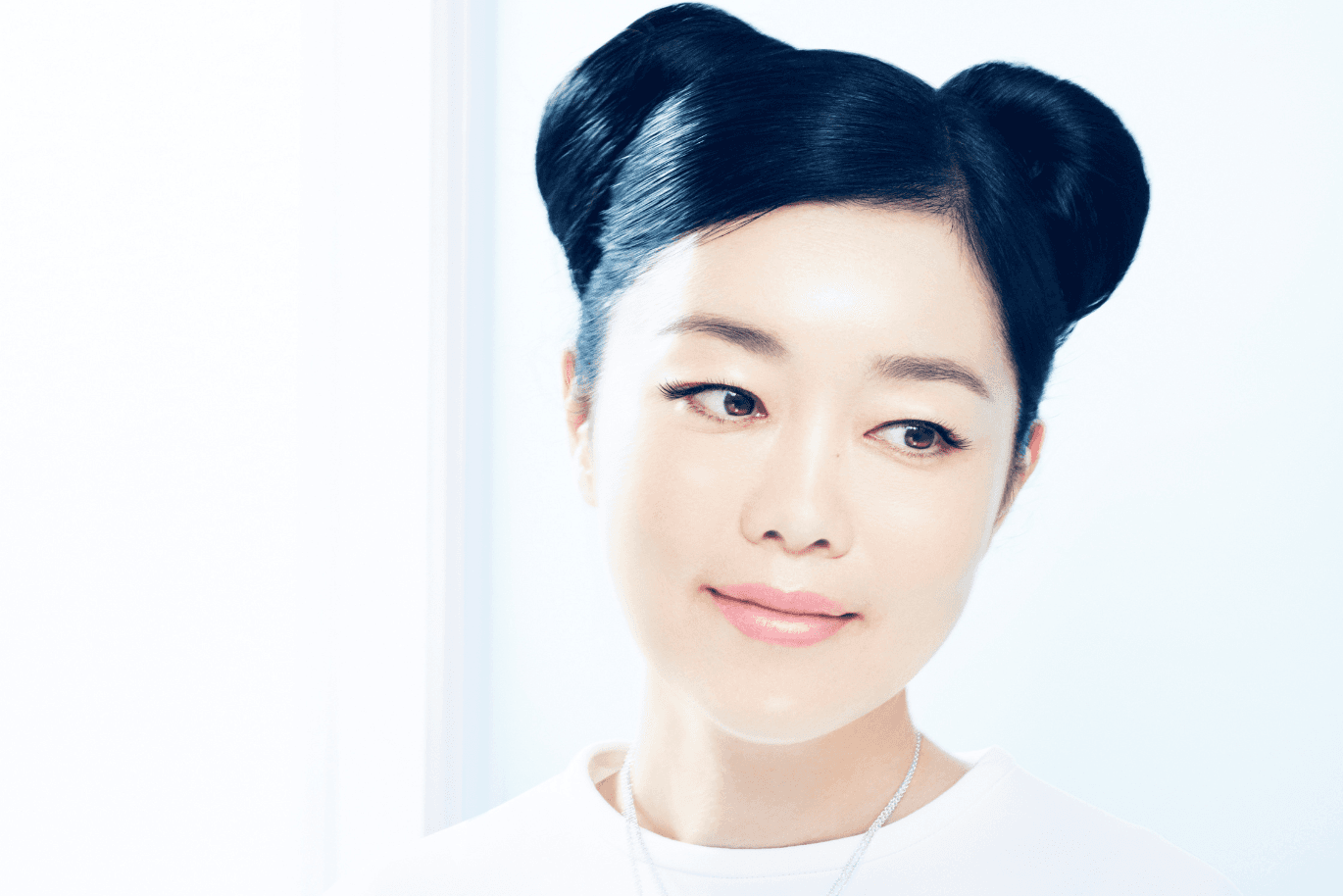
A shimmering white, animated background dances behind her. Rays of light fill the digital space around Mariko Mori, who is clothed, as always, entirely in white. Her hair is styled in a tidy updo and she radiates a deep, almost imperturbable calm. During the video call with Tokyo, she chooses her words with care. We speak to each other on March 11, a date that has inscribed itself into the collective memory of Japan. While the day’s reporting revolves around the catastrophic tsunami that engulfed the country 15 years ago, Mori’s presence acts as a quiet antithesis to the darkness surrounding that event.
It is this conscious orientation toward light that defines Mariko Mori’s entire artistic oeuvre. In her work, she searches for answers to one of humanity’s biggest questions: What connects all of us inside? Her art is an attempt to make perceptible the invisible threads that connect the human spirit with nature and the infinity of the cosmos. If you look at her body of work over the last three decades, you can see that she is steadily refining her vision.
Born in Tokyo in 1967, Mori began her career in the 1990s doing performance art, for which she dressed up as a cyborg or a futuristic manga goddess. Over time, her aesthetic shifted and started taking on an almost meditative clarity. Today, she combines quantum and astrophysics with ancient philosophies – a journey that ultimately returns us to our origins. To the light, of which we are all made.
Your artistic style has changed over the decades. How would you describe the essence of your work?
My work explores the nature of consciousness, the origins of life and humanity, and our relationship to the cosmos. I began asking questions about the human spirit when I was in my early twenties – whether it was eternal or rather disappeared after death. I search for answers in philosophy, in spirituality and in science. In my work, I establish connections between mythologies, technologies and contemporary culture so as to create a space where viewers can contemplate and feel a sense of oneness with the universe.
How would you interpret the word “flow” in this context?
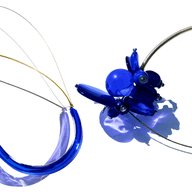
To me, flow is the continuous movement that connects all forms of existence – from primary particles to the rhythms of nature. It represents the energy of everything. In my series of works entitled “Cyclic” and “Ekpyrotic String,” I have tried to visualize that flow as endless circles, almost like an endless universe.
You talk about eternity. Is your art also a continuous process that never arrives at a definitive answer?
It is a never-ending challenge. Like opening one door and finding that it always immediately leads to the next. I haven’t yet found a final answer, but I think I have come to a point where I can sense what the essence of life really is. My work is a vehicle through which to share those discoveries.
Do you find it easier to express yourself through art than with words?
Yes, because language has its limitations. Some of my work appeals to all six senses. If a work is successful, it reaches a viewer’s deeper consciousness and creates a true connection. We have a surface consciousness and many levels beneath it, invisible levels that we are always connected to. I hope that my work can access this deeper consciousness.
Do you perform daily rituals in order to reach this state of deep connection with yourself?
I like to begin my day by taking a walk around a shrine near my house. It’s a walk of about an hour and a half through the park. I also practice a clarifying meditation in order to focus. It helps me a lot. But mostly, I try to travel at least once a month to Miyako island to contemplate and be part of nature. Spending time there is very precious to me.
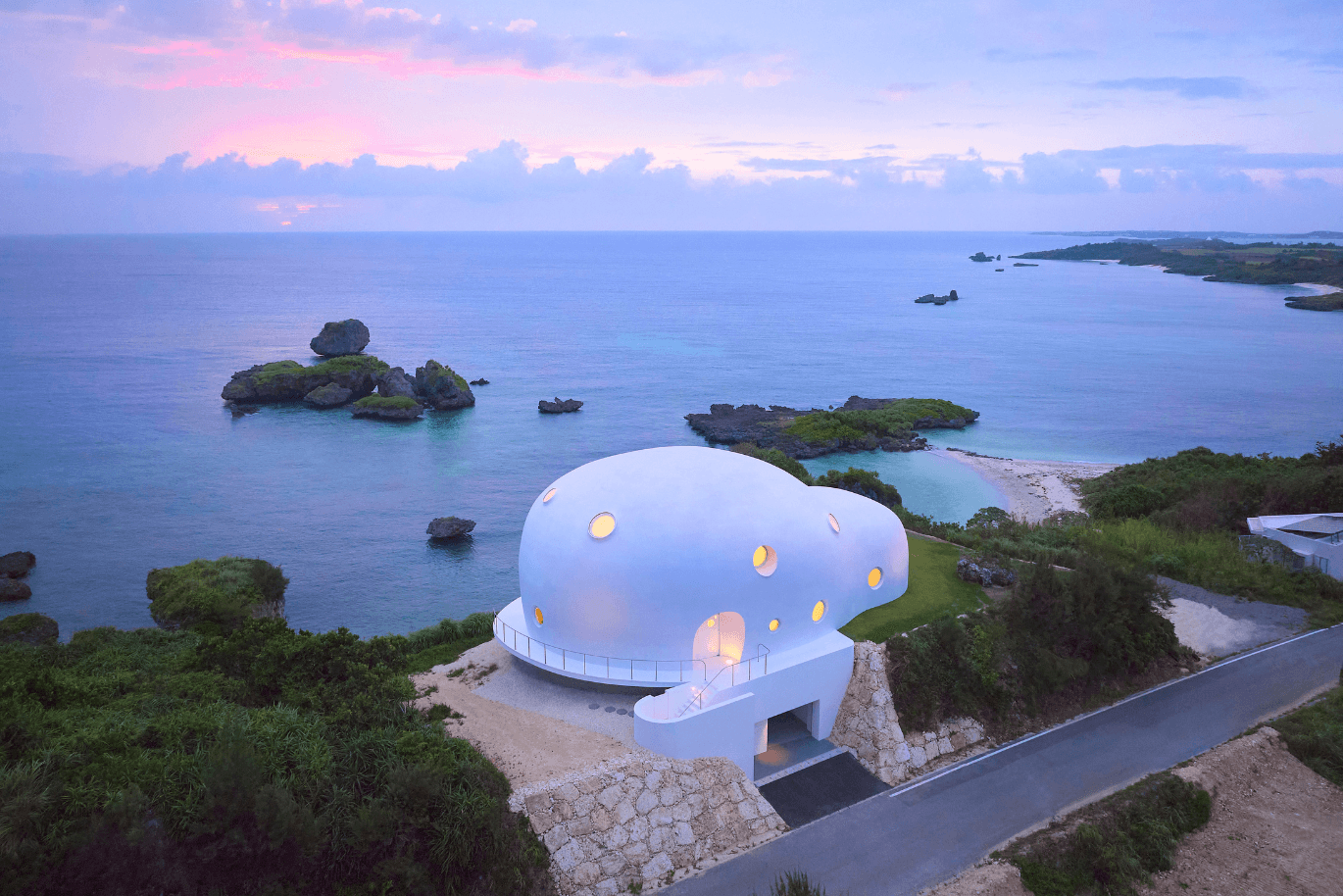
That’s where you built your house "Yuputira" according to organic designs. What kind of atmosphere were you intending to create?
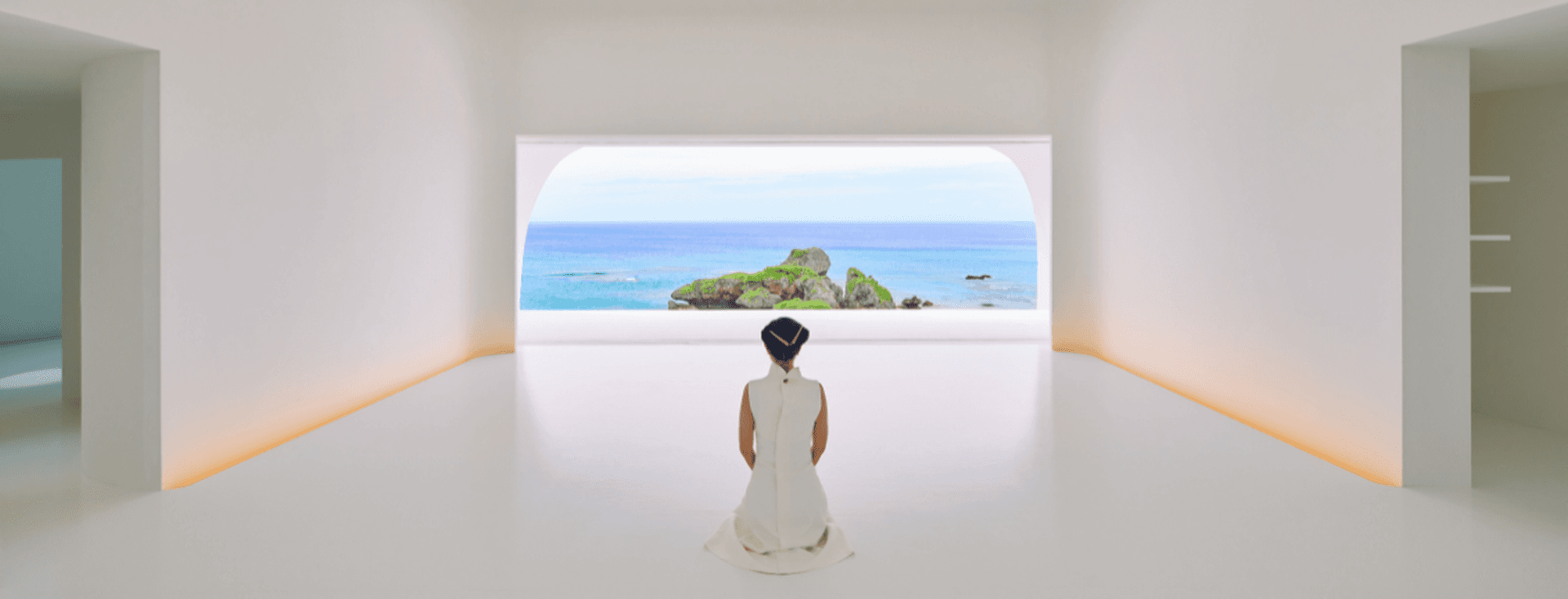
I wanted it to feel like part of the landscape. Its form reflects its natural environment and tries to embrace everything it has to offer. There’s a very strong north wind, for instance, and the structure of the house deflects the force of the wind. The window openings were a conscious decision as well. The large one faces the sunset, while the smaller one looks toward the sunrise. At the same time, I was thinking about prehistoric dwellings and what it was like to live in a cave – one of the first human homes. A cave is warm and protective. This is the feeling that I wanted the house to reflect.
I like to think that the space in our minds is infinite. With Yuputira, I wanted to create a place thatreflects this unlimited sense of vastness.
Isn’t it part of human nature for a child to feel just as safe in its mother’s womb as in a cave?
Yes, it’s very much like a cocoon. "Yuputira" has no corners. I wanted to create a place with an unlimited sense of vastness. I like to think of the space in our minds as unlimited. In my house, I feel very protected from storms and the harshness of nature.
Many of your physical projects take years to complete. How long does it take you to come up with your ideas?
It depends. I worked on the designs for "Yuputira" for five years. It was my first architectural project, so it required a lot of engineering research. I also had to learn that time isn’t something you can force. Sometimes I have to wait until a particular technology is available, or I have to develop it with a team of engineers. I just follow the process – like a baby that needs time to be delivered, time to be born.
How do you choose the right technology for your projects? Which comes first, the technology or your idea?
Always the idea. Then I search for the right technology. I was very lucky to meet great systems engineers early in my career. Collaborating with the late Nobel Prize winner Masatoshi Koshiba was a particular challenge. It was hard to convince him to participate in my project, but I didn’t give up. Scientists are very open to new ideas. It was a wonderful opportunity to learn more about primal particles and physics. The process of making is really a gift that helps me find answers to the questions I carry inside.
In “Tom Na H-iu,” technology and installation form a visible unit. What was your intention?
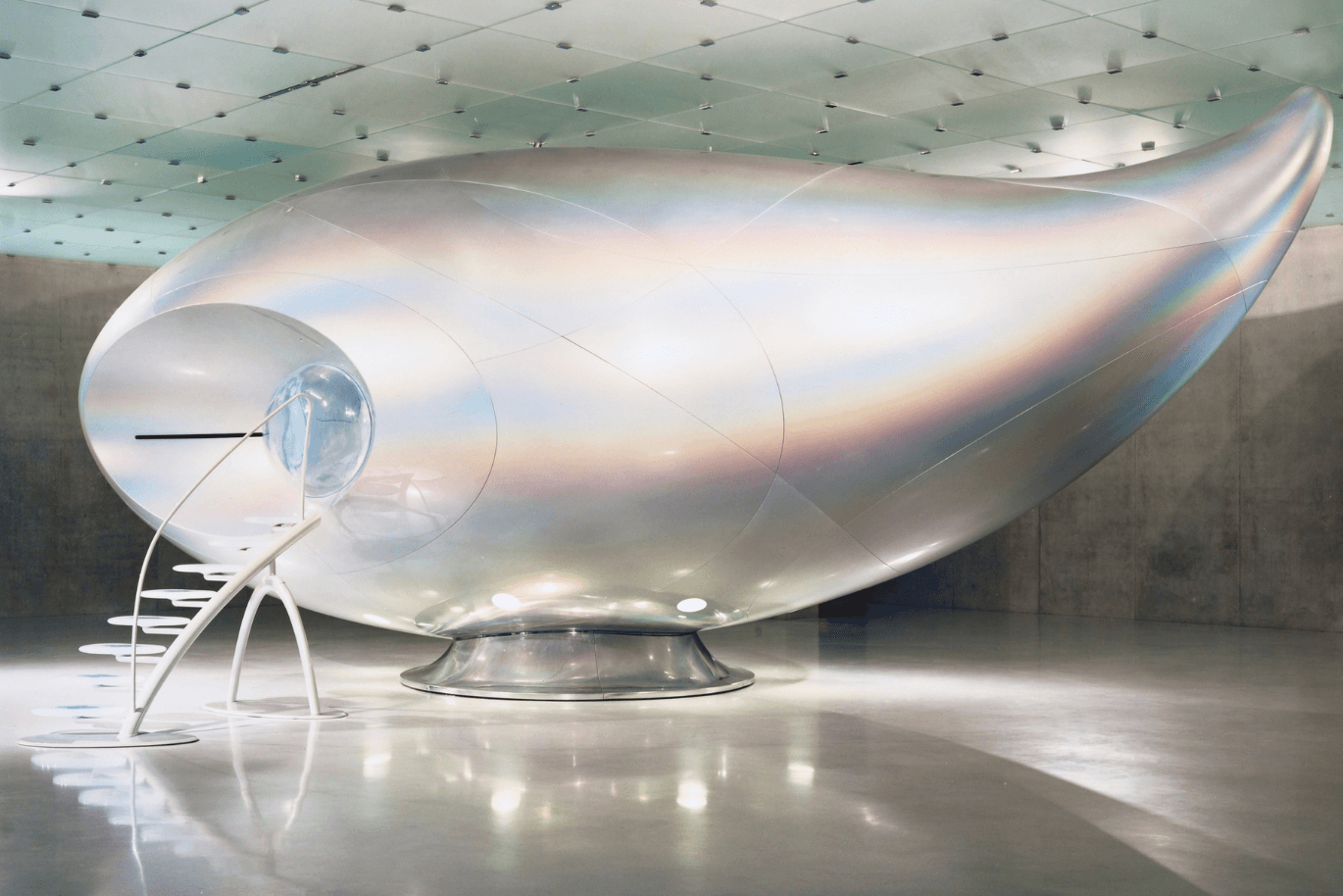
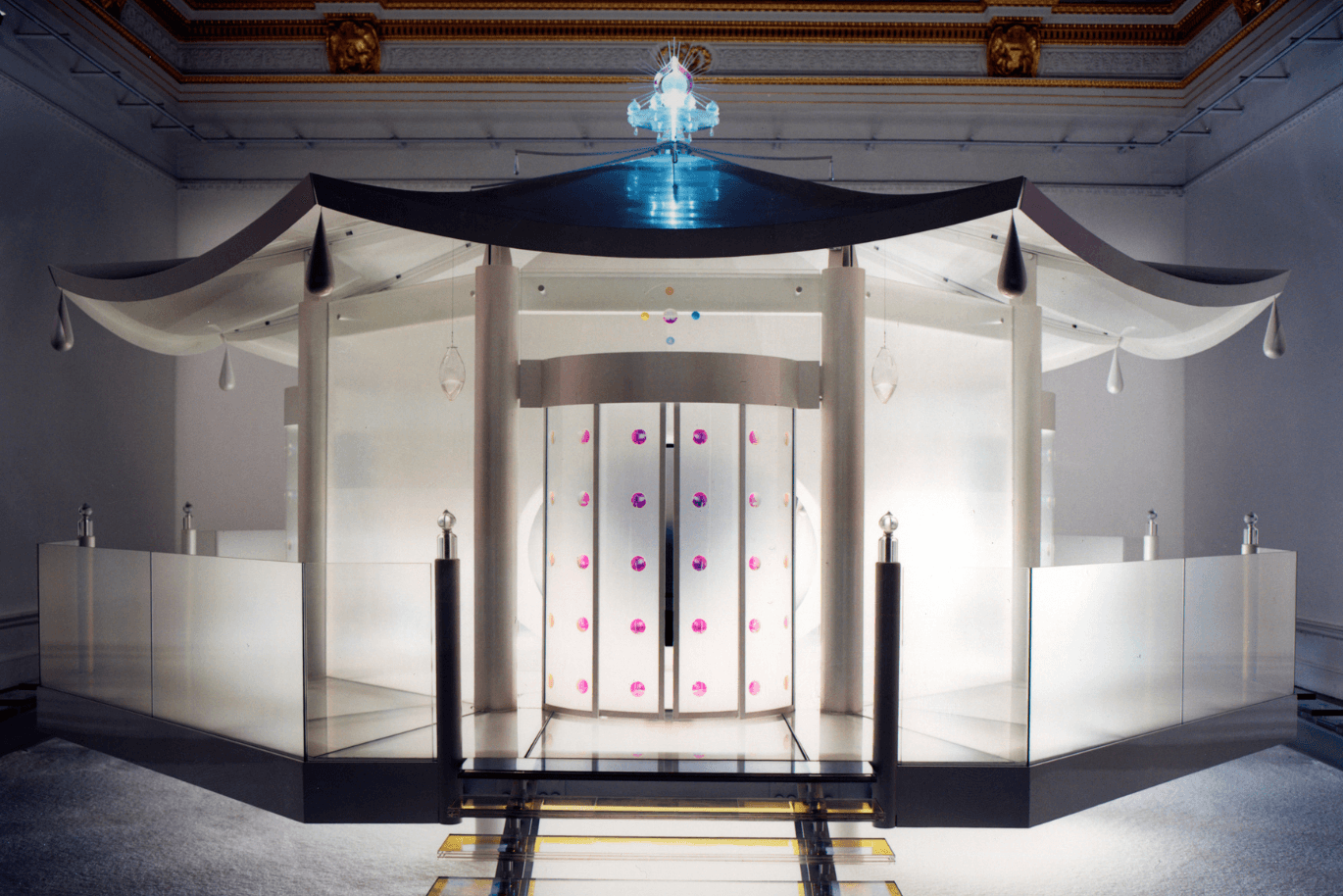
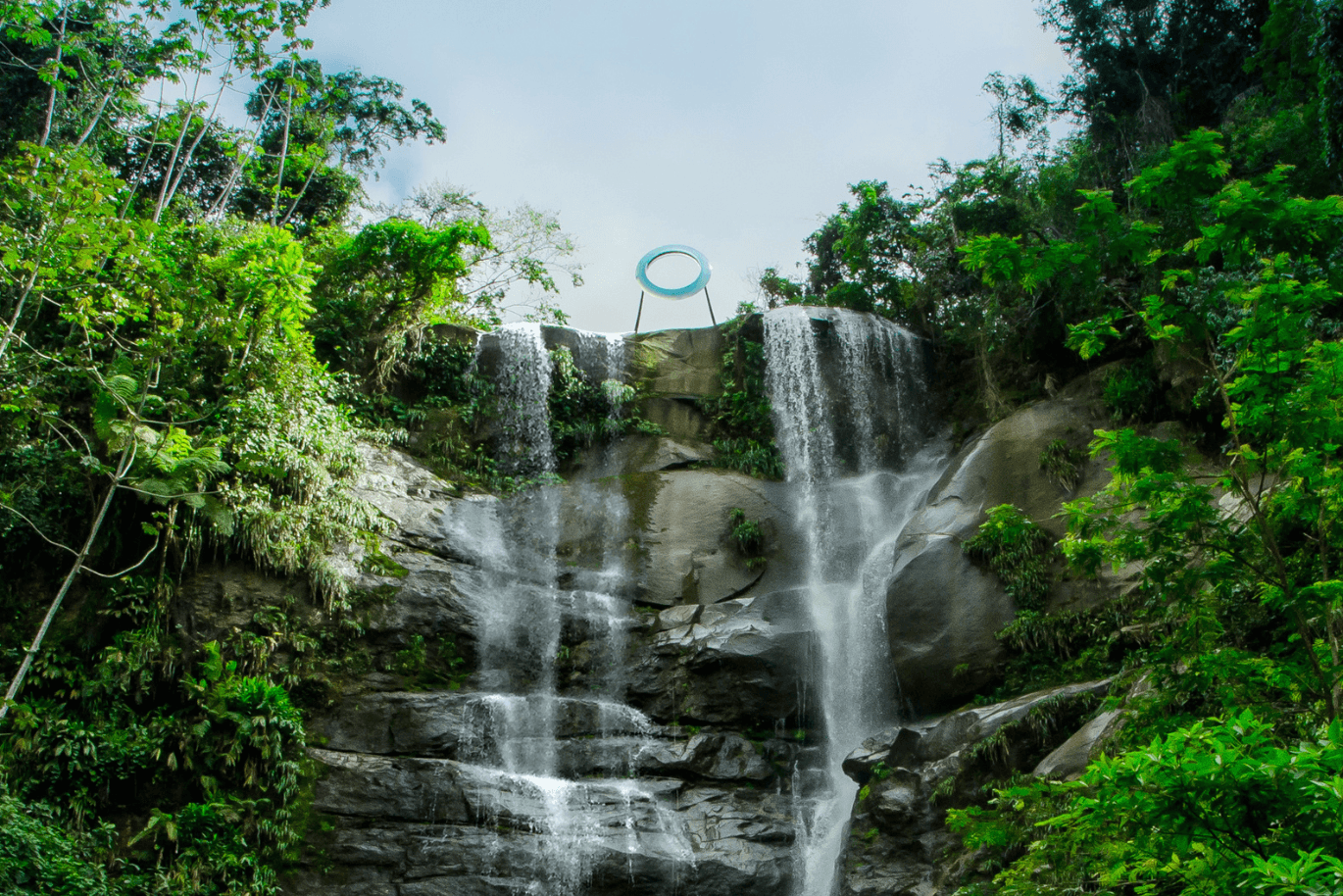
“Tom Na H-iu” is the ancient Celtic word for afterlife. I visited many prehistoric sites in England, Scotland and Japan, and the universal theme at all of them was the rebirth of nature. I wanted to visualize this idea by making an interactive sculpture that was connected to the neutrino detector Super-Kamiokande. When a star in our galaxy explodes – an event called a supernova – many neutrinos pass the Earth. The sculpture uses light to display such events in real time. I wanted to remind viewers that the death of a star may signal the end of the star, but that it’s also a beginning of life, because our lives depend on the atoms that a star releases when it explodes. We are part of a continuous cycle of rebirth, just like the Buddhist philosophy of reincarnation.
Light and the color white are key elements of your work. Is it true that you only ever wear white?
Yes, I’ve been wearing white since 1998. Bright white in the summer and off-white in the winter. For me, white is the color that comes closest to light. I had a spiritual experience that involved a light so bright you couldn’t look at it directly – like blinding sunlight. But the light that I saw was full of deep love and compassion, a million times stronger than anything I had ever experienced before. So, to remind myself of that love and that experience, I always wear white.
When a child is born, the first thing it sees is the light of the world. People who have near-death experiences also talk about seeing a bright light. Do you regard light as being part of our human life cycle?
Yes. For all living beings, the force of energy is an inner light. If you focus too strongly on the material world, you don’t experience that light. But when you surround yourself with nature, you start to feel the energy and are reminded of its purity.
The Mori Art Museum in Japan is showcasing your work in the fall. What would you like to share with visitors to the museum?
It’s a retrospective of my work over the last 30 years, so viewers can follow the journey I took. I learned something at every step, and I hope my viewers can share this experience. The answers only come if you pass through the light yourself – it’s like collecting seeds. If you follow my path through the exhibition, you will hopefully be able to recognize my vision.
You may also be interested in



GG Magazine exclusive content
GG is an independent magazine at the highest level. Exploring the world of architecture, lifestyle, design, fashion, yachting, luxury living and travel. We seek out the most exciting topics and personalities for you and invite you to get to know them from a fresh new angle. In GG, you will meet successful architects, interesting designers and exciting artists who are the talk of the town from London to New York and Berlin to Hong Kong.