- 3 min read
Living spaces that redefine the way we live
Trends: Autumn–Winter 2026
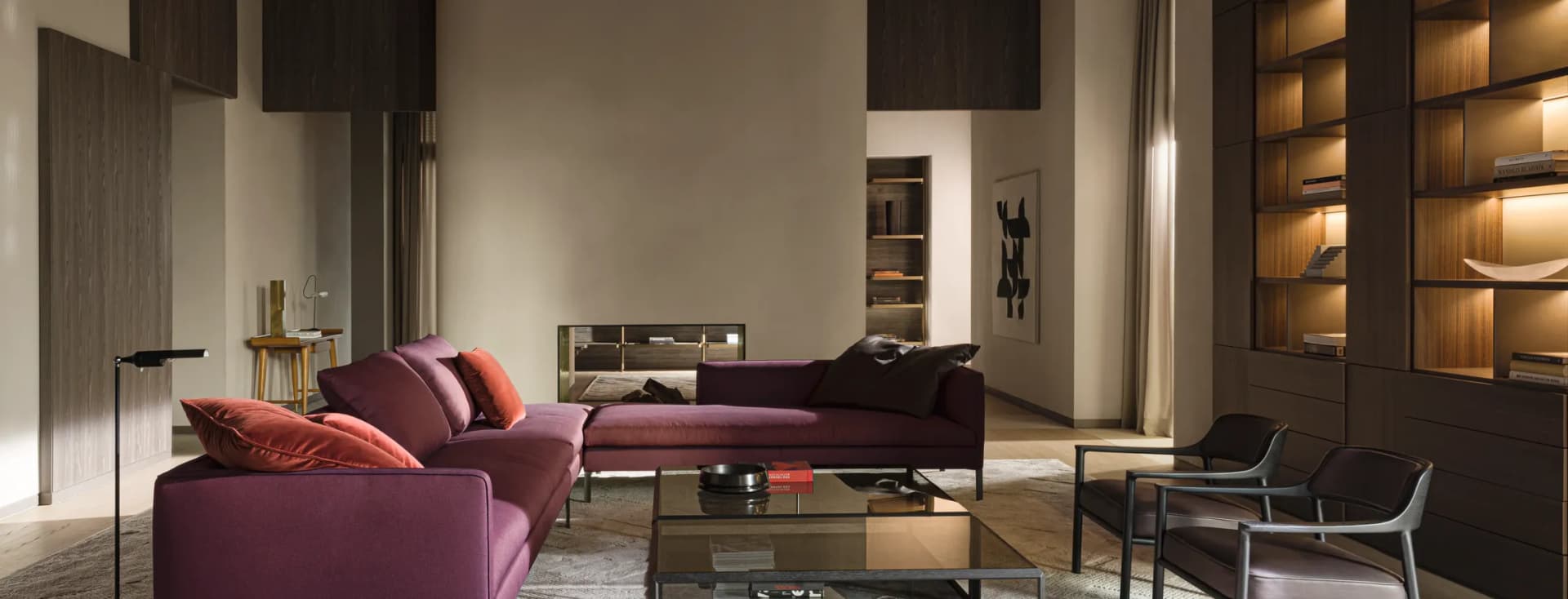
A New Way of Entertaining
As the days grow shorter, our attention naturally turns indoors. But the living spaces of autumn-winter 2026 are no longer static rooms designed around a single purpose. The living room, library and dining room now come together to form a freer, more personal interior landscape.
Furniture, materials and lighting create new possibilities for welcoming guests, spending time together or simply slowing down at home. This evolution reflects a subtle shift in our relationship with our living environment. After several years dominated by large, open spaces and pared-back compositions, interiors are once again embracing a sense of intimacy. Not by closing themselves off, but by accommodating different uses and changing moods. The same space can provide the setting for a conversation, a place to read or, a few hours later, the backdrop for dinner with family or friends.
The Sofa as an Architectural Element
The sofa plays a leading role in this transformation. For a long time, it was positioned against a wall or oriented towards a screen. Today, it has become a central element of interior architecture.
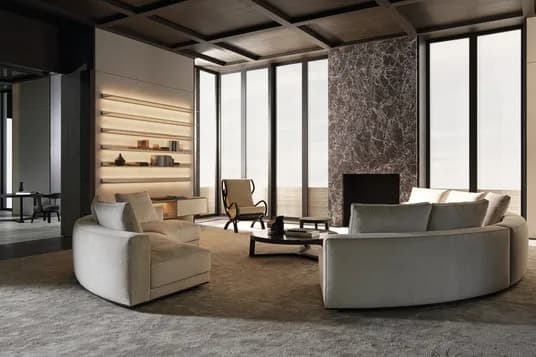
Compositions are freer, lower and often modular. They extend into the room or create islands that naturally structure the space. This modularity reflects a more flexible way of living.
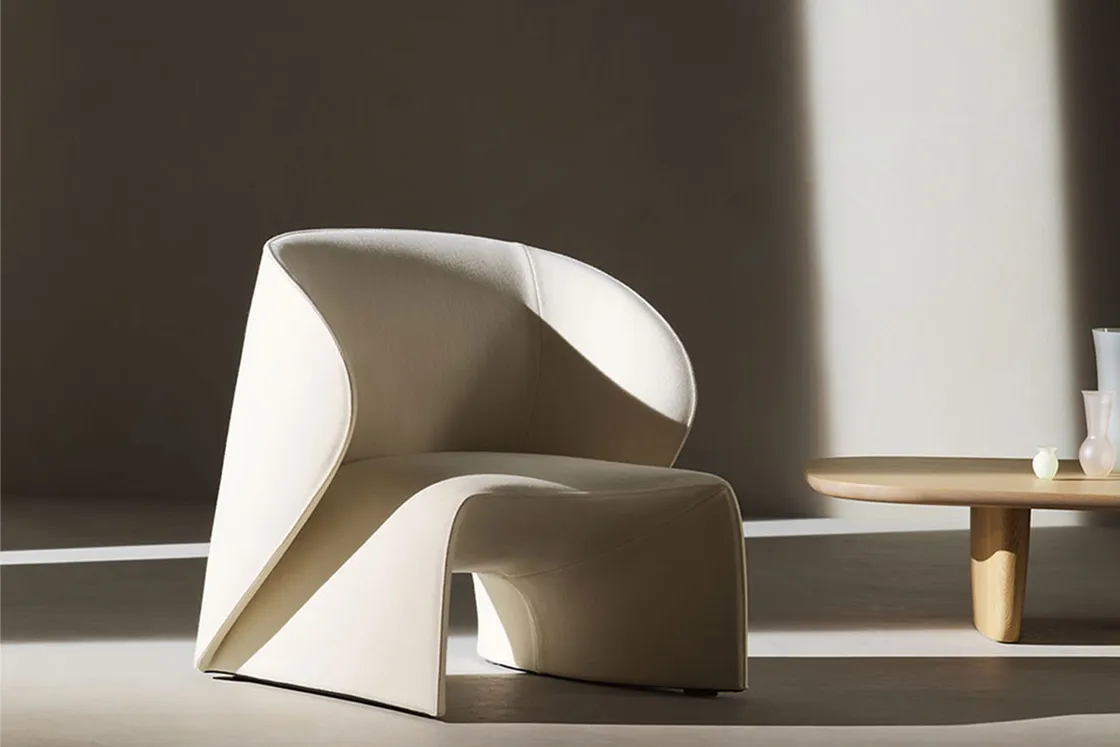
Chaise longues, corner elements, ottomans and freestanding seats make it possible to adapt the configuration to the moment. Forms are becoming fuller, more enveloping and sometimes almost organic. Comfort remains essential, but certain designs now take on a sculptural presence that contributes fully to the identity of the space.
The Return of Individual Pieces
The armchair is also taking centre stage. More autonomous than the sofa, it introduces a different material, an unexpected colour or a distinctive signature into the interior. An iconic 20th-century piece can sit alongside a contemporary creation; a chaise longue placed near a bookcase or window can be enough to create a new space within the room. Furniture is combined with greater freedom, deliberately avoiding the impression of a perfectly coordinated set.
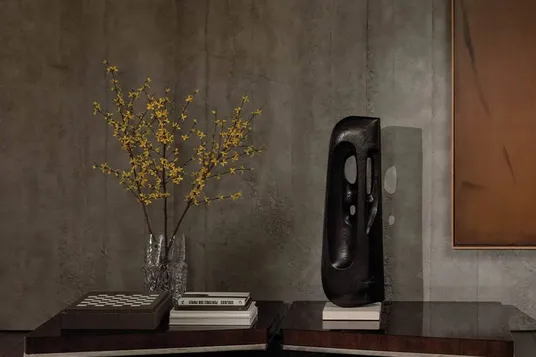
The same approach can be seen in the use of coffee and side tables. A single large table is giving way to several elements in different shapes and heights. Stone, wood, glass, metal and lacquer create contrasts and come together in almost sculptural compositions. Rather than dominating the room, these pieces punctuate it, reinforcing the new flexibility of the interior.
A Dialogue Between Materials
Materials also play an important role in this search for balance. Wood takes on deeper tones, from walnut to darker brown finishes. Veined natural stone, tactile textiles and polished, brushed or patinated metals introduce variation. The aim is no longer uniformity, but a dialogue between soft and mineral surfaces, between matt and glossy finishes.
&w=1920&q=75)
A Warmer Colour Palette
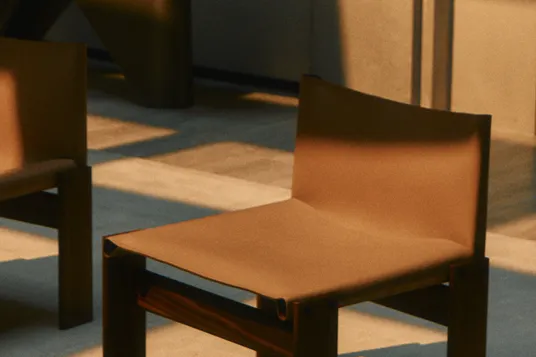
Colour plays an equally subtle role. Neutral tones remain the foundation, but compositions are becoming warmer. Ivory, sand and stone tones meet deep browns, tobacco and caramel shades, punctuated by accents of deep burgundy or olive green. A chair, sofa, rug or distinctive object can turn colour into an anchor point, bringing rhythm and depth to the overall composition.
Light as a Mood Setter
Light has always been an essential component of any interior. As winter approaches, lighting becomes warmer, more focused and more intimate. Floor lamps, table lamps, wall lights and pendants are no longer intended simply to illuminate a room evenly, but to create atmosphere. Indirect light reveals the texture of a wall, a floor lamp defines a reading area and a low pendant brings people closer together around a table.
Lighting Becomes Sculptural
Lighting fixtures are also taking on a new role within the composition. Some almost transcend their original function as sources of light, becoming sculptural objects in their own right. They highlight a piece of furniture, draw attention to a work of art or create a sense of structure.
Once night falls, lighting transforms our perception of volumes and allows the atmosphere of a space to shift subtly.
Composing Rather Than Coordinating
More broadly, the interiors of 2026 are moving away from perfectly coordinated schemes. Furniture is increasingly selected as one might build a collection: gradually, allowing different periods, materials and designers to enter into dialogue. A contemporary creation can meet a historic piece of furniture, a work of art or a handcrafted object.
This carefully curated diversity gives interiors greater depth and a more personal, rich and timeless character.
Design is no longer concerned solely with novelty: increasing value is placed on objects that can stand the test of time, adapt and evolve with their surroundings.
Timelessness as a New Form of Luxury
This approach results in living spaces that are less demonstrative and more personal.
Here, luxury is expressed through considered choices rather than accumulation. A sofa, armchair, table, light or work of art enters into dialogue with the architecture, creating an interior where comfort, refinement and personality take centre stage, with attention to every detail and to an enduring aesthetic quality that will remain relevant today and in the future.
Contact
Contact your personal advisor


Engel & Völkers Belgium
Chaussée de Waterloo 1173
1180 Uccle, Brussels (VAT: BE 1004.032.746)
Tel: +32 2 880 40 21