A Matter of Taste
- 3 min.
- 19.9.2026
Issue
04/26
Location
Umbria, Italy
Photography
Reschio
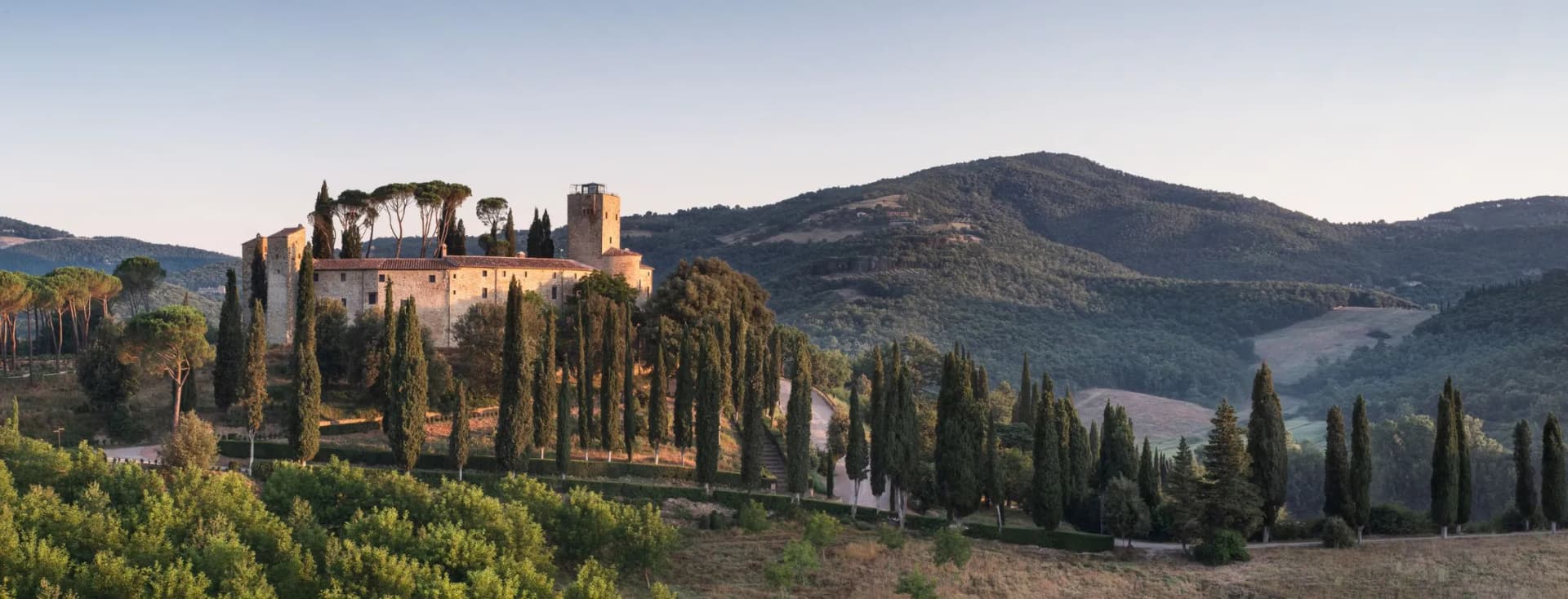
The Castello di Reschio is a magical retreat and living work of art on the border between Umbria and Tuscany. This estate, which had crumbled into disrepair, was brought back to life by the Bolza family’s boundless passion and their deep respect for architecture, design and nature.
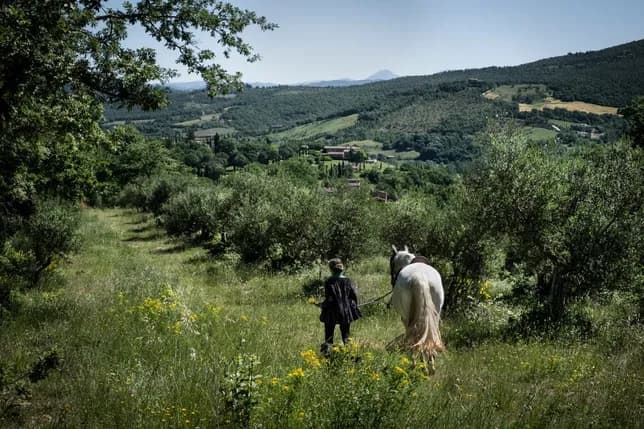
Complete tranquility abounds. Before me lies a green expanse with rolling hills and the occasional cottage in the distance. With every step, the gravel path crunches satisfyingly beneath my sandals. Apart from this, only the gentle chirping of a bird and murmuring of the wind in the pine trees breaks the silence. I am embraced by a sense of serenity and the feeling of having arrived, despite having first set foot on the grounds of the Hotel Reschio mere minutes ago after a two-hour journey that took me from Florence and past Lake Trasimeno. This stretch of land, which perches on the historic border between Umbria and Tuscany, was once fought-over territory until Reschio was placed under the emperor’s protection and transformed into a self-sufficient island of peace. To this day, it remains a protected world of its own
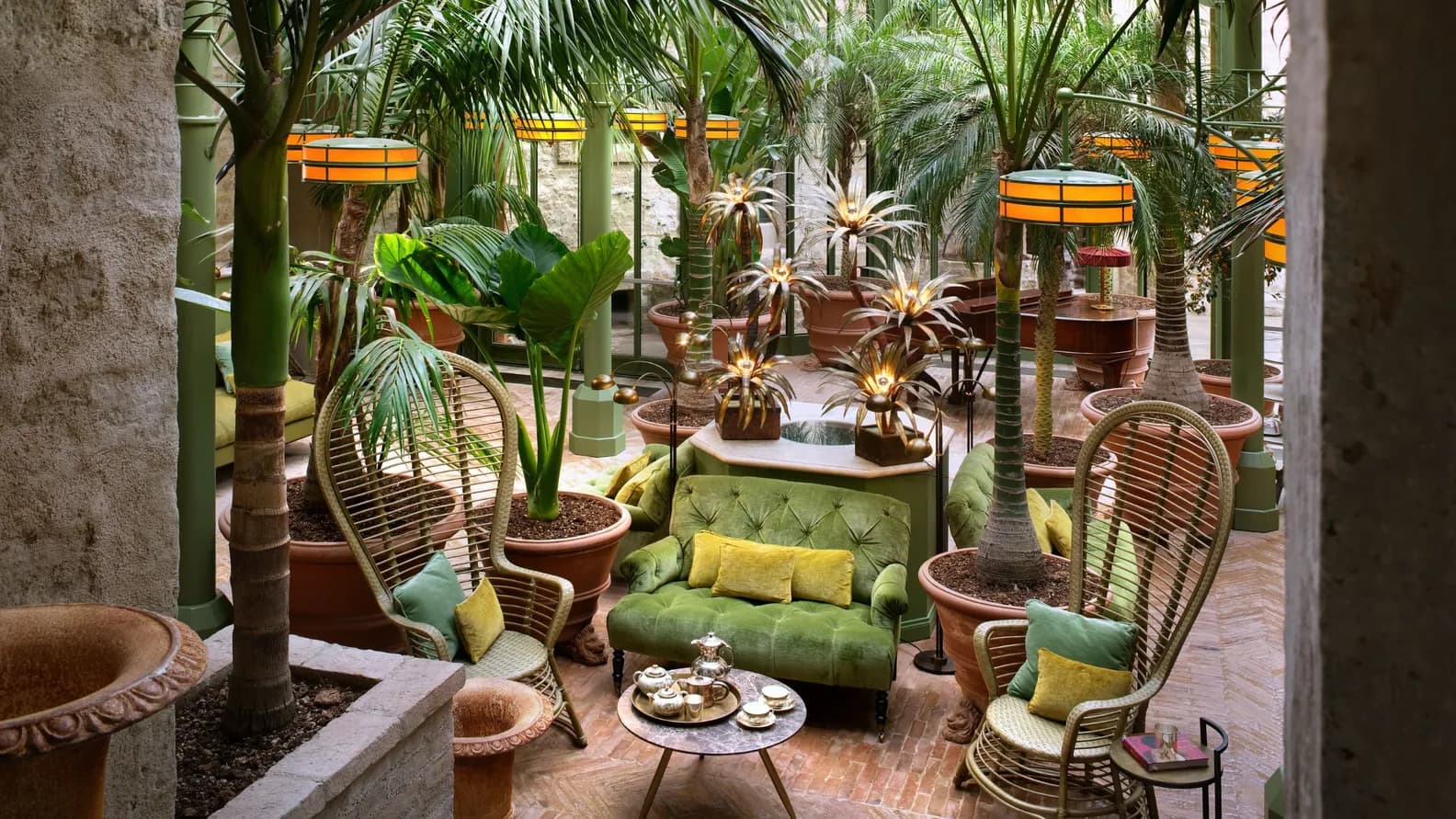
I step into the Palm Court, the architectural centerpiece of the Castello, and am warmly welcomed. The green metal-and-glass structure exudes the spirit of the Belle Époque and its palm trees, wicker armchairs and inviting velvet sofas were inspired by elegant historic sunrooms. Concierge Sebastiano points out the Steinway grand piano, which was built before the Titanic. In keeping with the castle’s ancient stone walls, I almost expect to be handed a heavy, wrought-iron key, but instead receive a keycard made of wood printed with an antique portrait. This turns out to be something of a pattern, and I start spotting portraits everywhere on the walls. They are one of the many collecting passions of Count Benedikt Bolza and his wife Nencia, who have amassed countless paintings, sourced from antique and flea markets, which now add character and soul to the rooms.
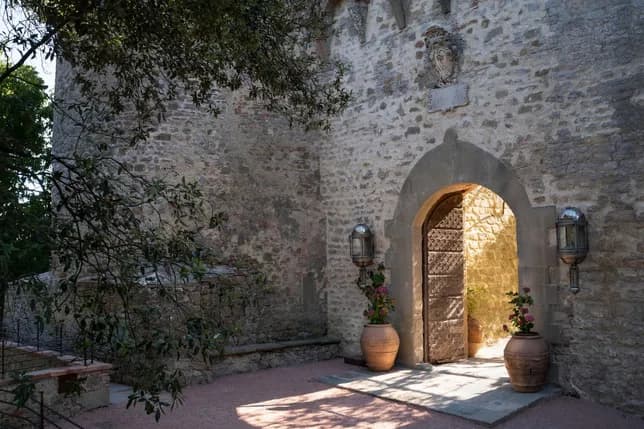
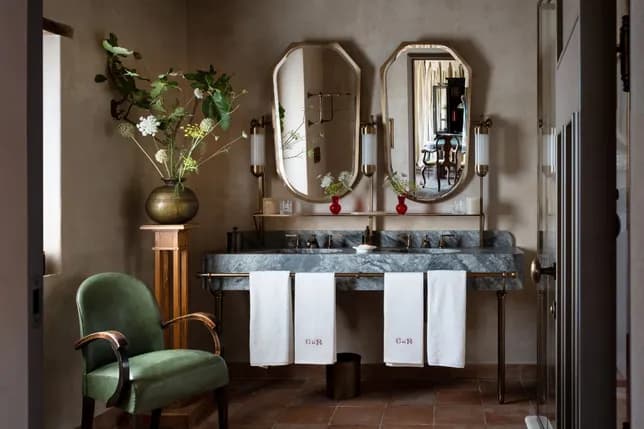
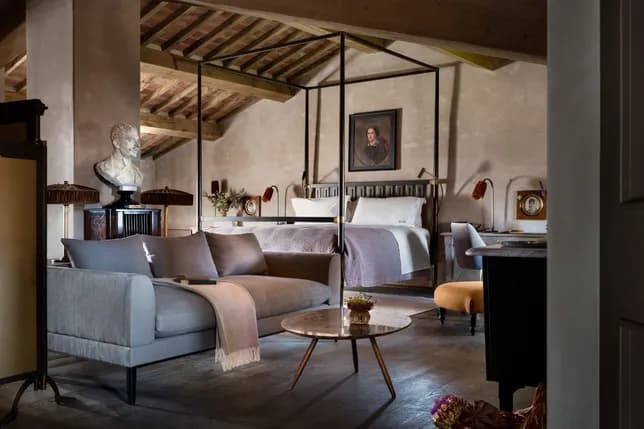
If I needed any further proof that this is no ordinary hotel, it is provided the moment I enter my spacious suite in the annex, tucked behind the former church of San Michele. There’s no sign of the typical hotel bedroom design; instead, the suite positively glows with personality. Warm colors and dark wood dominate the interior, and I feel like a private guest in the home of a distinguished collector. The rooms flow elegantly into one another and exploring them feels almost like taking a tour of a stately home. A delectable chocolate cake awaits on the sideboard. Delicately dusted with icing sugar, it bears – just like the cushions on the bed – the initials CdR. One might assume they stand for Castello di Reschio. In fact, however, these are the initials of the first Count of Reschio, a detail that further underscores the nostalgic charm.
If Count Bolza cannot find an object that matches his vision, he designs it himself – which is how the B.B. for Reschio range came into being. The collection includes the metal bed frame and the design award-worthy, chrome-plated coffee machine. The windows open onto two worlds: To the east, the morning sun creeps through the mist of the Umbrian hills; to the west, it sinks behind the border to Tuscany, bathing the landscape in a golden light.
In the afternoon, I take a tour and discover some of the secrets of this vast 1,500-hectare property, which stretches across unspoilt hills, wild forests and seven artificial lakes. The origins of the fortress date back to the year 1050. When the Bolza family purchased the overgrown estate in the mid-1980s, almost all of the fifty historic farmhouses were in ruins, and not a single one still had a roof. Over the decades, the buildings have been carefully restored by the family and, for the most part, sold to private owners. All work takes place under the watchful supervision of Count Benedikt Bolza, who, as an architect and visionary, ensures that the spirit of the past remains alive in even the smallest details.
It was only in 2021, after years of meticulous work, that the Castello opened as a boutique hotel with 36 suites. As I wander through its hidden nooks and narrow corridors, I can sense the deeply personal family history radiating from every stone. It is a place where fate has played its part, too: In the 1990s, Donna Nencia came to Reschio as a restorer to work on the historic frescoes. She met Benedikt Bolza, they fell in love, and Nencia stayed. Today, her creativity and love of nature are an incredible asset to the estate. The staff say she knows every plant on the grounds, from the huge rosemary bushes to the numerous fig and lemon trees.
The next morning in the Tabaccaia, I realize just how deep the creative spirit is rooted in the family. Count Bolza transformed this 1940s tobacco factory into a design studio, with brick, concrete and glass details lending an industrial feel. Antiques, sculptures and gilded mirrors are piled high between the desks. Bolza is a perfectionist who leaves nothing to chance. For him, the renovation of every single house is a deeply emotional act: “It’s like a child being born,” he says, his eyes lighting up. Two of his daughters join us around the table during our conversation. They carry on the family’s creative legacy with Reschio Collections, a brand name that sells items linked to the estate’s traditions and crafted by local artisans – from olive oil and leather pouches to signature lamps.
&w=1920&q=75)
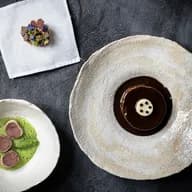
Later, I stroll down to the Ristorante alle Scuderie, past the Teatro Equestre, the heart of the legendary horse-breeding operation founded by the present owner’s grandfather, Count Antonio Bolza. In the indoor ring, guests can watch the training sessions led by master Antonello Radicchi and his wife Francesca. His gentle method requires no tack whatsoever, and the Andalusians, whose coats turn snow-white over the years, move in perfect harmony. The horses are not entered into competitions, as the rigid discipline and coercion that that would require goes against the estate’s philosophy of freedom. Near the stables, I take a seat in the restaurant and enjoy an excellent pasta cacio e pepe and a scoop of pistachio ice cream.
Before the day draws to a close, I head to the Bathhouse spa, situated in the former wine cellars, directly beneath the imposing stone walls of the castello. Thanks to the ingenious booking system, I feel I have the place entirely to myself. As I descend the steps, I lose all sense of time. The thick walls block out the daylight, leaving only the candles flickering around the sides of the Roman bath. I swim through a narrow passageway into the foundations of the great tower, where a waterfall cascades down from a height of several meters. After the sauna, I float into the monumental fireplace room for a massage and give in to a state of pure, timeless bliss.
When the driver comes to take me back to Florence a few days later, I take one last look at the cypress trees, which soar into the sky like bold brush strokes. As we pull away, I leave with a deep appreciation of the potential that can be unleashed by a family’s unconditional devotion to a place – and vow to return to Reschio and its living legacy.
You may also be interested in

&w=1920&q=75)
GG Magazine exclusive content
GG is an independent magazine at the highest level. Exploring the world of architecture, lifestyle, design, fashion, yachting, luxury living and travel. We seek out the most exciting topics and personalities for you and invite you to get to know them from a fresh new angle. In GG, you will meet successful architects, interesting designers and exciting artists who are the talk of the town from London to New York and Berlin to Hong Kong.