Issue
04/26
Location
England
Photography
Moeez Ali
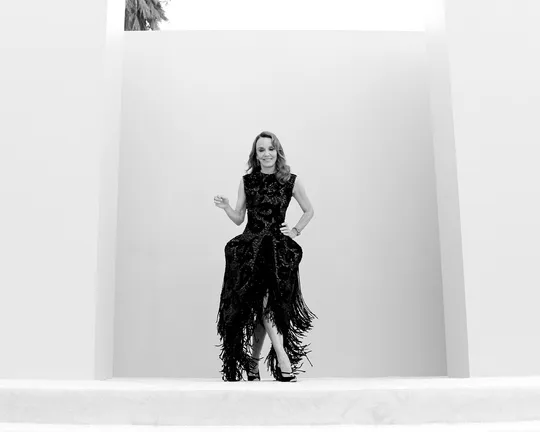
As one of the legendary supermodels of the 1990s, Claudia Schiffer was the face of an era. Beauty has never left her side; it has always been a faithful companion. The former model is now a curator in her own right. With carefully chosen projects that highlight her taste and reflect a deep inner creativity, Karl Lagerfeld’s former muse continues to demonstrate her keen sense of aesthetics and design.
Tall. Slim. Blonde. Bright eyes. A radiant smile. For many years, she graced the world’s runways, radiating angelic poise. So many stories could be told about Claudia Schiffer, but this one isn’t about her looks – even though they have undoubtedly played a decisive role in what the German icon has achieved to this day and what she stands for.
Claudia Schiffer was the ultimate embodiment of the great supermodel era of the 1990s. She lived through the absolute pinnacle of the fashion world – an intense time when loud pop culture set the tone and supermodels like Cindy Crawford, Naomi Campbell and Kate Moss were celebrated as stars. Karl Lagerfeld chose Claudia Schiffer as his muse and the face of Chanel. Her look defined an entire fashion decade and has made her a mainstay on magazine covers to this day.
This picture-perfect career wasn’t achieved solely through luck and opportunity. Schiffer never played into the persistent cliché of the clueless model. From the outset, she brought with her a strong entrepreneurial spirit and deep creative drive. Originally, she had planned to follow in her father’s footsteps and study law, but by chance was discovered by a model scout at a Düsseldorf nightclub, catapulting her onto a new trajectory, one that could not have been more successful.
Today, she stays largely out of the spotlight yet remains a muse, recently starring in campaigns for Versace, Balenciaga, Tommy Hilfiger and Donna Karan – with more to come. Some suspect a coolly calculated strategy behind this, but perhaps the secret to her continued success lies in her infallible instinct and deep faith that what comes from the heart is bound to succeed.
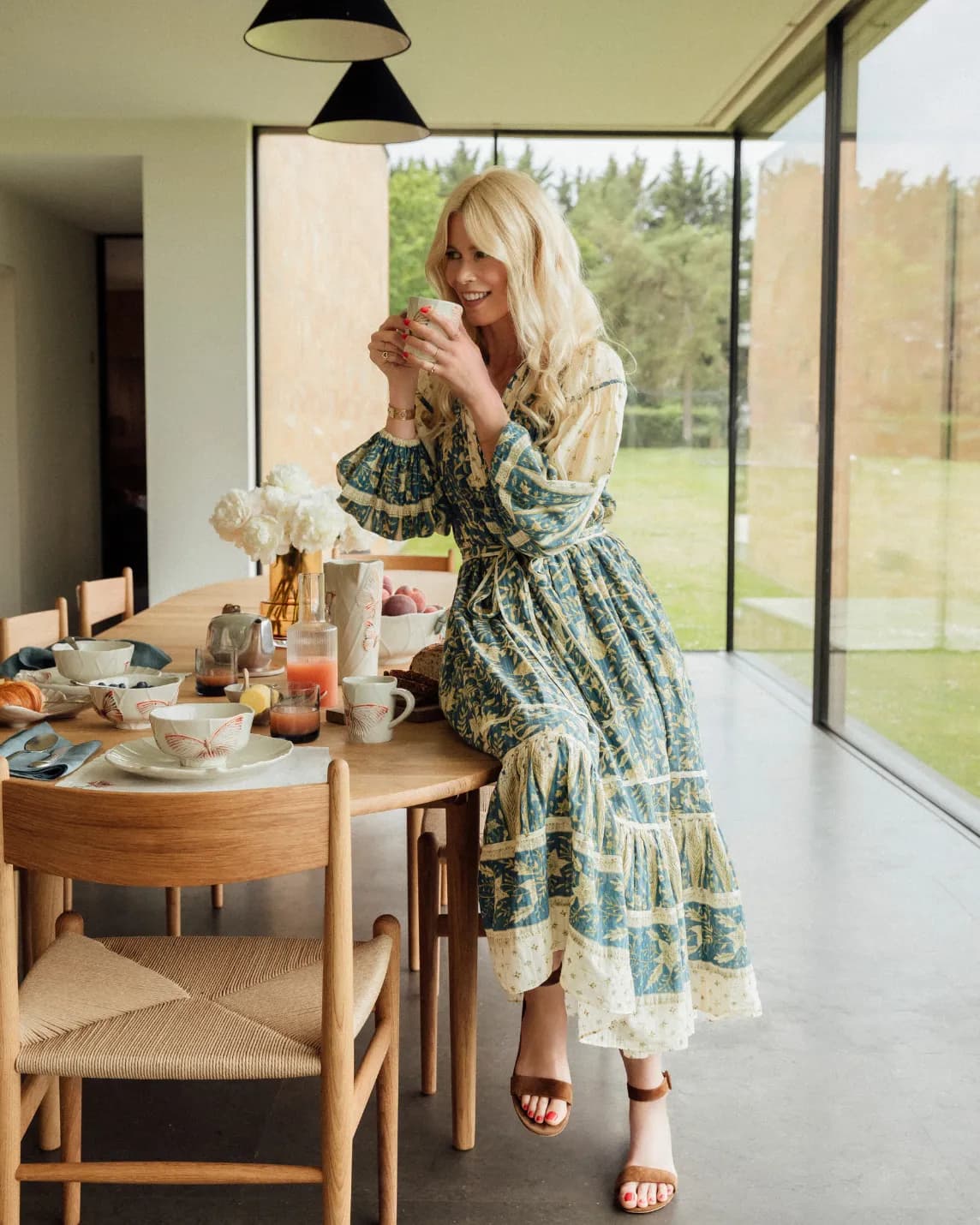
Ms. Schiffer, financial and cultural analysts often describe your career as a masterclass in “quiet accumulation” and strategic retreat. You chose the tranquility of the English countryside to let your brand and capital compound, away from constant public visibility. Was this a natural personal instinct, or a conscious business decision to protect your artistic autonomy?
Claudia Schiffer: It is a reflection of who I am. Everything I do is genuine and natural.
Looking back at your transition from ultimate supermodel muse to curator, producer, and designer, how has your creative fire evolved?
I’m passionate about many different things; besides my family life, I also love decorating my home – hence the ceramic, glass and porcelain collections. I love movies and since my husband is a filmmaker, it feels natural for me to be on standby for questions on beauty and costume. Generally speaking, I am a very creative person and have learned from working with the best.
Fashion designer Karl Lagerfeld was famously your “magic dust,” transforming you from a shy German girl into a global icon. What did you learn from him?
Karl Lagerfeld was the perfect example of creating without strategy – following his instincts and passions, he taught me that creativity can come from anything.
Claudia Schiffer continues to make her mark in the fashion world and designs collections under her own name. She accepts only select commissions and engages exclusively with projects she believes in. A passionate art collector, she owns works by renowned contemporary artists. Even as a young model, she preferred browsing the trendy Parisian galleries to attending wild parties. In 2021, she curated her first solo exhibition, titled “Captivate! Fashion Photography from the ’90s.” She has collaborated with the world’s best photographers: Peter Lindbergh, Herb Ritts, Ellen von Unwerth, Mario Testino, to name but a few. The accompanying book of the same name, published by Prestel, offers rare insights into her personal archive.
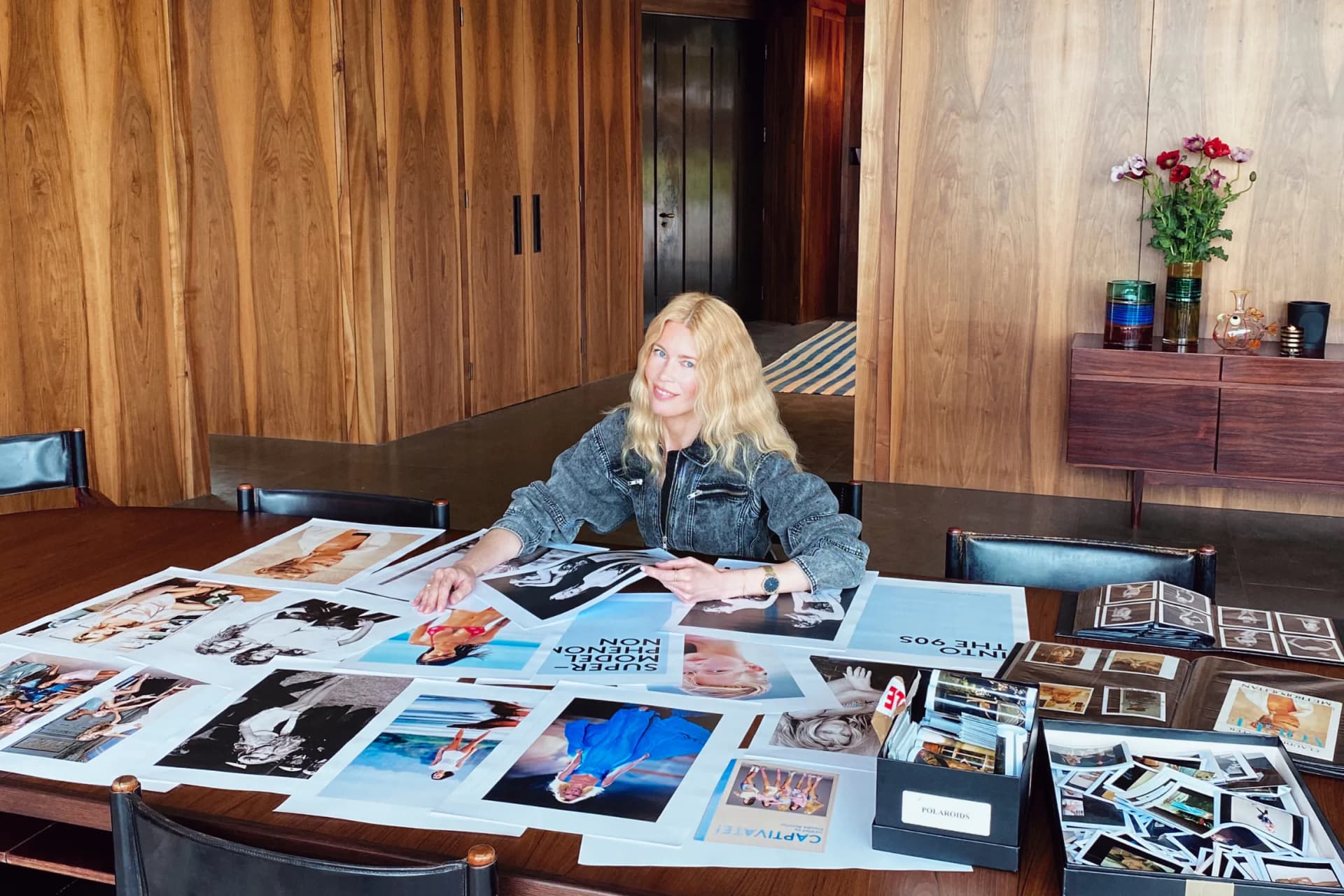
Your work on “Captivate!” highlights the golden age of analog fashion photography. What did looking back at thousands of photos and test Polaroids reveal about that era?
There was so much incredible photography in the 1990s. Relooking at it all reminded me of what an extraordinary period of reinvention, rebellion and innovation that era was and how amazing it was to have been a part of it. The 1990s was an exceptional decade that witnessed the rise of style culture, the birth of the supermodel and fearless creativity. Young designers, photographers, stylists and art directors emerged and fundamentally changed the way we view fashion and design. Because fashion photography is a democratic art form, circulating on billboards, digital platforms, packaging and in magazines, it has an enormous sphere of influence. The 1990s was a watershed decade that welcomed fashion photography and photographers as a driving force in visual culture. I think that is why it is of such fascination to a younger generation now. There’s a fascination with the analogue era: vinyl, Polaroids!
You have written that an iconic fashion image is born from the rapport between model and photographer. You’ve worked with many legends. What made those creative partnerships so successful?
As a model, you needed to study a photographer’s work, a designer’s work and learn how to translate that vision in front of the lens. In Valentino you are transformed into a romantic heroine; in Versace into a siren; in Chanel into an effortlessly chic woman of the world. What I learnt early on is that each photographer “sees” in a different way. Helmut Newton was meticulous in every detail and that is what gives his imagery such graphic strength. By contrast, Elgort is a master at capturing exuberance outdoors while working with Ellen Von Unwerth brought out the playful and naughtiness. But the shoot itself is an alchemy of experts from all fields – photography, hair and makeup, location and set design, models, stylists, art directors and editors. A captivating shoot is the result of great teamwork.
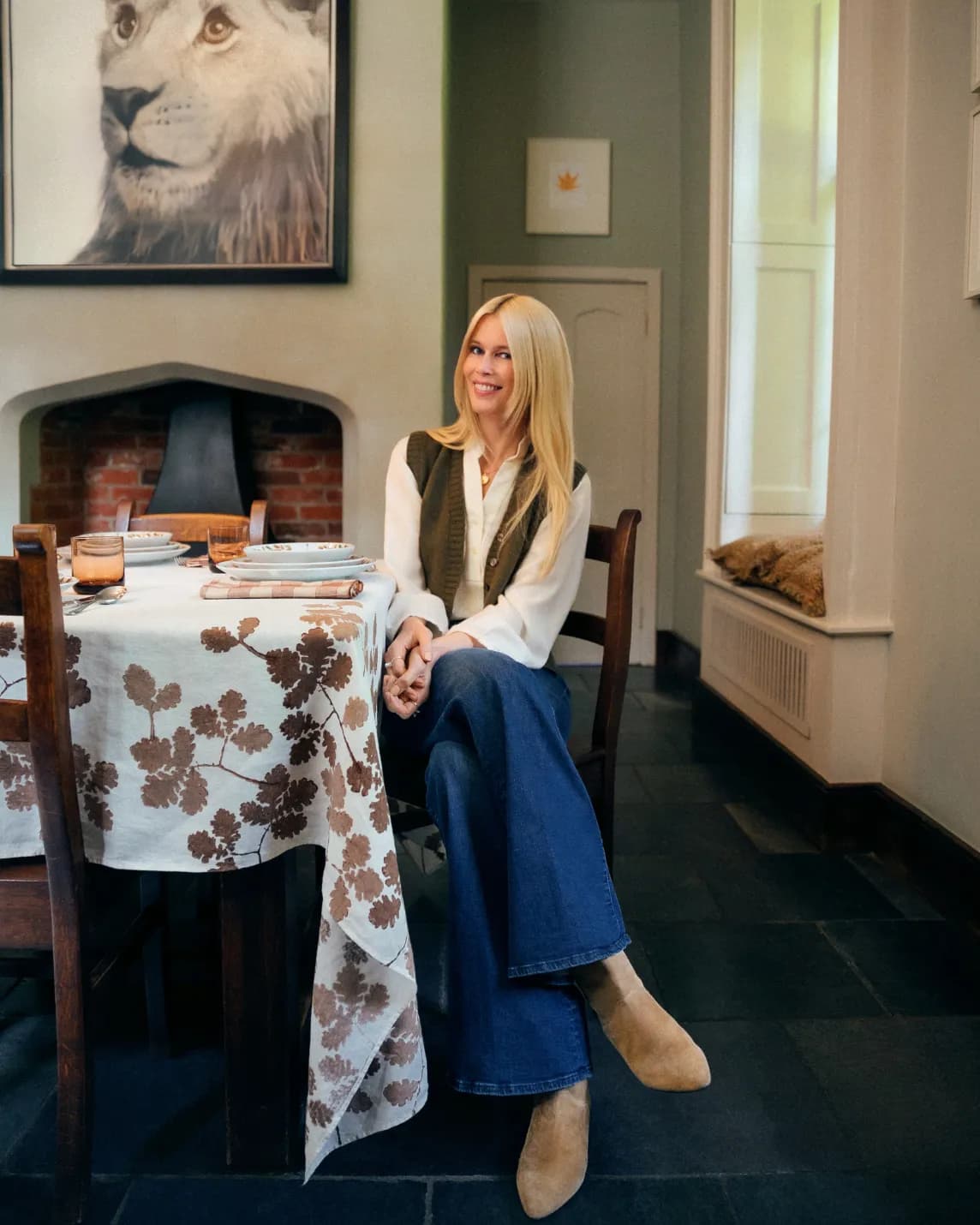
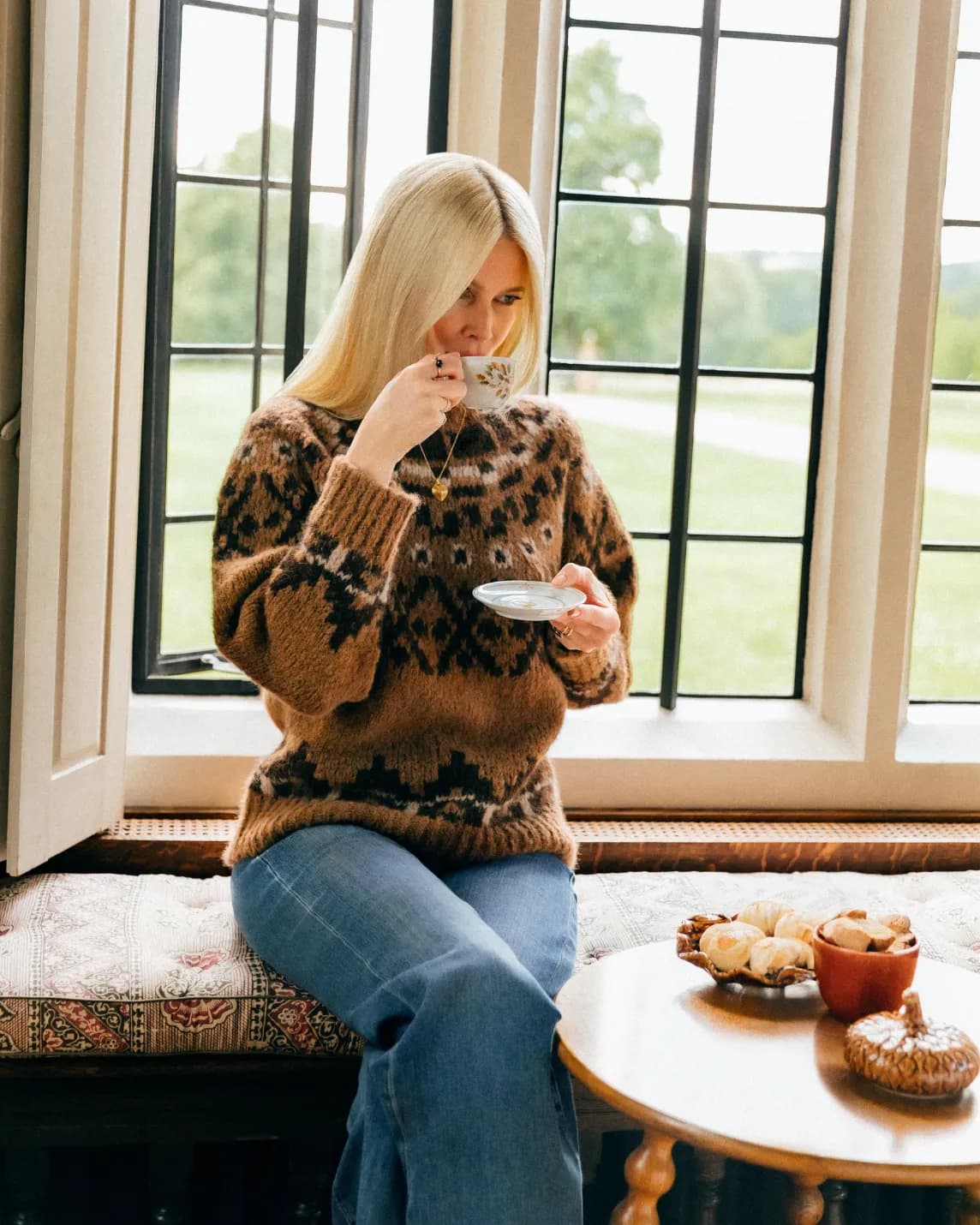
As an executive producer, Schiffer now brings this creative expertise to her husband Matthew Vaughn’s film sets, where she oversees the visual identity – aesthetics, hair and makeup, costumes, and interior design – of the productions. The name of her production company is a play on her nickname: Cloudy Productions. Her creative influence on screen is unmistakable: Whether it’s the tailored, British elegance of the hit spy series “Kingsman,” the extravagance of the Elton John biopic “Rocketman,” or the set design of the latest spy comedy “Argylle,” Schiffer pulls the aesthetic strings behind the scenes. “Argylle” is close to the family’s heart for a very special reason: The family cat, Chip, made an appearance on screen and rapidly emerged as the secret star. Schiffer immortalized the story in her book “Blue Chip: The Confessions of Claudia Schiffer’s Cat,” written with tongue-in-cheek humor and plenty of heartfelt emotion.
Schiffer’s creative passion manifests itself in the spaces she inhabits. Her private interior universe thrives on a fascinating architectural duality, embodied by two very different English homes. Her light-filled, modern retreat in Oxfordshire features an elegant mélange of Scandinavian minimalism and mid-century furniture. In contrast, the historic Tudor estate Coldham Hall in Suffolk has a more storied, traditional feel. Schiffer purposefully contrasts the heavy oak paneling with contemporary art by Damien Hirst and Andy Warhol. It was this love of eclecticism – and the desire to leave behind the stiff, perfectly matching tableware of her childhood – that inspired her chinaware collection. She has designed pieces that blend time-honored craftsmanship with deeply personal stories for the long-established manufacturers Vista Alegre and Bordallo Pinheiro.
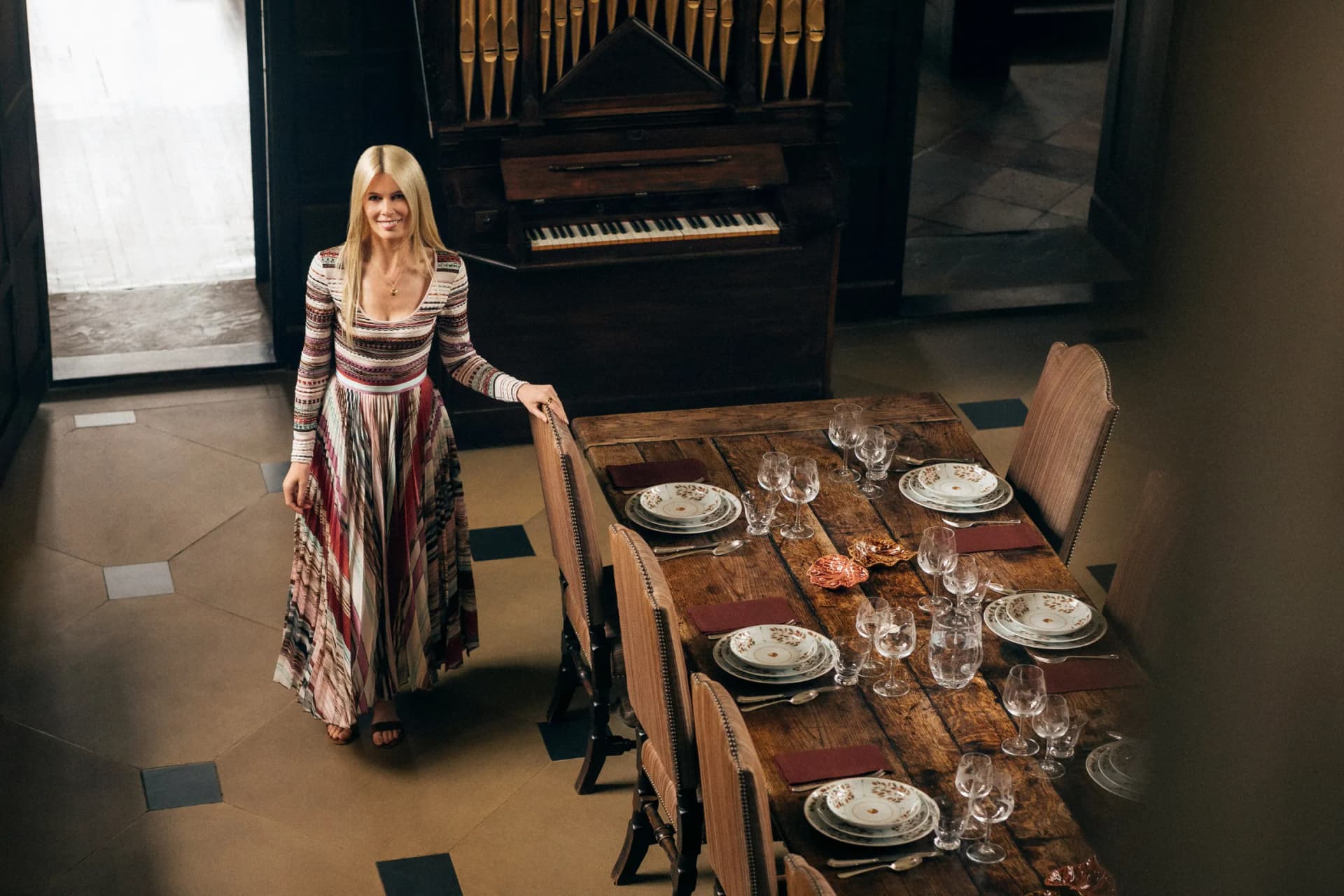
Uniting Vista Alegre’s refined, heritage porcelain with Bordallo Pinheiro’s whimsical, expressive ceramics is a rare and unexpected feat. What was the creative friction or harmony you wanted to explore by mixing these two very different Portuguese traditions?
I’ve been drawn to homeware and collecting ceramics, glass and porcelain my whole life, and Vista Alegre and Bordallo Pinheiro are experts at what they do. I’d collected so many of their ceramic pieces that I eventually wanted to connect with the team, talk about their history and explore a collaboration. Over my career, I’ve learned only to work with brands that I admire and so this felt like an authentic fit. I was very hands-on throughout the entire process – from ideation and my initial designs, right through to the final product.
The glass vases in your Cloudy Butterflies collection require master glassmakers to execute the medieval incalmo technique, hot-melting different colors horizontally without a mold or mixing. What was it like collaborating on a process where the margin for error is miniscule, and where ancient craftsmanship dictates the final form?
I’ve always been passionate about exceptional craftsmanship, whether in fashion design or photography, architecture, or objects: I’m endlessly curious about the how and the why things are made. That’s why it was incredible to work with a heritage brand like Vista Alegre and experience first-hand how to use traditional techniques to create beautiful everyday pieces that will hopefully be cherished and passed down through generations over time.
Your Gudrun collection is named after your late mother, an avid gardener, and is deeply rooted in your childhood memories of autumn. When you see these pieces finished in forest greens, mustard, and crimson, do you feel they successfully translate the mood of those fall days?
I wanted to dedicate this collection to my childhood memories connected to the German countryside. It’s inspired by listening to the woodpeckers and birdsong, watching the squirrels from my bedroom window and collecting acorns while my mother gathered leaves, which I used as tiny canvases for my drawings. When I started brainstorming ideas for Gudrun, acorns were one of my first design references and feature in some of my favorite pieces like the porcelain teapot and the cups for tea or expresso. They look lovely on display.
You styled the lifestyle imagery for the Gudrun collection on your mid-century wooden tables at Coldham Hall. How does the design process change when you are creating specifically for your own lived-in, domestic spaces?
Everything I design, I design for myself. I grew up with very formal, matching crockery, but I’ve realized that I prefer to mix things up. Decorating my home with beautiful items, from art to candles and vintage furniture, as well as pieces I collect and have found around the world, is a passion of mine.
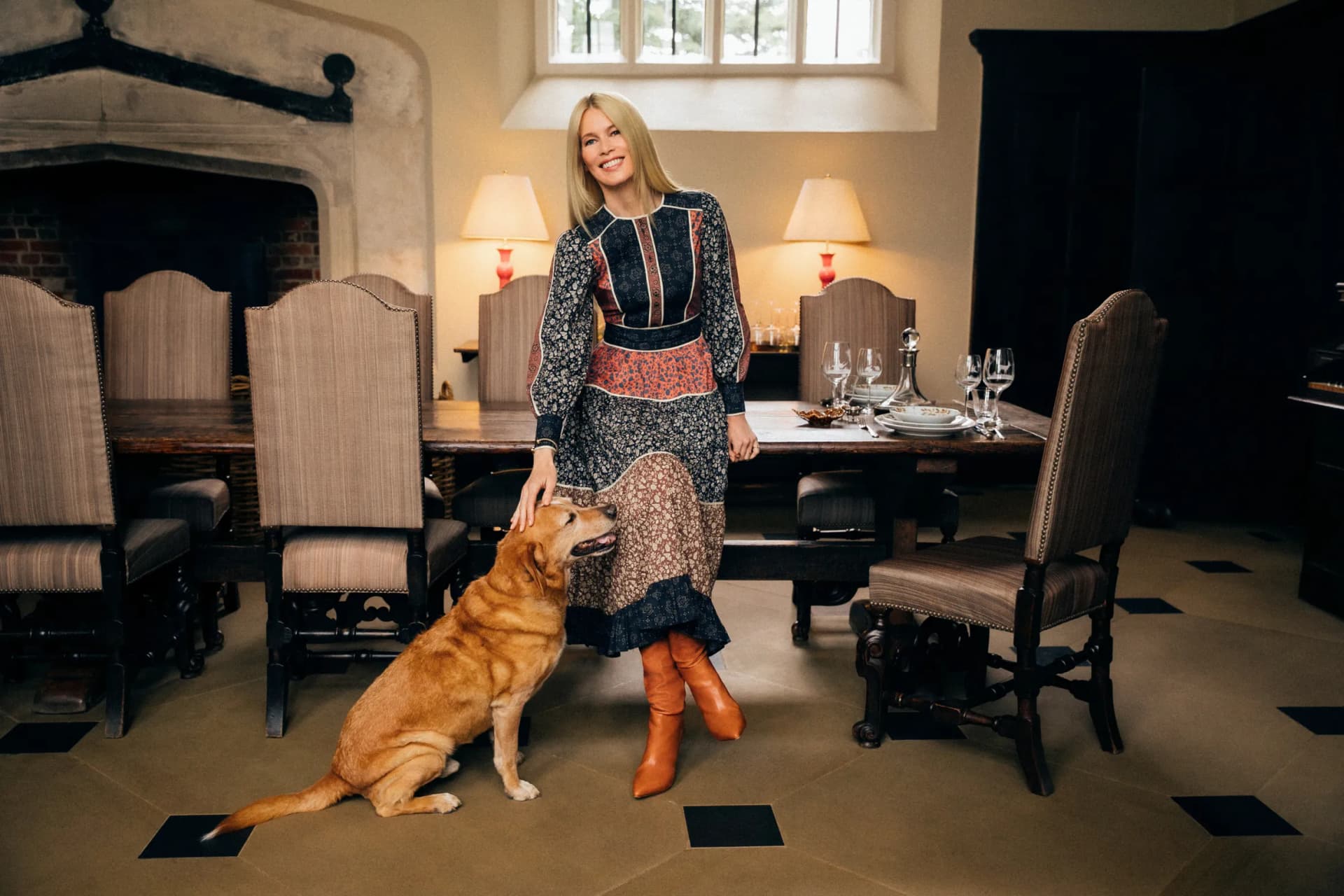
Your two homes are very different. Coldham Hall was built in 1574 and is a listed historic building. In Oxfordshire, you live in a far more modern setting. How do you strike a balance between preserving history and creating a modern home?
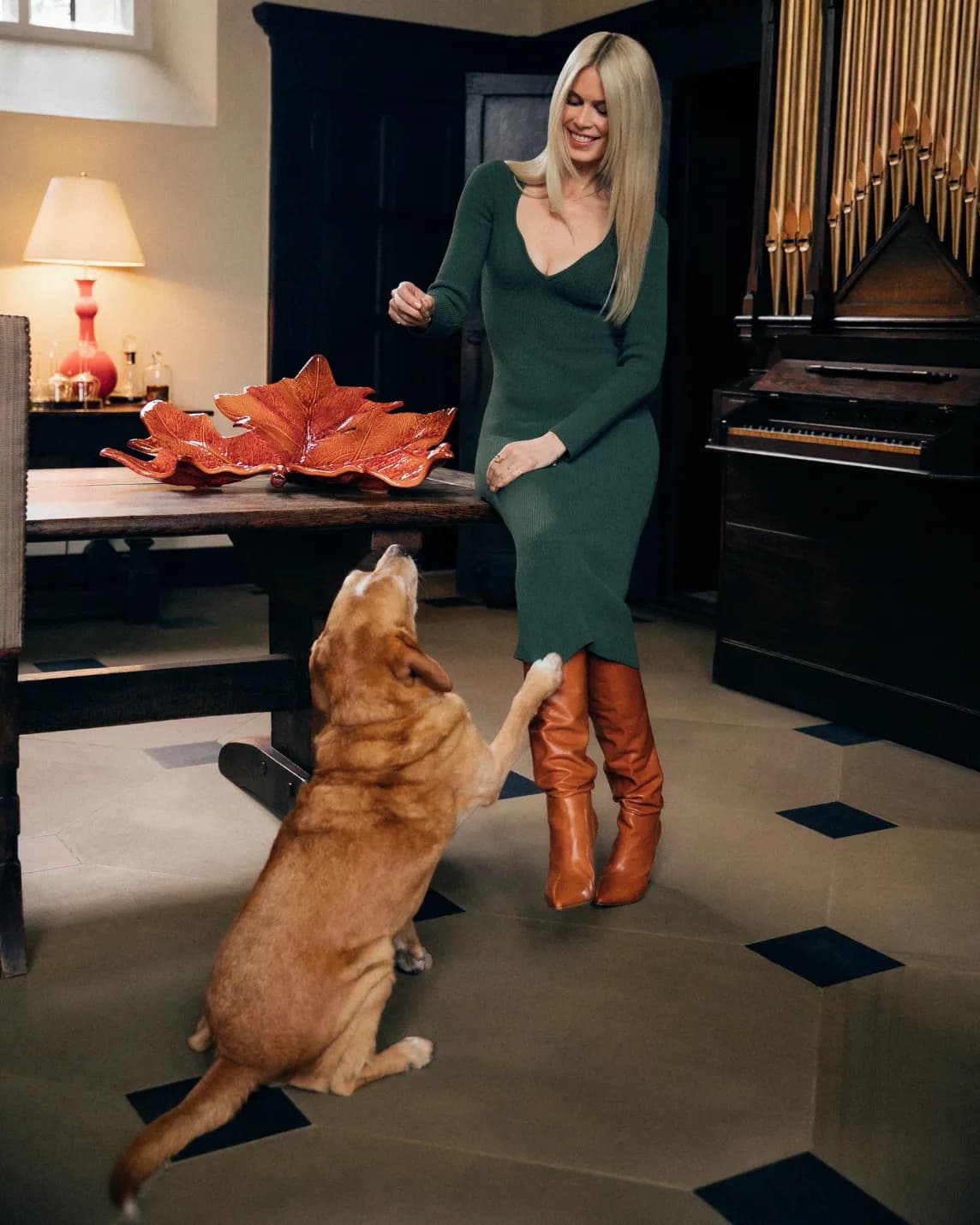
I’m fascinated by art, design and interiors. With my Suffolk home, I adopted a modern take on country style. I brought in light and dark oak furniture, lots of green, reds and orange, as well as patterned wallpaper, all juxtaposed with modern art. I chose fabrics that work with muddy dogs and created cozy little nooks where you can enjoy the warmth of a fireplace, both in winter and in a cool summer. It’s a place to feel inspired.
Coldham Hall was once owned by the Rookwood family, which included Ambrose Rookwood, a Catholic conspirator who played an instrumental role in the Gunpowder Plot. Legend has it that the conspirators, headed by Guy Fawkes, gathered here before setting off on their journey to London. The house, originally called Rockwood Hall, changed its name after Queen Elizabeth I visited for lunch one day and was served cold ham. She was so appalled that she christened it “Coldham Hall.”
When the days grow shorter, how do you cultivate a sense of coziness within your home?
I light a lot of candles, which I feel adds a quality to my life at home. I designed the Gudrun pieces to compliment my mid-century wooden tables; they infuse my home with the warm earthy tones of fall. They also find a place in my weekend countryside retreats, where their rich colors and seasonal motifs – mushrooms, leaves and acorns – contribute to a sense of coziness alongside a crackling fire. I take joy in how these ceramics introduce a subtle change to the living space; they pair beautifully with green hydrangeas and the lit cream candles while the Butterfly collection goes into hibernation until spring.
A fashion writer famously referred to you as “the model who doesn’t make mistakes.” You gracefully disagreed, stating that you certainly make them but strive “never to make the same mistake twice.” What has been your most valuable setback and what did it teach you?
Every setback has taught me tenacity, strength and never to take anything personally.
Is there still one unfulfilled creative dream that you would love to bring to life?
Not really, because I never put any dream on the back burner. It might not work out but I will definitely explore it. I have lots of projects in the pipeline and I will see which ones become a reality.

Merle Wilkening
As a Senior Editor at GG Magazine, Merle Wilkening writes about the people, places, and ideas that shape our world. She is most in her element interviewing personalities who speak about their passions with genuine enthusiasm. Driven by curiosity, her travels regularly take her toward the sun in search of unique encounters and the stories behind the world’s most captivating destinations. Her culinary pursuits range from local neighborhood gems to Michelin-starred dining.
Email