- 3 min read
Investing in Historic Monuments: A Guide to Heritage Tax Benefits
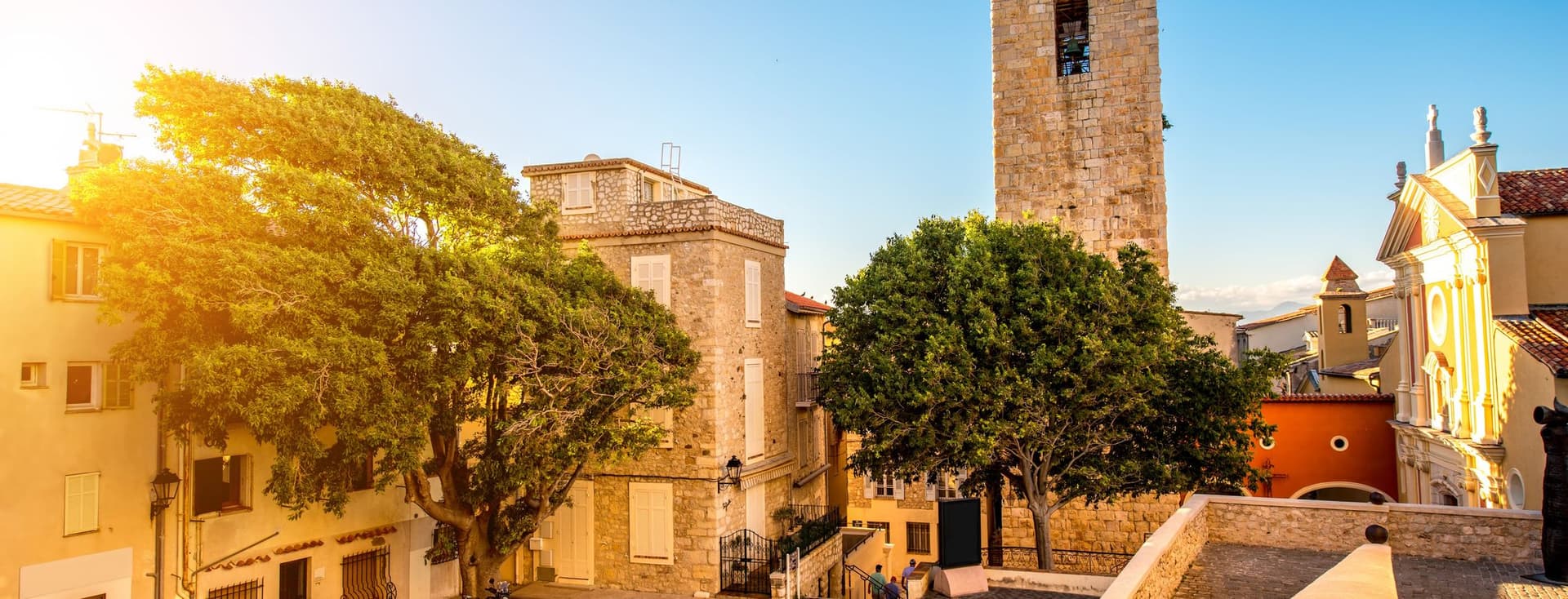
France is home to approximately 45,000 properties protected as historic monuments, nearly half of which are privately owned. Investing in one of these properties means acquiring far more than a real estate asset: it means becoming the custodian of a piece of France's architectural heritage. Such an investment comes with specific obligations but may also benefit from a dedicated tax regime. Restoration work, long-term ownership, family succession and tax optimisation all need to be considered as part of a broader, long-term wealth strategy.
Table of Content
What Is the Historic Monuments Tax Regime ?
The Tax Benefits of Investing in Historic Monuments
Historic Monuments Regime vs Malraux Scheme vs Property Deficit: Which Should You Choose ?
What Conditions Must Be Met to Invest Under the Historic Monuments Regime ?
Grants and Financial Support for Restoration
Investing in a Historic Monument with Engel & Völkers
What Is the Historic Monuments Tax Regime ?
The term Historic Monuments regime is commonly used to describe the tax framework applicable to certain properties of recognised historical, artistic or architectural interest. Its purpose is to support the preservation of heritage whose value extends beyond its function as real estate, while taking into account the sometimes considerable costs associated with its maintenance and restoration.
Origins and Purpose: Preserving French Architectural Heritage Since 1913
The modern protection of historic monuments has its roots in the French legislation introduced in 1913. Since then, the French Heritage Code has established different levels of protection and regulated work that may alter the properties concerned. The tax regime follows a complementary objective: under certain conditions, it recognises the financial effort made by owners to preserve and restore protected heritage.
A historic monument may be a château, a manor house, a private mansion, an apartment building or even part of a building. Its heritage value is therefore not determined solely by its age or market price.
Which Properties Are Eligible? Classified MH, Listed ISMH and Approved Properties
Eligible properties may include buildings classified as Historic Monuments, properties listed as Historic Monuments—formerly referred to by the acronym ISMH—and other properties covered by the tax regime under the relevant conditions.
Classification represents the highest level of protection. Listing applies to properties of significant heritage interest without necessarily being subject to the same degree of protection. This distinction can affect the authorisations required, the supervision of restoration work and the rules applicable to the property.
Before purchasing, it is therefore essential to establish the exact legal status of the property. Our guide on how to have a property classified as a Historic Monument explores these distinctions in greater detail.
The Tax Benefits of Investing in Historic Monuments
The tax advantages are often a major factor in the decision to invest, but they should never be considered separately from the actual cost of preserving the property. The regime may allow certain expenses and restoration costs to be deducted under particularly favourable conditions, especially for highly taxed individuals.
Deducting Up to 100% of Eligible Works from Taxable Income
Where the conditions of the regime are met, certain expenses related to the property may be taken into account when reducing taxable income. However, the nature of the expense, the use of the property and its heritage status determine the tax treatment that applies.
For a property open to the public or generating income under the relevant conditions, the mechanism may allow a substantial proportion of eligible expenses to be deducted. For a property retained for personal use, different rules apply; the brief notably refers to a 50% deduction in certain situations.
This is therefore not simply a fixed tax credit. The tax benefit depends directly on the expenses actually incurred and whether they qualify under the applicable regime.
A Tax Regime Outside the General Cap on Tax Benefits
One of the regime's principal advantages is that, subject to the applicable conditions, it falls outside France's general cap on tax benefits. This can make it particularly relevant for taxpayers who already benefit from other tax optimisation schemes.
The economic impact also depends on the taxpayer's marginal tax rate. For someone taxed at 41% or 45%, the deduction of a significant eligible expense can substantially affect the net cost of restoration work.
Property Deficits Deductible from Overall Income
The regime may also allow certain property-related expenses to be offset against overall income, depending on the property's circumstances and the conditions established by the French General Tax Code. Maintenance, repair and restoration expenses should not, however, be confused with every cost incurred by the owner.
Mortgage interest is notably subject to specific tax treatment. The financing structure should therefore be considered before the acquisition rather than after restoration work has already begun.
Exemption from Inheritance and Gift Tax
Succession planning is another important consideration. Subject to certain conditions, particularly where an appropriate agreement has been entered into with the French State, a historic monument may benefit from a specific regime for inheritance and gift tax purposes.
For a family that has owned a property for several generations, this aspect may be just as significant as the income tax savings achieved during the ownership period. It can help preserve family heritage over the long term.
Historic Monuments Regime vs Malraux Scheme vs Property Deficit: Which Should You Choose ?
These schemes serve different purposes. The right choice is not determined solely by the theoretical amount of the tax benefit. The status of the property, its location, the nature of the work, its intended future use and the planned holding period are all decisive factors.
Can These Tax Schemes Be Combined ?
The possibility of combining tax schemes must be assessed on a case-by-case basis. The same expense cannot generate several incompatible tax advantages. The legal and tax structure should therefore be established before restoration work begins, ideally with the support of a wealth management adviser and a specialist in heritage taxation.
What Conditions Must Be Met to Invest Under the Historic Monuments Regime ?
The tax benefits available under the regime come with demanding ownership, preservation and restoration requirements. An investor should not view a historic monument as an interchangeable tax product: preserving the heritage itself is central to the purpose of the regime.
A Mandatory 15-Year Holding Period
The owner must comply with a fifteen-year holding period under the conditions provided by the regime. This requirement has a direct impact on the financing strategy and the liquidity of the investment.
Purchasing a historic monument therefore requires a long-term perspective. An early sale may undermine the financial and tax balance on which the project was originally based.
Restoration Work Supervised by the ABF and DRAC
Restoration work is overseen by the relevant authorities. Depending on the property's status and the nature of the project, the Architect of Buildings of France (Architecte des Bâtiments de France), the Regional Directorate of Cultural Affairs (DRAC) and other services of the Ministry of Culture may be involved in the authorisation and supervision process.
The choice of project management is crucial. Restoring an historic roof, original wood panelling, a protected façade or decorative features often requires specialised expertise and appropriate materials, resulting in costs and timelines that differ significantly from a conventional renovation.
Is Renting Out the Property Mandatory or Optional ?
Renting out the property is not systematically required. Depending on the applicable regime and the conditions met, an owner may retain the property for personal use or incorporate it into a rental strategy.
This decision nevertheless affects rental income, potential profitability and the tax treatment of expenses. It should therefore be defined before making the investment.
Tax Filing: Special Form 2044
The tax treatment of a historic monument requires careful documentation of expenses and the use of the appropriate tax declarations, including the special French Form 2044 where applicable. Invoices, supporting documents, authorisations and the allocation of expenses must all be retained accurately.
Grants and Financial Support for Restoration
Tax deductions are not the only way to reduce the cost of restoration work. Public and private grants may complement the financing of a project and reduce the owner's remaining financial contribution.
Government Grants Through the DRAC: 15% to 35% of Restoration Costs
According to the information provided in the brief, French government support may represent between 15% and 35% of restoration costs, depending on the property's protected status, its heritage significance and the nature of the project.
Such support is not automatic. Applications should be anticipated and incorporated into the project's administrative timetable before work begins.
Support from Local Authorities and Private Philanthropy
Regions, departments and municipalities may also support certain restoration projects. Private philanthropy can provide an additional source of funding, particularly where a project has cultural, architectural or local significance.
The financing plan should therefore take into account all potentially available forms of support rather than relying exclusively on tax benefits.
Fondation du Patrimoine: Labels and Additional Tax Benefits
The Fondation du Patrimoine supports certain owners through heritage labels, fundraising campaigns and other assistance schemes. Depending on the project, its involvement may contribute to the financing of restoration work and provide access to additional possibilities under the applicable tax framework.
Investing in a Historic Monument with Engel & Völkers
Taxation alone does not create the value of an exceptional property. In historic real estate, location, authenticity, architectural quality, state of preservation and rarity also determine the property's heritage value and its potential appeal to future buyers.
Why Historic Prestige Real Estate Can Be a Safe-Haven Asset
A château set within a preserved landscape, a private mansion in the heart of a sought-after district or a manor house retaining its original architectural features possesses a degree of uniqueness that is difficult to reproduce. This scarcity helps explain why luxury real estate can be regarded as a safe-haven asset.
Rarity does not, however, guarantee profitability or capital appreciation. Maintenance costs, regulatory restrictions, restoration requirements and the depth of the potential buyer market must all be considered from the outset.
When buying a château in France, it is particularly important to determine whether the property genuinely represents a sound investment and to understand the difference between a château and a manor house. The criteria used to assess a private mansion are different again.
Engel & Völkers Support: From Property Search to Wealth Management
ngel & Völkers supports buyers and owners of exceptional properties, from châteaux and manor houses to private mansions. Local market knowledge is combined with an international network and access to both French and international buyers, including through its Private Office for selected heritage property searches.
A project of this nature requires a comprehensive assessment: property search, architectural condition, ownership strategy, financing and prestige investment advice. The objective is to evaluate the property as a whole rather than focusing solely on its potential tax benefits.
For owners considering a sale, a free property valuation can provide an initial assessment before defining a marketing strategy suited to the nature, character and rarity of the property.
Frequently Asked Questions About Investing in Historic Monuments
Yes, personal occupation may be compatible with the acquisition of a historic monument. However, the use of the property can affect the conditions under which certain expenses are deductible. The tax implications should therefore be reviewed before purchasing the property and before restoration work begins.
There is no universal minimum budget. The purchase price represents only one part of the investment: restoration work, surveys, project management, insurance, maintenance and potential financing costs must also be taken into account.
A protected apartment, a private mansion and a château obviously involve very different levels of financial commitment and management requirements.
An SCI, or French property-holding company, may be considered in certain situations, but its compatibility depends on its structure, tax regime and the specific conditions of the Historic Monuments scheme. A family SCI may support particular ownership or succession objectives without necessarily being suitable for every project.
A legal and tax assessment should therefore be carried out before the acquisition to ensure that the ownership structure is consistent with the nature of the property, the overall wealth strategy and the family's succession objectives.
Contact
Contact your personal advisor


Engel & Völkers France
170 Rue du Faubourg Saint-Honoré
75008 Paris
Tel: +33145643030