New
4th arrondissement, Paris, Île-de-France, France
3-room apartment – Notre Dame
Total rent
€4,200
- 2 Bedrooms
- 1 Bathroom
- ~66 m² Living area
The new GG website: Inspiring personalities, extraordinary places and exceptional properties. Discover now
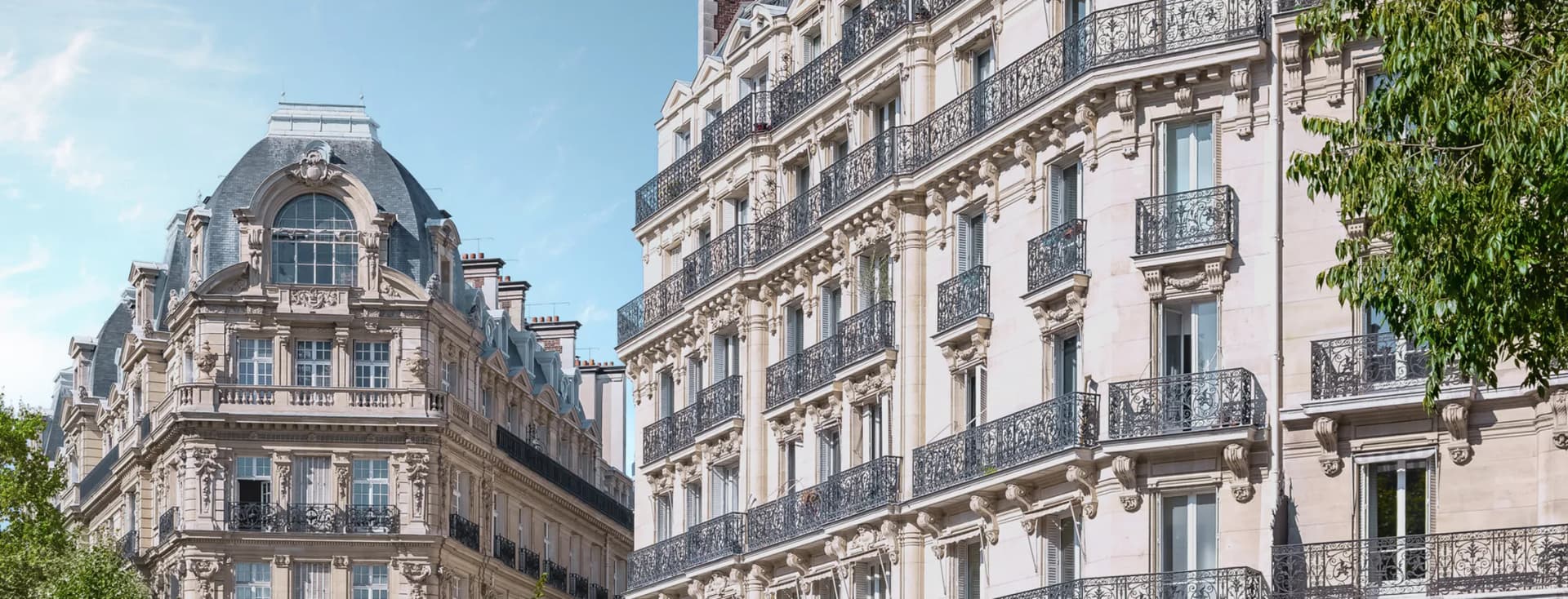
Paris remains a distinctive rental market. High acquisition prices naturally limit rental yields compared with some major French cities, but the depth of tenant demand, the diversity of tenant profiles and the potential for long-term capital appreciation continue to support investor interest.
In 2026, however, the equation requires a more detailed analysis. Rent controls limit rental income, while new Energy Performance Certificate (EPC) requirements are progressively removing some properties from the rental market. At the same time, the decline in prices since their 2022 peak has changed acquisition conditions for certain investment projects.
Our luxury real estate investment advice helps investors assess these different factors within a coherent wealth strategy. To understand the broader context of the current market, our 2026 real estate market outlook also provides insight into recent trends.
Table of Content
Key Takeaways
What Does Rental Investment in Paris Mean in 2026?
Understanding Gross, Net and After-Tax Rental Yield for a Paris Property
Rent Controls and EPC Requirements: What Impact Do They Have on Paris Rental Investment?
Paris 11th, 15th and 16th Arrondissements: Three Areas for Targeted Rental Investment
Who Rents in Paris: Students, International Executives or Families?
Grand Paris Express Is Redrawing the Investment Map Beyond Paris
Which Strategies Can Improve Rental Profitability in Paris?
Tax Schemes for Parisian Real Estate Assets
Engel & Völkers Can Support Your Rental Investment in Paris
Engel & Völkers vous accompagne dans votre investissement locatif à Paris
Gross rental yields in Paris generally range from 2.5% to 4%, depending on the district, property type and condition.
Rent controls limit rental income, but a rent supplement may be possible when a property offers clearly superior comfort or features compared with comparable properties.
The 11th arrondissement combines strong rental demand with relatively accessible acquisition prices within Paris.
The 15th arrondissement is particularly suited to a long-term residential strategy, especially for family apartments.
The 16th arrondissement offers more moderate yields but can support a strategy focused on capital preservation and long-term appreciation, with demand from international and affluent tenants.
Greater Paris expands the investment area, with lower average prices per square metre than central Paris and potentially higher rental yields.
EPC ratings have become a central investment criterion: properties rated G have been subject to rental restrictions for new leases since 2025, while properties rated F will be affected from 2028.
A profitable investment cannot be assessed through gross yield alone. Purchase price, rent, charges, taxation, renovation costs, regulations and appreciation potential all need to be considered..
Rental investment consists of purchasing a property with the intention of renting it out. The income generated by rent is the first component of the investment return, while potential capital appreciation represents a second driver of long-term performance.
This distinction is particularly important in Paris. Rental yields are generally lower than those found in some regional cities, but a Parisian investment can serve a different wealth-management objective. Location, the depth of the rental market and a property's ability to remain attractive over time can be just as important as its rental income.
The Paris market has also changed since prices reached their peak in 2022. The decline observed since then can create new acquisition opportunities, particularly where the asking price does not fully reflect the property's condition or renovation potential.
The brief places Paris property prices at approximately €8,000 to €11,000 per square metre, with significant differences depending on the arrondissement, neighbourhood and characteristics of the property.
Rental demand remains diverse. Students tend to seek smaller, well-connected properties. Young professionals often prioritise transport links and employment hubs. Families generally look for larger properties, good schools and green spaces. International executives and expatriates may favour high-end furnished apartments in prestigious central or residential districts.
This diversity allows investors to consider different strategies. A studio may target a more dynamic rental market, while a family apartment may prioritise tenant stability and long-term capital preservation.
The question is therefore not simply whether rental investment in Paris is profitable, but under which conditions a specific property can achieve a balanced combination of rental income and capital appreciation.
Rental yield is one of the first indicators used to compare investment properties. It should, however, be calculated at several levels because gross yield does not reflect either the costs borne by the owner or taxation.
Gross yield compares annual rental income with the property's acquisition price.
Gross rental yield = (monthly rent × 12) / purchase price × 100
Take an apartment purchased for €500,000 and rented for €1,500 per month. Annual rental income amounts to €18,000.
The gross yield is therefore:
€18,000 / €500,000 × 100 = 3.6%
This provides a useful first basis for comparison, but it does not show how much income the owner actually retains.
Net yield takes into account the costs associated with owning the property. These may include non-recoverable service charges, property tax, management fees and insurance.
Net rental yield = (annual rent – non-recoverable charges – property tax – management fees – insurance) / purchase price × 100
Depending on the property's characteristics and expenses, net yield can be 0.8 to 1.2 percentage points lower than gross yield in Paris.
This difference matters. Two apartments with the same gross yield can generate very different net returns depending on their service charges, building costs or management requirements.
The third level of analysis incorporates taxation. The result depends in particular on the applicable tax regime and the investor's individual circumstances.
The micro-foncier, régime réel foncier and LMNP regimes follow different principles. The relevant regime depends on factors including the type of rental, expenses, renovation costs and the investor's tax situation.
Gross yields in Paris generally range from 2.5% to 4%, depending on the arrondissement, property type and condition.
A higher rental yield does not necessarily mean a better investment from a wealth-management perspective. A property generating 4% may have less appreciation potential than an apartment in a highly sought-after location generating a lower yield.
The analysis should therefore also consider the property's current value and its future potential. A free property valuation provides a useful starting point for establishing a realistic valuation and calculating the yield on a sound basis.
Free, confidential and non-binding
Receive your digital valuation instantly
Based on data by Engel & Völkers
Two regulations directly influence rental investment in Paris: rent controls and energy performance requirements.
Rent controls have applied in Paris since July 2019. The base rent cannot exceed the increased reference rent, which is established according to the property's characteristics and location. The maximum corresponds to the reference rent increased by 20%.
This rule limits the extent to which rents can be freely increased, even in particularly sought-after areas.
The rent supplement is an important exception within this framework. It may allow a landlord to charge more than the increased reference rent when a property has specific comfort or equipment features that clearly distinguish it from comparable properties.
A terrace, exceptional views, air conditioning, architectural features or high-end finishes may contribute to this differentiation. The supplement must be included in the lease and may be challenged by the tenant under the applicable rules.
For investors, the objective is therefore to identify the property's genuinely distinctive characteristics rather than simply applying a higher rent per square metre.
EPC requirements represent another major change for the rental market. Since 2025, properties rated G have been subject to rental restrictions for new leases. Properties rated F are scheduled to be affected from 2028.
This development has turned the EPC rating into a key acquisition criterion. A poorly rated property may have a lower purchase price, but the required renovation costs must be incorporated into the initial investment budget.
Insulation, heating, ventilation and windows may all be relevant to an energy-efficiency renovation. The objective can be to improve the property's energy performance while preserving its ability to remain on the rental market.
The EPC should therefore no longer be treated as a purely administrative detail. For an investor, it can directly affect the purchase price, renovation budget, ability to rent the property and future resale potential.
The arrondissement selected can significantly change the balance between purchase price, potential rent, tenant profile and capital appreciation. The 11th, 15th and 16th arrondissements illustrate three different investment approaches.
For a broader overview, see our guide to the best neighbourhoods to buy in Paris.
Investors can also browse properties for sale in Paris to compare these criteria with the current market offering.
Property prices in the 11th arrondissement are estimated in the brief at approximately €8,500 to €9,500 per square metre, depending on areas such as Bastille, République and Charonne.
The tenant profile is dominated by young professionals, executives and couples without children. The proximity of several higher-education institutions also supports student demand.
Smaller properties are particularly suited to this market. Studios and one-bedroom apartments can offer strong rental turnover, provided their location, condition and rent remain aligned with local demand.
The gross yield indicated in the brief is around 3% to 4%, among the higher levels found within Paris. The area's restaurants, nightlife, local shops and access to several metro lines further support rental appeal.
The 15th arrondissement presents a different configuration. The brief places prices at around €8,000 to €8,800 per square metre, making it one of the more accessible Paris arrondissements in terms of acquisition price.
Demand mainly comes from families, middle-management professionals and public-sector employees. Three- and four-bedroom apartments address a more stable residential demand than smaller properties primarily targeting students or young professionals.
Apartments with balconies and located near schools or green spaces can respond particularly well to this profile. Georges Brassens and André Citroën parks are among the area's attractions for households seeking a more residential environment.
Gross yields are estimated at between 3% and 3.8%. The appeal of the 15th therefore lies in the balance between acquisition price, rental demand and tenant stability.
The 16th arrondissement follows a different investment logic. Prices mentioned in the brief range from approximately €9,000 to €11,000 per square metre, with variations across Auteuil, Passy, La Muette and Trocadéro.
The tenant base includes international executives, expatriates, diplomats and affluent families. This demand can favour high-end family apartments, top-floor properties with views and penthouses.
Gross yields are around 2.5% to 3%, below those of the 11th or 15th arrondissements.
The appeal of the 16th lies more in the quality of the underlying asset and its ability to meet the expectations of a premium tenant base. Proximity to the Bois de Boulogne, embassies and international schools reinforces this positioning.
For local expertise, our Passy real estate agency in the 16th arrondissement provides access to local market knowledge.
4th arrondissement, Paris, Île-de-France, France
Total rent
€4,200
8th arrondissement, Paris, Île-de-France, France
Total rent
€5,500
15th arrondissement, Paris, Île-de-France, France
Total rent
€4,500
8th arrondissement, Paris, Île-de-France, France
Total rent
€1,820
1st arrondissement, Paris, Île-de-France, France
Total rent
€3,990
5th arrondissement, Paris, Île-de-France, France
Total rent
€2,550
16th arrondissement, Paris, Île-de-France, France
Total rent
€6,590
8th arrondissement, Paris, Île-de-France, France
Total rent
€3,600
18th arrondissement, Paris, Île-de-France, France
Total rent
€2,700
The tenant profile should be identified before choosing the property. The property's size, location and level of finish should correspond to the demand being targeted.
Students are particularly concentrated in the 5th, 13th, 14th and 15th arrondissements. They generally look for studios and smaller apartments, creating a market that can involve more frequent tenant turnover.
International executives and expatriates are more strongly represented in the 8th, 16th and 17th arrondissements. For this segment, a high-end furnished apartment that is well located and ready to occupy can be a decisive factor.
Families tend to look for larger properties in the 12th, 15th and 16th arrondissements. Three- to five-bedroom properties, proximity to schools, green spaces and a residential environment are important criteria.
This segmentation is particularly relevant for premium investment properties. A property may be perfectly suited to an international tenant but less appropriate for a student-oriented strategy. The target tenant should therefore be considered alongside the property and rental strategy.
For international investors, our guide to buying property in France as a foreigner provides additional context for a Parisian investment project.
Greater Paris real estate investment is expanding the range of locations available to investors. The development of the Grand Paris Express is progressively extending the investment perimeter beyond Paris itself.
The network comprises four automated metro lines 15, 16, 17 and 18 together with 68 new stations and approximately 200 km of lines. New sections are scheduled to enter service progressively from 2026.
This development may strengthen the appeal of municipalities located near new stations. The brief specifically identifies Levallois-Perret, Neuilly-sur-Seine, Boulogne-Billancourt, Issy-les-Moulineaux, Vincennes and Montreuil.
The underlying economic logic is straightforward: lower prices per square metre can make it possible to achieve higher rental yields than with an equivalent property within Paris. The brief places gross yields in the inner suburbs at around 4% to 6%, compared with approximately 2.5% to 4% in Paris.
Indicative prices in the inner suburbs are around €5,000 to €7,000 per square metre on average, although substantial differences exist between municipalities.
Being close to a future station can therefore be a relevant selection criterion. It should not, however, replace an analysis of the neighbourhood itself. Local demand, existing transport connections, schools, retail, the quality of the surrounding environment and the property's long-term potential remain essential.
Important: the precise opening schedule should be checked with Société du Grand Paris before publication, as requested in the brief.Quelles stratégies pour booster la rentabilité locative à Paris ?
In Paris, improving rental profitability rarely depends on a single factor. It can result from negotiating the purchase price, renovating the property, choosing the right rental strategy or making the most of the property's distinctive characteristics.
Le complément de loyer peut s’appliquer lorsqu’un logement possède des caractéristiques de confort ou d’équipement qui le distinguent nettement des biens comparables du même secteur.
A rent supplement may apply when a property offers comfort or equipment features that clearly distinguish it from comparable properties in the same area.
A terrace, open views, certain architectural features, air conditioning or high-end equipment may contribute to this differentiation. The supplement must be included in the lease and justified by the property's characteristics and comparable properties. It can also be challenged by the tenant.
Take a simple example: a property rented for €1,500 per month with a potential supplement of €100 to €300.
Annual rental income would increase from €18,000 to €19,200–€21,600, before charges and taxation.
On a €500,000 acquisition, the theoretical gross yield would therefore rise from 3.6% to approximately 3.84%–4.32%.
This example illustrates the potential impact of a supplement, but its application depends on the property's actual characteristics and compliance with the applicable regulations.
A poor EPC rating can reduce a property's appeal and value. For an investor with sufficient renovation capacity, however, it can also create an opportunity to add value.
The brief refers to potential discounts of 5% to 15%, depending on the condition of the property. A lower acquisition price can then be combined with an energy-efficiency renovation programme involving insulation, heating or ventilation.
The objective is twofold: improve the property's energy performance and preserve its ability to remain on the rental market in the coming years.
The regulatory timetable should be considered from the moment of acquisition. Buying an F- or G-rated property without accurately calculating the required renovation costs can turn an apparent opportunity into an expensive project.
Existing support schemes, such as MaPrimeRénov’, CEE and éco-PTZ, may also form part of the analysis, subject to the project's eligibility conditions.
Co-living can be an appropriate strategy for certain larger apartments. The brief identifies the 13th, 14th, 15th and 18th arrondissements for this type of configuration and indicates that rents per square metre can be 20% to 30% higher than for conventional rental arrangements.
The strategy nevertheless requires careful consideration of the property's layout, management requirements and target tenants.
Short-term rentals can generate higher revenues than conventional long-term rentals in certain situations, but Paris applies a much stricter regulatory framework. A change of use may be required, and specific limits apply to primary residences.
For premium properties, an event-oriented short-term rental strategy may be considered in certain circumstances, particularly around trade fairs or Fashion Week. The applicable local regulations must nevertheless be assessed before implementing such a strategy.
Our guide to short-term rentals in Paris provides further information on the regulatory framework and opportunities.
4th arrondissement, Paris, Île-de-France, France
Total rent
€4,200
8th arrondissement, Paris, Île-de-France, France
Total rent
€5,500
15th arrondissement, Paris, Île-de-France, France
Total rent
€4,500
8th arrondissement, Paris, Île-de-France, France
Total rent
€1,820
1st arrondissement, Paris, Île-de-France, France
Total rent
€3,990
5th arrondissement, Paris, Île-de-France, France
Total rent
€2,550
16th arrondissement, Paris, Île-de-France, France
Total rent
€6,590
8th arrondissement, Paris, Île-de-France, France
Total rent
€3,600
18th arrondissement, Paris, Île-de-France, France
Total rent
€2,700
Taxation can significantly affect the net profitability of a property investment. In Paris, certain schemes may be particularly relevant for historic properties, renovation projects or specific wealth-management strategies.
The Monuments Historiques tax scheme applies to listed or registered historic buildings. According to the brief, it can allow qualifying renovation costs to be deducted in full from taxable income, subject to the applicable conditions and limits.
This approach may be relevant to investors with substantial taxable income who are looking to combine ownership of an exceptional property with a specific tax strategy.
The Malraux scheme can also apply to restoration projects carried out in certain protected areas. The brief refers to tax reductions of between 22% and 30% of qualifying restoration costs, with a €100,000 annual works ceiling under the applicable conditions.
The déficit foncier mechanism provides another option for owners carrying out qualifying renovation works on an unfurnished rental property. Eligible expenses may be deducted from rental income and, within the applicable limits, from overall taxable income.
Finally, the LMNP status can be relevant to certain furnished rental strategies. Depreciation and deductible expenses can affect the level of taxable rental income.
These schemes serve different purposes, and their relevance depends on the investor's tax position, the property and the holding strategy. Tax rules can change, so their application should be checked when the investment is structured.
For further information, see our guides on investing in historic monuments, the advantages and constraints of owning a listed historic property and luxury real estate as a safe-haven asset.
A Paris rental investment requires several areas of expertise: finding the right property, assessing its value, understanding the local market, completing the transaction and, depending on the project, managing the property.
Engel & Völkers supports investors through these stages with knowledge of the Paris market at arrondissement level and an international network of qualified buyers. Our services can also be adapted to the needs of international investors and expatriates looking to build a property portfolio in France.
Our Paris network includes the Engel & Völkers Passy agency in the 16th arrondissement, providing local market expertise.
Property search and selection, valuation, transactions, advice and property management can therefore be incorporated into a single investment strategy.
Explore our advice for property buyers or find a specialised real estate advisor.
La fiscalité peut modifier sensiblement la rentabilité nette d’un investissement. À Paris, certains dispositifs sont particulièrement pertinents pour les biens anciens, les logements nécessitant des travaux ou les projets patrimoniaux spécifiques.
La loi Monuments Historiques concerne les immeubles classés ou inscrits à l’inventaire. Le brief indique qu’elle peut permettre une réduction d’impôt correspondant à 100 % du montant de certains travaux, sous réserve des conditions et plafonds applicables.
Cette solution peut intéresser certains investisseurs disposant d’un patrimoine important et recherchant une stratégie combinant conservation d’un actif immobilier remarquable et optimisation fiscale.
La loi Malraux peut également concerner des opérations de restauration réalisées dans certains secteurs protégés. Le brief mentionne une réduction d’impôt comprise entre 22 % et 30 % des travaux de restauration, avec un plafond de travaux de 100 000 € par an selon les conditions applicables.
Le déficit foncier constitue une autre possibilité pour les propriétaires réalisant certains travaux sur un bien loué nu. Une partie des dépenses éligibles peut être déduite du revenu foncier et, dans les limites prévues par la réglementation, du revenu global.
Enfin, le LMNP peut être adapté à certaines stratégies de location meublée. L’amortissement du bien et la déduction de certaines charges peuvent modifier le niveau de revenu imposable.
Ces dispositifs ne répondent pas aux mêmes objectifs et leur pertinence dépend du profil fiscal de l’investisseur, de la nature du bien et de la stratégie de détention. Les règles fiscales étant susceptibles d’évoluer, leur application doit être vérifiée au moment de la réalisation du projet.
Pour approfondir la dimension patrimoniale, consultez également nos contenus sur l’investissement dans les monuments historiques, les avantages et contraintes d’un bien classé monument historique et l’immobilier de luxe comme valeur refuge.
Un investissement locatif parisien nécessite de croiser plusieurs expertises : recherche du bien, analyse de sa valeur, compréhension du marché local, transaction et, selon le projet, gestion locative.
Engel & Völkers accompagne les investisseurs dans ces différentes étapes grâce à une connaissance du marché parisien arrondissement par arrondissement et à un réseau international d’acquéreurs. L’accompagnement peut également s’adapter aux besoins des investisseurs étrangers et des expatriés souhaitant construire un patrimoine immobilier en France.
Notre réseau parisien comprend notamment l’agence Engel & Völkers de Passy dans le 16e arrondissement, permettant de bénéficier d’une connaissance locale du secteur.
La recherche et la sélection de biens, l’estimation, la transaction, le conseil et la gestion locative peuvent ainsi être intégrés à une même réflexion patrimoniale.
Pour aller plus loin, retrouvez nos conseils pour les acheteurs immobiliers ou trouvez un conseiller immobilier spécialisé.
Gross rental yields in Paris generally range from 2.5% to 4%, depending on the arrondissement, property type and condition. The 11th and 15th arrondissements can offer higher yields than some of the city's most expensive areas. The 16th and certain central districts tend to offer yields around 2.5% to 3%, with a stronger focus on long-term capital appreciation.
Net yield is lower once service charges, property tax, management fees and insurance are taken into account. The after-tax return then depends on the applicable tax regime and the investor's personal circumstances.
Properties rated G under the EPC system have been subject to rental restrictions for new leases since 2025. Properties rated F are scheduled to be affected from 2028.
For investors, these deadlines should be incorporated into the acquisition analysis. An F- or G-rated property may be available at a discount, but the renovation costs required to improve its energy performance need to be included in the profitability calculation.
Gross rental yields can be higher in certain inner-suburban municipalities. The brief places them at around 4% to 6%, compared with 2.5% to 4% within Paris. The difference is partly explained by lower property prices per square metre.
The Grand Paris Express may further increase the appeal of certain areas, but yield is not the only criterion. Local rental demand, transport connections, neighbourhood quality and long-term capital appreciation should also be assessed.
Yes. The brief states that a non-resident can purchase property in France without a general legal restriction based solely on their foreign residency. Rental income generated in France remains subject to the applicable French tax rules.
For an international investor, the analysis should therefore include financing, taxation, rental regulations, property management and administrative requirements. Engel & Völkers can support international buyers throughout the different stages of a Paris investment project.
Contact


Engel & Völkers France
170 Rue du Faubourg Saint-Honoré
75008 Paris
Tel: +33145643030