Issue
02/2025
Location
Germany
Photography
Ole Koch
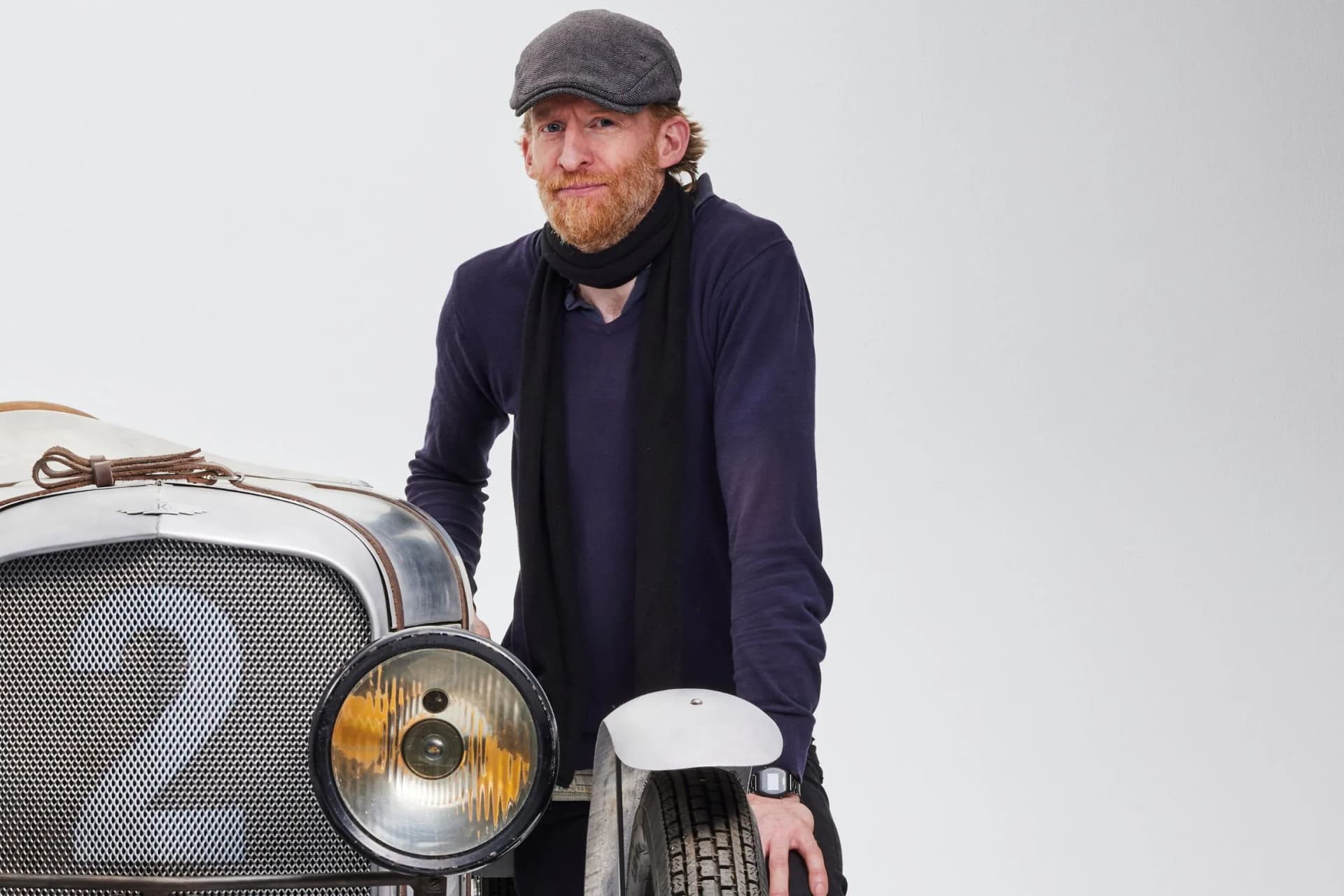
In his workshop Blechkisten Manufaktur, Ole Koch creates models for vintage car enthusiasts inspired by the 1920s.
Where did you get the idea to build model cars?
When my children were seven and nine, they wanted nothing more than to have a soapbox car. That was basically my first model – a racing car that I continue building to this day. So what I do is the direct result of my children’s wish. I enjoyed building them a car and wanted to turn it into something more. I’ve had my workshop for about three years now.
All of your cars are your own design. Where do you take the inspiration?
I’ve been a fan of vintage cars ever since I was young. But art has also always played an important role in my life. After attending art school, I worked in various different areas, developed some skills and, over the years, an idea of the kind of work I wanted to do. Each model is my own creation, but one that is based on a car that already exists. I’ve always been particularly interested in British cars, which is how the “Shootingbrake” came about.
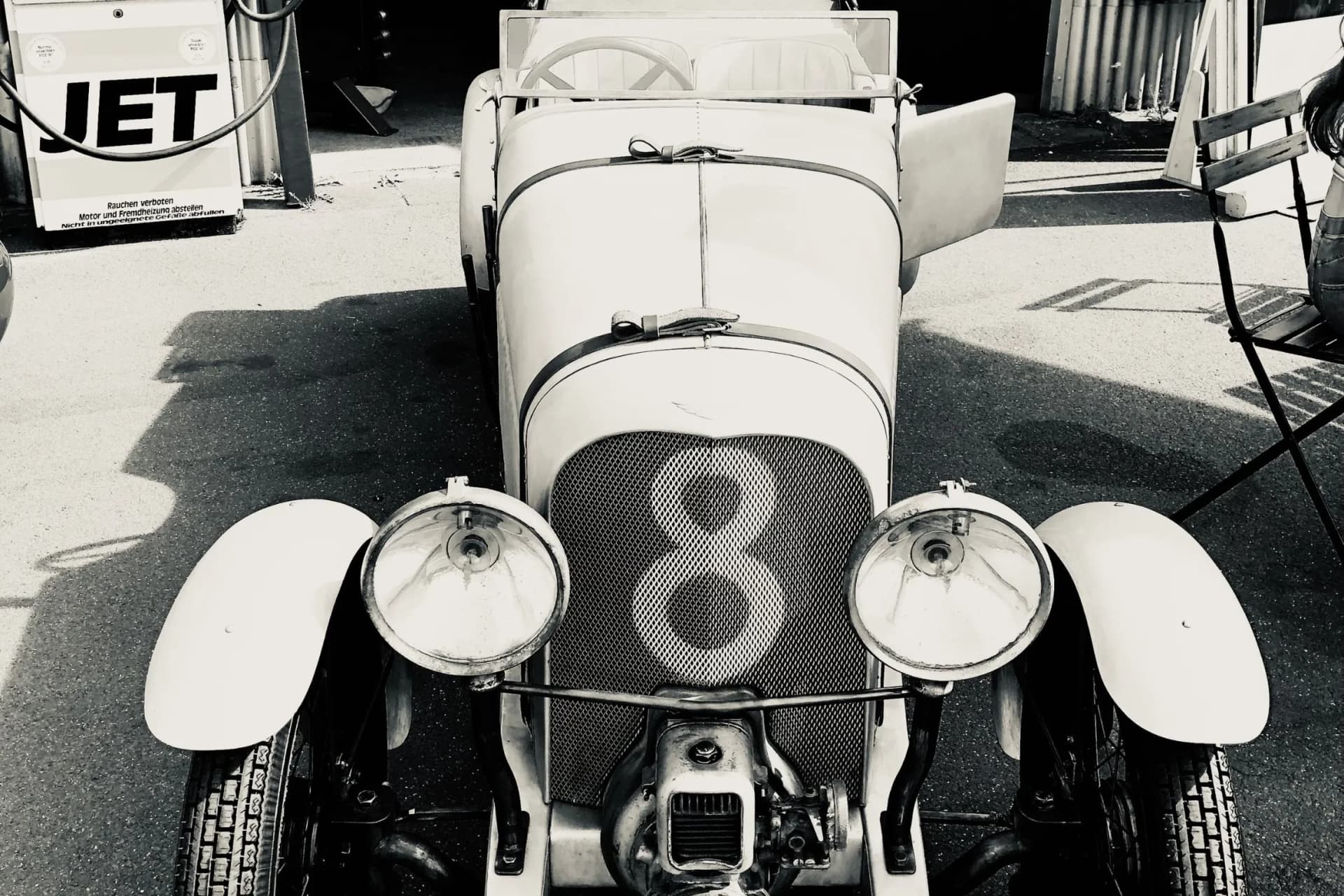
Your models are roughly three meters long, have working brakes and steering, so a person could theoretically climb inside, right?
It’s possible, but it’s not my intention. My cars are only meant to be displayed, they’re a special kind of objet d’art. Everything is handmade: the aluminum body, the frame, all of the woodwork, the entire interior. But what’s most important to me is the design. I don’t want my models to look “overly restored.” I want them to give the impression that they have been around during interesting times. To this effect, I put a lot of effort into producing a patina on every component.
Who are your customers?
Oh, that varies: My customers range from classic car museums to vintage car dealers, from architects to art aficionados who are looking for something to place in their homes. All kinds of people are interested in my work. I even had a customer from as far away as Australia, that was very exciting.
How long does it take you to make a model?
The work takes a lot of time. I need around 250 hours for the simplest model, and for the more elaborate versions it can easily take twice as long.
I start by drawing a rough sketch of what the model might look like, and then I get started. As I’m making it, I see how it can be improved, or where I need to make compromises on certain points because it simply isn’t feasible as it stands.
Which model did you start with?
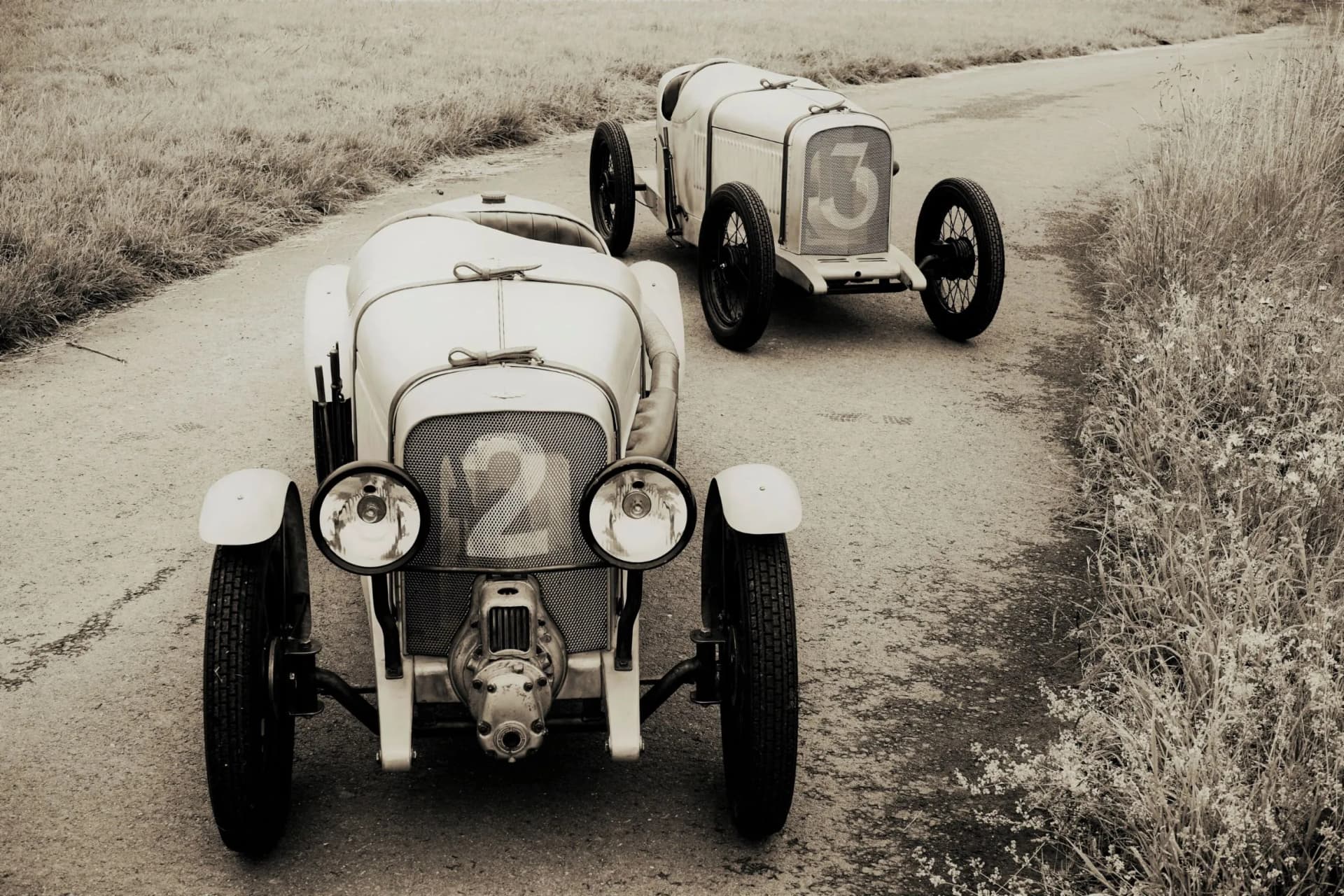
The racing car. It’s now available in various versions; everything has become a bit more elaborate over time. The basic model is the racing car without any add-on parts, and later versions included mudguards, fenders and so on. That was how it all began. And then I started thinking about creating a whole family of models. All my cars have the same front end – that is, the radiator at the front and the bonnet – and then the wheelbase of the chassis and the bodywork vary towards the rear.
Which parts are still original?
The engine, which was originally a stationary engine or an industrial engine used to power small appliances. I usually source the headlights from France, where you can often still find ones that look quite classic. Most of the instruments and the fittings in the dashboard are also old, but I do make some of them from scratch. The leather for the seats is recycled from old sofas that look nicely worn.
Find your dream property in North Rhine-Westphalia
Where quality of life is at home
AI
ExclusiveLangst-Kierst, Meerbusch, North Rhine-Westphalia, Germany
Spectacular villa with garden, pool, and shared garage
Price
€6,900,000
- 6 Rooms
- 3 Bathrooms
- ~420 m² Living area
- ~6,344 m² Plot surface
Marienburg, Cologne, North Rhine-Westphalia, Germany
Impressive villa in Marienburg
Price
€6,900,000
- 15 Rooms
- 5 Bathrooms
- ~666 m² Living area
- ~1,260 m² Plot surface
Lindenthal, Cologne, North Rhine-Westphalia, Germany
Uncompromising luxury ensemble in a prime location – A statement of modern architecture
Price
€6,800,000
- 11 Rooms
- 5 Bathrooms
- ~425 m² Living area
- ~1,093 m² Plot surface
Hahnwald, Cologne, North Rhine-Westphalia, Germany
Architectural Experience
Price
€6,500,000
- 11 Rooms
- 5 Bathrooms
- ~700 m² Living area
- ~2,620 m² Plot surface
Wittlaer, Düsseldorf, North Rhine-Westphalia, Germany
Luxury family villa with Mediterranean outdoor living
Price
€5,400,000
- 10 Rooms
- 4 Bathrooms
- ~493 m² Living area
- ~1,400 m² Plot surface
Düsseltal, Düsseldorf, North Rhine-Westphalia, Germany
Exclusive historic villa in prime zoo location
Price
€4,900,000
- 11.5 Rooms
- 5 Bathrooms
- ~522 m² Living area
- ~455 m² Plot surface
- Exclusive
Oberkassel, Düsseldorf, North Rhine-Westphalia, Germany
Historic city villa with generous space
Price
€4,875,000
- 12 Rooms
- 5 Bathrooms
- ~381 m² Living area
- ~512 m² Plot surface
Rüngsdorf, Bonn, North Rhine-Westphalia, Germany
A Legacy of Elegance – A Villa for Generations
Price on request
- 10 Rooms
- 4 Bathrooms
- ~415 m² Living area
- ~1,297 m² Plot surface
- Exclusive
Oberkassel, Düsseldorf, North Rhine-Westphalia, Germany
Elegant townhouse in prime location
Price
€4,450,000
- 8 Rooms
- 3 Bathrooms
- ~360 m² Living area
- ~240 m² Plot surface

Merle Wilkening
As a Senior Editor at GG Magazine, Merle Wilkening writes about the people, places, and ideas that shape our world. She is most in her element interviewing personalities who speak about their passions with genuine enthusiasm. Driven by curiosity, her travels regularly take her toward the sun in search of unique encounters and the stories behind the world’s most captivating destinations. Her culinary pursuits range from local neighborhood gems to Michelin-starred dining.
Email