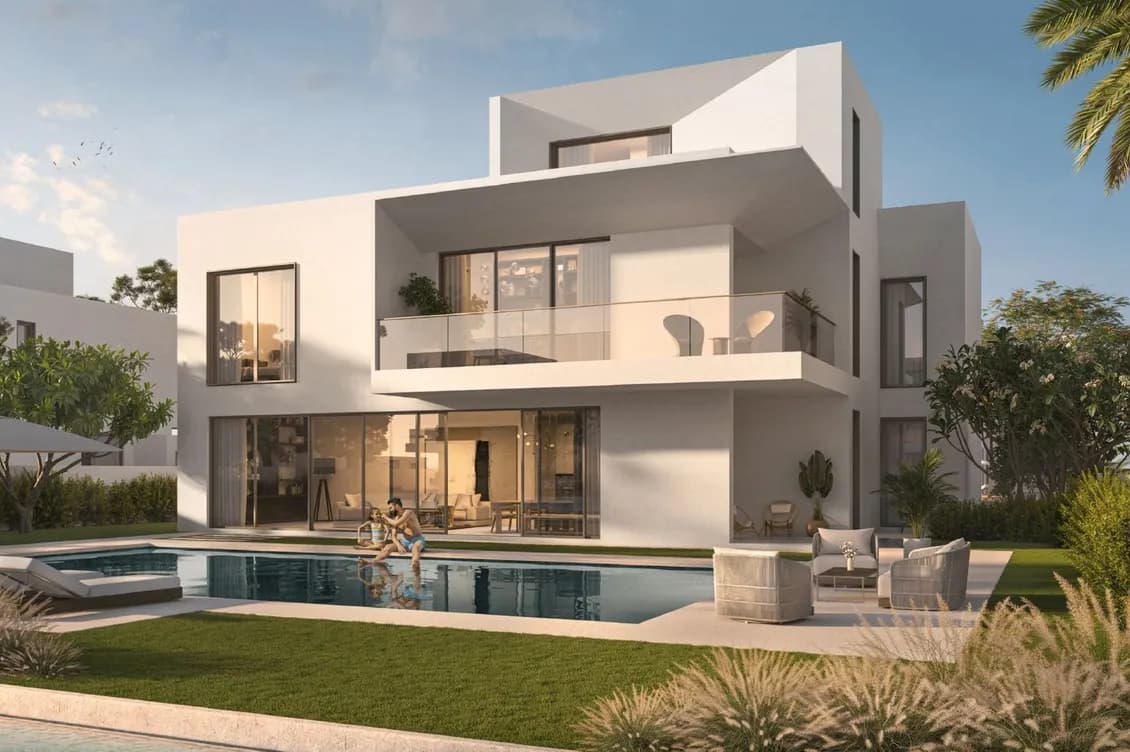
Find Your Ideal Property in Dubai
Explore properties for sale in Dubai with expert guidance from Engel & Völkers, helping you compare layouts, usable living space and overall property value.
The new GG website: Inspiring personalities, extraordinary places and exceptional properties. Discover now
Key Takeaways
Carpet area refers to the usable internal floor space of a property, excluding balconies, external walls and shared facilities.
Carpet area differs from built-up area (BUA), which generally includes walls and certain additional spaces.
Buyers should compare usable living space rather than relying solely on advertised property sizes or prices per square foot.
Dubai property measurements can vary by developer, making it important to verify floor plans and official property documents.
Understanding carpet area is important when buying property in Dubai, particularly when comparing homes with similar advertised sizes. A property's total square footage doesn't always reflect how much usable living space it offers, making it essential to understand what is included in different area measurements.
This guide explains what carpet area means, how to calculate it and how it differs from built-up area and other property measurements. We'll also cover how buyers can verify a property's usable space before making a purchase.
Table of Content
Dubai Property Area Measurements at a Glance
What Is Carpet Area in Real Estate?
What Is Included and Excluded in Carpet Area?
How to Calculate Carpet Area
Carpet Area vs Built-Up Area vs Super Built-Up Area
Which Measurement Should You Focus On When Buying in Dubai?
How to Check the Carpet Area of a Property
Finding the Right Property in Dubai
Property sizes in Dubai can be expressed using several different measurements, each describing a different aspect of a home.
Carpet area: The usable internal floor space of a property, excluding balconies, external walls and shared facilities.
Built-up area (BUA): The constructed area of a property, generally including internal rooms, walls and certain balconies, terraces or covered spaces.
Gross floor area (GFA): A measurement primarily used for building planning and regulatory purposes, covering floor space according to the applicable planning rules.
Plot area: The total land area associated with a property, particularly relevant when buying villas and townhouses.
These measurements are not interchangeable, and the definitions used in property documents can vary between developments.
Carpet area refers to the usable floor space inside a property, essentially the area available for everyday living, furniture and movement. It includes spaces such as bedrooms, living rooms, kitchens, bathrooms and internal hallways.
Unlike built-up area, carpet area focuses on the interior living space rather than the property's overall constructed size. This makes it particularly useful for buyers comparing the practical layout and spaciousness of different homes.
However, carpet area is not a universally standardised measurement in Dubai property listings. Buyers may also encounter terms such as net area, internal area or saleable area, which should not automatically be treated as equivalent. Always confirm what the quoted measurement includes.
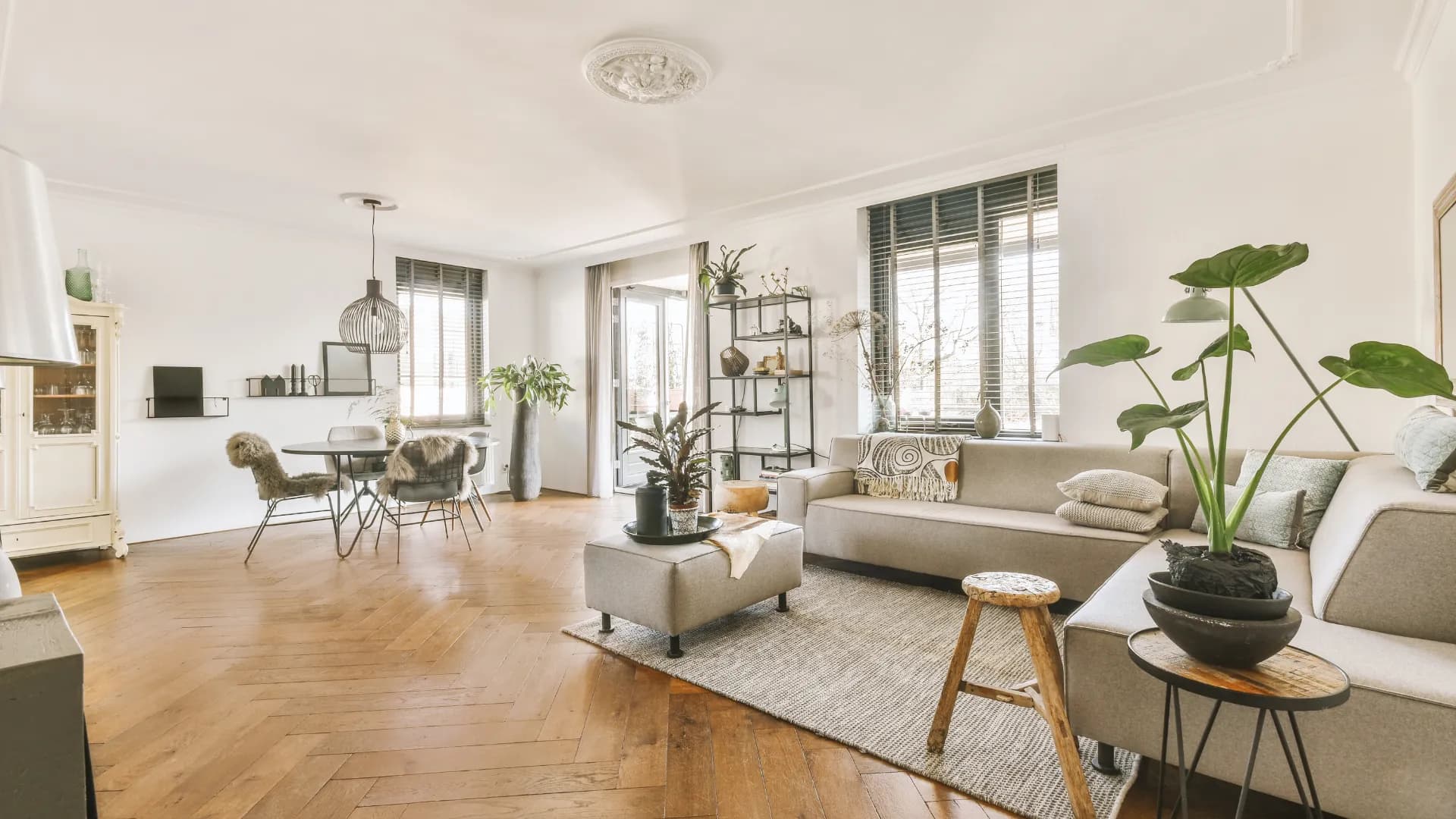
Carpet area measures the usable internal living space of a property, rather than its total constructed or advertised size.
Carpet area generally includes:
Bedrooms and living rooms
Kitchens and bathrooms
Dining areas and internal hallways
Storage rooms and other usable interior spaces
Carpet area generally excludes:
Balconies, terraces and external areas
Space occupied by external walls and structural columns
Shared corridors, staircases, lifts and building lobbies
Parking spaces and communal amenities
The treatment of internal partition walls can vary depending on the measurement standard being used. Buyers should therefore confirm the exact definition applied to their property rather than assuming every developer calculates carpet area identically.
Carpet area can be calculated by measuring the usable floor space within each room and adding these areas together. Alternatively, where a property's total area and excluded components are clearly identified, buyers can subtract those components to estimate the usable internal space.
A simplified formula is:
Carpet Area = Total Stated Area − Excluded Areas
Excluded areas may include balconies, wall thickness and other non-usable spaces, depending on how the original area was measured.
Consider an apartment advertised at 1,400 sq ft, with the following hypothetical breakdown:
Advertised area: 1,400 sq ft
Balcony: 200 sq ft
Walls and other excluded areas: 100 sq ft
The calculation would be:
1,400 − 200 − 100 = 1,100 sq ft
In this example, the apartment offers approximately 1,100 sq ft of usable internal space, despite being advertised at 1,400 sq ft.
This calculation is illustrative. Buyers should confirm which areas are included in the advertised measurement and use an approved floor plan or detailed room dimensions to establish the actual usable space.
The main difference between carpet area, built-up area and super built-up area is which parts of a property are included in the measurement.
Carpet area: Measures usable internal living space, generally excluding walls, balconies and communal facilities.
Built-up area (BUA): Includes the property's constructed area, generally accounting for walls, internal rooms and certain balconies or covered spaces.
Super built-up area: Includes the built-up area plus a proportionate share of communal spaces, such as corridors, lobbies and other shared facilities.
Super built-up area is particularly common in Indian real estate terminology but is not a standard measurement used consistently across Dubai property listings.
For a more detailed explanation of constructed property measurements, read our guide to GFA vs BUA in Dubai.
The most useful property measurement depends on what you're buying and how you intend to use it.
For apartment buyers, carpet living area helps establish how much practical interior space a property offers. Two apartments advertised at 1,500 sq ft may have significantly different usable areas depending on their layouts, balconies and structural features.
For villa and townhouse buyers, built-up area and plot size are also important. A larger plot may provide more garden space, privacy and outdoor amenities, even where the internal living areas are similar.
When comparing property prices, buyers should ensure they are using equivalent area measurements. A property advertised at a lower price per square foot is not necessarily better value if a smaller proportion of its stated area is usable living space.
Ultimately, room dimensions, layout efficiency and the property's overall suitability matter just as much as its advertised size.

Before purchasing a property in Dubai, buyers should verify the usable internal area rather than relying solely on the size advertised in property listings or marketing brochures.
There are several ways to check a property's carpet living area:
Review the floor plan: Check room dimensions, internal layouts and the space allocated to balconies, terraces and other areas.
Request an area breakdown: Ask the developer or agent to clarify what is included in the advertised square footage and whether a separate internal usable area is available.
Check property documents: Compare the measurements in the Sale and Purchase Agreement (SPA), approved plans and relevant property registration documents.
Measure the property: For completed homes, take measurements during a viewing or arrange a professional survey where accurate dimensions are required.
For off-plan properties, reviewing the approved floor plans and contractual documentation is particularly important, as buyers cannot physically inspect the completed space.
Where measurements differ between documents, request clarification before proceeding with a purchase.
Understanding carpet area helps buyers look beyond advertised square footage and assess how much practical living space a property offers. However, size is just one consideration, alongside layout, location, property quality and overall value.
At Engel & Völkers, our experienced real estate advisors help buyers compare properties, understand key measurements and identify homes that meet their lifestyle and investment requirements.
Find Your Ideal Property in Dubai
Explore properties for sale in Dubai with expert guidance from Engel & Völkers, helping you compare layouts, usable living space and overall property value.
You may also be interested in





Carpet area and net area can both describe usable internal space, but their definitions may differ depending on the measurement standard and developer.
Dubai title deeds contain registered property details and area measurements, but they do not necessarily identify carpet area as a separate figure.
Yes, final measurements can differ from initial plans, making it important to review the area variation provisions in the Sale and Purchase Agreement.
Service charges are generally calculated using the property's applicable chargeable area rather than its carpet area, so buyers should confirm the measurement used.
Not necessarily, as layout efficiency, room proportions, location and property quality can be just as important as the total usable floor space.
Contact



Engel & Völkers Dubai
7th Floor, Al Khail Plaza
Jumeirah Village Triangle, Dubai, UAE
Tel: +971 4 4223500