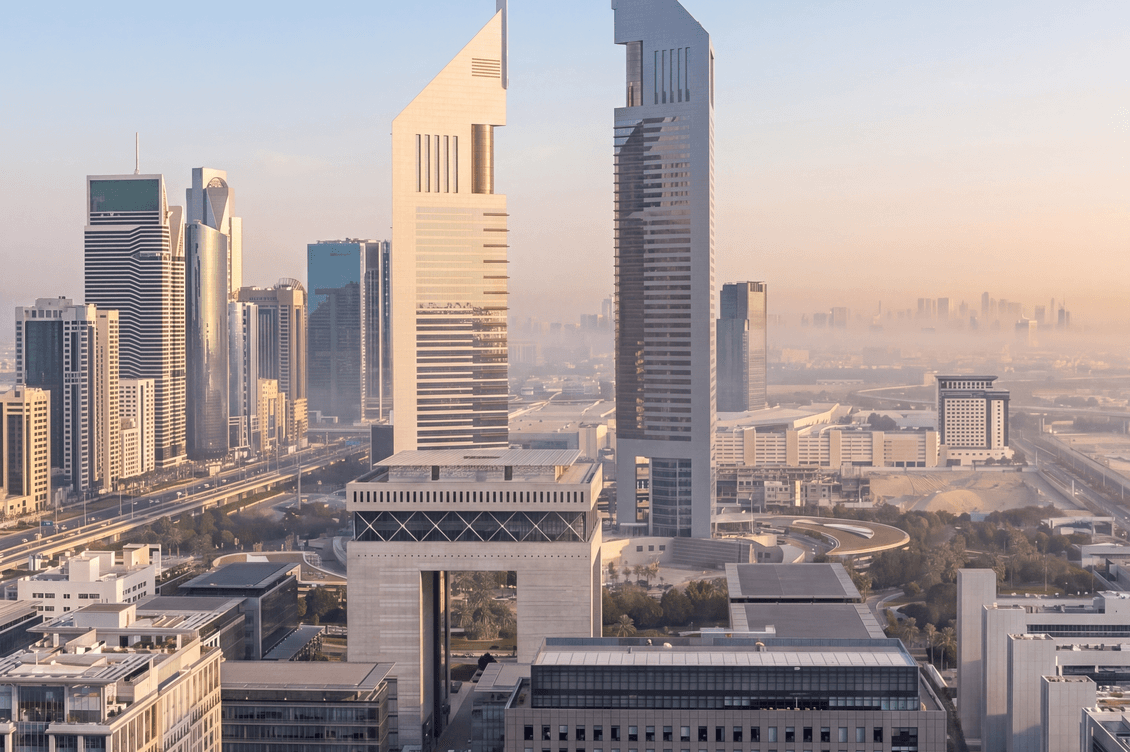
Explore industrial real estate opportunities in Dubai
Speak to an expert to identify the right warehouse, logistics asset, or investment strategy for your goals
Access exclusive properties and get in touch for personal advisory: Explore Private Office.
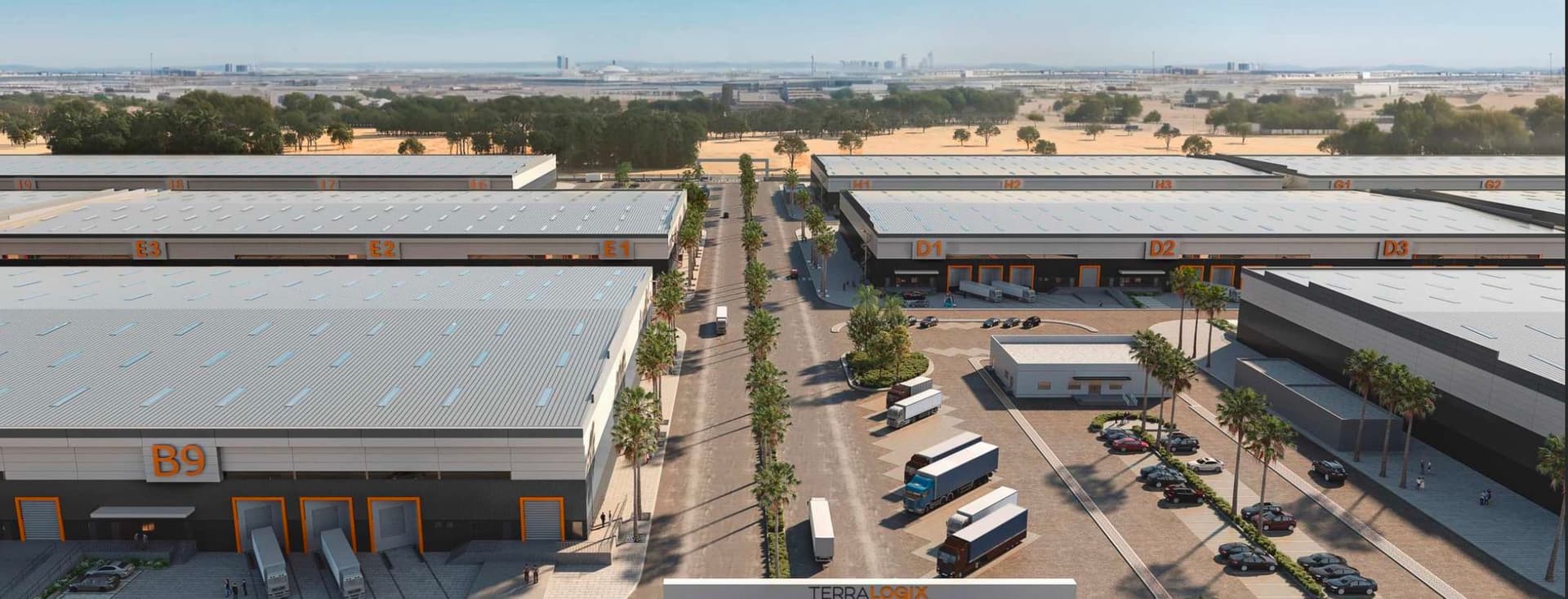
Key Takeaways
Dubai industrial real estate offers high yields and long-term stability: Warehouses and logistics assets in hubs like Jebel Ali Free Zone and Dubai Industrial City deliver strong rental returns of 7–10% with long lease tenures
Warehouse demand is booming due to e-commerce and global trade: Strategic locations such as Dubai South and Al Quoz are witnessing rising rents and occupancy driven by storage, fulfilment, and distribution needs
Freehold zones enable foreign ownership and tax advantages: Investors can fully own industrial assets in designated zones.
Future growth is backed by infrastructure and policy support initiatives such as the Dubai Industrial Strategy 2030 and the Dubai 2040 Urban Master Plan
Dubai’s position between East and West, combined with its continued economic diversification and thriving economy, has made it a global hub for logistics, trade, and industrial activity. As infrastructure continues to expand and supply chains evolve, industrial real estate is becoming an increasingly important asset class for investors.
While traditionally overshadowed by residential and other types of commercial property, industrial real estate in Dubai is now attracting growing attention due to its strong yields, long-term leases, and demand driven by e-commerce and global trade.
This guide provides a comprehensive understanding of industrial and warehouse real estate in Dubai, including how it works, why it is growing, and how investors can approach this segment strategically.
Table of Content
What is industrial real estate?
Types of industrial real estate
Freehold and mainland industrial real estate
How to invest in industrial real estate in Dubai
Key uses of industrial properties
Why industrial real estate is growing in Dubai
Investment potential of industrial real estate in Dubai
Key factors to consider
Risks and considerations
Industrial real estate trends
Conclusion
Industrial real estate spans various properties that are used for manufacturing, production, logistics, and storage. Within the storage segment, warehouse real estate is one of the fastest-growing niches, owing to a boom in trade and e-commerce. This niche focuses exclusively on the storage, distribution chain, and logistics of goods.
In Dubai, industrial real estate can be one of the most profitable segments for investors, often offering rental yields between 7–10% annually and longer lease terms, typically spanning 3 to 10 years.
Having gained a fundamental understanding of what industrial real estate is, let’s explore the different kinds of properties it encompasses.
Warehouse real estate is one of the most popular niches within this segment, encapsulating facilities designed for specific uses, such as:
Cold storage warehouses for pharmaceutical products, food, and other perishables
Dry storage warehouses for automotive or retail components
Smart warehouses that utilise automation and inventory technology
Warehouse real estate is commonly found in areas such as Dubai South, Jebel Ali, and Al Quoz, which are considered the industrial hubs of the city.
For investors and occupiers looking to explore active opportunities, this segment connects directly with warehouse and industrial property availability across Dubai’s leading logistics zones.
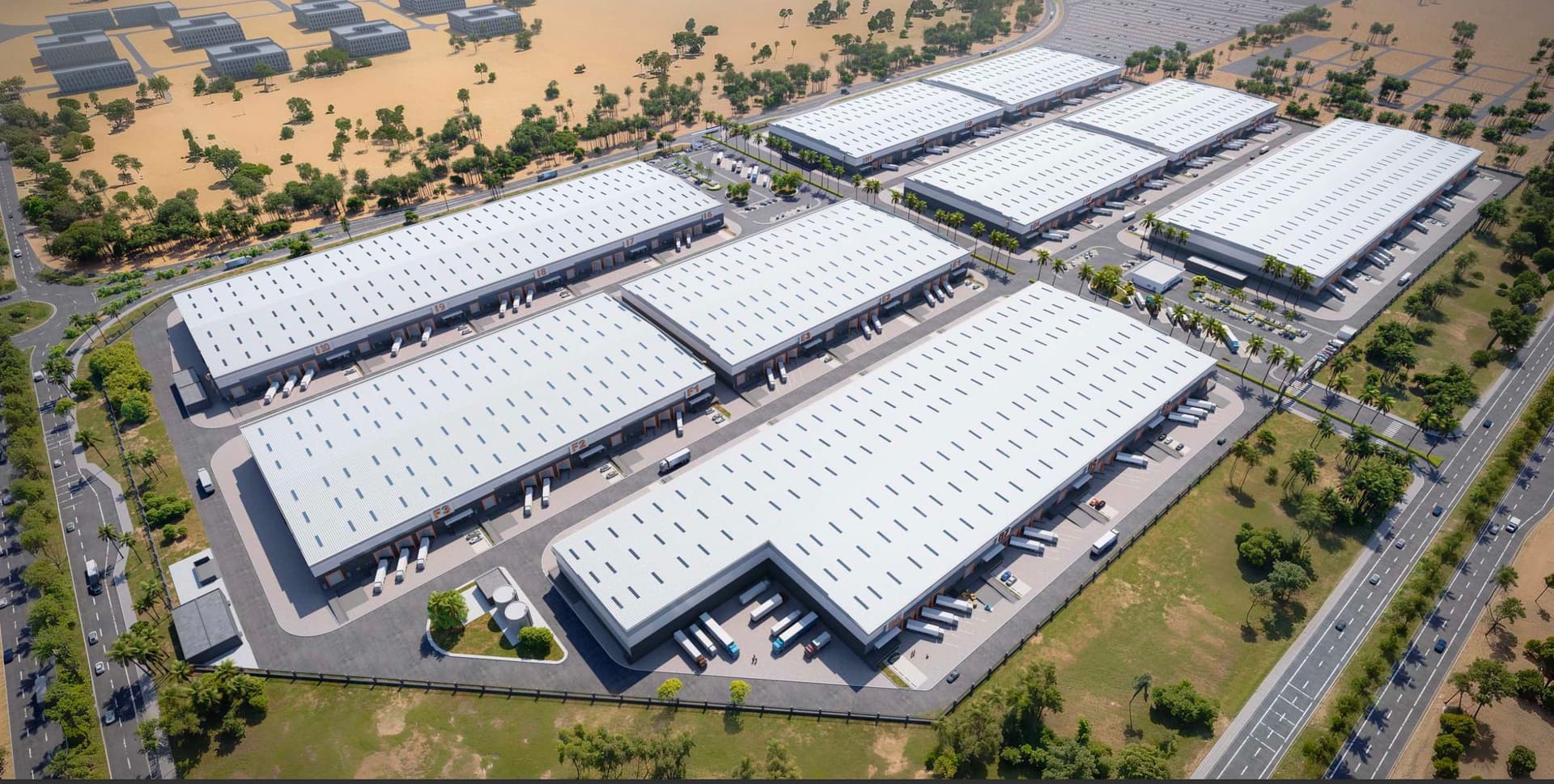
Manufacturing real estate includes factories, plants, and production facilities used to create, assemble, or process goods.
Manufacturing plants are at the heart of Dubai’s industrial ecosystem, supporting sectors such as food and beverage, aluminium, petrochemicals, and pharmaceuticals. Dubai Industrial City and Al Quoz Industrial Area remain key hubs for manufacturing activity.
Logistics and distribution facilities are designed to support the movement, sorting, and delivery of goods across local, regional, and international markets.
These assets are particularly important for e-commerce, freight, third-party logistics, and supply chain operators that require proximity to ports, airports, highways, and population centres. In Dubai, demand for modern logistics space continues to rise as companies seek faster fulfilment, better connectivity, and more efficient distribution networks.
Foreign property ownership laws in Dubai extend beyond residential assets and apply to industrial real estate as well. Ownership and operating structures typically depend on whether the asset is located in a freehold zone, free zone, or mainland area.
Industrial property in designated freehold or free zone locations may allow 100% foreign ownership, while mainland structures can involve different licensing and regulatory requirements depending on the business activity.
For investors, this distinction matters because it can affect ownership rights, licensing, operational flexibility, tax treatment, and the ability to lease to specific types of occupiers. Areas such as JAFZA, Dubai South, and selected industrial zones are often attractive because they combine ownership flexibility with strong logistics infrastructure.
Understanding what industrial real estate is is only part of the equation. The real value lies in how investors approach this segment.
There are several ways to invest, depending on capital, risk appetite, and long-term objectives.
Investors can acquire leased warehouse assets that generate stable rental income, often backed by long-term tenants in logistics or distribution sectors.
Some investors focus on acquiring vacant or semi-vacant units and leasing them to operators, benefiting from rising demand and rental growth in key industrial zones.
Investors may also purchase industrial plots and develop facilities tailored to market demand, particularly in emerging zones such as Dubai South.
For more advanced investors or occupiers, build-to-suit developments provide a structured approach to delivering purpose-built facilities aligned with specific operational requirements.
This approach is increasingly popular in Dubai’s tightening industrial market, where companies prioritise efficiency, automation, and long-term scalability.
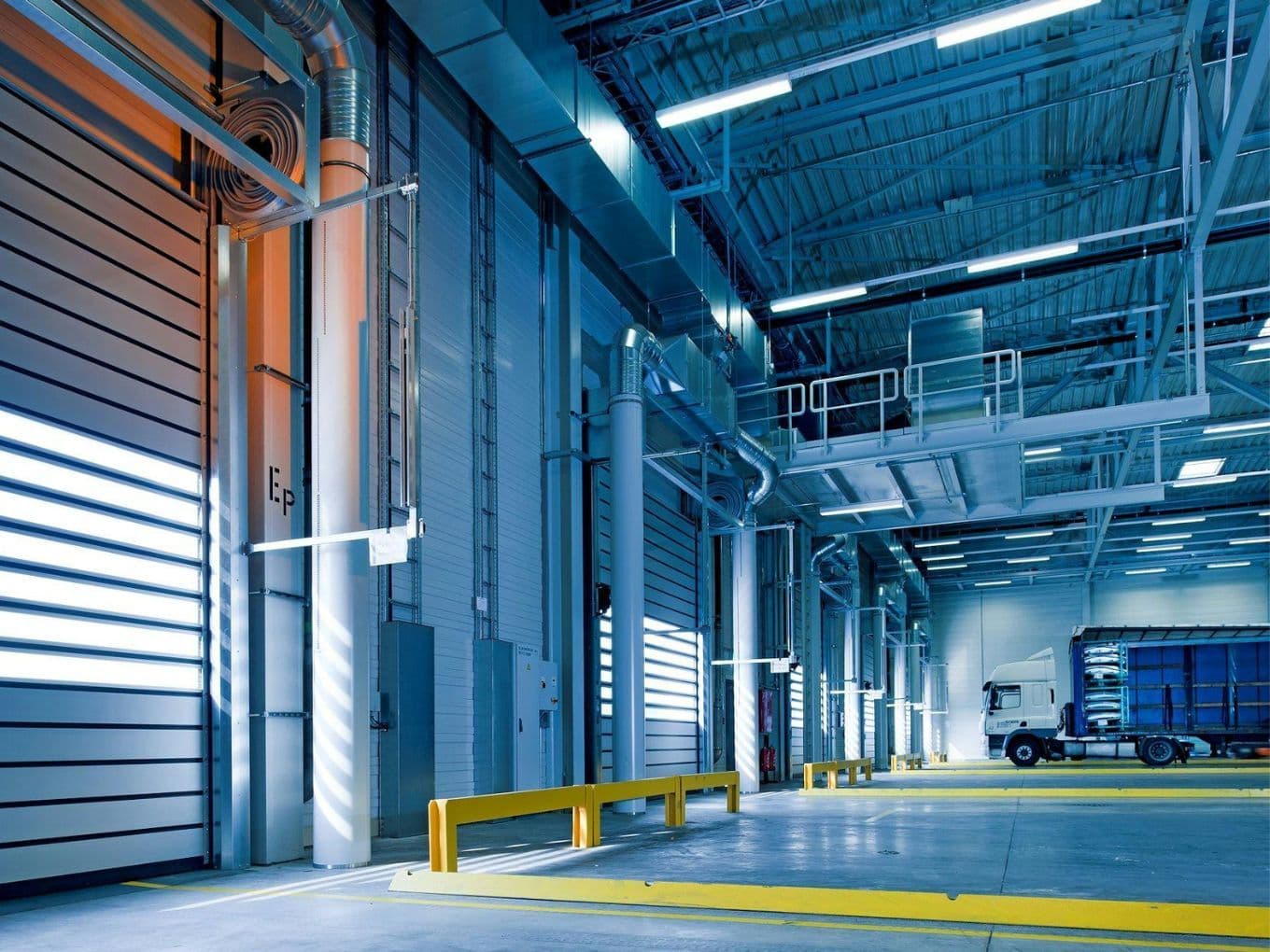
Industrial real estate is a multifaceted sector with diverse applications.
Large-scale manufacturing operations: These facilities support the production, processing, or assembly of goods across sectors such as food, automotive, pharmaceuticals, and construction materials
E-commerce storage and distribution: Warehouses and fulfilment centres allow online retailers to store inventory, process orders, and deliver goods quickly across Dubai and the wider region
Assembly and production units: These spaces are used for light manufacturing, component assembly, packaging, and other operational processes that require functional industrial layouts
Logistics and supply chain operations: Distribution hubs support freight movement, regional delivery, import-export activity, and last-mile logistics
Industrial real estate developers are increasingly active in Dubai as the sector continues to expand.
A February 2026 report highlighted strong growth in H2 2025, with areas such as Al Quoz and Dubai Industrial City experiencing notable rental increases:
Al Quoz: AED 100 per sq ft
Dubai Industrial City: AED 58 per sq ft, 32% year-on-year growth
JAFZA: AED 40–45 per sq ft, 22% year-on-year growth
National Industries Park: AED 42–52 per sq ft
Dubai Investment Park: AED 60–65 per sq ft
This growth is supported by several core drivers:
Global connectivity between East and West: Dubai’s position gives businesses efficient access to regional and international trade routes
Investor-friendly regulations and ownership structures: Free zones and designated ownership areas make it easier for international investors and operators to enter the market
Streamlined government processes: Dubai’s business environment supports faster licensing, company setup, and operational expansion
Modern infrastructure across industrial zones: Ports, airports, highways, and logistics corridors help industrial occupiers operate more efficiently
In 2026, approximately 6.6 million sq ft of new industrial and warehousing stock is expected to enter the market to meet growing demand.
Many occupier requirements are concentrated in the 10,000 to 50,000 sq ft range, highlighting sustained demand for mid-sized warehouse and logistics facilities.
Occupancy rates remain high across major hubs, with Dubai South at 96% and Dubai Industrial City at 94%. These figures reinforce strong investor confidence and highlight the sector’s stability.
For investors, the appeal lies in the combination of income, resilience, and long-term demand. Industrial assets are often tied to essential business operations, which can make them less discretionary than some other real estate categories.
Investing in industrial real estate requires careful evaluation beyond just headline yields.
Budget and pricing variations: Industrial property prices and rents vary significantly by location, specification, and tenant demand, so aligning budget with the right segment is critical
Property type and suitability: The asset must match occupier demand, whether for logistics, storage, manufacturing, or distribution, to ensure long-term leasing potential
Infrastructure and specifications: Ceiling height, loading bays, yard space, power capacity, and road access directly impact usability and rental appeal
Zoning and licensing requirements: Each industrial zone has specific permitted uses and authority requirements, which must align with tenant operations
Tenant quality and lease structure: Strong tenants and well-structured leases improve income stability and reduce operational risk
While industrial real estate offers strong returns, investors should also be aware of the risks associated with the asset class.
Tenant dependency: Income is often reliant on a single occupier, particularly in large warehouses or build-to-suit facilities
Vacancy risk: Re-letting can take time if the unit is highly specialised or located in a less active industrial zone
Specification risk: Older or poorly configured assets may become less competitive as occupier requirements evolve
Liquidity constraints: Industrial assets typically have a smaller buyer pool compared to residential property, which can impact exit timelines
Regulatory complexity: Licensing, zoning, and authority approvals can affect how easily a property can be leased or repurposed
Understanding these risks is essential to building a balanced and sustainable investment strategy.
Several trends are shaping the future of industrial real estate in Dubai.
E-commerce growth driving demand: Increased online retail activity is accelerating demand for fulfilment centres, storage space, and last-mile delivery hubs
Limited supply supporting rental growth: Strong occupier demand combined with controlled new supply is pushing rents higher in established industrial zones
Shift towards automation-ready facilities: Businesses are prioritising warehouses that can support racking systems, robotics, and advanced logistics technology
Sustainability and efficiency becoming priorities: Developers are increasingly incorporating energy-efficient systems, solar integration, and smarter building design
Infrastructure expansion unlocking new areas: Ongoing development around ports, airports, and logistics corridors is creating new opportunities beyond traditional hubs
Dubai’s industrial real estate market is no longer a niche segment. It has become a core part of the city’s investment landscape, supported by global trade flows, e-commerce growth, and continued infrastructure expansion.
For investors, the opportunity lies in understanding how different types of industrial assets perform. Warehouses, logistics hubs, manufacturing facilities, and build-to-suit developments each serve distinct roles within the market, and performance is heavily influenced by location, specification, and tenant demand.
As occupier requirements become more sophisticated and availability tightens in key zones, well-positioned industrial assets are likely to continue benefiting from strong rental growth and high occupancy levels. At the same time, the sector offers a level of income stability that is often less sensitive to short-term market fluctuations compared to other real estate categories.
With the right strategy, industrial real estate in Dubai can provide a combination of steady income, long-term capital growth, and exposure to one of the region’s most critical economic sectors.
Explore industrial real estate opportunities in Dubai
Speak to an expert to identify the right warehouse, logistics asset, or investment strategy for your goals
You may also be interested in



Industrial real estate can offer strong returns due to high rental yields, long lease terms, and sustained demand from logistics, manufacturing, and e-commerce sectors.
Industrial real estate refers to properties used for manufacturing, logistics, storage, distribution, and production, including warehouses and factories.
Warehouse real estate is a subset of industrial real estate focused on storage and distribution, while industrial real estate also includes manufacturing and production facilities.
Demand is driven by Dubai’s role as a global logistics hub, combined with e-commerce growth, infrastructure investment, and strong international trade connections.
Investors should evaluate location, infrastructure, tenant demand, lease structure, and how well the asset meets current and future occupier requirements.

Alex Lourenco
Alex Lourenco is the Head of Commercial at Engel & Völkers Commercial Middle East, where he has built and led the department since its inception. With over a decade of international experience in management and business development, Alex brings a global perspective and a results-driven approach to Dubai’s commercial real estate sector. Under his leadership, Engel & Völkers Commercial was recognised as the Top Team of Engel & Völkers Dubai in 2024, reflecting his focus on performance, collaboration, and long-term client partnerships.
Contact



Engel & Völkers Dubai
7th Floor, Al Khail Plaza
Jumeirah Village Triangle, Dubai, UAE
Tel: +971 4 4223500