
Get Your Free Investment Guide
Learn how to maximise returns and make informed decisions in Dubai’s property market.
The new GG website: Inspiring personalities, extraordinary places and exceptional properties. Discover now
Key Takeaways:
The most expensive buildings in the world include Masjid al-Haram, Abraj Al Bait, Marina Bay Sands, Hong Kong’s IFC complex, and SoFi Stadium.
These landmark megastructures span religion, hospitality, finance, entertainment, and sport, functioning as economic powerhouses and global attractions.
Cities like Mecca, Singapore, Hong Kong, Los Angeles, and Dubai invest heavily in architectural icons to signal economic strength and attract international capital.
Proximity to globally recognised landmark buildings can positively influence surrounding real estate demand, particularly in prime urban markets.
When it comes to real estate, imagination and capital often know no bounds. Around the world, leading architects, engineers, and developers collaborate to create formidable structures that shape skylines and define eras.
These buildings are among the most expensive ever constructed, often costing billions of dollars. But what makes these buildings so famous, and why are they consistently ranked among the world’s most expensive?
In this guide, we take a closer look at the most expensive buildings in the world, examine their estimated development costs, and explore how they were brought to life.
Table of Content
List of the World’s 5 Most Expensive Buildings
How Construction Costs Reach Billion-Dollar Levels
Cities That Dominate the List of Expensive Buildings
Why Cities Compete to Build the World’s Most Expensive Buildings
How Iconic Buildings Shape Luxury Real Estate Markets
Are Expensive Buildings Good Long-Term Investments?
Masjid al-Haram in Mecca, the holiest site in Islam, has undergone continuous expansion and redevelopment over decades. Major expansion phases have added hundreds of thousands of square metres of prayer space, climate-controlled courtyards, additional minarets, and large-scale infrastructure to accommodate millions of pilgrims during Hajj and Umrah.
While not constructed in a single phase at this cost, cumulative redevelopment and expansion spending is widely reported to exceed $100 billion. Ongoing upgrades continue to add to total investment, making it widely regarded as the most expensive building complex in the world.
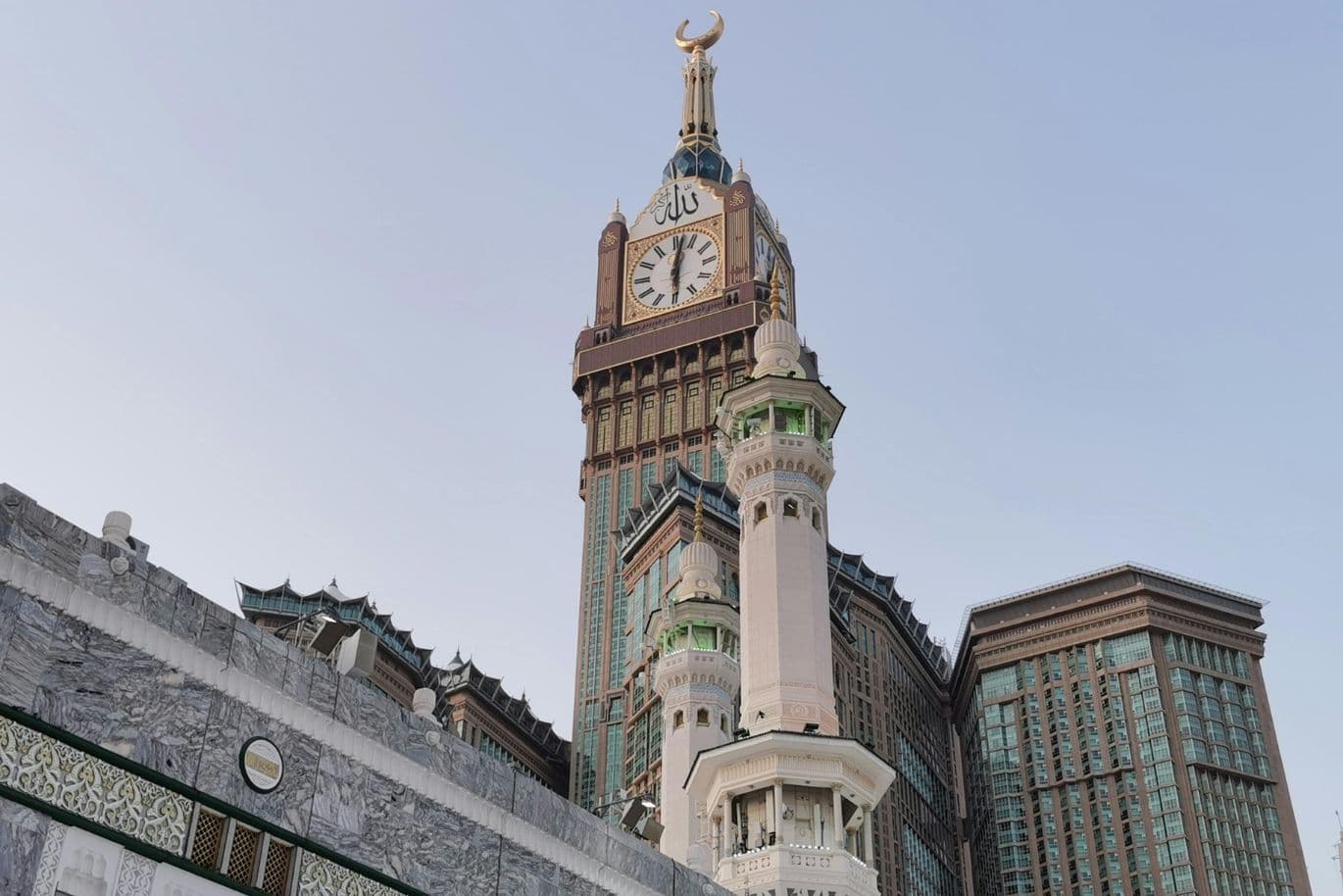
Overlooking Masjid al-Haram, the Abraj Al Bait complex, commonly known as the Makkah Royal Clock Tower, was built at an estimated cost of $15 billion.
The seven-tower complex includes luxury hotels, serviced residences, retail space, prayer halls, and hospitality infrastructure. Its centrepiece, the 601-metre Makkah Royal Clock Tower, is one of the tallest buildings globally and features one of the largest clock faces in the world.
Its scale, height, and mixed-use design place it firmly among the world’s most expensive buildings.
Completed in 2010 at a reported cost of approximately $6.8 billion, Marina Bay Sands remains one of Singapore’s most iconic developments.
The integrated resort consists of three 55-storey towers topped by the SkyPark, a dramatic cantilevered platform connecting the towers. The development includes a large casino, convention centre, luxury retail mall, hotel rooms, fine dining venues, and the world-famous rooftop infinity pool.
A major expansion project has been approved, further reinforcing its status as one of the most ambitious hospitality projects globally.
Hong Kong’s International Finance Centre (IFC) complex, completed between 1998 and 2003, is one of the most expensive commercial developments in Asia.
The mixed-use complex comprises two office towers, a luxury shopping mall, and the Four Seasons Hotel. Two IFC rises 420 metres above Victoria Harbour and serves as headquarters for major global financial institutions.
Its classification as a complex rather than a single tower explains its scale of investment.

Located in Inglewood, California, SoFi Stadium is widely recognised as the most expensive stadium ever built. Completed in 2020, the total development cost reportedly exceeded $5 billion and may approach $6 billion when surrounding infrastructure is included.
The stadium serves as home to the NFL’s Los Angeles Rams and Los Angeles Chargers. It features:
A seating capacity of over 70,000, expandable to more than 100,000
A translucent ETFE canopy roof
One of the largest suspended 4K video boards in the world
Integrated entertainment and hospitality facilities
Its scale and technological sophistication place it among the world’s most expensive standalone buildings.
How do projects reach such extraordinary cost levels?
Size and engineering complexity: Ultra-tall towers, expansive foundations, and advanced structural systems significantly increase costs.
Prime location: Land values in global hubs like Hong Kong, Singapore, Mecca, and Los Angeles are exceptionally high.
High-end materials and finishes: Steel, reinforced concrete, specialist façades, luxury interiors, and climate systems drive expenditure upward.
Mixed-use integration: Many of these projects combine hospitality, residential, retail, commercial, and entertainment components in a single master-planned structure.
Specialist talent: Leading architects, engineers, and consultants command premium fees but deliver world-class results.
Several cities consistently feature in high-cost development rankings:
Burj Khalifa
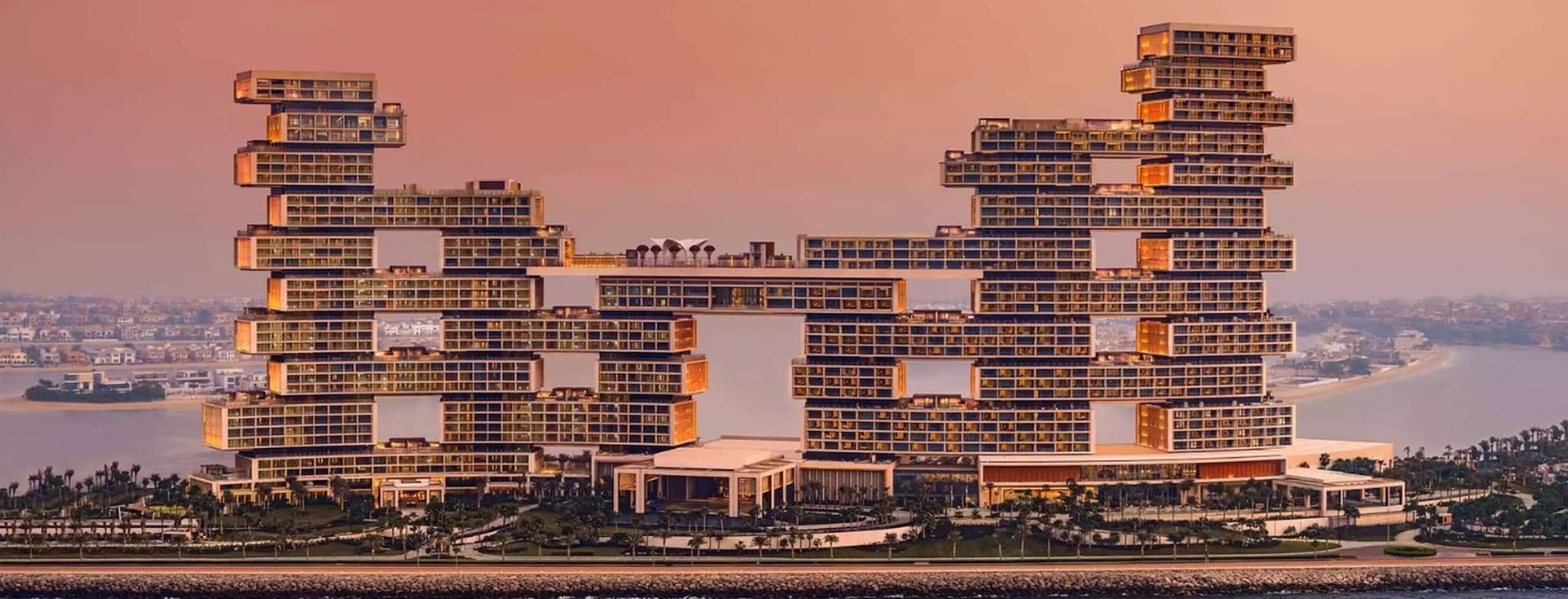
Atlantis The Royal
Upcoming large-scale waterfront developments
Masjid al-Haram
Abraj Al Bait
Marina Bay Sands
Marina One
Resorts World Sentosa
IFC Complex
SoFi Stadium
One World Trade Center
One Vanderbilt
Cities invest billions in megastructures for several strategic reasons:
Tourism: Iconic buildings attract millions of visitors annually, generating long-term economic returns.
Economic development: Large projects draw multinational corporations, luxury brands, and global investors.
Global branding: Landmark architecture strengthens a city’s international profile.
Innovation and prestige: Pushing engineering boundaries enhances national and corporate reputation.
Iconic buildings often anchor prime real estate districts. Their presence can:
Increase global recognition of a neighbourhood
Drive demand for nearby luxury developments
Support premium pricing due to brand association
For example, properties near globally recognised landmarks such as Burj Khalifa typically command premium valuations, although long-term price growth depends on broader market fundamentals.
Ownership within landmark developments can offer prestige and strong rental demand. However, investment performance depends on market cycles, entry price, and supply dynamics.
Potential advantages include:
Limited supply in globally recognised locations
Strong appeal to high-net-worth tenants and buyers
Long-term capital preservation in mature global cities
That said, luxury real estate is not immune to market fluctuations. Investors should assess fundamentals carefully before committing capital.
If you are considering entering the luxury property market in Dubai, Engel & Völkers can provide tailored guidance aligned with your investment goals.
With extensive local expertise and access to prime residential developments, Engel & Völkers supports buyers at every stage of the acquisition process.
To begin your property search, email dubai@engelvoelkers.com or call 800 3555.
Get Your Free Investment Guide
Learn how to maximise returns and make informed decisions in Dubai’s property market.
Masjid al-Haram, based on cumulative expansion spending, is widely regarded as the most expensive building complex globally.
Saudi Arabia, Singapore, the United States, and the UAE have developed several of the world’s highest-cost landmark buildings.
They can enhance global recognition and demand, although price growth depends on broader market conditions.
Antilia in Mumbai, India, is widely cited as the most expensive private residence, with reported construction costs exceeding $1 billion.
You may also be interested in

Contact



Engel & Völkers Dubai
7th Floor, Al Khail Plaza
Jumeirah Village Triangle, Dubai, UAE
Tel: +971 4 4223500