
- 4 min read
Real Estate Transfer
Anticipating to Better Protect Your Estate

At some point in every property owner’s life, the question of what to do with their property becomes more than a theoretical consideration. It rarely arises at the right time. Often, it follows a family event; sometimes, it stems from a quieter realisation: the desire to put everything in order before circumstances make those decisions unavoidable.
Transferring a property involves far more than signing a notarial deed. It can have a lasting impact on relationships between heirs and often determines how an estate will be preserved or divided for years to come.
Have you recently inherited a property? Our article on property inheritance explains the inheritance taxes that may apply and the options available to you.
Planning Ahead Rather Than Leaving Things to Chance
In Belgium, inheritance tax remains a significant expense for those inheriting real estate, with rates that can rise quickly even for transfers to close family members, such as children and partners. Making a gift during one’s lifetime can reduce the tax cost of transferring property, depending on the Region, the relationship between the parties, and their family and financial circumstances. Certain inheritances may also benefit from exemptions, notably for the family home inherited by a surviving spouse or legally cohabiting partner, subject to specific conditions.
For gifts of real estate, the 2026 rate schedule is stated to be identical across all three Belgian Regions: 3% on the portion up to €150,000, 9% on the portion between €150,000 and €250,000, 18% on the portion between €250,000 and €450,000, and 27% on the portion exceeding €450,000.
A gift can involve full ownership or be structured by separating usufruct from bare ownership. In the latter case, the donor retains the usufruct, meaning the right to occupy or rent out the property for the rest of their life, while transferring bare ownership. The bare owner owns the property but does not have the full right to use or enjoy it while the usufruct remains in place. Where a gift is made with the usufruct retained by the donor, gift tax is calculated on the full ownership value of the property, even though the donor retains the usufruct.
This decision deserves careful consideration, taking into account the family situation and the needs of everyone involved.
To put this into perspective, the gift tax on a property valued at €500,000 amounts to approximately €63,000, representing an effective rate of 12.6%. This example assumes that one parent gifts the entire property to a single child, with no previous gifts of real estate to be taken into account. The amount excludes notarial fees and other deed-related costs. Depending on the Region and the family’s circumstances, these costs are often lower than the inheritance tax that would otherwise be payable. Planning a gift sufficiently early can generally offer more favourable tax conditions.
Real Estate: An Asset That Is Difficult to Divide
Unlike a financial portfolio, a property cannot easily be divided among several heirs. This is often where tensions arise: one person wants to keep the family home, another would prefer to sell it, while a third needs access to cash.
These situations can be anticipated during the owner’s lifetime through clear arrangements. One heir might take over the property and compensate the others financially. Alternatively, the property could be sold in advance so that the proceeds can be distributed fairly.
Such arrangements must, however, respect the rights of heirs entitled to a reserved share of the estate. Under Belgian law, certain heirs are guaranteed a minimum share of an estate.
What may appear to be a straightforward legal formality is, in reality, a way of protecting loved ones: helping them avoid difficult decisions at an already emotionally challenging time.
Professional Guidance: A Discreet but Decisive Advantage
Transferring real estate requires careful planning. The involvement of a notary is mandatory for every gift of real estate in Belgium. The notary prepares the authentic notarial deed and ensures that the transaction is legally sound.
Expertise in the property market also plays an important role, particularly when assessing the property’s value and informing decisions about the family’s assets.
What is the property’s actual market value? How might that value evolve over time? Is it better to retain the property, transfer it in kind, or sell it before transferring the proceeds? Addressing these questions early can create considerably more options and help prevent misunderstandings later on.
A Decision That Goes Beyond Financial Considerations
Passing on wealth involves more than transferring an asset. Behind every property, there is often a story: memories, a family home, and a place where several generations have grown up.
This emotional dimension should not be overlooked in favour of tax considerations alone. Otherwise, there is a risk of making decisions that look optimal on paper but prove difficult for the family in practice.
Taking the time to discuss these matters openly with loved ones can help prevent unspoken expectations and unresolved disagreements from lingering long after the deed has been signed.
Planning the transfer of your real estate assets in advance means giving your loved ones greater peace of mind when they need it most. It also allows you to remain in control of your decisions rather than being forced to live with the consequences of circumstances beyond your control.
Our advisers speak with families facing these questions every week. They would be pleased to discuss your situation in complete confidence and, should you wish, put you in touch with a trusted notary.
Value your property
FAQ
Frequently asked questions
In direct line, making a gift generally costs less than paying inheritance tax. However, this is not always the case: it depends on the region, the value of the property and the family circumstances, and certain conditions must be met for the gift to take effect. A notary can compare the costs for your specific situation.
The owner transfers the bare ownership of the property, retaining the right to use it or receive rental income from it through a life interest (usufruct). This means they can continue to live in the property or rent it out for the rest of their life.
Yes, if the gift relates only to the bare ownership of the property. The donor retains the usufruct and can continue to live in the property.
You may also be interested in
 Three Factors for a Successful Sale
 Living or Investing?
- 4 min.
 Legislative Changes That Will Affect Your Real Estate Projects
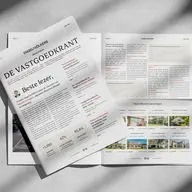 Analysis, trends, and opportunities: discover The Real Estate Gazette 2026-2027
Contact
Contact your personal advisor


Engel & Völkers Belgium
Chaussée de Waterloo 1173
1180 Uccle, Brussels (VAT: BE 1004.032.746)
Tel: +32 2 880 40 21