Selling commercial real estate successfully
Realize the full value of your commercial property – with the leading partner for professional transactions.
Realize the full value of your commercial property – with the leading partner for professional transactions.
&w=1920&q=75)
Expertise, Experience, Excellence
Selling a commercial property is a complex transaction that demands deep expertise in each segment - whether it’s a mixed-use building, multi-family home, hotel, office, logistics, or retail space. Successful marketing requires foresight, strategic planning, and discretion. It’s about accurately assessing market value and engaging the right circle of qualified buyers. As a globally connected and locally rooted partner, we manage this process for you, guiding you personally every step of the way.
We leverage our global network to give you access to a financially strong, international pool of buyers.
We support you with market analysis and years of expertise to optimize your investment strategy.
We guide you personally, confidently, and with complete discretion through the entire process to a successful conclusion.
Six Steps to Success

A personal consultation is the foundation of every successful transaction. Together, we define your individual goals, analyse the optimal time to sell, and develop a tailored, data-driven strategy for marketing your commercial property. Our services also include non-binding advice on portfolio optimization and lease value management.

Our experts don’t just provide an estimate for your property. Based on thorough market analysis, comparable properties, and a detailed assessment of your asset’s potential, we create a reliable data foundation. This allows us to determine a realistic, market-oriented asking price for your property.
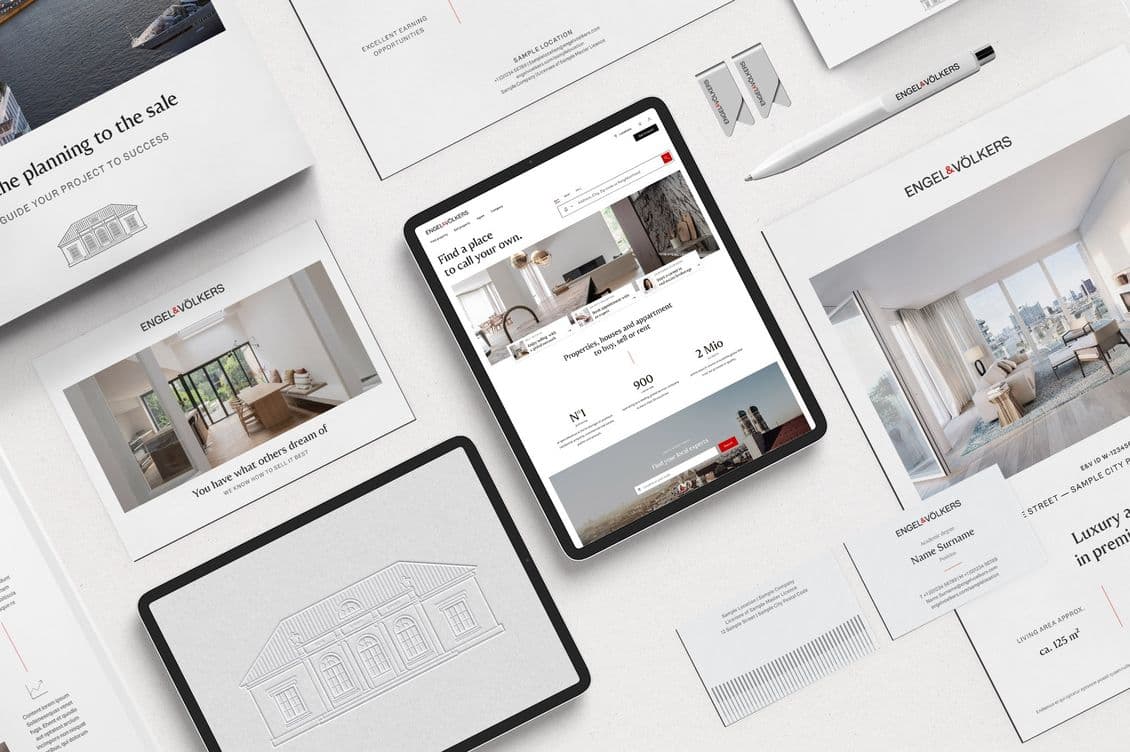
Our bespoke marketing strategy includes high-quality property brochures, data-driven target audience analysis, and strategic positioning of your commercial property - whether discreetly within our network or broadly on the global market. Additional marketing channels are selected individually, tailored to the specific requirements of each property.

The viewing phase is a critical part of the marketing process. We manage it reliably and discreetly, minimizing any disruption to ongoing operations. Our experts showcase your property in the best possible light, presenting it convincingly to pre-qualified, vetted prospects - either in your presence or independently.

Transparency is the foundation of our partnership. We provide continuous, proactive reporting on all marketing activities, target audience engagement, and the current status of negotiations. This ensures you are fully informed at all times and maintain complete control over the process.

We manage the entire process through to a successful closing. Our negotiation expertise safeguards your interests. We coordinate the drafting of the purchase agreement with the notary, oversee the property handover, and remain a trusted partner for all contractual matters—even after the transaction is complete.
1 out of 6

A thorough valuation is the foundation of every sales strategy. Start with our free online assessment for multi-family buildings, or request a detailed expert analysis.
Our property advisors are more than brokers - they are strategic partners with in-depth knowledge of the local market. This expertise forms the foundation for an accurate valuation of your commercial property. At the same time, they leverage access to our global network to connect your asset with financially qualified buyers. This combination of local excellence and international reach ensures an optimal sales process for your investment or commercial property.
FAQ – Answers to your most important questions
In general terms, a commercial property is one intended exclusively for economic (for-profit) activities rather than residential purposes. Its technical classification depends not only on its architecture but fundamentally on its Land Use, defined by the Communal Regulatory Plan (PRC) of each municipality.
Key Factors of the Chilean Market:
Land Use and Final Acceptance (Recepción Final): For a property to operate legally as a commercial space, it must have a municipal acceptance authorizing that purpose. Without this, the tenant will not be able to obtain their Commercial License (Patente Comercial).
Taxes (VAT on rent): Unlike residential properties, the leasing of commercial real estate in Chile is usually subject to VAT (19%) if the property includes facilities or furniture that enable the execution of a commercial or industrial activity.
Leasing Law: It is governed by Law 18.101, which, although it protects the owner in cases of arrears (especially following the "Devuélveme mi casa" [Give me my house back] law), allows for contracts with much greater negotiation freedom in the commercial sector compared to the residential one.
The ideal time to sell a property in Chile depends on several factors that must be carefully evaluated together:
1. Capital Gains Tax (8,000 UF Limit)
Unlike other countries, individuals in Chile have a lifetime cumulative exemption of up to 8,000 UF on gains from the sale of properties acquired after 2004. It is crucial to calculate if your profit exceeds this amount, as the surplus could be subject to a single 10% tax or be integrated into your Global Complementary Tax (Impuesto Global Complementario). Selling before exceeding this limit is key for tax optimization.
2. Rental Yield vs. Interest Rates
The Chilean real estate market operates in UF (Unidad de Fomento). When mortgage interest rates rise, buyer demand tends to fall, putting downward pressure on prices. However, in a scenario of stable or falling rates, buyers' purchasing power increases. You must compare your property's cap rate (annual yield) against other fixed-income investments (such as bonds or term deposits) to decide if your capital is better invested in bricks and mortar or in the financial market.
3. Energy Efficiency Requirements and Remodeling
With the implementation of the Energy Efficiency Law and the Housing Energy Rating (CEV) in Chile, properties featuring thermal improvements, double-pane windows, and efficient climate control systems are commanding significantly higher sale prices. An "outdated" property compared to new construction regulations may suffer a greater price penalty.
4. Portfolio Optimization (Asset Allocation)
Selling can be a strategic move if you are looking to reinvest in assets with greater capital appreciation potential or better tax benefits, such as DFL2 properties (if you still have available quota), which offer exemptions on property taxes (contribuciones) and inheritance tax.
Although selling privately allows you to save the commission (which in the Chilean commercial market is usually 2% + VAT for each side), the process in this sector is significantly more demanding for the following reasons:
1. The "Invisible" Market (Off-Market)
In Chile, high-value transactions (such as office buildings, strip centers, or large warehouses) rarely reach public portals.
Access: A broker with a strong network of contacts has direct reach to Family Offices, Insurance Companies, and Investment Fund Administrators (AFIs).
Discretion: Many sellers prefer the off-market format to avoid alerting the competition or to prevent public exposure of the asset. Without an intermediary, it is almost impossible to reach these institutional investors.
2. Cash Flow Valuation (Cap Rate and DCF)
Valuing a commercial property is not just about looking at the price per square meter in the area.
Financial Analysis: It requires calculating the NOI (Net Operating Income) and applying a Capitalization Rate (Cap Rate) commensurate with the asset's risk.
Modeling: An error in vacancy projections, property tax (contribuciones) calculations, or failing to consider the impact of VAT on the cash flow can destroy the sale value or cause the buyer to demand aggressive discounts during the process.
3. Legal Certainty and "Due Diligence"
The closing process in Chile is bureaucratic and requires expert management.
Title Study: It is vital to ensure that the property has no encumbrances, liens, or prohibitions. A professional broker coordinates this process with specialized lawyers.
Promise to Purchase and Escrow (Notary instructions): The use of cashier's checks (vales vista) held in notary custody with precise delivery instructions is the standard practice in Chile to protect both parties.
Local Regulations: Compliance with the requirements of the Real Estate Conservator (CBR) and the management of Prior Information Certificates (CIP) are critical steps where an agent provides essential agility.
1. Property Titles (Legal Folder)
In Chile, it is required to prove the history of the property to ensure there are no legal defects.
Copy of the Deed of Sale (Escritura de Compraventa): It should include the titles from the last 10 years (10-year title study).
Certificate of Current Ownership (Certificado de Dominio Vigente): Issued by the respective Real Estate Conservator (CBR) (no older than 30-60 days).
Certificate of Encumbrances and Prohibitions (GP): To prove that the property has no mortgages, embargoes, or prohibitions on alienation (selling).
2. Municipal and Technical Status
These documents define what can be done on the property and if it complies with regulations.
Prior Information Certificate (CIP): The "master" document issued by the Municipal Works Directorate (DOM) that indicates permitted land uses, buildability, sightlines (rasantes), and fencing.
Certificate of Final Acceptance (Recepción Final - Total or Partial): Without this document, the property does not legally exist for commercial purposes, and a commercial license cannot be obtained.
Plans stamped by the DOM: Architecture, structural calculations, and, very importantly in the commercial sector, the Universal Accessibility plan.
Certificate of Non-Expropriation: Both the one issued by Serviu (Housing and Urbanization Service) and the Municipality.
3. Financial and Operational Information
Vital for calculating the asset's value based on its profitability (Cap Rate).
Current Lease Agreements: Including all their annexes and rent updates.
Rent Roll: A detailed spreadsheet with rent amounts, expiration dates, guarantees, and adjustments (usually in UF).
Property Tax Debt Certificate (Certificado de Deuda de Contribuciones): Issued by the General Treasury of the Republic (TGR).
Detailed Fiscal Appraisal Certificate (Certificado de Avalúo Fiscal Detallado): Issued by the Internal Revenue Service (SII).
Common Expenses and Operational Expenses (OpEx): Settlements from the last 24 months to demonstrate the true cost of maintaining the asset.
4. Specific Permits (Depending on the asset)
Sanitary Resolution: Crucial for food establishments, health facilities, or hazardous waste warehouses.
Commercial License (Patente Comercial): Copy of the current paid license.
Facility Certifications: Green Seal (Sello Verde - for gas), elevator certification, and electrical panel certification (TE1).
In practice, the tax treatment depends on the nature of the seller and whether there is "habituality" (regular trading). The key points according to Chilean regulations are:
1. The Concept of "Habitual Seller" (Vendedor Habitual)
Unlike other countries, in Chile, VAT (IVA) applies if the seller is considered a habitual seller by the SII (Internal Revenue Service).
Habituality is presumed when less than a year elapses between the acquisition (or construction) and the sale of the property.
Real estate and construction companies are always considered habitual sellers when selling goods within their line of business.
2. New vs. Used Properties
New Properties: The sale of properties built by a construction company (or by a third party for it) is subject to VAT.
Used Properties: If the seller is a "habitual seller" (for example, a company that buys and sells assets), the sale is also subject to VAT, even if the property is used. If the seller is an individual or a company not dedicated to the real estate sector, the sale is usually exempt.
3. Land Value Deduction (Art. 17)
In Chile, VAT is not applied to the total transaction value. The law allows the value of the land to be deducted from the sale price, applying the 19% only to the value of the construction (the "bricks").
Note: The land value can be determined through the fiscal appraisal (avalúo fiscal), the adjusted acquisition cost, or a commercial appraisal validated by the SII.
4. Fiscal Credit and VAT Recovery
If a company purchased a commercial asset with VAT (and recovered that VAT as a Fiscal Credit), the subsequent sale of that asset will always be subject to VAT, regardless of the time that has passed, to offset the tax benefit initially obtained.
5. Asset Sale vs. Company Sale (SPV)
In large-scale corporate transactions, it is common that the physical property is not sold directly (Asset Deal), but rather the shares or social rights of the company that owns the asset are sold (Share Deal).
This structure is generally not subject to VAT, as the ownership of the company is transferred and not the real estate itself. However, the SII monitors these operations under the General Anti-Avoidance Rule (Norma General Anti-elusión).
The information contained in this article is strictly for informational purposes and does not constitute, under any circumstances, legal, tax, or investment advice. Despite the exhaustive research and professional preparation of this content, the author and the publisher disclaim all liability for the accuracy, validity, completeness, or quality of the information provided.
Due to the fact that legal regulations and circulars from the Internal Revenue Service (SII) in Chile are subject to constant change, it is highly recommended that any investment decision or real estate transaction be previously validated by specialized consultants who can analyze your specific case in accordance with current legislation.
Not every commercial property belongs on the open market. For high-value assets, operating businesses, or situations demanding the utmost confidentiality, a discreet marketing strategy is the superior choice. We present your property exclusively to a handpicked, pre-qualified, and financially strong buyer network from our global connections. This approach safeguards your asset’s value, prevents market overexposure, and enables efficient, targeted negotiations.

Every successful sale begins with a confidential, strategic conversation. Our advisors look forward to understanding your individual goals and presenting a tailored sales strategy for your property in a personal consultation.




Your Shop
Page content provided by: Engel & Völkers Chile