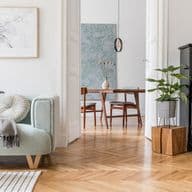
Seven tips for stylishly combining old and new pieces of furniture
The new GG website: Inspiring personalities, extraordinary places and exceptional properties. Discover now.

Many homeowners want to adapt their outdoor spaces for relaxing activities to spend time with family, friends or invited guests. Depending on the size of the property and the style of the house, the options for achieving this naturally vary. For example, the decision to roof a balcony or build a conservatory depends largely on personal preference.
The name loggia comes originally from the Italian language (loggia). The term "loggia" sounds seductively like a holiday in romantic Italy. It originally referred to a columned corridor open to the exterior. Loggias are an integral part of classical architecture in southern countries. The sheltered retreats, which are integrated into the structure of the house, are surrounded on three sides by walls. They offer protection from the sun, wind and rain. Loggias can be designed in any size. Where the loggia faces outwards to the exterior, it can be railings, glass or a combination of both. The difference between a balcony and a loggia lies in the construction. A balcony is either suspended or erected on a vertical structural system. It can be visually perceived as a protruding part on the house. In contrast, the loggia is never projected in front of the vertical structure. It rests against the walls that form its sides. While loggias offer good protection from the prying eyes of passers-by and the often unpredictable weather due to their internal orientation, the balcony is literally exposed to all these influences. When it rains, being on the balcony is usually not a great pleasure. The retractable awning, glass canopy and extended roof overhang allow for more frequent use. However, they do not provide the protection afforded by loggias. The advantage of a balcony in house construction is that no square metres of valuable living space need be sacrificed and homeowners gain extra space outside the building.

Patio awnings made of Plexiglas and clear glass protect against rain and strong sunlight. In summer, the terrace often becomes an open kitchen and a favourite place for the whole family. The patio furniture, barbecue, hot tub and decorations usually stay dry. Conservatories are essentially terraces glazed on all sides. Some may be heated, but this is not a requirement. In spring, the first rays of the sun gather in south-facing conservatories and warm them up, making them the perfect place to retreat to after the cold winter. If you own a heated conservatory, you don't have to worry about the weather. As a homeowner, you can enjoy valuable daylight to the fullest in these green plant oases, even during the cold months. To enjoy the light summer breeze and be closer to nature, you usually simply open the large sliding doors and you are partially outside. A well-planned and carefully executed conservatory, integrated into the energy concept of the house, can reduce the property's energy costs. Well-insulated homes have a low energy demand and can store the heat of every ray of sunlight. Automatic or manually controlled shading of the glass roof in summer prevents excessive heating of the living space.
When planning a new home, carefully consider your family's living habits and wishes. If you place a high value on privacy, you will certainly prefer a loggia to a conservatory or balcony. By planning the floor plan, for example in a U-shape, terraces can be integrated into the overall architectural concept without obstructing views. For small plots with little garden space, a fully or partially covered roof terrace can be the perfect solution. Some areas are strongly exposed to the wind. In this case, being outside quickly becomes uncomfortable. Conservatories and enclosed loggias offer sheltered retreats where the glazing can be opened as required. If in doubt, building owners can seek advice from an experienced architect. Specialists recognise opportunities and can thus create architectural works that match the style and energy concept of the house and the wishes of future residents.
You may also be interested in

&w=1920&q=75)
Contact


Engel & Völkers Czechia
Plzeňská 3351/19
150 00 Prague 5 - Smíchov, Czechia
Tel: +420 233 091 011