la Californie, Cannes, Provence-Alpes-Côte d'Azur, France
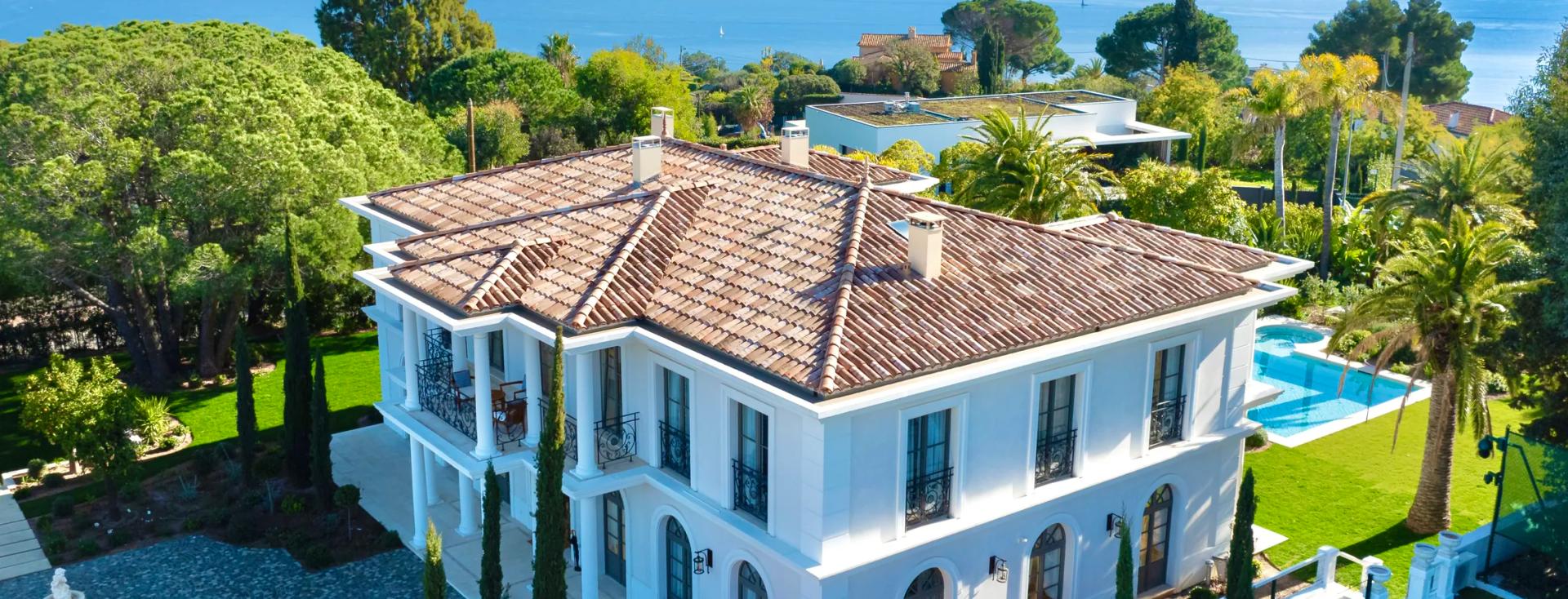
Louis XIII Château – A historic property with exceptional panoramic views in Cannes
Price
€25,000,000
- 8 Bedrooms
- 8 Bathrooms
- ~733 m² Living area
- ~6,355 m² Plot surface
The new GG website: Inspiring personalities, extraordinary places and exceptional properties. Discover now
The French luxury real estate market continues to attract strong demand in Paris and on the Côte d’Azur, with this momentum also extending to regional metropolitan areas.
Faced with a fragmented market, selecting the right partner becomes essential to maximising the value of an exceptional property portfolio. We guide you through the key selection criteria, local expertise by city and the personalised support required for luxury real estate.
Key takeawaysLocal expertise is the first criterion when choosing a luxury real estate agency.
An international network increases the visibility of exceptional properties.
Confidential sales (off-market) protect owners who value discretion.
Luxury real estate is built on discretion and relationships.
Always check the agency’s professional licence and track record.
For the most prestigious residences: Private Office
A dedicated advisor, absolute discretion and access to buyers from around the world for the sale or acquisition of the most exclusive properties.
A bourgeois house generally refers to a residence built during the 19th and early 20th centuries for the urban bourgeoisie, including merchants, industrialists and members of the liberal professions.
Its façade is often symmetrical, with window surrounds, ashlar corner quoins, a cornice or génoise beneath the roof and wrought-iron balconies [2].
Inside, the generous proportions reflect the social status of its original occupants: high ceilings, herringbone parquet flooring, plaster mouldings and marble fireplaces. A carefully designed staircase typically serves a sequence of reception rooms facing both the street and the garden. Outbuildings such as storage rooms, stables and laundry rooms, as well as the cellar, reflect the bourgeois lifestyle of the period.
The property is often set within a walled garden, accessed through a wrought-iron gate. High-quality materials such as ashlar stone, exposed brick, lime render and decorative zincwork reinforce the property’s character.
This typology differs from the hôtel particulier, an aristocratic urban residence traditionally organised around a courtyard and garden.
La distinction repose surtout sur le contexte.
A maison de maître was often built in the countryside for the owner of an agricultural or wine-growing estate, with outbuildings such as a wine press, barn or stable.
A bourgeois house is more typically located in an urban setting and was designed for the commercial and industrial bourgeoisie; its exterior generally features an ornamental garden rather than productive estate land.
Both typologies share common characteristics: generous proportions, high-quality materials, rooms arranged in sequence and carefully designed staircases.
In everyday language, the two terms are often used interchangeably. To further explore prestigious property types, see our analysis of the difference between a château and a manor house.
Bourgeois houses can be found in most French cities, with strong regional architectural styles.
Toulouse is known for its brique foraine, northern France for its red brick, Bordeaux and Normandy for their limestone, while the Côte d’Azur features Mediterranean-style villas: each region has its own architectural identity.
In Paris, bourgeois houses remain rare in the city centre. The 16th arrondissement, Passy and Auteuil, together with the western inner suburbs, account for most of the available properties.
To identify architectural styles and locations, consult our guide to Parisian architectural styles.
Our houses for sale
la Californie, Cannes, Provence-Alpes-Côte d'Azur, France
Price
€25,000,000
Ramatuelle, Provence-Alpes-Côte d'Azur, France
Price
€22,000,000
Cap-d'Ail, Provence-Alpes-Côte d'Azur, France
Price
€19,990,000
la Californie, Cannes, Provence-Alpes-Côte d'Azur, France
Price
€19,000,000
Cap d'Antibes, Antibes, Provence-Alpes-Côte d'Azur, France
Price
€17,000,000
Saint-Tropez, Provence-Alpes-Côte d'Azur, France
Price
€15,900,000
Saint-Jean-Cap-Ferrat, Provence-Alpes-Côte d'Azur, France
Price
€15,000,000
Saint-Tropez, Provence-Alpes-Côte d'Azur, France
Price
€15,000,000
Cap d'Antibes, Antibes, Provence-Alpes-Côte d'Azur, France
Price
€14,750,000
The price of a bourgeois house varies significantly depending on the region, floor area, land and condition of the property. A character property in a medium-sized city in northern or south-western France may cost the same as a Parisian family apartment, while a bourgeois house in Paris or the nearby western suburbs frequently exceeds €1 million.
Several factors affect the property’s value: living area, land area, preservation of original decorative features, potential historic-monument protection and the quality of the renovation.
If you already own this type of property, request a free valuation of your bourgeois house from our advisors.
Acheter une maison bourgeoise à rénover demande d’évaluer le budget travaux avant de signer. Quatre postes structurent ce budget :
la structure (murs et fondations), la toiture (charpente et couverture), les réseaux (électricité et plomberie) et l’isolation thermique.
Les maisons anciennes non rénovées affichent souvent une étiquette énergétique E, F ou G. Depuis le 1er avril 2023, l’audit énergétique est obligatoire à la vente pour les maisons classées F et G, et depuis le 1er janvier 2025 pour la classe E : il chiffre les scénarios de travaux, utile pour négocier. Une rénovation complète se chiffre en centaines, voire en milliers d’euros par m², selon l’ampleur des travaux et les matériaux.
Vérifiez l’avis de l’architecte des Bâtiments de France si le bien se trouve dans un site patrimonial remarquable ou aux abords d’un monument historique. Pour approfondir la méthode, consultez notre guide pour acheter un château à rénover.
What should you inspect before buying a bourgeois house?Before buying, inspect these key points to avoid unexpected costs after the acquisition:
Energy performance certificate and energy audit: an F or G rating can result in high annual energy costs and significant renovation requirements.
Roof: check the condition of the roof structure, the presence of wood-boring insects, the roof covering in tiles or slate and the zincwork.
Damp: stone or brick walls can absorb moisture from the ground, and treatment can cost several thousand euros.
Heating: for properties of 200 m² or more, annual heating costs can represent a significant part of the budget.
Property tax: its amount depends in particular on the property’s floor area and standing. If the property is protected as a historic monument, specific tax arrangements may apply: consult our guide to investing in historic monuments.
Garden maintenance: tree pruning, fences, gates and pathways represent an annual budget that should be anticipated.
Prepare your purchase by consulting our advice for buyers of prestigious properties.
Engel & Völkers supports you in buying a bourgeois houseWe support buyers looking for bourgeois houses and properties with character through our agencies across France. We provide personalised support at every stage: selecting properties according to your criteria, providing an opinion on value, negotiating the price and monitoring the transaction through to completion.
Our advisors understand local markets and the architectural characteristics of each region. For a direct discussion, contact our specialist property advisors.
la Californie, Cannes, Provence-Alpes-Côte d'Azur, France
Price
€25,000,000
Ramatuelle, Provence-Alpes-Côte d'Azur, France
Price
€22,000,000
Cap-d'Ail, Provence-Alpes-Côte d'Azur, France
Price
€19,990,000
la Californie, Cannes, Provence-Alpes-Côte d'Azur, France
Price
€19,000,000
Cap d'Antibes, Antibes, Provence-Alpes-Côte d'Azur, France
Price
€17,000,000
Saint-Tropez, Provence-Alpes-Côte d'Azur, France
Price
€15,900,000
Saint-Jean-Cap-Ferrat, Provence-Alpes-Côte d'Azur, France
Price
€15,000,000
Saint-Tropez, Provence-Alpes-Côte d'Azur, France
Price
€15,000,000
Cap d'Antibes, Antibes, Provence-Alpes-Côte d'Azur, France
Price
€14,750,000
A bourgeois house often has between 6 and 10 rooms spread over two or three levels. Reception rooms are generally arranged in sequence on the ground floor, with bedrooms upstairs.
Yes. Banks can finance renovation works through the main mortgage or an additional renovation loan. The financing plan should detail the cost of the works and the energy performance targeted after renovation. MaPrimeRénov’ and the éco-PTZ can help reduce the financing burden.
The seller must provide the DPE, an energy audit if the house is rated E, F or G, the natural and technological risk report, a lead assessment for buildings constructed before 1949, an asbestos assessment for properties whose building permits date from before July 1997, electricity and gas diagnostics for installations more than 15 years old, a termite assessment depending on the area and, where applicable, an inspection of non-collective sanitation systems.
No. Most bourgeois houses are neither classified nor registered as historic monuments. However, many are located in protected areas where façade, roofing or joinery works are subject to the opinion of the Architecte des Bâtiments de France.
Contact


Engel & Völkers France
170 Rue du Faubourg Saint-Honoré
75008 Paris
Tel: +33145643030