Issue
04/26
Location
Ireland
Bridging the worlds of art and design, Joseph Walsh creates functional yet aesthetically extraordinary objects of the highest caliber.
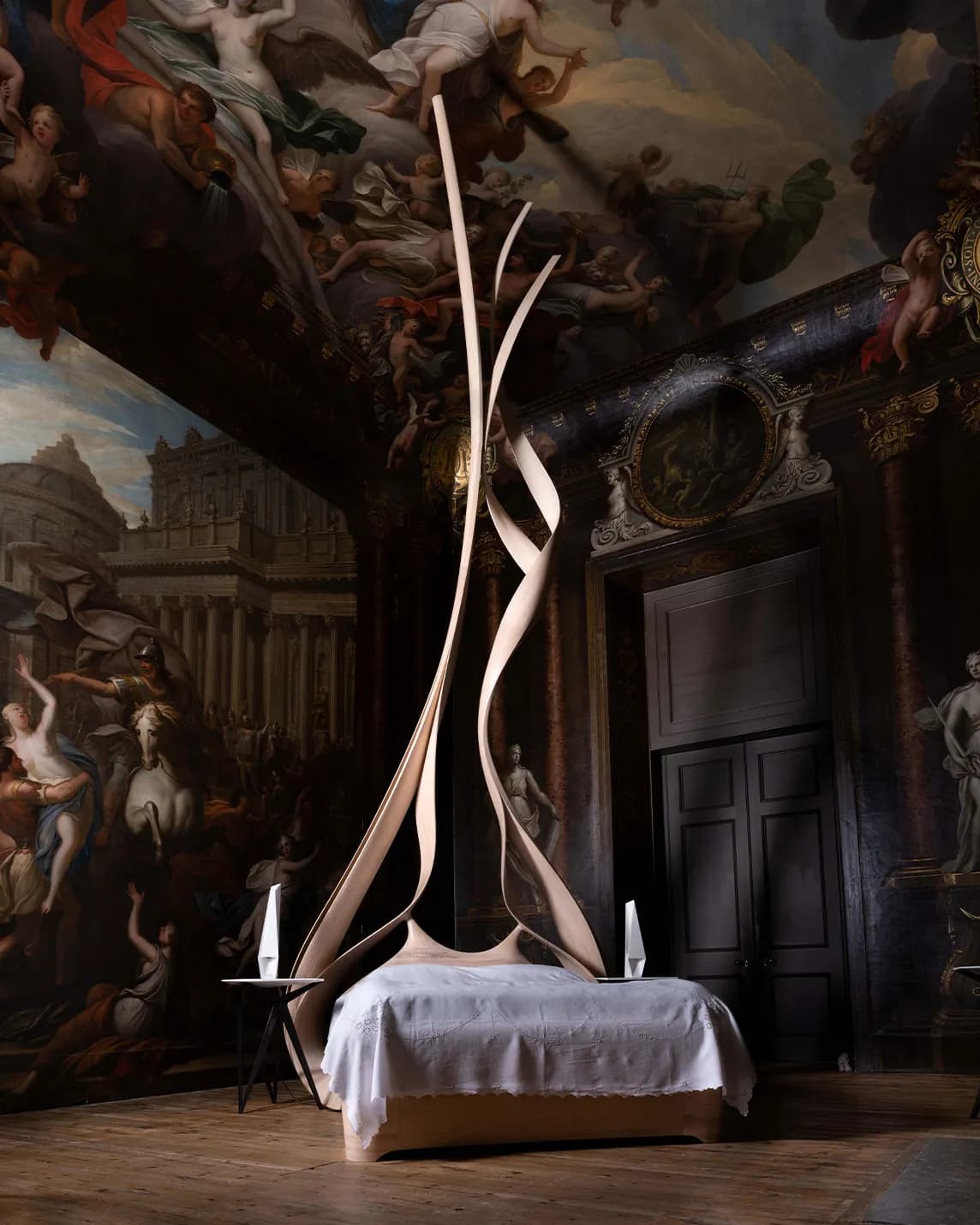
His works are simultaneously clear and extravagant, simple yet complex. They feel both ancient and futuristic – almost as if they had grown naturally rather than been designed. Born in Ireland in 1979, Joseph Walsh designs exceptional furniture and objects, practicing his craft in its most exquisite form. The Duke and Duchess of Devonshire commissioned him to design the seating for Chatsworth House, and his high-profile admirers include actor Jeremy Irons and the former Gucci Group president, Domenico De Sole. In this interview, the charming autodidact declares his preference for wood and expresses his deep appreciation for the centuries-old trees that shape his art. He describes a pivotal crisis in his career, the inspiration he takes from Ireland’s rugged natural landscape and reveals two pieces of unsolicited advice that changed his life. We learn about his new exhibition in Paris and what drives him to go to his studio every day, where, with patience, passion and a relaxed mindset, he continues to transform wood into new, unexpected forms.
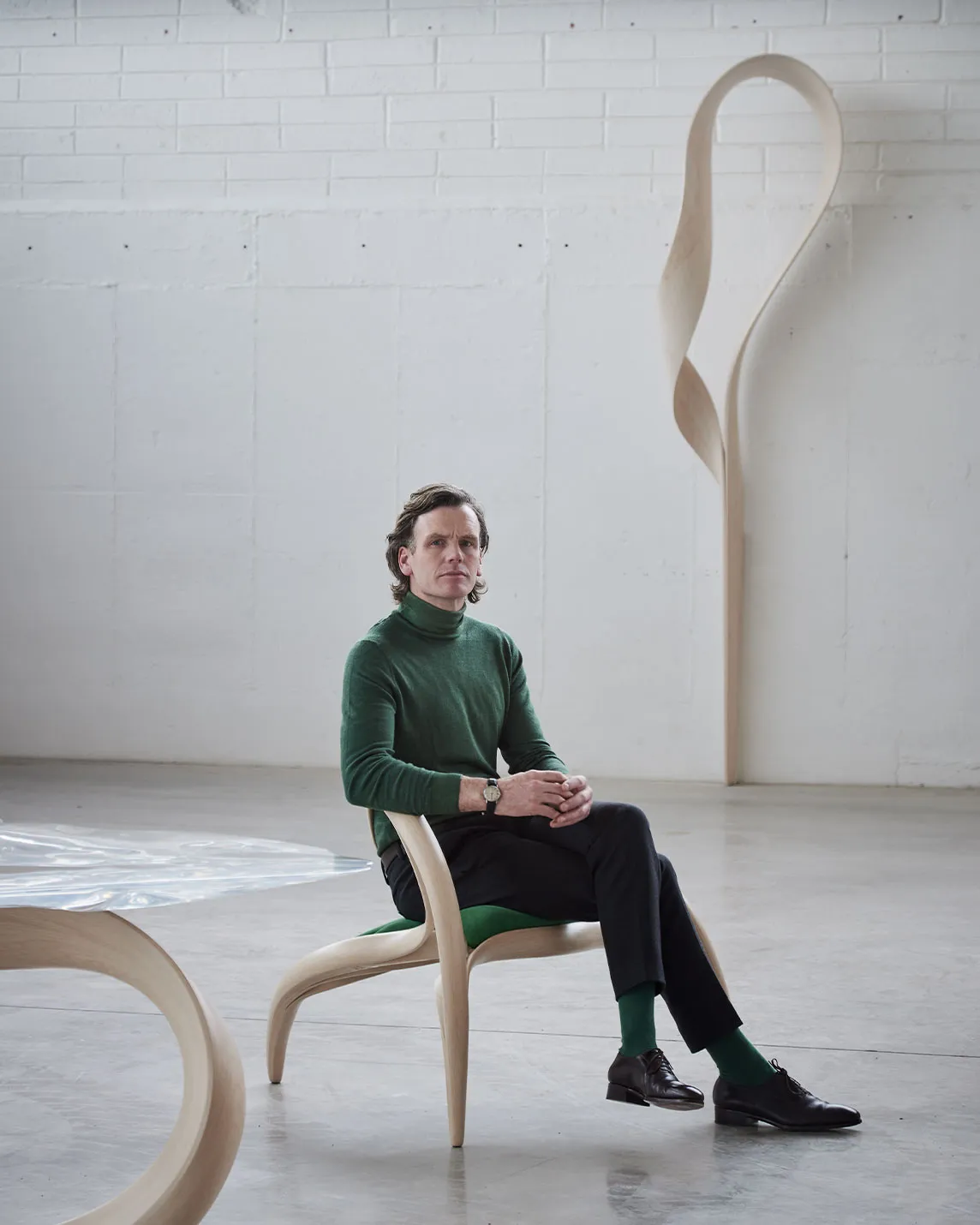
Joseph Walsh, are you in New York right now?
Yes, I’ve been coming here several times a year for the past fifteen years. The city plays an important part in my life. Right now, I’m here to refinish one of my pieces, to install another piece and to see a few clients. My schedule here always seems to fill up quickly.
But your work has a strong connection to your home country of Ireland, doesn’t it?
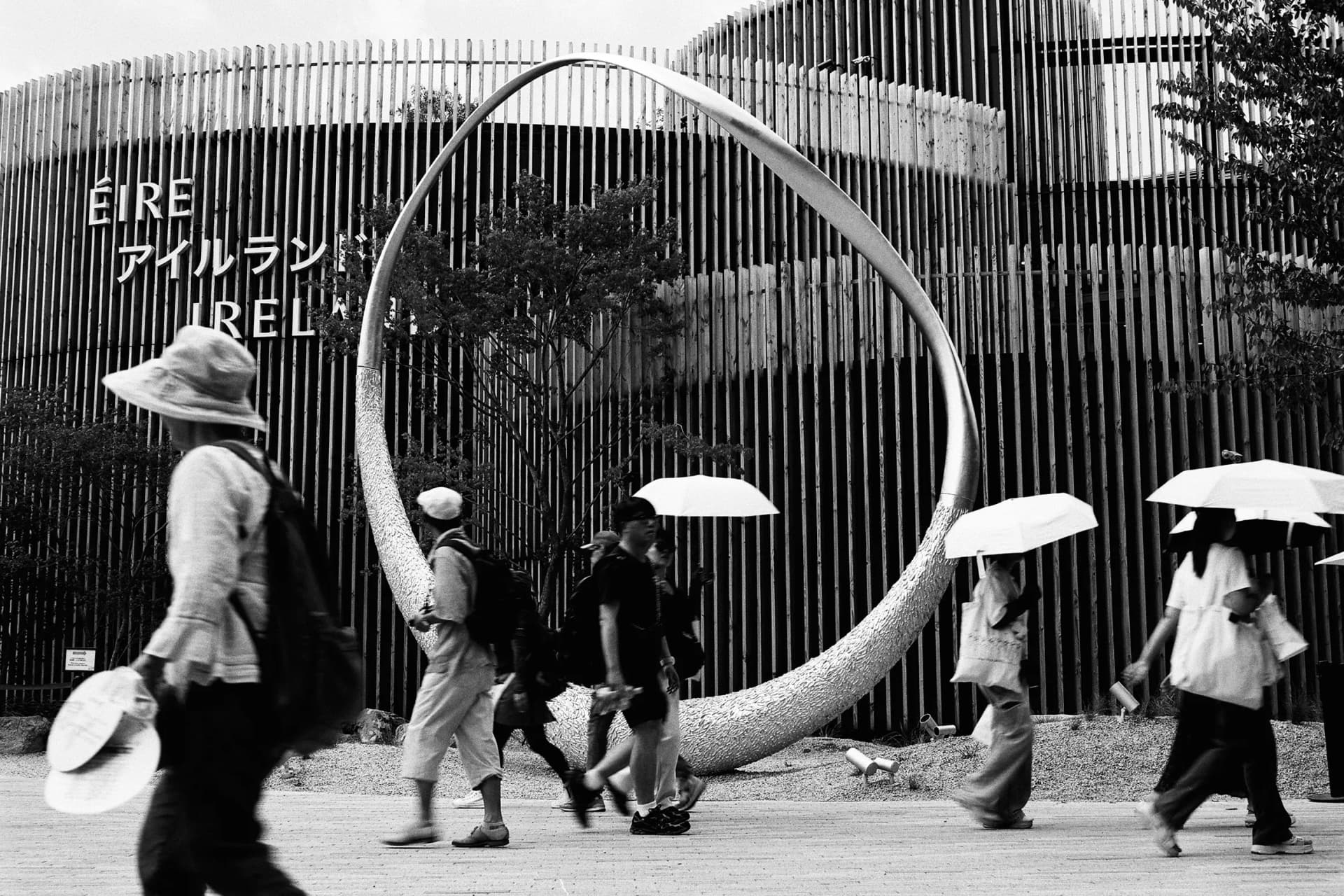
That’s true. However, my work also adapts to other places and circumstances, like the recent project I carried out in Japan. My work responds to my surroundings. In Ireland, I can hear the sound of the wind all the time. My studio is also near the sea – so you have the feeling of actually being on the edge of Europe. If I were working on mainland Europe, my work probably wouldn’t be quite as influenced by chance; it’d be a bit more formal and maybe even larger as well.
Trees should be revered, respected and treasured; the more we appreciate them, the more joy they give back.
Wasn’t there an early experience with wood that changed your life?
I started carving and working with wood when I was quite young – although back then, it was still very amateurish. I made my first piece of furniture when I was twelve. I think I was a bit of a curiosity to my neighbors, but I piqued their interest because I took what I was doing quite seriously. When I turned fifteen, a neighbor – a nice elderly man in his mid-eighties – offered me some trees. They were ash trees. I have a very vivid memory of that day. He led me across his yard to the trees and said, “I’ve known these trees my whole life. They’ve grown very slowly because the soil here is poor. They will make great furniture.” At fifteen, I didn’t understand much about wood – for example, that it can shrink or expand when you’re working with it, or how pliable it is. But as the years passed, what my neighbor told me began to make more and more sense. The trees were felled and cut into planks. As a thank-you, I built my neighbor a bookshelf out of the wood. He was a wonderful gentleman – kind of from another era – who lived in a large Georgian house. Unfortunately, it was later destroyed in a fire, along with the bookshelf. I’ve been working with ash wood ever since. I still remember exactly when I saw the fresh shavings for the first time. Before that, I had only known aggressively dried wood. This wood, however, had grown slowly and been air-dried. It was a profoundly moving experience.
How do you select the wood you work with today?
I’ve been buying timber from a woman in France for the past fifteen years. So, in a way, she takes the very first step. She knows the timber I like, what I’m trying to achieve, and she finds the trees for me. I visit her once a year. Every now and then, I’m also offered individual, old trees from estates. This is why I started the Tree Legacy Project. I was recently offered a yew from Lismore Castle. It had grown very slowly and was probably about five hundred years old – something very special. Imagine this tree in this historically significant place. It once stood in a bishop’s palace, witnessed the Reformation, and passed into the possession of Sir Walter Raleigh in 1589. It later came into the hands of the Boyle family, into which the Devonshire family married. This tree witnessed all of that. We wanted to invest the time and energy we believed this tree deserved and to record exactly where it came from. So, we asked an artist to draw the tree and its surroundings and then wrote a little bit of history about the place during the time the tree was there. It’s profoundly moving to think of the timber as a living thing that has actively participated in the history of its surroundings. The tree should be revered, respected and cherished. The more we appreciate it, the more joy it gives back. Doing so allows us to change our thought patterns and break the cycle of constant consumption.
You’ve said that the characteristics of the wood influence the way you work. How much does the wood itself dictate the final form?
There was one very specific moment when I changed my approach. Funnily enough, it relates to New York. In 2008, I had an exhibition here featuring 23 new pieces and some that I had borrowed from clients. It was a huge deal for me at the time. But the more I heard the feedback, opinions and interpretations from visitors, the more frustrated I became. Back in Ireland, I received a letter from Jack Lenor Larsen, a very renowned textile designer whom I hadn’t known until then. It was a beautifully written and presented letter. Larsen had visited my exhibition and wrote: “You don’t know me, but I’m writing to you like an admiring grandfather with some unsolicited advice. Your craftsmanship scores 16 out of 10, but you haven’t found your own voice yet. To achieve this will require some soul searching.”
I thought this might be the last piece I’d ever make, that it was going to be terrible. But I didn’t care. I just wanted to create something free. And from then on, that became my way of thinking.
That was very direct and unsolicited indeed.
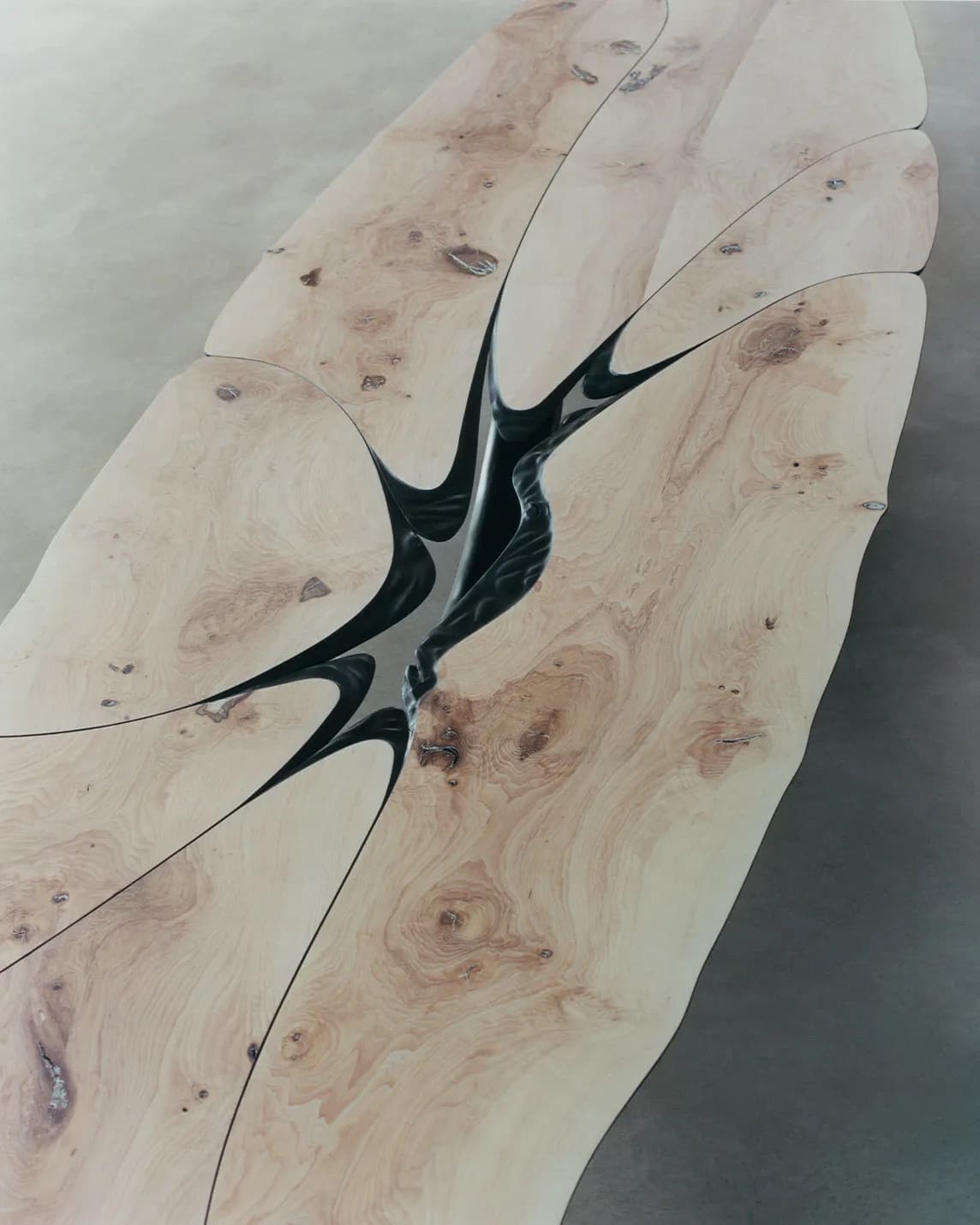
Yes, and I was going through a phase where I was very frustrated with my own work. After the exhibition, I actually wanted to destroy everything, but I couldn’t because a lot of it belonged to clients. Then I looked again at Larsen’s letter, in which he had written: “I think you should study the beauty of bird bones. Even a blind person should be able to enjoy the beauty of your work.” So, I took one of my new pieces and began carving away its harsh, rigid lines, guiding it toward softness. As I did so, I imagined a blind person touching the wood. It changed everything, and became a real breakthrough for me. The idea behind it was that the wood contains the complex DNA of its geometry. Without the influence of nature, the tree would, in fact, have a perfect geometry. But insects, the wind and life shape it into what we see. In a way, the strength of nature and its capacity to adapt became my way of thinking about designing. It helped me to be more open and to accept that there could be something better than just drawing on paper in a perfect grid. I took the time to change, and took a risk. I remember creating the first Enignum Table that way and thinking: I’m breaking all my own rules. This might be the last piece I ever make and it’s going to be terrible. But I didn’t care. I just wanted to create something free. And from then on, that became my way of thinking.
I’m so glad you were open to this suggestion. What can we expect to see at your exhibition in Paris?
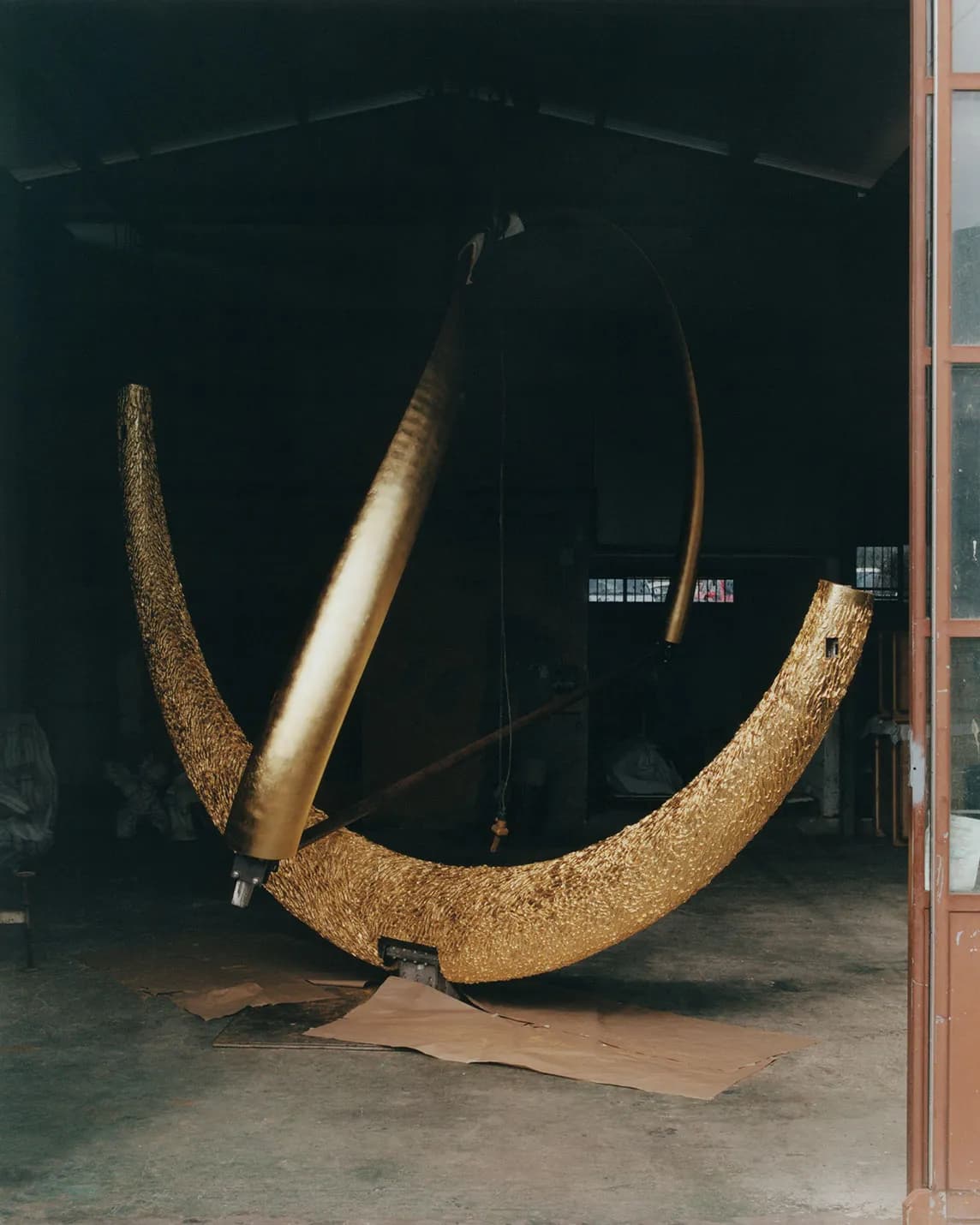
In September and October, we’ll be showing some pieces at the beautiful Hôtel de Sully and telling the stories behind them. The exhibition will include some pieces we don’t normally get to display. We’ll also be showing a large sculpture in the garden – part of a research project we’ve been working on for the past few years. There will also be a cultural program running alongside the exhibition.
I took one of my new pieces and began carving away its harsh, rigid lines, guiding it toward softness. As I did so, I imagined a blind person touching the wood.
That sounds very interesting. What motivates you to keep going today?
I find my work incredibly enriching. It brings me into contact with the world and I’m constantly learning. I love working with people from different cultures, but I also like being in my workshop. I like the challenge and the rigor. I like that I just keep going and that each piece is an expression of the year in which it was made. That’s very motivating. However, there’s also the risk of becoming so immersed that time flies by – as it always does when you’re having fun. But I feel a strong sense of purpose and can’t imagine doing anything else.

Bettina Krause
For more than 15 years, freelance journalist Bettina Krause has been writing about art, design, architecture, and travel for numerous high-profile magazines. Based in Berlin, she is most passionate about interviewing inspiring personalities and traveling the world for her stories.