Exclusive
- 5 min read
- 15.04.2026
- by Femke Maleen Fritz
Art in Karat – Up-and-coming goldsmith Luca Sonnentag on his passion

Issue
Online Exclusive
Location
Schwäbisch Gmünd, Germany
Photography
Luca Sonnentag/Mika Krips
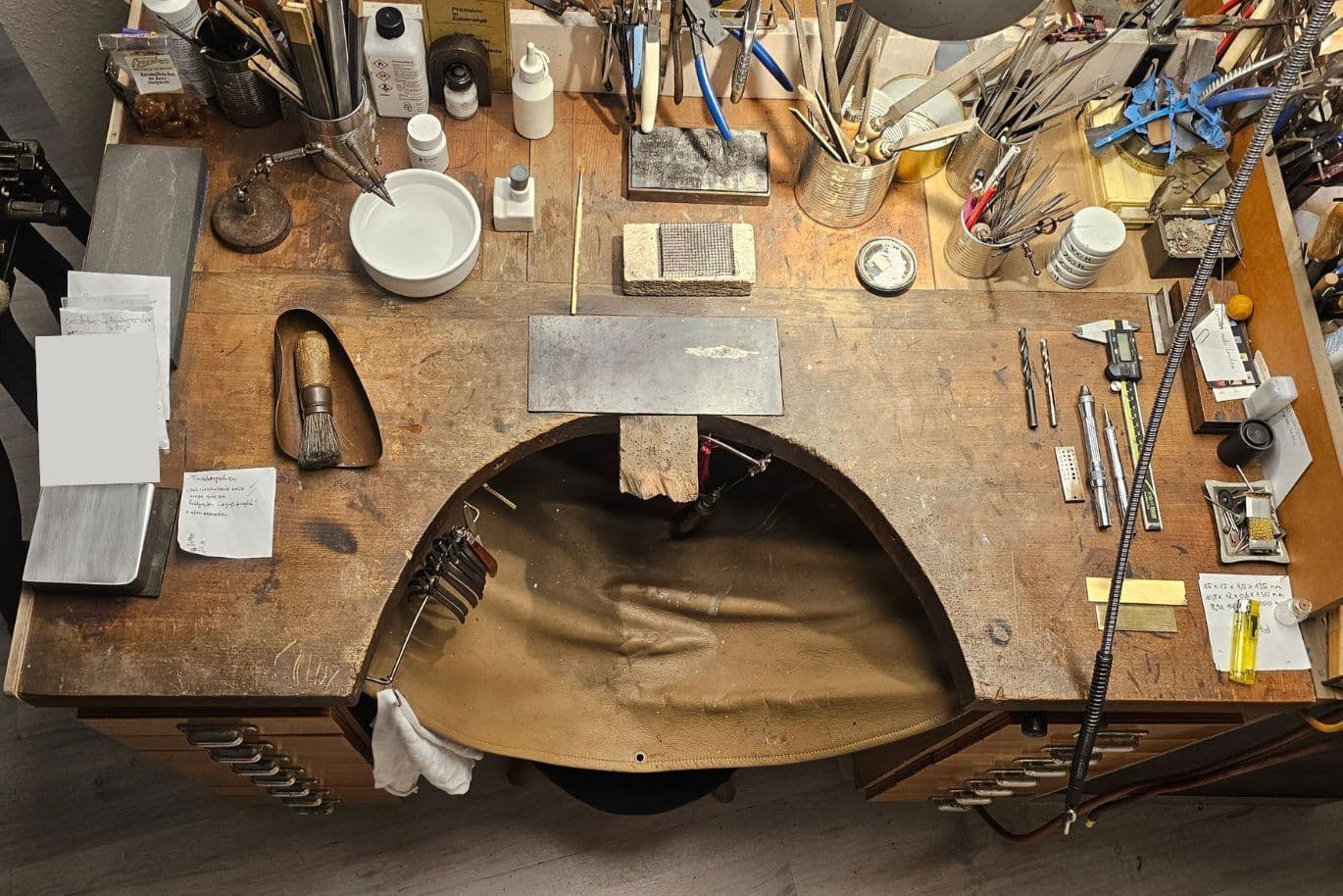
Files, pliers, and engraving tools lie within easy reach; an old workbench with its indentations bears witness to countless hours of work – Luca Sonnentag sits in his workshop near Schwäbisch Gmünd, a small town in Baden-Württemberg, and seems completely in his element. At just 24 years old, he belongs to a generation that has become rare: young people who consciously choose the time-honored craft of goldsmithing. For him, it is more than a profession; it is expression, precision, and passion all at once.
At the German Craft Skills Championships in 2025, he prevailed against competitors from across the country and was named Germany’s top goldsmith’s apprentice. In this interview, he talks about ambition, mechanics, and perfectionism – and why true craftsmanship is more important today than ever before.
From Apprentice to National Champion
How did you realize that craftsmanship, design, and materials are your means of expression?
To be honest, I never really thought that goldsmithing could be a career for me. But I’m from Schwäbisch Gmünd, known as the “City of Gold and Silver,” and in high school at the Waldorf School, goldsmithing was offered as an elective. It was through my teacher, Ms. Engelhardt-Kuntze, that I first realized I had a creative talent. Within the first two hours, I knew: This is it. It felt like a missing piece of the puzzle. I wish more people could experience that clarity. I enjoyed it so much that I gave up my original plan to become a photographer – even though I own quite a bit of equipment and had been working with it for years. Photography is a very helpful side project today, because presentation is also very important in jewelry.
It felt like a missing piece of the puzzle. I wish more people could experience that clarity.
Luca Sonnentag

When did you decide to enter the German Championship?
For me, it was clear relatively early on. First, I completed a three-year apprenticeship as a jewelry designer, followed by an additional year and a half of advanced training. I heard about the German Championship right at the start of that advanced training. I wanted to enter right away and asked my master about it. The competition among the participants is fierce, though – especially because goldsmithing is a traditional craft that’s often passed down from generation to generation. Still, I was determined, gave it my all, and in the end, it paid off.
What was the biggest challenge during the competition?
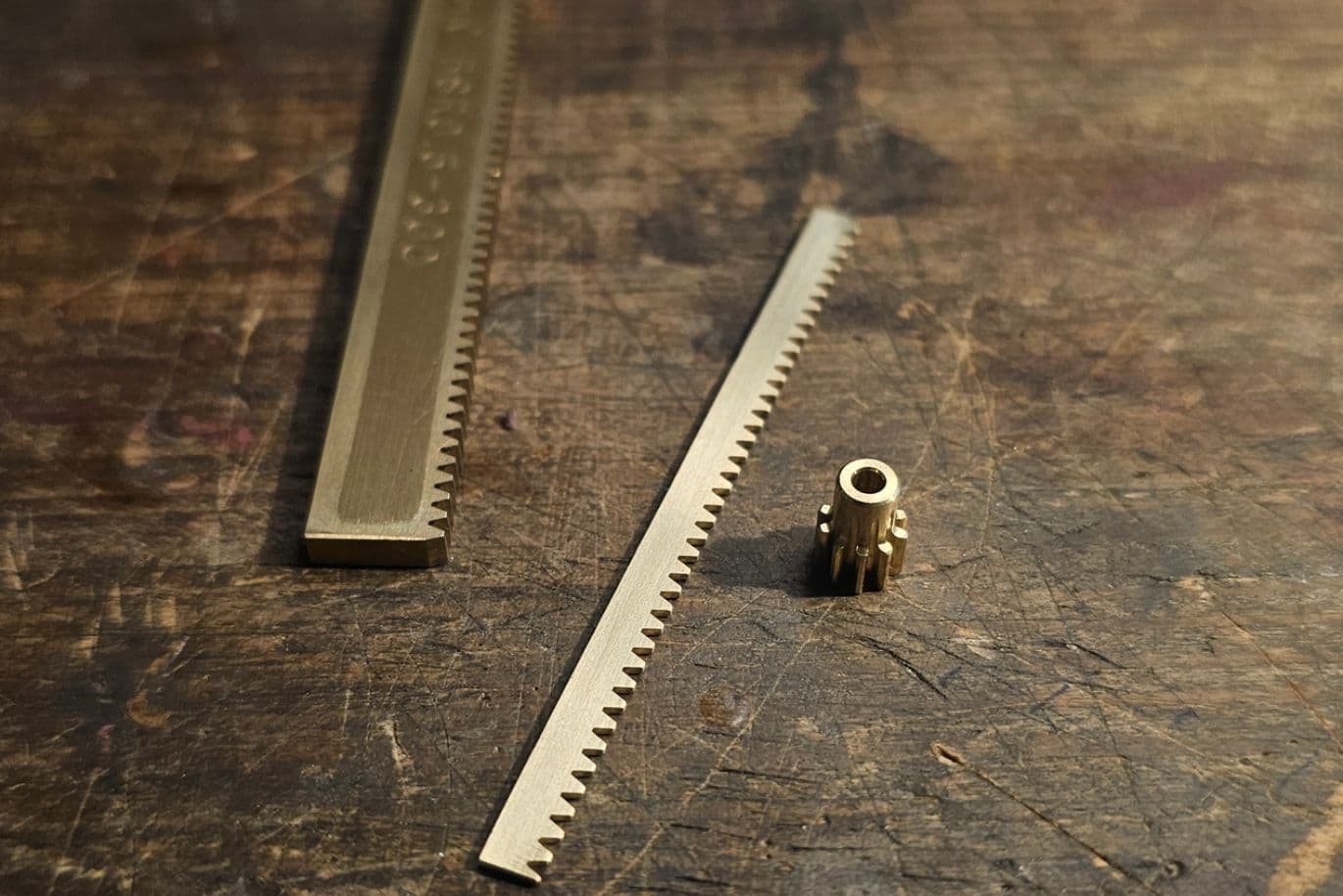
It was a real rollercoaster ride. During the exam, I was so focused on dimensional accuracy and precision that I kept getting hot and cold from the tension – I had to constantly unbutton and button my sweater. Aesthetics play a huge role in jewelry, and if something looks off or sounds wrong, it’s an immediate deal-breaker. I pushed myself to the limit by designing and developing the mechanics on my own. For testing, I used larger plastic gears. The big question was whether the whole thing would also work later in metal and in miniature. The special techniques were also very complex and prone to errors, which required enormous concentration. It was a very exhausting week; I’d fall into bed at night and head straight back to the workshop in the morning.
Mechanics meets aesthetics: The lipstick as the standout piece
Your lipstick particularly impressed the jury. From a craftsmanship perspective, what makes this piece so extraordinary?
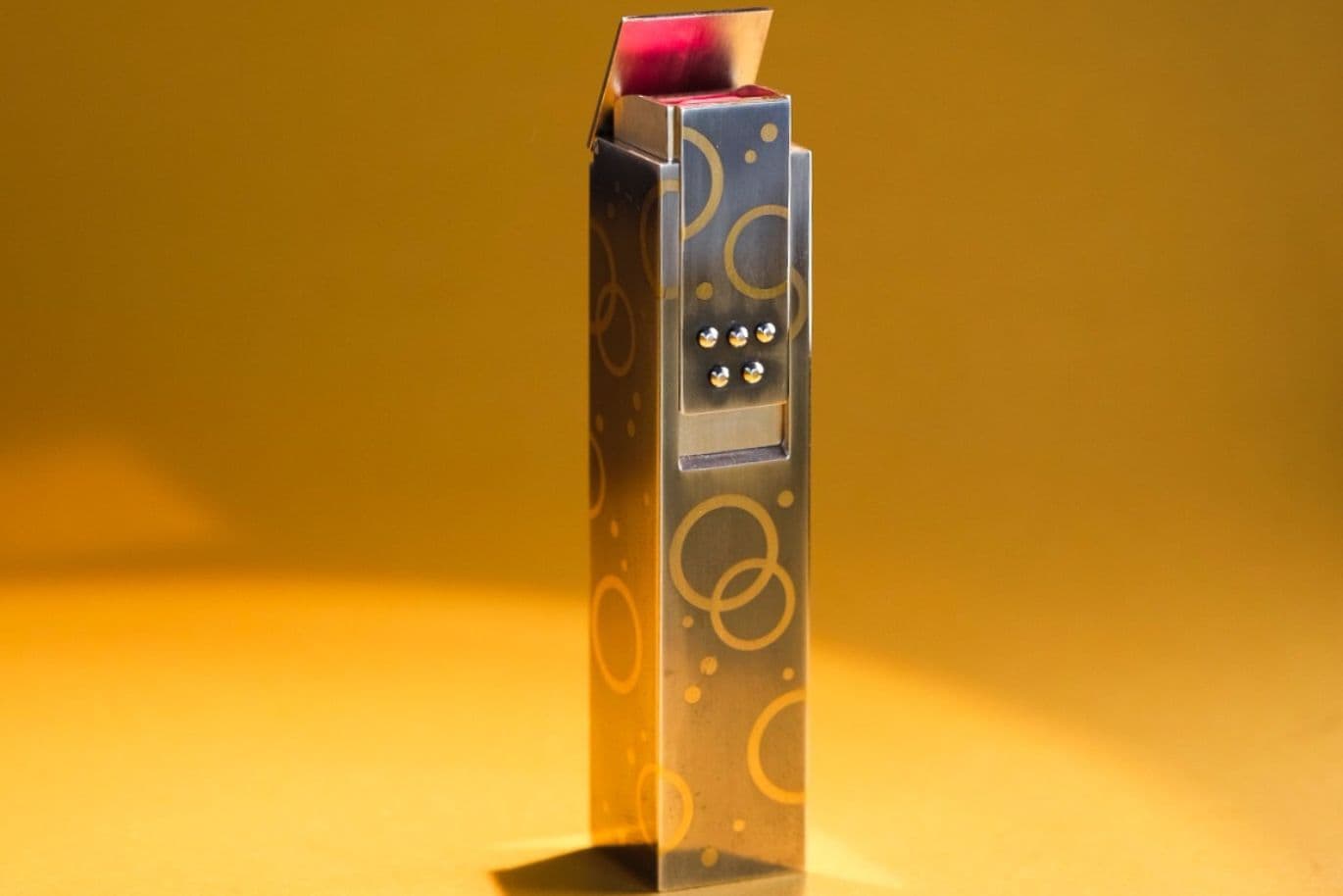
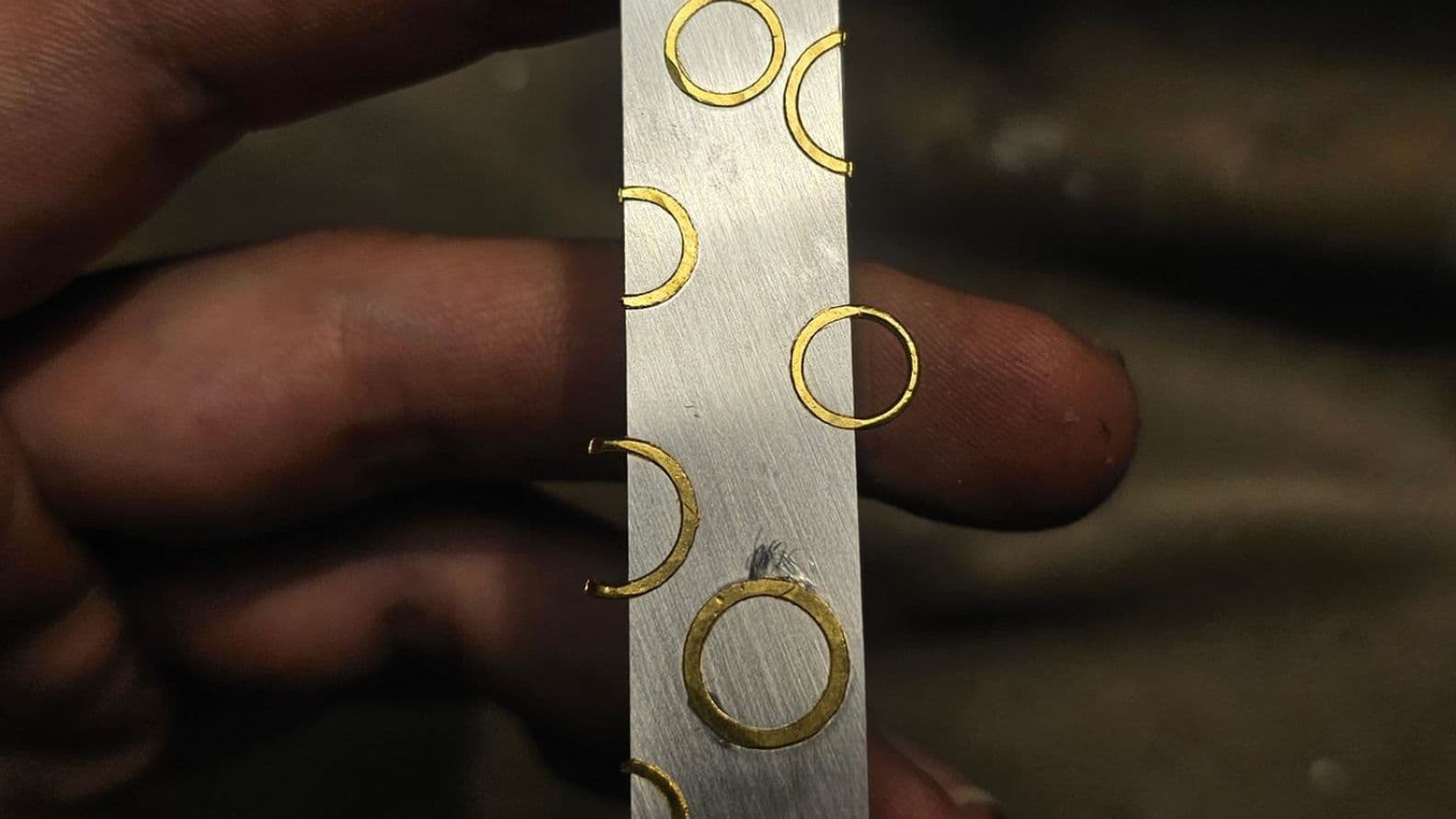
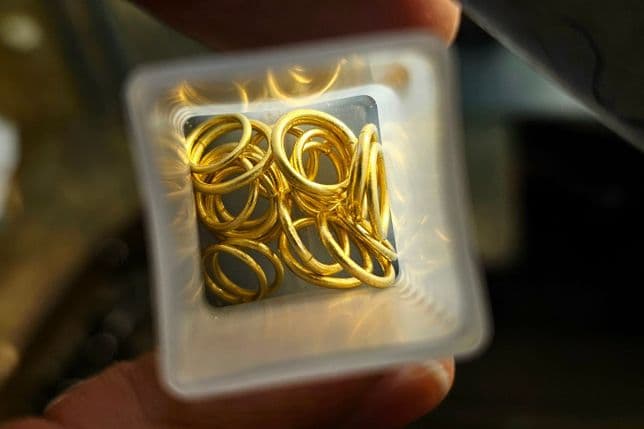
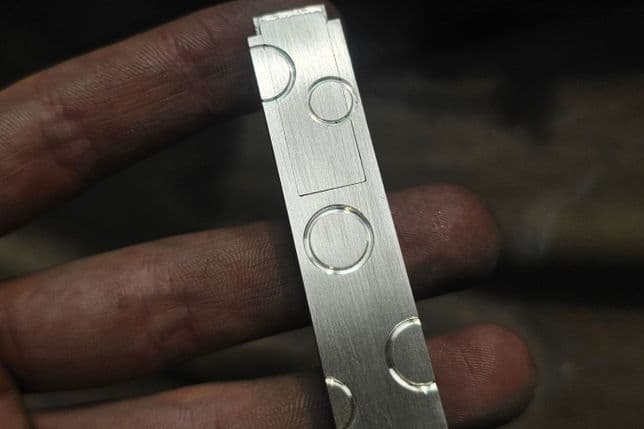
In the competition, design and mechanics are especially important. Thanks to my training as a jewelry designer, my focus was strongly on style, but I wanted to shine with the mechanics. I analyzed existing lipsticks and eventually developed my own system: a gear mechanism with a two-to-one mechanism. Instead of twisting, you slide the lipstick, and it extends twice as fast. Stylistically, I opted for inlay work, an antique and very demanding technique. I worked experimentally, built my own tools, and found a solution that works perfectly. Thousands of decisions go into a piece like this.
What were the biggest technical challenges during the creation process?
The piece is highly precise. It consists of three tubes that fit inside one another, which is why dimensional accuracy has to be incredibly high. They mustn’t wobble; instead, they have to rise absolutely straight. At the same time, I had to make sure that no vacuum formed inside that would block the mechanism. Combined with the enormous time pressure, this created an explosive mix. We only had 32 hours for testing, which is very tight for a piece like this. In the end, though, everything worked perfectly: I put the finishing touches on it in the last half hour.
The artisan mindset
What do you do when you’re not in the workshop?
I really enjoy cooking. Interestingly, this is true of many goldsmiths – all of my previous mentors were also passionate cooks. I see a lot of parallels: combining ingredients, developing your own recipes, and working with all your senses.
What was your journey like, from your first attempts at crafting to completing your apprenticeship as a goldsmith?
I’m very lucky to have the family I do. As kids, we spent a lot of time in our father’s workshop making things: lampshades, roller coasters – you name it. That gave me an early start in hands-on work, and I was quite talented during my apprenticeship. I also had the advantage of taking four hours of goldsmithing classes every week for two years in school. I was at the top of my class from the very beginning and eventually became the national champion in the follow-up apprenticeship.
What qualities are most important for your work?
Perfectionism and a delicate touch. My perfectionism used to annoy me, but it’s ideal for goldsmithing. On top of that, you need a keen sense of aesthetics – that is, the ability to intuitively grasp form, proportion, and impact. Patience is also very important; I had to learn that. But it doesn’t work without ambition. You have to stick with it and be open to constantly learning new things. Goldsmithing is so complex that you never stop learning.
What does a typical workday look like for you?
The great thing is that no two days are the same for me. I do everything myself – from working with liquid materials to creating the finished piece of jewelry with set stones. All kinds of people come by my apprenticeship workshop: professors, artists, and colleagues. We offer a wide variety of jewelry, and I always tailor my approach to each individual. I love advising customers and figuring out which shape, material, and proportions suit them best. I enjoy bringing all these different ideas to life. In doing so, I’ve noticed that the trend is shifting away from machine-made products and back toward unique, handcrafted pieces.
What does genuine craftsmanship mean to you in an age when so much is produced digitally or industrially?
To me, genuine craftsmanship stands above all for quality and transparency. Especially when it comes to high-quality and correspondingly expensive materials, honesty is crucial – both in pricing and in craftsmanship. A piece of jewelry must not only be visually appealing on the outside, but also be cleanly finished on the inside and the back. This attention to detail is a clear sign of quality that immediately catches the eye, even without being explicitly pointed out. Even the tiniest scratches, visible only under a microscope, need to be checked, in my view. A piece of jewelry should only leave the store once you are completely satisfied.
For me, durability is also inextricably linked to genuine craftsmanship. A handmade piece of jewelry is created with the intention of lasting for generations: thoughtfully designed, robustly crafted, and repairable at any time. It is not a short-lived accessory, but an enduring object that, ideally, will be passed down. In contrast, mass-produced costume jewelry is often designed for short-term appeal. It quickly loses its substance and promotes a form of consumption that is neither creatively nor materially sustainable.
What role do sustainability and mindful use of materials play in your work as a goldsmith?
A very significant one. I see how much goes wrong in precious metal and gemstone mining, and my generation in particular has developed a strong awareness of this. I work exclusively with recycled gold and silver from certified refineries. There are also increasingly transparent sources for gemstones. For materials like ivory, there are excellent alternatives available today, such as the stone nut from Africa. For me, responsibility is an integral part of the craft.
Goldsmithing is a craft that has become rare and is deeply rooted in tradition.
Luca Sonnentag
How important is the blend of tradition and innovation to you?
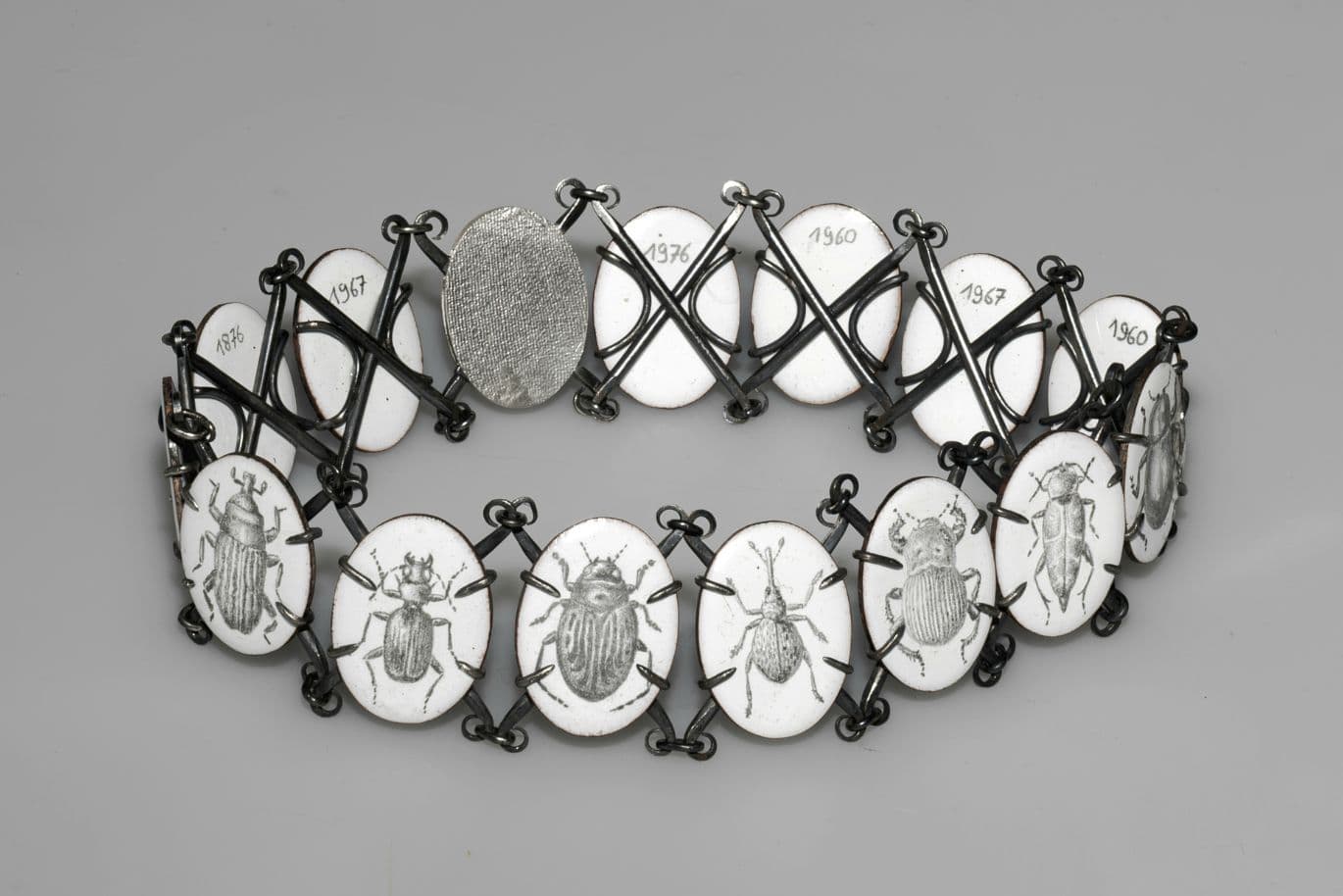
It’s very important to me; I want to be a pioneer in the craft. For me, that means preserving ancient expertise in traditional techniques while also adapting it to a contemporary form. Goldsmithing is a craft that has become rare and is deeply rooted in tradition. Many techniques have stood the test of time over millennia; surprisingly little has changed in terms of tools and working methods. However, there are highly specialized, complex processes that cannot be learned from books but are passed down through years of practical experience. If this experiential knowledge is lost, it can hardly be reconstructed. History repeatedly shows how painful such losses of knowledge are. That is why I feel a clear responsibility to keep this artisanal know-how alive and not let it fall into oblivion. For this reason, I am also determined to earn my master’s certification – to pass on knowledge, ensure quality, and strengthen the craft for the long term. However, it is crucial to keep an eye on new developments and consider how the old can be meaningfully combined with the new.
Jewelry that tells stories
Where do you get the inspiration for your designs – from everyday objects, art, architecture, or the material itself?
From everything. I’m constantly thinking about jewelry and even dream about it. Much of it comes from experimentation, research, and observing new things. Inspiration comes from nature, from everyday objects, or from tiny details under the microscope. My vivid imagination also plays a major role; new ideas often emerge very clearly in my mind’s eye. When I work completely freely, a touch of subtle humor can creep in. Lipstick is a good example: an everyday product that you can sometimes get for just a few euros – technically reimagined and crafted with such complexity that it now commands an extraordinary price.
How do you start creating a new piece of jewelry?
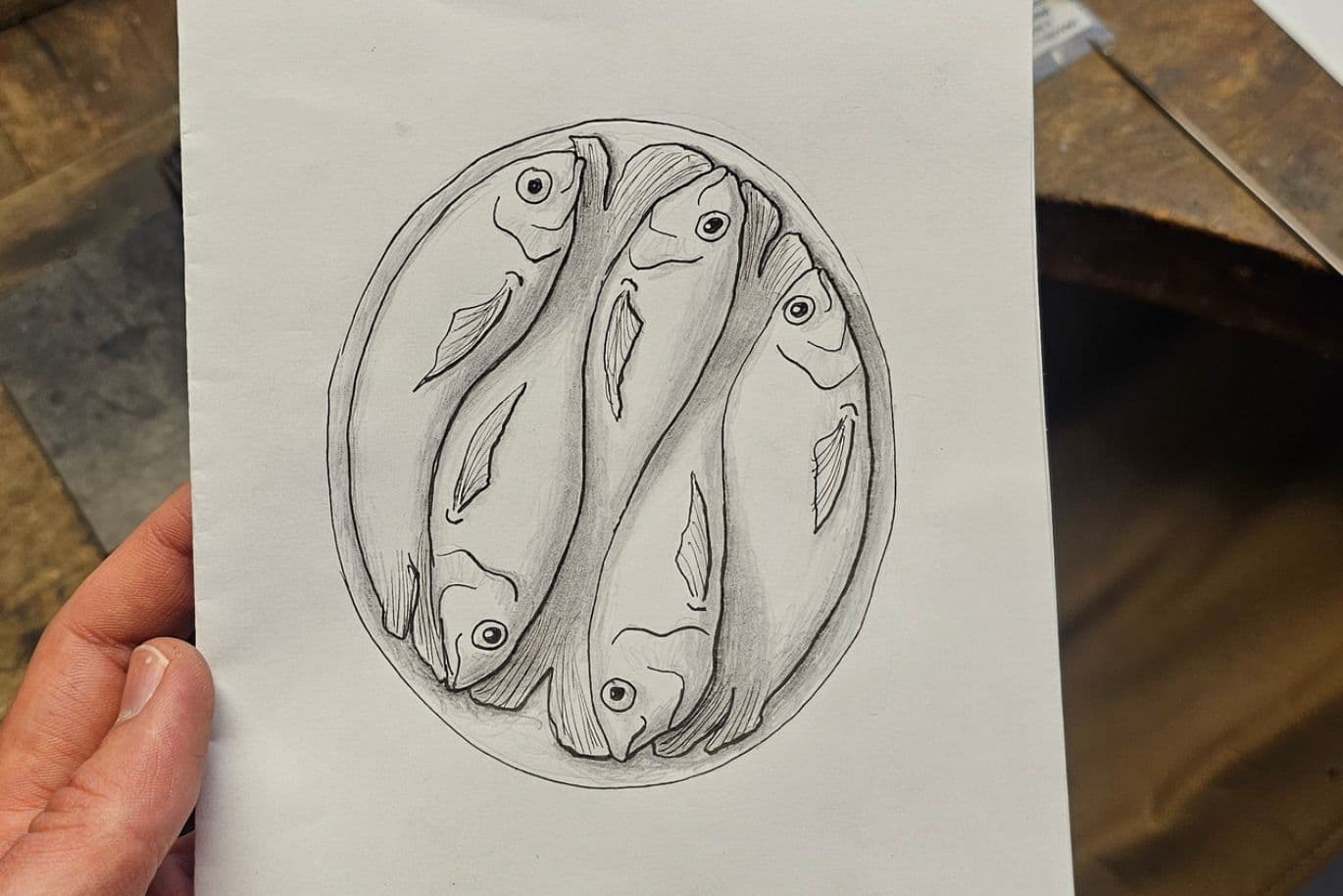
Almost always with a sketch. That’s followed by a lot of theoretical work, and for complex pieces, some math as well. Only once the plan is finalized do I begin the actual creation. Just diving right in, depending on the technique, often results in a piece that looks like a mass-produced item.
Which of your works is particularly close to your heart?
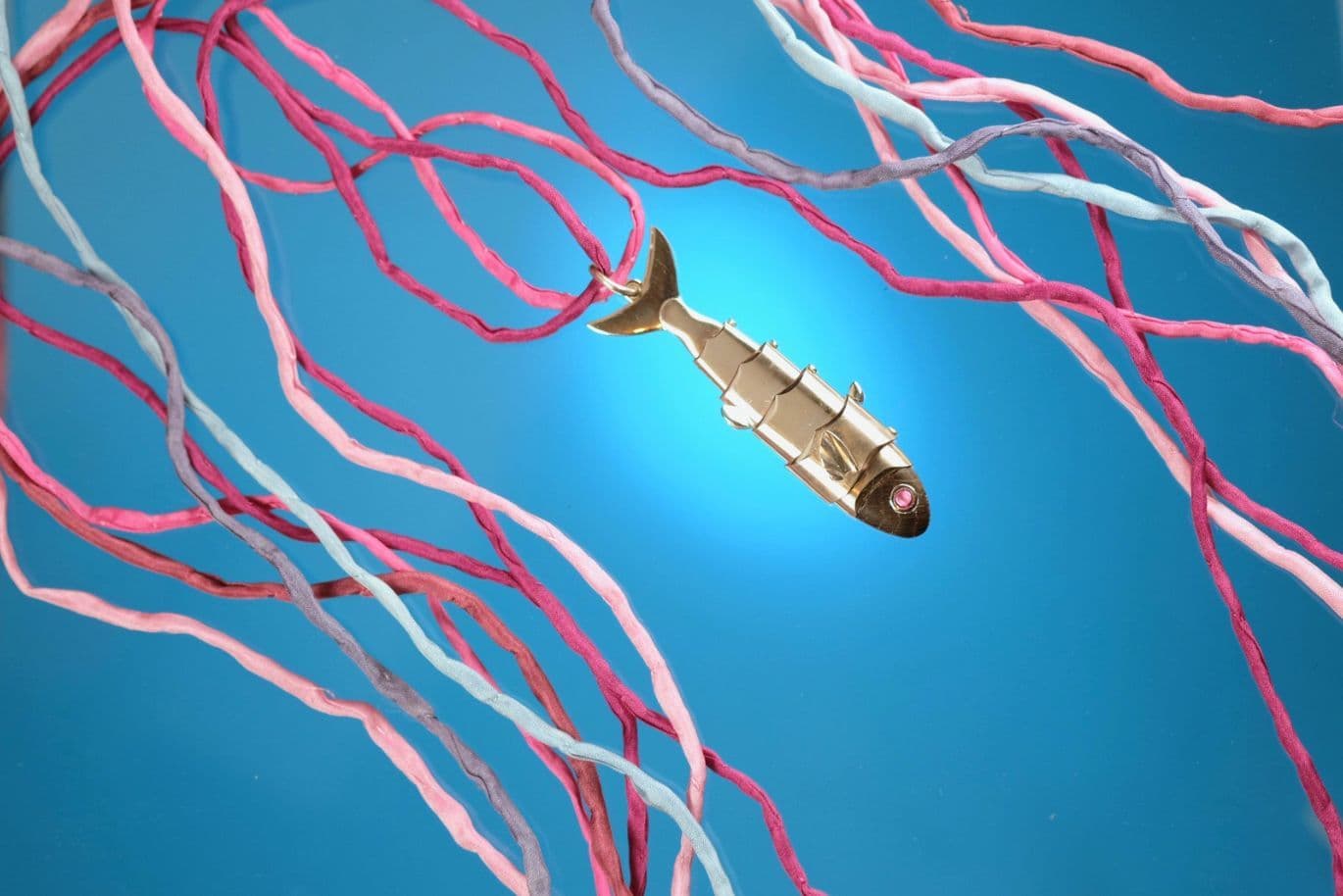
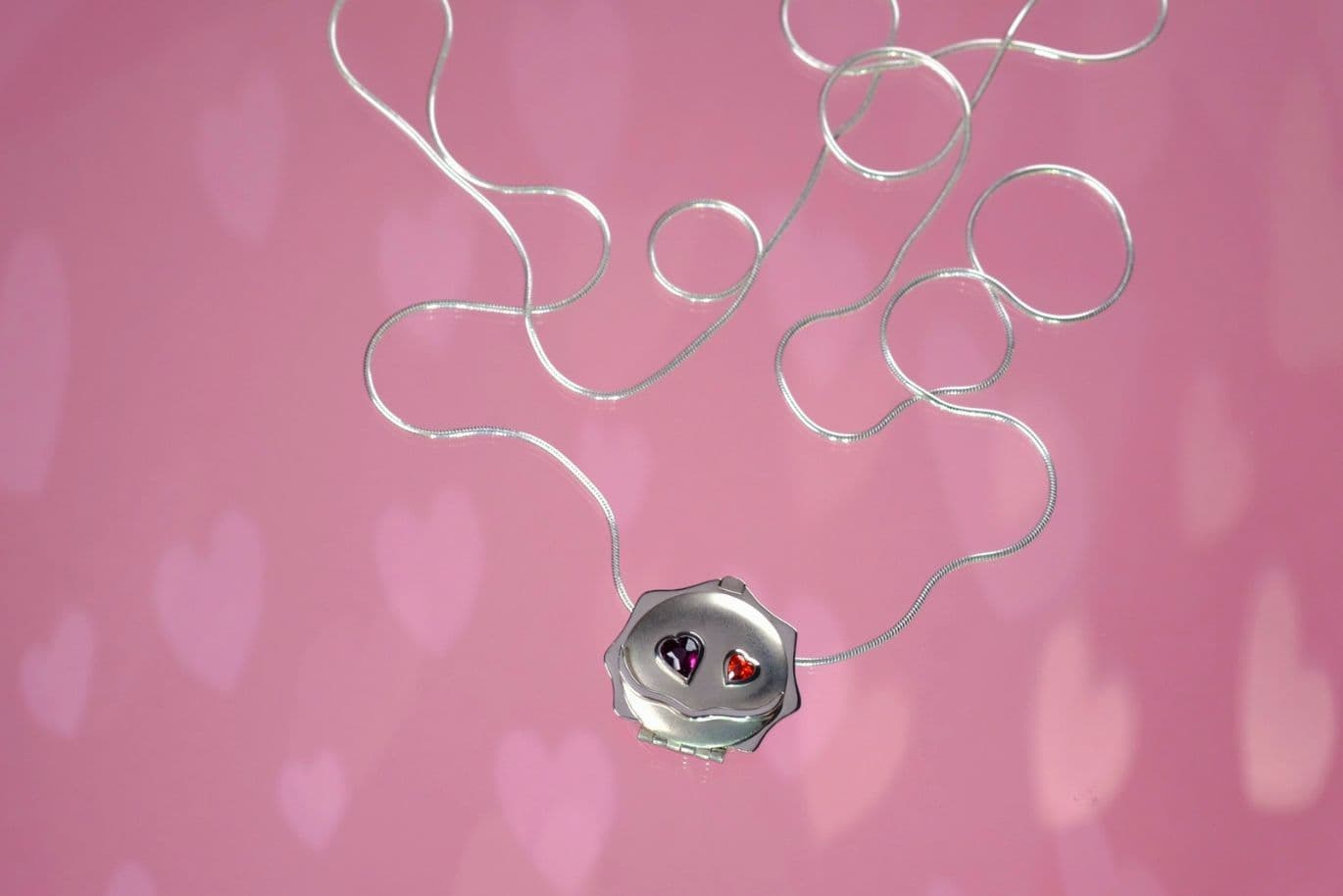
That’s hard to say – I don’t have a single “favorite.” The lipstick and another of my favorite pieces are currently on a tour of Germany and the world, traveling from exhibition to exhibition. But one piece that’s very special to me is a fish I forged for someone very important to me: a Lake Constance smelt with many personal details. It holds a tremendous amount of emotional significance. I’m also generally drawn to pieces that involve complex techniques, such as tins with spring hinges that open automatically at the push of a button. I’ve created many other pieces using special techniques, each of which holds its own high sentimental value for me.
The Path to the Future
According to the German Chamber of Industry and Commerce, there were only 66 apprenticeship positions in the gold and silversmithing trade nationwide in 2024; the previous year, there were just 63. The decline in the number of apprentices is also confirmed by the German Confederation of Skilled Crafts: The number fell from 1,444 apprentices in 1998 to just 471 in 2024 – a decline of approximately 67 percent.
The craft world needs a platform again to show that people can lose themselves in it and turn their hobby into a career.
Luca Sonnentag
What would need to change for more young people to choose this profession?
People need to hear about it more often. I only got into goldsmithing by chance myself. The craft needs a platform again to show that you can lose yourself in it and turn your hobby into a career. I received a multi-year scholarship for gifted students – before that, I never would have thought such a thing even existed for goldsmiths.
If a young person today were considering becoming a goldsmith – what would you honestly tell them?
Goldsmithing is demanding; you absolutely have to stick with it. No one starts out as a pro; in the beginning, a lot of things are crooked and lopsided. The important thing is not to lose heart and to stay ambitious. Over time, you get better and better, and the sense of accomplishment builds up. When the solder flows just right, it’s a real feeling of joy. I now have many such moments every day.
Are there any materials, techniques, or themes you’d like to experiment with more in the future?
I’d like to create a small collection using stone nuts. I’m also interested in the special technique called Mitsuro Hikime. This involves working with a Japanese wax mixture that is repeatedly pulled and folded – similar to dough or candy. You can create amazing shapes from the resulting strands. I can definitely see myself taking the leap into self-employment after mastering this technique, perhaps even with an online shop.
What are your next career steps?
I want to use my scholarship to go abroad and learn from even more masters. You could think of it as a modern version of the traditional journeyman’s tour: traveling, working in different workshops, and gaining experience. Networking is very important in the craft, especially since there aren’t many goldsmiths. We all know each other; it almost feels like one big family. Thanks to some of my award-winning pieces, many of my idols are now even following me.
Goldsmithing is incredibly diverse: ten goldsmiths will find ten different solutions to the same problem. That’s very exciting for my personal development. First, I’m heading to Stockholm, where my master worked for 20 years and maintains good contacts. After that, I’m heading to Australia, where I’ll work for two to three months. Once I’ve satisfied my curiosity a bit, I’d like to pursue my master’s degree. I’m really looking forward to creating another major exam piece. With the master’s degree, I’d have my bachelor’s and could go on to further studies later, because I also want to develop my theoretical knowledge.
If you look five years into the future: What do you want the name Luca Sonnentag to stand for in the trades?
For quality, honesty, and good design. I’ve been working on a plan for meaningful, efficient self-employment for a long time. Becoming a successful independent contractor someday is clearly my goal. My name should stand for trust – for the assurance that you can ask any question and get honest answers. I want to preserve the craft and show why it’s so valuable.
Find your property in Schwäbisch Gmünd.
Enjoying Life in Baden-Württemberg
You may also be interested in
 Beaded Beauty – an interview with Marijke de Cock
- 2 min.
- 05.06.2026
 Going deep – an interview with freediver Guillaume Néry
- 2 min.
- 5.6.2026
 Francis Kéré – What really matters
- 9 min.
- 16.06.2026
 The fashion label Zeus+Dione: Threads of Force
- 5 min.
- 26.05.2026
 The Hand of the Visionary – Designer Kelly Wearstler
- 5 min.
- 14.04.2026
 A class of its own – the limited edition Mercedes-Maybach V12
 Art on the floor – Carpets by cc-tapis
- 4 min.
- 05.03.2026
&w=1920&q=75) Leadership times two – the legendary Taschen publishing house
Leadership times two – the legendary Taschen publishing house- 5 min.
- 06.10.2025
GG Magazine exclusive content
GG is an independent magazine at the highest level. Exploring the world of architecture, lifestyle, design, fashion, yachting, luxury living and travel. We seek out the most exciting topics and personalities for you and invite you to get to know them from a fresh new angle. In GG, you will meet successful architects, interesting designers and exciting artists who are the talk of the town from London to New York and Berlin to Hong Kong.