
Speak to a Real Estate Specialist
Contact us today for expert guidance and all your property questions answered.
Access exclusive properties and get in touch for personal advisory: Explore Private Office.
Key Takeaways:
A DEWA bill in Dubai covers your monthly electricity and water consumption, making it an essential part of living in the city
Bills include electricity, water, Dubai Municipality housing fees, and additional service charges depending on your property
You can check and pay DEWA bills online via the DEWA website, smart app, Dubai Now app, or participating banks
One of the most important aspects of your real estate journey in Dubai is not just the cost of buying a property or renting it, but understanding the ongoing expenses associated with your home. One of the most important monthly costs is your DEWA bill, which is the Dubai equivalent of a utility bill covering electricity and water consumption.
For anyone moving to Dubai for the first time, setting up and managing DEWA is an essential step when moving into a new home. The Dubai Electricity and Water Authority (DEWA) is the official provider responsible for electricity and water services across the emirate.
This article will provide a comprehensive overview of the DEWA bill, including its components, charges, how to check your DEWA bill online, payment methods, and tips for reducing your monthly costs.
Let us first delve into the basics, of what a DEWA bill is. DEWA bills are your bill for using water and electricity in your home.
These bills are emailed to customers as part of the authority’s sustainability initiative rather than physical letters. This is a part of DEWA’s smart living initiatives.
Whether you are a buyer or renter, a monthly DEWA bill will be part of your living expenses in Dubai. It will include details such as your account number, consumption, charge, and other fees.
Before proceeding to how to check a DEWA bill, let us understand the various components.
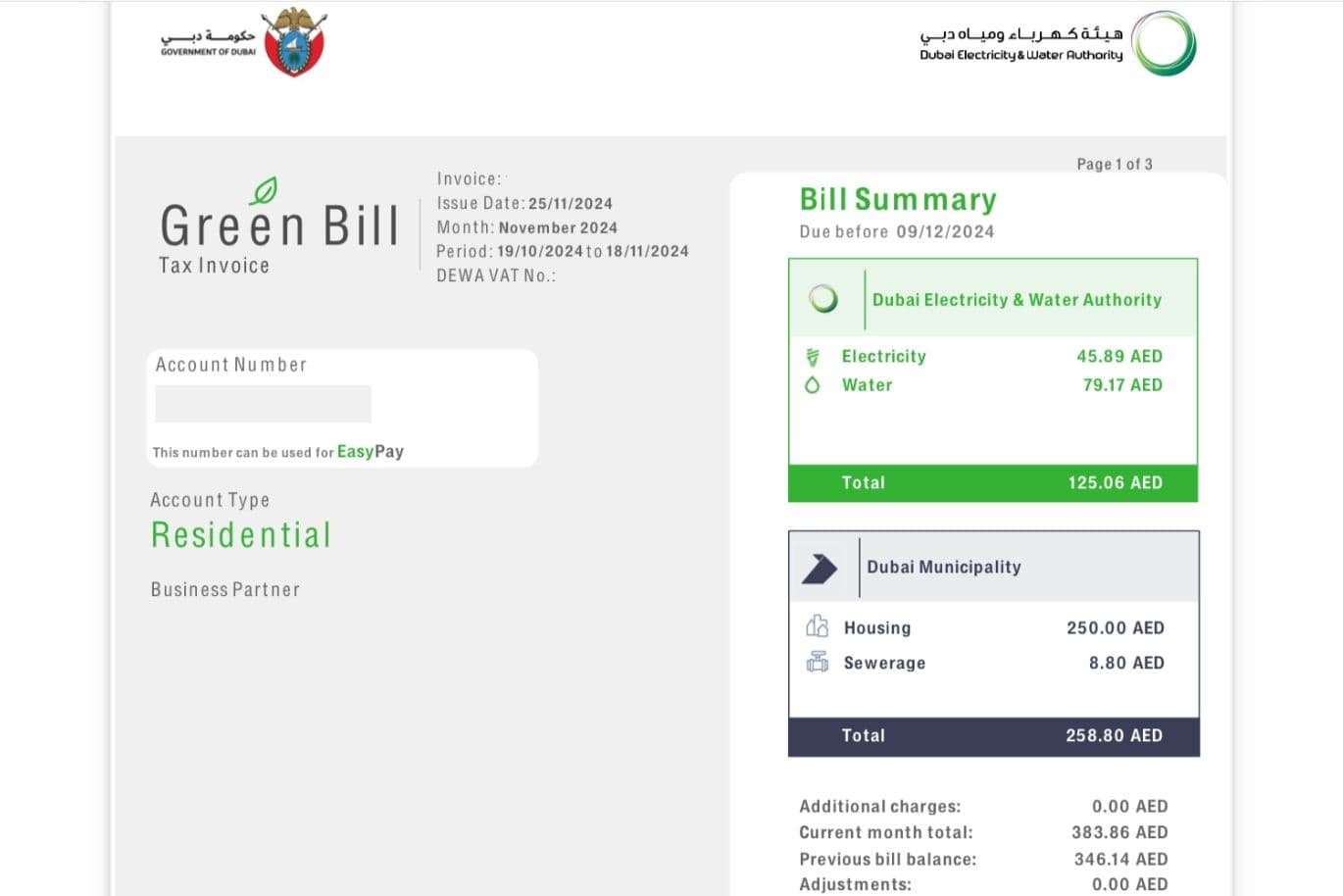
Generally, a Dubai DEWA bill is split into three pages with the following components.
On page 1, you will find the following:
Invoice date, month, and period
DEWA VAT number
DEWA account number, type
Property type and number
Dubai Municipality housing fees
Summary of electricity and water charges.
Previous DEWA bill amount
Additional service charges and adjustments
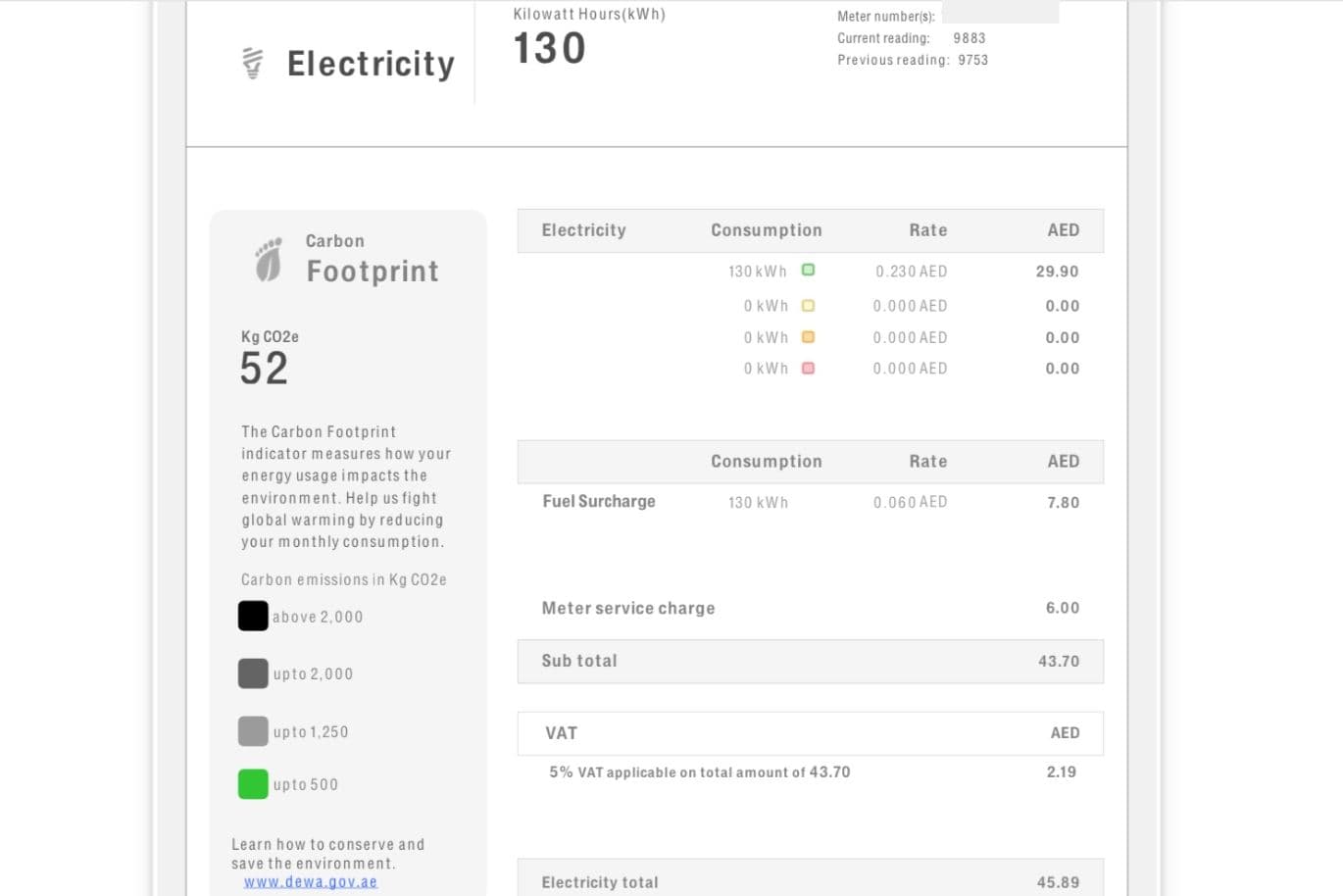
Page 2 of the DEWA bill covers your electricity usage. Here you will find information on your electricity consumption and charges, which generally are:
0-2000 kWh: 23 fils
2001-4000 kWh: 28 fils
4001-6000 kWh: 32 fils
6001-more kWh: 38 fils
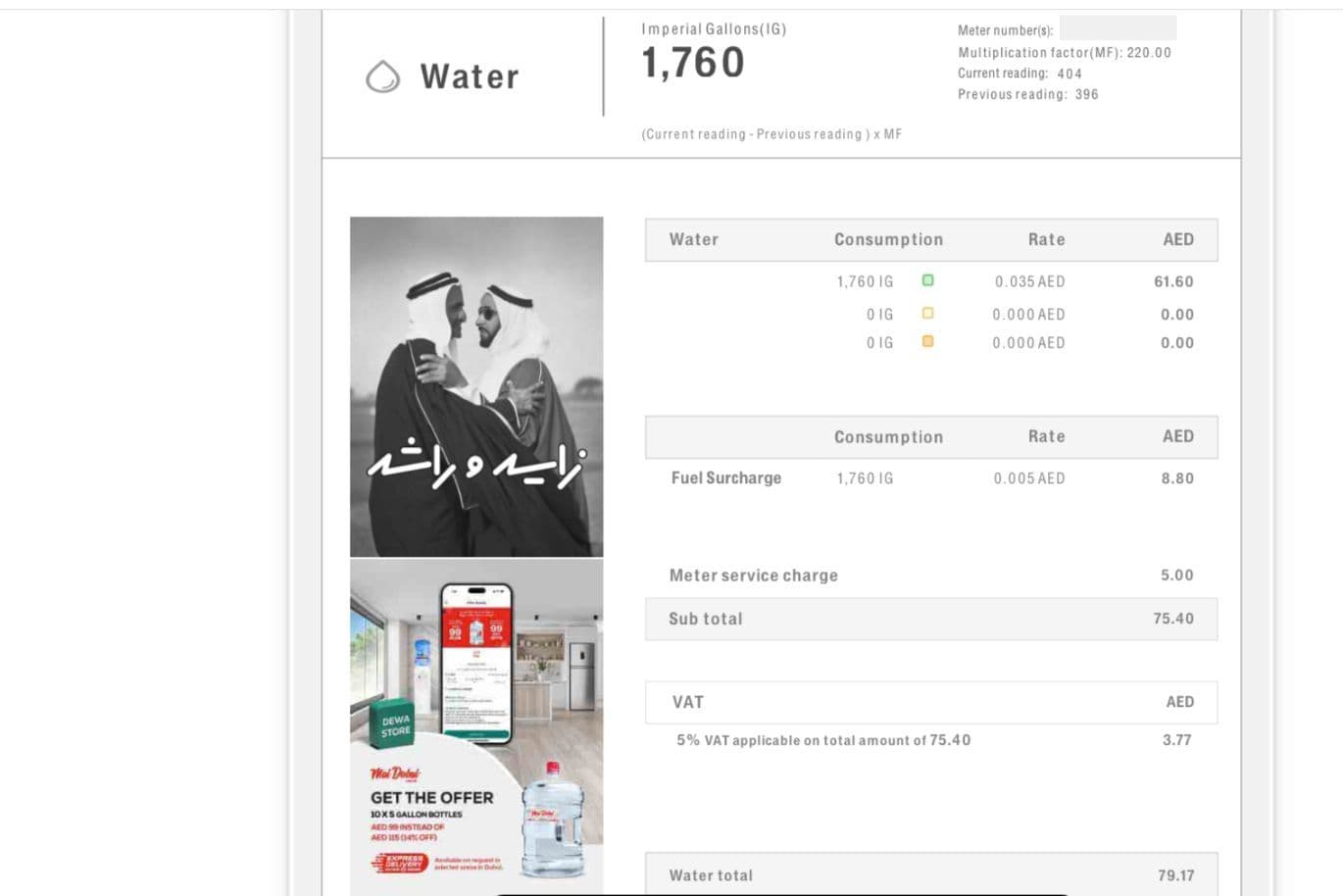
Page 3 of the bill breaks down your water consumption and charges. For residential properties, these are usually:
0-6000 imperial gallons: 3.5 fils per gallon
6001-1200 imperial gallons: 4 fils per gallon
12,000-more gallons: 4.6 fils per gallon
Water consumption charges for commercial and industrial properties generally are:
0-10000 imperial gallons: 3.5 fils per gallon
10,001 to 20,000 imperial gallons: 4 fils per gallon
20,000-more imperial gallons: 4.6 fils per gallon
A fuel surcharge of AED 0.5 fils per imperial gallon is also included in the water bill
Free, confidential and non-binding
Receive your digital valuation instantly
Based on data by Engel & Völkers
If you are wondering, “Where can I check my DEWA bill?” Do not worry. You can do it from the comfort of your home, from your phone or computer.
Checking your DEWA bill and even paying it can be done online. You can follow these steps for a smooth process:
Visit the official DEWA website and log in using your DEWA account details. If you do not already have an account, you can easily create one on the website.
Head to the “Pay Your Bill” section, where you can view and manage your bills
While the Dubai DEWA bill system is very straightforward, there may be some instances wherein consumers get confused - from how to pay a DEWA bill to why their charges are high.
Your DEWA bills include charges for your water and electricity consumption as well as the Dubai Housing Fee, which is paid by all residents, whether they own or rent a property.
Your bill will also include moving-in charges when establishing a new DEWA connection.
An unexpectedly high DEWA bill may result from seasonal variations in electricity use, undetected water leaks, or faulty appliances consuming excess energy or water.
To address this, monitor your consumption through DEWA’s 'Smart Living' initiative, check for water leaks, and maintain your appliances to ensure they operate efficiently.
Billing errors can occur due to incorrect meter readings or the wrong tariff for your property type.
Please carefully review your bill for discrepancies, and if necessary, contact DEWA's customer service to request a meter inspection.
If you believe you’ve been overcharged, it’s important to dispute the charges with DEWA.
Gather all relevant documents, such as previous bills and receipts, and file a detailed complaint through DEWA’s official channels. Then, follow up regularly to track the resolution.
Unpaid DEWA bills can lead to service disconnection after 14 days and legal complications for tenants. To avoid disruptions, ensure timely payments by setting reminders or automating payments.
Having understood how to check a DEWA bill online, let us understand how to pay a DEWA bill.
Now the question you might have is- “Where can I pay my DEWA bill?”.
Once you have scanned the charges on the DEWA website’s “Pay Your Bill” section, you can opt to pay the fees.
There will be several payment options, such as debit and credit card or Apple Pay, from which you can select your preferred one.
Once more, you will be able to review your payment details, confirm your transaction, and pay. Upon completing your payment, you will receive an electronic receipt as proof of payment.
While most people utilize the official DEWA website, you can also use the DEWA Smart App or the Dubai Now App to pay your DEWA bill.
Certain banks such as Emirates NBD, Dubai Islamic Bank, and Mashreq also allow their users to pay their DEWA bills from the bank website itself.
One of the biggest concerns people have with their DEWA bill is the high charges that may come with it.
Nevertheless, here are some tips to reduce the charges of your DEWA bill:
Be mindful of peak hour usage, which is generally between 12:00 PM and 06:00 PM, particularly during the summer. Limit the use of non-essential appliances during this period to reduce charges.
You can invest in appliances such as a programmable thermostat, which helps keep the home temperature moderate and also helps save on utility bills.
Avoid leaving your electric appliances on standby. Many experts state that even standby appliances can consume 5% of your home’s electricity.
Laundry dryers consume a lot of electricity - which is reflected in your DEWA bill. Therefore, many people line-dry their clothes to save on their DEWA bill costs.
Switch to energy-efficient appliances such as CFL and LED bulbs.
While air conditioners are used a lot in Dubai, use yours wisely. This includes doing things such as:
Setting your aircon at a higher temperature
Choose the right aircon for your apartment (e.g. one with a programmable thermostat)
Keeping curtains/blinds closed during the day when you are not in the property
Understanding your DEWA bill is an important part of managing your living costs in Dubai, whether you are renting or own your property. From electricity and water consumption to additional charges such as the Dubai Municipality housing fee, knowing what is included helps you budget effectively and avoid unexpected costs.
With convenient online services through the DEWA website, smart app, and other digital platforms, checking and paying your DEWA bill has become a simple process. By monitoring your consumption and following energy-saving practices, you can also manage your monthly expenses more efficiently.
If you are planning to buy, sell, or rent a property in Dubai, Engel & Völkers Dubai can guide you through every step of your real estate journey.
Speak to a Real Estate Specialist
Contact us today for expert guidance and all your property questions answered.
A DEWA bill is the monthly utility bill issued by the Dubai Electricity and Water Authority, covering electricity, water, and other related charges for your property.
DEWA stands for Dubai Electricity and Water Authority, the government authority responsible for providing electricity and water services in Dubai.
You can check your DEWA bill online through the official DEWA website, DEWA Smart App, or Dubai Now app using your account details.
The tenant usually pays DEWA bills when renting a property in Dubai, while property owners are responsible for DEWA payments when living in their own home.
The average DEWA bill in Dubai depends on the property size, number of occupants, season, and consumption habits. Larger properties, especially villas, typically have higher bills than apartments.
You can reduce your DEWA bill by monitoring electricity and water usage, maintaining appliances, using energy-efficient products, and managing air conditioning consumption carefully.
You may also be interested in





Contact



Engel & Völkers Dubai
7th Floor, Al Khail Plaza
Jumeirah Village Triangle, Dubai, UAE
Tel: +971 4 4223500