Top Interior Design Companies in Dubai
Discover the leading interior designers to take your home renovation to the next level.
The new GG website: Inspiring personalities, extraordinary places and exceptional properties. Discover now
Key Takeaways:
Modern villa design focuses on clean architecture, privacy, and functional luxury
Dubai villa design blends minimalism, smart technology, and natural materials
Villa interior design prioritises warmth, texture, and open living spaces
Landscape design villa features enhance outdoor living and overall property value
The villa has long been associated with space, privacy, and premium living. In Dubai, this has evolved into something more defined. Today, modern villa design is less about scale and more about how a home is planned, experienced, and lived in.
Across the market, Dubai villa design has shifted towards cleaner architecture, open layouts, and a more refined approach to luxury. Instead of overly decorative spaces, there is a growing focus on functionality, natural materials, and seamless indoor-outdoor living.
Whether you are designing a home or exploring the market, understanding how villa interior design and landscape design villa features come together will help you better assess both lifestyle quality and long-term value.
Table of Content
The evolution of modern villa design
Modern villa exterior design ideas
Modern villa interior design concepts
4 popular modern villa layouts and floor plans
Materials used in modern villa design
Cost factors when designing a villa
Luxury features to include in your modern villa
Modern villa design trends in 2026
Conclusion
Dubai's villa design story tracks closely with the city's broader development arc. The early 2000s were defined by the Palm Jumeirah era, with sprawling footprints, ornate facades, and interiors that prioritised visual drama over liveability.
The 2010s brought the mega-villa moment: double-height entrance halls, statement staircases, and a philosophy where more was always more. Communities like Emirates Hills set the benchmark for scale, and developers competed on square footage as much as on design quality.
The shift began quietly in the early 2020s and has accelerated sharply since. Driven by an influx of globally-travelled residents with exposure to design markets in London, Milan, and Tokyo, buyer expectations evolved. Scale stopped being the primary metric.
In its place came a demand for intentionality, homes where every material, proportion, and spatial transition was considered. Today's Dubai villa design is less about impressing a visitor in the entrance hall and more about how the home actually feels at 7am on a Tuesday. That fundamental reorientation is what makes the current moment in Dubai's villa market genuinely interesting.
The exterior of a villa plays a defining role in shaping first impressions and setting the tone for the entire property. In modern villa design, the focus is on clean architecture, balanced proportions, and a restrained material palette.
In Dubai, many villas feature neutral tones such as white, beige, grey, and taupe, reflecting a more refined and understated aesthetic. This approach aligns with the broader shift towards “quiet luxury”, where design relies on proportion and material quality rather than bold or decorative elements.
Here are some key exterior elements commonly seen in Dubai villa design:
The use of natural wood alongside concrete creates a balanced contrast between warmth and structure. This combination is widely used in modern villa design to achieve a contemporary yet inviting exterior.
A well-planned landscape design villa concept is essential. Manicured lawns, structured planting, and a mix of greenery help create a clean, cohesive outdoor environment. Many properties also incorporate villa garden design elements such as shaded seating areas, water features, and integrated lighting.
Courtyards are a defining feature in many modern villas. They act as a transition between indoor and outdoor spaces, improving ventilation while creating a private, usable outdoor area. In larger properties, courtyards often connect directly to gardens and pools.
Terraces are designed as functional living areas rather than secondary spaces. Wider layouts, seating zones, and open views allow homeowners to maximise outdoor use, particularly during cooler months.
Stone is often used to introduce texture and connect the property to its surroundings. In Dubai villa design, this can create a balance between modern architecture and more traditional regional influences, resulting in a timeless exterior aesthetic.
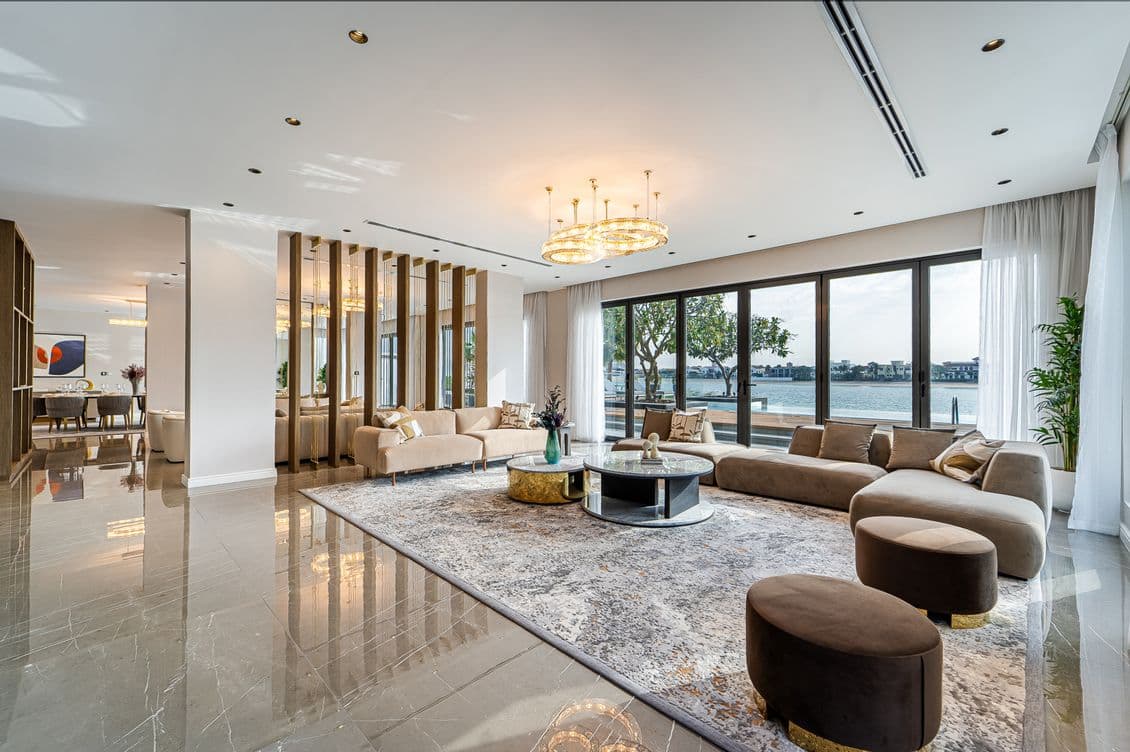
The scope for creating distinctive interiors is one of the defining aspects of modern villa design. Today, villa interior design in Dubai focuses on balance, combining clean layouts with warmth, texture, and functionality.
Here are some commonly adopted interior concepts:
Rather than stark minimalism, many villas now favour warmer palettes inspired by natural surroundings. Soft neutrals, layered textiles, and subtle material contrasts create a more comfortable and liveable environment while maintaining a refined aesthetic.
Marble remains a key feature in villa interior design, valued for both its visual appeal and practical benefits in Dubai’s climate. Used across flooring, walls, and surfaces, it creates a cohesive and timeless look.
Many Dubai villa design concepts draw inspiration from Mediterranean architecture. Elements such as arched openings, textured walls, and earthy tones introduce character while maintaining an open and airy feel.
Biophilic design continues to shape modern interiors. Large windows, indoor greenery, and natural materials help bring light and outdoor elements into the home, enhancing both aesthetics and wellbeing.
Technology is now a standard component of modern villa design. Lighting, climate control, and security systems are increasingly integrated into the home, designed to enhance comfort without disrupting the overall aesthetic.
Choosing the right layout is a key part of modern villa design, directly influencing how space is experienced and used. Across Dubai, several layouts have become particularly popular:
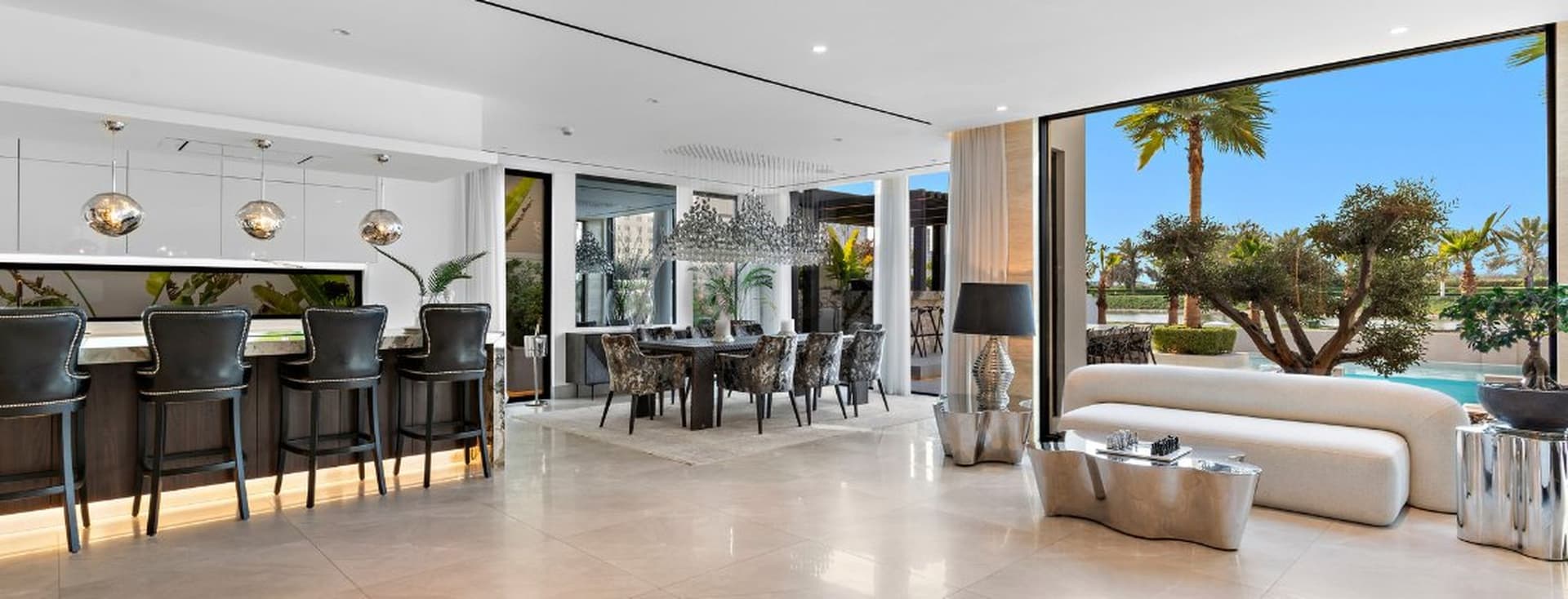
Open-plan living remains the most common approach in Dubai villa design. Kitchens, dining areas, and living spaces are combined to create a more fluid and spacious environment, improving both functionality and natural light.
Many villas are designed with clearly defined zones, separating formal living areas, family spaces, and private quarters. This layout supports both entertaining and day-to-day living, offering a balance between openness and privacy.
Courtyard-based layouts integrate outdoor space into the centre of the home. This approach enhances ventilation, introduces natural light, and creates a private outdoor area that can be used throughout the year.
Designed to maximise light and airflow, these layouts feature high ceilings, open spaces, and direct connections to outdoor areas. They are particularly effective in Dubai’s climate, supporting both comfort and energy efficiency.
From villa interior design to landscape design villa features, material selection defines both the aesthetic and performance of a home. In modern villa design, the focus has shifted towards natural, tactile, and climate-appropriate materials that balance durability with understated luxury.
Common materials used in Dubai villa design include:
Travertine – widely used for flooring, walls, and outdoor areas due to its soft tones and heat resistance
Natural stone (limestone, marble, granite) – adds depth and longevity, often used in feature walls and bathrooms
Wood and walnut finishes – bring warmth into otherwise minimal interiors
Microcement and plaster finishes – create seamless, modern surfaces with a soft, matte texture
Glass – floor-to-ceiling glazing to maximise light and indoor-outdoor connection
Metal accents (brushed brass, bronze, black steel) – used subtly in fixtures and detailing
Composite and engineered materials – chosen for durability, particularly in kitchens and outdoor spaces
There is also a growing emphasis on sustainable and energy-efficient materials, with developers increasingly incorporating insulated façades, solar-ready systems, and environmentally conscious finishes.
Top Interior Design Companies in Dubai
Discover the leading interior designers to take your home renovation to the next level.
Villas sit at the premium end of the market, particularly when building or customising a property from scratch. In modern villa design, costs are driven by a combination of location, scale, and specification rather than a single factor.
Key considerations include:
Location: Prime areas such as Palm Jumeirah, Emirates Hills, or Dubai Hills Estate command significantly higher land and build costs.
Size and layout: Larger villas require more materials, labour, and design input. Double-height spaces and expansive layouts increase both construction and finishing costs.
Design complexity: Bespoke elements such as feature staircases, custom joinery, or architectural detailing require specialist input, increasing both time and cost.
Villa interior design: The level of finish has a major impact. Premium materials, tailored furniture, and high-end fittings will significantly raise the overall budget.
Landscape design villa elements: Outdoor spaces are now a core part of modern villa design. Pools, shaded lounges, courtyards, and villa garden design features all add to the total cost.
Materials and finishes: The choice of materials, particularly natural stone, bespoke finishes, or sustainable systems, can substantially influence pricing.
Understanding these factors early allows for better planning and ensures the design aligns with both budget and long-term objectives.
In Dubai villa design, luxury is no longer about excess. The focus has shifted towards features that enhance how the home is experienced on a daily basis.
Common additions in modern villa design include:
Temperature-controlled indoor or outdoor pools
Outdoor entertainment areas with shaded seating and dining spaces
Double-height ceilings and open living areas
Walk-in wardrobes and dressing rooms
Private family lounges or separate living zones
Seamless smart home integration controlling lighting, climate, and security
These features are typically integrated into the overall villa interior design, creating homes that feel considered, functional, and aligned with modern living expectations.
The defining shift in Dubai villa design in 2026 is not about any single aesthetic — it is about a fundamental change in how luxury is defined. The question has moved from "how does this home look?" to "how does this home perform?"
Minimalism has grown warmer and more tactile. Travertine, walnut, honed stone, and plaster finishes dominate — chosen for how they feel as much as how they look. Facades are following suit: quieter, more proportional, and deliberately free of decorative excess.
The benchmark has shifted from "this home has a smart system" to "you would never know it did." AI-driven systems that learn occupant behaviour and adapt automatically are replacing manual controls — technology as infrastructure rather than feature.
Wellness is now embedded into the layout itself. Light cycles, acoustic privacy, passive cooling through sunken courtyards, and dedicated quiet zones are being planned from the ground up — not added as amenities after the fact.
The indoor-outdoor connection is now a baseline, but execution has become more refined. Leading villa interior design treats outdoor spaces as fully resolved rooms — with ceiling definition, temperature management, and lighting given the same attention as any interior space.
One of the most underreported trends is the rise of genuinely independent living wings within a single villa. Separate entrances, kitchenettes, and private outdoor areas — connected internally to the main home — reflect Dubai's family culture and represent significant, growing buyer demand.
Dubai's booming branded-residence sector has raised expectations across the entire private-villa market. Buyers familiar with Four Seasons or Bugatti-level material quality and spatial precision are bringing those benchmarks to their own homes — accelerating demand for bespoke joinery, gallery-quality lighting, and hotel-grade finishes.
The conversation has matured beyond whether a villa is sustainable to how sustainable — with buyers requesting specific certifications and performance data. Solar-ready infrastructure, greywater recycling, and climate-responsive design are now standard brief requirements, not differentiators.
Designing or choosing the right villa in Dubai goes beyond aesthetics. A well-executed modern villa design should balance architecture, functionality, and long-term value, while reflecting how you actually live.
Whether you are building from scratch or exploring available properties, understanding these principles will help you make more informed decisions in a competitive and fast-moving market.
Engel & Völkers Dubai provides expert guidance across both off-plan and ready villa opportunities, helping you identify properties that align with your lifestyle and investment goals.
Speak to a Real Estate Specialist
Contact us today for expert guidance and all your property questions answered.
Modern villa design in Dubai focuses on clean architecture, open layouts, natural materials, and seamless indoor-outdoor living, with an emphasis on functionality and understated luxury.
Construction costs typically range from AED 300 to AED 1,000+ per sq. ft., depending on design complexity, materials, and level of finish.
Modern design follows a consistent style based on minimalism and clean lines, while contemporary design evolves with current trends and can incorporate a wider mix of styles.
Materials such as travertine, natural stone, and treated wood perform well in Dubai’s climate due to their durability, heat resistance, and ability to handle temperature fluctuations.
Landscape design is a key part of modern villa design, extending living spaces outdoors through gardens, terraces, pools, and shaded areas that enhance both lifestyle and property value.
Popular styles include warm minimalism, contemporary luxury, and Mediterranean-inspired interiors, all focused on neutral palettes, natural textures, and functional layouts.
Energy-efficient villa design includes insulation, solar-ready systems, smart climate control, and layouts that maximise natural light and ventilation.
You may also be interested in



Contact



Engel & Völkers Dubai
7th Floor, Al Khail Plaza
Jumeirah Village Triangle, Dubai, UAE
Tel: +971 4 4223500