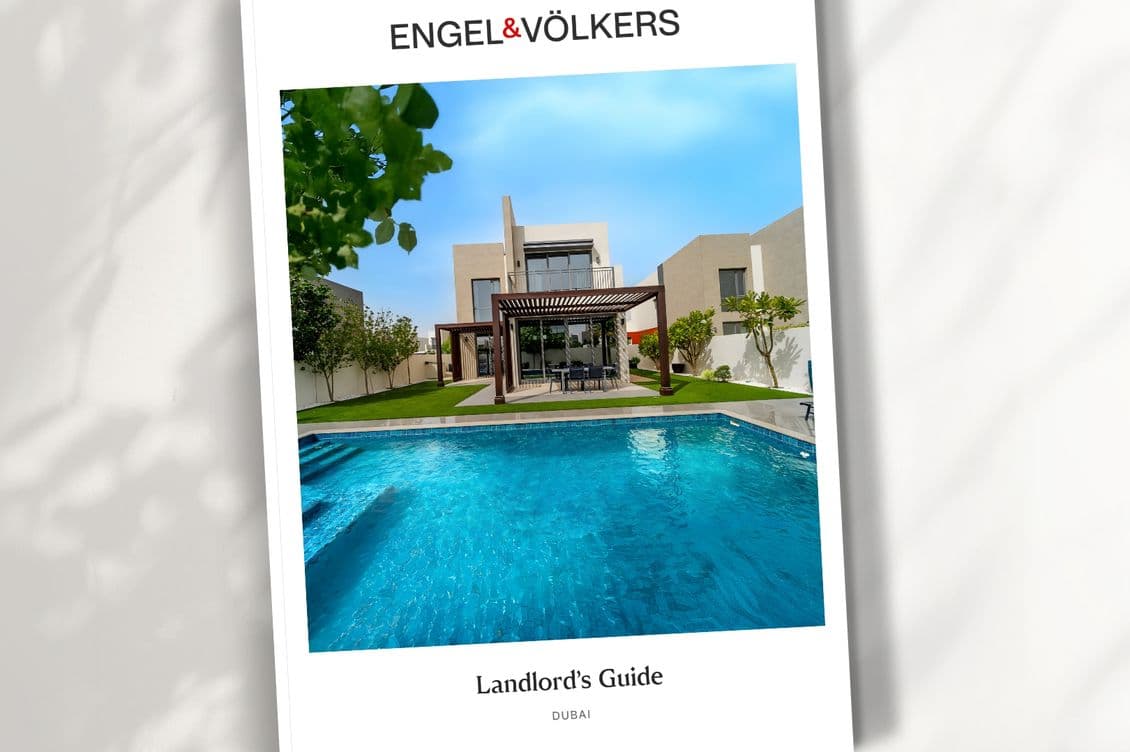
Avoid Costly Mistakes as a Landlord
Download our free Landlord’s Guide for expert tips, a smooth process and maximum returns.
The new GG website: Inspiring personalities, extraordinary places and exceptional properties. Discover now

Key Takeaways:
Advice to landlords on renting property in Dubai includes market insight, legal compliance, and effective tenant management
Rent increases follow RERA Rental Index rules with 90 days written notice before renewal
Well-maintained, fairly priced homes attract quality tenants and reduce vacancy periods
Partnering with Engel & Völkers ensures expert guidance and maximum rental returns
At Engel & Völkers, we know that navigating the Dubai rental market can be complex, especially for landlords. Whether you're managing your first property or growing a portfolio, the right guidance is essential.
From understanding how a landlord can increase rent to knowing whether a landlord can increase rent every year in Dubai, there are many key regulations and strategies to grasp.
This article offers clear, practical advice to landlords on renting property, helping you attract quality tenants, stay compliant, and maximize returns in 2026.
Before providing advice to landlords on renting properties, it is essential to understand Dubai’s rental property market and its functioning. Heading into 2026, here are some elements of the property market you should be aware of:
Strong Demand Driving Growth: Dubai’s rental market remains highly active, with continued demand across both residential and short-term sectors.
Rising Rental Prices: Increased demand is pushing up rental rates. As of December, the average annual rental prices have climbed by 5-20% in many key communities over the last 12 months, especially in villa communities.
Boom in Holiday Rentals: The short-term rental market is thriving, driven by Dubai’s ever-growing tourism. While income may be less consistent month-to-month, holiday rentals often yield higher returns compared to traditional long-term leases.
Diverse Investment Hotspots: Dubai offers a broad mix of mature and emerging neighborhoods, catering to various budgets and investment strategies. Savvy landlords are capitalizing on growth areas with strong tenant demand and future upside.
Regulatory Support and Oversight: The Real Estate Regulatory Agency (RERA) continues to maintain a structured and landlord-friendly environment, helping ensure transparency in rental increases, dispute resolution, and tenant rights.
To those asking how landlords can increase rent, the process starts here.
When leasing your investment property in Dubai, it’s important to remember that while the property is yours, it will be your tenant’s home during their stay. Presenting it in top condition is key to attracting high-quality tenants and securing strong lease terms.
Make sure the property is freshly painted, professionally cleaned, and that any maintenance issues are resolved before listing. A proactive listing agent can help you address these details early on to ensure a smooth leasing process. After all, just as landlords want reliable tenants, tenants look for responsive and trustworthy landlords.
Any investment left unoccupied leads to lost revenue, making it essential to list and price your property correctly from the outset. Every day a rental sits vacant is a day of income lost. In Dubai, landlords are also responsible for maintenance service charges, so an unoccupied property not only generates no income but continues to incur costs.
In a competitive market, overpricing a property and allowing it to remain untenanted is counterproductive and undermines sound investment principles.
Avoid Costly Mistakes as a Landlord
Download our free Landlord’s Guide for expert tips, a smooth process and maximum returns.
As a landlord, your property should be returned in the same condition it was handed over at the start of the tenancy contract. Tenants are not permitted to renovate or alter the property without written consent.
To protect your interests, ensure your agent prepares a detailed condition report before the tenant moves in. This report serves as a visual and written record, helping to avoid disputes when the tenancy ends.
This section is particularly relevant for those asking, can landlords increase rent every year in Dubai?
Landlords must be familiar with their legal rights under Law No (33) of 2008, which governs tenancy regulations in Dubai. This law allows landlords to evict tenants before the lease ends under specific conditions—such as failure to pay rent within 30 days of notice, unauthorized subletting, using the property for illegal activities, or causing serious damage that renders the property unsafe.
Understanding and applying your rights within the legal framework is essential for maintaining a professional and lawful landlord-tenant relationship.
This is one of the most important pieces of advice to landlords on renting property: ensure all contracts and payment terms are legally sound and efficiently executed.
In Dubai, tenancy contracts are based on a 12-month renewal cycle. If you plan to increase the rent, your agent must first conduct a rental review through the Dubai Rental Index. If the review supports a rent increase, you are required to give the tenant 90 days’ written notice before the contract expires.
The same timeline applies to any other changes in contract terms. Both parties must agree in writing, and changes must be notarized through the Dubai courts. Most contracts also include a break lease clause, typically requiring 60 days notice and a 60 day rent penalty.
Adhering to these procedures helps ensure a transparent, compliant, and dispute-free rental experience.
Rental payments in Dubai differ from many other countries. Instead of monthly payments, tenants typically pay rent in 1 to 6 cheques per year. These cheques are usually submitted at the start of the contract, with one current and the others post-dated.
Landlords are advised to accept rent via cheque, as they serve as security if a tenant defaults. Brokers should provide tenants with copies of the cheques to serve as proof of payment in case of disputes.
Tenants also pay a security deposit—typically 5% of the annual rent for unfurnished properties and 10% for furnished ones. This is held until the tenancy ends and can be used to cover damages or unpaid dues.
Utilities like DEWA and air conditioning are registered in the tenant’s name. At move-out, the tenant must provide the agent with a final paid bill, which is required to transfer services to new tenants.
Landlords must also register with utility providers and pay a refundable security deposit, which is used if tenants leave unpaid balances. This deposit is returned if you sell or transfer ownership of the property.
Before a tenant moves in, all maintenance fees on the property must be paid in full. These fees grant access to building facilities such as car parks, pools, gyms, and beaches, which are controlled via access cards that won’t work if fees are unpaid.
At the end of a tenancy, all maintenance issues and service bills must be settled by the tenant. If any balances remain, you may use the security deposit to cover outstanding amounts. Ensuring all accounts are cleared protects both you and the next tenant.
Having answered several key questions—such as whether landlords can increase rent every year in Dubai and how landlords can increase rent—let's explore how to manage landlord-tenant relations effectively.
A core piece of advice to landlords on renting property is to always act professionally to avoid unnecessary conflict and maintain long-term success.
Landlords must give prior notice before visiting the property. Unannounced visits are not permitted and may breach tenant rights.
Whether initiating or ending a lease, both landlord and tenant are responsible for ensuring all required documentation is accurate and complete.
Landlords should ensure there are no outstanding debts, utility bills, or legal issues tied to the property, as these can negatively affect tenants and create legal complications.
A landlord cannot evict a tenant before the contract expires unless specific legal grounds exist. These include non-payment of rent (after a 30-day notice), unauthorized subletting, illegal activity on the premises, or serious property damage. Even then, formal notice must be given and the process must go through the Dubai Rental Dispute Settlement Centre.
Clear, consistent communication fosters a smooth tenancy. Keep tenants informed about property matters and ensure they can reach you easily when needed.
Yes, landlords can increase rent every year in Dubai, but only in line with RERA regulations. The increase must align with the Rental Index, and tenants must receive 90 days’ written notice before the current lease expires. Increases cannot be made arbitrarily.
Renting out property in Dubai can be a highly rewarding investment if done correctly. As this guide has shown, successful property rental goes beyond finding a tenant. It requires legal knowledge, strategic pricing, property preparation, and ongoing communication.
To recap the essential advice to landlords who are planning to rent property in 2026:
Understand the rental market – Dubai continues to experience rising demand, rental prices, and short-term rental opportunities.
Prepare your property properly – Well-maintained, professionally presented homes attract better tenants and higher returns.
Know your legal obligations – From tenancy contracts to eviction rules and how much a landlord can raise rent, compliance with RERA regulations is non-negotiable.
Yes, landlords can increase rent every year in Dubai – but only with 90 days' written notice and alignment with the Dubai Rental Index.
Communicate and act professionally – Building trust with tenants leads to smoother rentals, fewer disputes, and longer tenancies.
Whether you're wondering how a landlord can increase rent, or need support managing your property end-to-end, expert guidance makes all the difference.
Get in touch with Engel & Völkers today at dubai@engelvoelkers.com or call us on 800 355 to speak with one of our experienced property advisors.

Rent successfully with Engel & Völkers
It's promising: Our extensive network of prospective tenants.

Jake Fletcher
Jake Fletcher is the Head of Leasing at Engel & Völkers Dubai, where he leads one of the city’s top-performing leasing teams with over 50 agents. With over four years of frontline experience in Dubai’s fast-paced real estate market, Jake is recognised for building high-performing teams. He pairs deep market expertise with a strategic, people-first leadership style that consistently drives results and raises industry standards. His achievements have also earned him industry recognition, including accolades such as Bayut’s Agent of the Month.
You may also be interested in







Contact



Engel & Völkers Dubai
7th Floor, Al Khail Plaza
Jumeirah Village Triangle, Dubai, UAE
Tel: +971 4 4223500