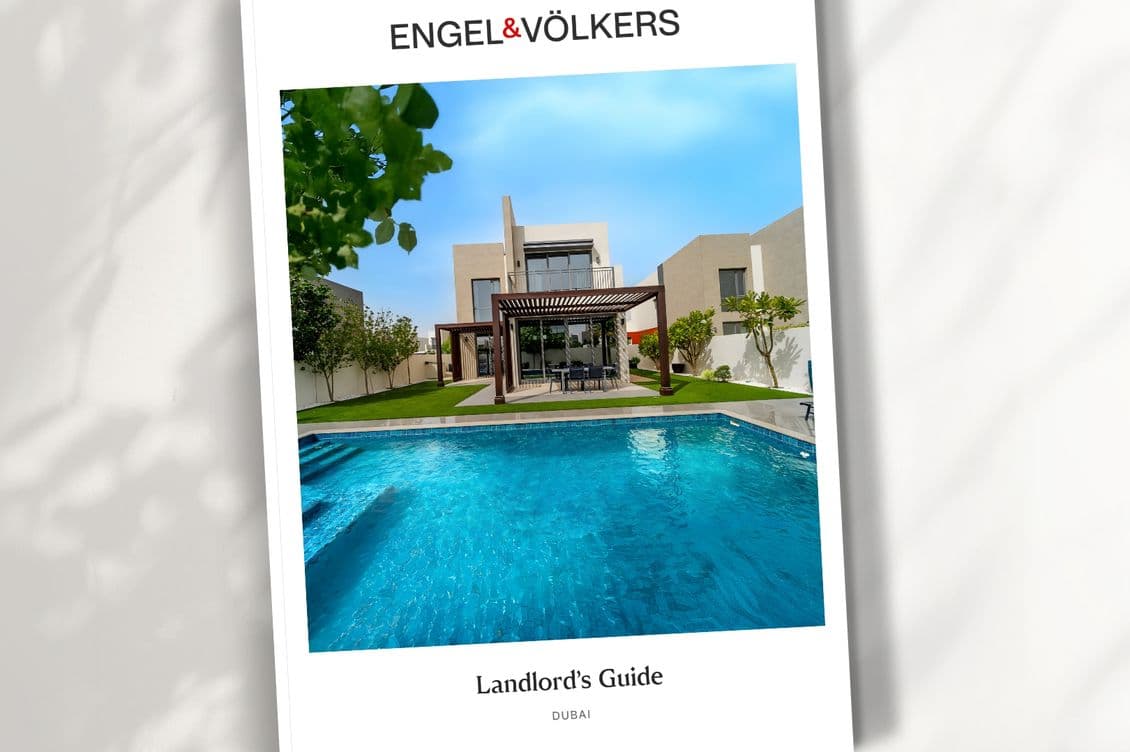
Avoid Costly Mistakes as a Landlord
Download our free Landlord’s Guide for expert tips, a smooth process and maximum returns.
The new GG website: Inspiring personalities, extraordinary places and exceptional properties. Discover now
Get expert insights and learn how to list your property for rent in Dubai.

Key Takeaways:
How to rent your property in Dubai involves preparing, pricing, and marketing it through a RERA-registered real estate agency
Required documents include title deed, passport, Emirates ID, and DEWA details for listing and Ejari registration
Well-presented properties with professional marketing attract faster leases and higher-quality tenants
Partnering with Engel & Völkers ensures expert guidance, compliance, and maximum rental performance
Planning to rent your property in Dubai? As the city’s real estate market continues booming with new projects, interested buyers from across the world, and high returns on investment (ROI), many buyers in Dubai are looking to lease their properties to tenants.
Putting a property for rent on the market may seem like an overwhelming endeavor with the age-old, “How to list my property for rent?” question. This article will provide a comprehensive guide on property listing for rent in Dubai and the steps you should take for a hassle-free process; from preparing your property to managing viewings and contracts.
The first step of listing a property for rent in Dubai is to prepare it. If there are any minor renovations required on your property such as plumbing, painting, or electrical work - it is recommended to complete these before putting it out for rental. This will ensure the property is visually appealing, attracts high quality tenants and achieves the best rental price.
First impressions and the property’s look matter.
Working with a real estate company to list your property for rent will be of immense help. This will allow you to work with experienced people in the industry who are familiar with the market, different property types and locations, and shifting trends. They will also have the resources and expertise to market your property effectively to a wide audience, attracting potential tenants and allowing you to rent your property for the best price.
A reputable real estate company does not only have years of experience when it comes to dealing with tenants, but it should also have a reputation for following the process swiftly and seamlessly.
Working with a reputable real estate agency will ensure a smooth process for you, as well as an informed one where there is clarity on both ends. Your agent/company will also help you understand the rent prices, vet potential tenants and negotiate desirable terms.
It is vital to work with an agency that is registered with the Real Estate Regulatory Authority (RERA) to avoid any legal issues in the future. Real estate companies affiliated with RERA not only help find suitable tenants but also ensure that the entire process is conducted professionally.
Knowing “how to list my property for rent in Dubai” is incomplete without understanding the documents and permits required for listing.
Here are two factors to keep in mind about the property listing process in Dubai:
Putting a property for rent in Dubai involves submitting various documentation, which you as the property owner will be responsible for. The documents required for putting a property on rent include:
The landlord’s passport and Emirates ID/Residence Visa copy
DEWA account details
All properties put up for rent in Dubai are required to obtain a permit that allows them to be advertised by a RERA-registered real estate company.
To obtain this permit, you will have to submit certain documents to the Dubai Land Department (DLD):
Title deed
Passport copy of the owner
Signed listing agreement
Your real estate agent should complete this process on your behalf.
As mentioned above, first impressions of your property matter. Therefore, it is important to showcase it in the best possible light before listing it for rent.
Your real estate agent should consider options like professional photography, videography and 360 tours to capture your property. However, these efforts could be wasted if your property is not clean, tidy and in good overall condition.
It is advisable to keep your property in good shape and decluttered prior to listing it for rent, and then maintain these standards so that potential tenants can view your property at its finest.
Your real estate agent should arrange property viewings on your behalf. They should be present to show potential tenants around your property and answer their questions, negotiate any offers and also give you constructive feedback on your property.
It is advisable to be as flexible as possible with timings for viewings to give potential tenants the best possible experience and not deter them from visiting your property.
Once a potential tenant decides that they would like to rent your property, they will submit an offer via the real estate agent. Both parties can discuss and negotiate the terms of the contract through the agent before mutually agreeing to proceed.
After accepting the tenant’s offer, the necessary documentation is to be completed and the contract will be drawn up, and the tenant should issue a deposit cheque. Your real estate agent will guide you and the tenant throughout the process.
Your property has been listed for rent and is almost secured by a tenant. The next step is signing the tenancy contract, for which there are two factors to consider:
The real estate company you are working with should provide the RERA Unified Tenancy Contract along with a standardized lease addendum that outlines the rights and responsibilities of both parties.
Upon signing the tenancy contract, it is mandatory to register with Ejari. This can be done by the tenant, landlord, or the real estate company.
While registering for Ejari, you will be required to provide certain documents and pay a fee - this can be done online or at an Ejari center.
There are two things to keep in mind when receiving the first payment from the tenant for your property:
During the contract signing, the tenant should make a payment to the landlord in line with the agreed terms. This typically includes a security deposit (5% of the annual rent for an unfurnished property or 10% if it is furnished) and any other upfront fees.
The tenant may either pay the full annual rent in one payment (one cheque) or they can make an initial payment with post-dated cheques.
If a tenant and landlord agree that the rent will be split over multiple payments throughout the year, the tenant should issue post-dated cheques to the landlord at the time of contract signing.
A post-dated cheque is a cheque which has a future date written on it instead of the date the cheque was written. This means that the cheque can only be deposited on or after the date specified - otherwise, it will not be accepted by the bank.
For example, lets imagine that the tenant and landlord agree for the annual rent to be split over 6 cheques. This would mean that the tenant will make the first payment (for 1/6 of the rent) at the time of signing the contract, and they would then issue 5 post-dated cheques which are dated at 2 month intervals throughout the year. This would allow the tenant to pay the rent in regular installments, whilst giving the landlord comfort in having the cheques ready to cash.
For the tenant’s ease, ensure that the contracts for their gas, water, and electricity utilities are in place. This happens as soon as the contract is registered with Ejari, after which DEWA creates the tenant’s account and emails them the details.
To activate the DEWA account, the following documents will be required:
DEWA number
Passport copies (of both tenant and landlord)
DEWA form
Title deed
Activation fee of AED 130
A refundable security deposit
If there are any outstanding utility bills at the time of tenancy commencement, you will have to pay them.
Ensure that you have a key and any necessary access cards ready to give to the tenant. These will have to be signed for and collected by the tenant before they move into your property.
Avoid Costly Mistakes as a Landlord
Download our free Landlord’s Guide for expert tips, a smooth process and maximum returns.
When listing your property for rent in Dubai, it's important to consider the additional costs involved in the process. These can include:
Minor renovation or maintenance costs
Professional cleaning
Photography and marketing expenses (usually covered by the real estate agency)
Property insurance
Utility clearance (paying any outstanding bills before handover)
Being aware of these potential expenses helps you budget effectively and ensures a smoother renting process.
The time it takes to rent a property in Dubai depends on various factors such as location, price point, condition of the property, and how well it is marketed.
In general, if your property is competitively priced and professionally marketed by a reputable agent, it can take anywhere from a few days to a few weeks to secure a suitable tenant.
Dubai's rental market is regulated to ensure fairness between landlords and tenants. To remain compliant, here are some important legal requirements:
Rental increases require a 90-day written notice before contract renewal
Evictions must follow legal grounds: non-payment, personal use, or misuse of the property
Major repairs are the landlord’s responsibility
Ejari registration is mandatory for all tenancy contracts
For landlords:
Emirates ID or passport
Title deed copy
9-digit DEWA premises number
Power of attorney (if applicable)
For tenants:
Emirates ID and passport
UAE residence visa
Signed tenancy contract
Security deposit receipt
Power of attorney (if applicable)
Many landlords unknowingly make mistakes that can delay the rental process or attract the wrong tenants. Here are some to avoid:
Not using an agent: trying to list your property for rent without a real agent can significantly slow down the process, attract lower quality tenants and potentially lead to you achieving a lower rental price.
Poor marketing: Low-quality photos or vague descriptions reduce visibility and tenant interest
Overpricing: Research the RERA rental index to ensure your asking rent is fair and realistic
Neglecting maintenance: Unrepaired damage or untidy interiors deter potential tenants
Avoiding these common pitfalls can help you secure better tenants and lease terms.
While Dubai offers a relatively streamlined process for listing your apartment or villa for rent in Dubai, navigating all the steps—especially as a first-time landlord, can be confusing and time-consuming. This is where Engel & Völkers steps in.
For over 10 years, Engel & Völkers has helped landlords in Dubai to successfully rent their properties and home seekers find the perfect place to call home. Whether you're looking to list your apartment for rent or find your dream home, contact us today for expert guidance.

Rent successfully with Engel & Völkers
It's promising: Our extensive network of prospective tenants.
Frequently Asked Questions
Key documents include the title deed, landlord’s passport and Emirates ID/Residence Visa copy, DEWA account details.
To determine the appropriate rental price, work with a reputable real estate company. They should be familiar with market trends, property types, and locations. They can provide insights into current rental rates, recent transactions and assist with negotiations with potential tenants.
Additional costs of listing your property for rent could include basic maintenance work, decorating and furnishing, and property insurance.
Yes, you can list your property on Airbnb in Dubai, but you must obtain a holiday home permit from the Dubai Department of Economy and Tourism (DET). The property must meet specific furnishing and safety standards.
Renting out property in Dubai can be highly profitable, particularly in popular communities. With rental yields ranging from 5–8% annually, many investors buy apartments specifically to rent them out as a source of passive income.
Yes, both residents and non-residents can buy property in designated freehold areas in Dubai and rent it out either on a short-term or long-term basis, provided they comply with RERA regulations.
To list on Property Finder, you must work with a RERA-registered real estate agency that holds a valid Property Finder account. Your agent will upload your listing with high-quality visuals and detailed information to attract potential tenants.

Jake Fletcher
Jake Fletcher is the Head of Leasing at Engel & Völkers Dubai, where he leads one of the city’s top-performing leasing teams with over 50 agents. With over four years of frontline experience in Dubai’s fast-paced real estate market, Jake is recognised for building high-performing teams. He pairs deep market expertise with a strategic, people-first leadership style that consistently drives results and raises industry standards. His achievements have also earned him industry recognition, including accolades such as Bayut’s Agent of the Month.
You may also be interested in






Contact



Engel & Völkers Dubai
7th Floor, Al Khail Plaza
Jumeirah Village Triangle, Dubai, UAE
Tel: +971 4 4223500