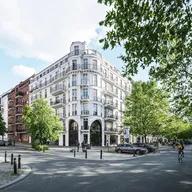
Pentagon, Brussels, Belgium
Characterful shopping in the heart of Sablon
Price
€249,000
- 5 Rooms
- 1 Bathroom
- ~67 m² Living area
Buying a flat in Brussels is a major decision, whether it is your first home, a move to a new neighbourhood or a step up in comfort. The capital offers a wide variety of properties and atmospheres from one commune to the next, which makes careful preparation all the more important.

In this guide, our agents share 9 practical tips to help you buy with confidence: from defining your criteria and budget to understanding what is specific to Brussels, making an offer and choosing your notary. Most of this advice also applies if you are buying a house.
For a broader overview of the purchase process in Belgium, see our complete guide to buying property in Belgium.
Table of Content
Tip 1: Make a list of your criteria
Tip 2: Plan your long-term payment capacity
Tip 3: Understand the local market before you visit
Tip 4: Visit with a method
Tip 5: Plan for any renovations
Tip 6: Make an offer to buy property
Tip 7: Take care of your property finance plan
Tip 8: Choose your notary
Tip 9: Get support from professionals
What is specific about buying a flat in Brussels
Buying a house, studio or flat must meet certain selection criteria that vary from person to person. Therefore, it is highly recommended to make a detailed list of what you would like to find in the property to be purchased. For buying a flat in Brussels, the most popular criteria are:
The surface area (in m2)
The number of rooms
The layout: duplex or penthouse
The type of building
The location: located in the centre of Brussels or on the outskirts
The type of property: new or existing
Outdoor spaces: terrace, balcony, etc.
These points will determine your research. They can also influence several factors: price, financing, additional costs or works.
Consider prioritising these criteria. Prioritisation will allow you to focus your search as much as possible.
Buying property takes time. Reviewing your needs today will make your future research easier.
Becoming a homeowner is a great project. YBefore starting your search, take a long-term view of your finances. Note that your investment could put you in debt for between 10 and 25 years.
To meet your financial obligations, look into the future and check whether, even a few years from now, you will still be able to repay your monthly payments.
Many things can happen in such a long time. Therefore, ask yourself the right questions before you start:
Is your professional situation stable?
Do you expect a steady increase in your income?
Are you planning to have children?
Is the home you want likely to be suitable for them or will you need to change it after a few years?
If all the lights are green, we can start looking for your property among our exceptional properties in the portfolio.
Remember to budget for purchase costs on top of the price, such as registration duties, notary fees and loan costs. Our guide to the costs of buying a property in Belgium details each of them.
Prices and buyer demand can vary significantly between Brussels communes, and sometimes between streets in the same neighbourhood. Before you start visiting, take the time to understand the market in the areas you are considering: price levels for comparable flats, how quickly properties sell, and which features buyers value most.
A local real estate agent can share this insight and alert you to suitable properties as soon as they come on the market, sometimes before they are widely advertised. If you are wondering how to select the right professional, read our guide on how to choose a real estate agent in Belgium.
Visit as many properties as possible that match your criteria. Each visit helps you refine what you are looking for (a higher floor, a terrace, a garden on the ground floor, a separate toilet) and compare more objectively.
Arrive a little early and walk around the neighbourhood. Check transport links, shops, schools and the general atmosphere at different times of day. During the visit, look beyond the decoration: natural light, noise, the condition of the windows and installations, and the state of the common areas of the building.
Take notes and photos after each visit, and do not hesitate to come back for a second viewing before making a decision.
Generally, an existing flat with works is less expensive than a renovated or new property. So you may be able to get a good deal. As long as you check that the work to be carried out does not involve a large cost. It is best to go with a structural engineer or architect to estimate the cost of the works.
Some are aesthetic, while others are upgrades and can lead to very high costs. Your real estate agent can also help you assess which works are essential and which can wait.
IOnce you have found the right flat, you can make a written purchase offer. Be aware that in Belgium, an offer accepted by the seller generally means the sale is concluded: both parties are committed.
That is why your offer should be in line with the market and, above all, include the right conditions. The most important one is a condition precedent of obtaining your mortgage, so that you are not bound if the bank refuses your loan. Also specify a validity period for your offer.
The sale is then formalised in a sales agreement (compromis), usually with a deposit, before the final deed is signed at the notary’s office.
Few buyers can buy without a mortgage. You probably have no choice and will have to spend time looking for financing solutions that fit your profile and budget.
First look at the loans with special conditions (large family, listed building, etc.) that you can get.
Investigate all financing options for which you are eligible, taking into account your personal and professional situation.
Contact several banking institutions and compare the rates obtained
Engage a broker to take care of these procedures.
If you do not have a notary, we usually let the seller's notary guide us. Note that you have the option of asking another notary to handle the purchase transaction of your flat.
In this case, two notaries work together. One looking after the seller's interests, the other looking after yours.
Either way, be aware that the costs are the same, with both notaries sharing the fees.
Acquiring real estate is not a trivial matter. Several thousands or even millions of euros are sometimes at stake.
Surrounding yourself with experienced professionals (an estate agent, a notary, a credit broker and, if needed, an architect) helps you avoid costly mistakes at every stage. If you are moving to Belgium from abroad, our guide to buying property in Belgium as an expat covers the specific points to consider.
To discuss your project, find an Engel & Völkers shop and meet a local advisor.
Yes. Registration duties are the main purchase cost in Belgium and are set by each Region. In Brussels, a reduction may apply when you buy your own home, under certain conditions. Your notary can confirm the amount for your situation.
Ask for the minutes of recent general meetings, the monthly charges, the reserve fund and any planned works. They give a clear view of future costs.
Generally yes, once the seller accepts it. That is why it is important to include a condition precedent of obtaining financing and a validity period.
Yes. Most steps are the same. The points specific to co-ownership apply mainly to flats.
Buying in Brussels follows the general Belgian process, but some points are specific to the Brussels-Capital Region or to flats in particular.
Registration duties are a regional tax and represent the largest purchase cost. In Brussels, buyers acquiring their own home can, under certain conditions, benefit from a reduction. Conditions and amounts change regularly: check them with your notary and see our guide to the costs of buying a property.
Most flats are part of a co-ownership. Before making an offer, ask for the minutes of recent general meetings, the amount of monthly charges, the reserve fund and any major works that have been decided or discussed. These documents can reveal future costs that are not visible during a visit.
The seller must provide several documents, including the energy performance certificate (EPB), the soil certificate, the electrical inspection report and urban planning information. Read them carefully: they can affect your renovation budget and your financing.
Each of the 19 Brussels communes has its own character, from lively central neighbourhoods to greener, quieter residential areas. Think about your daily life (commute, schools, local shops) as much as the property itself.
Pentagon, Brussels, Belgium
Price
€249,000
Bruxelles, Brussels, Belgium
Price
€1,095,000
Pentagon, Brussels, Belgium
Price
€1,345,000
Bruxelles, Brussels, Belgium
Price
€845,000
Bruxelles, Brussels, Belgium
Price
€399,000
Bruxelles, Brussels, Belgium
Price
€875,000
Pentagon, Brussels, Belgium
Price
€465,000
Pentagon, Brussels, Belgium
Price
€250,000
Pentagon, Brussels, Belgium
Price
€420,000
You may also be interested in
Contact provider
Page content provided by: EV MMC Belgium SRL
License partner of Engel & Völkers Franchise and Trademark GmbH