- 7 min read
- by DOYA KAROLINI
The Discipline of Memory
Stelios Parliaros speaks about pastry as an inner architecture, about aesthetics that precede technique, and about dessert as a narrative of life.
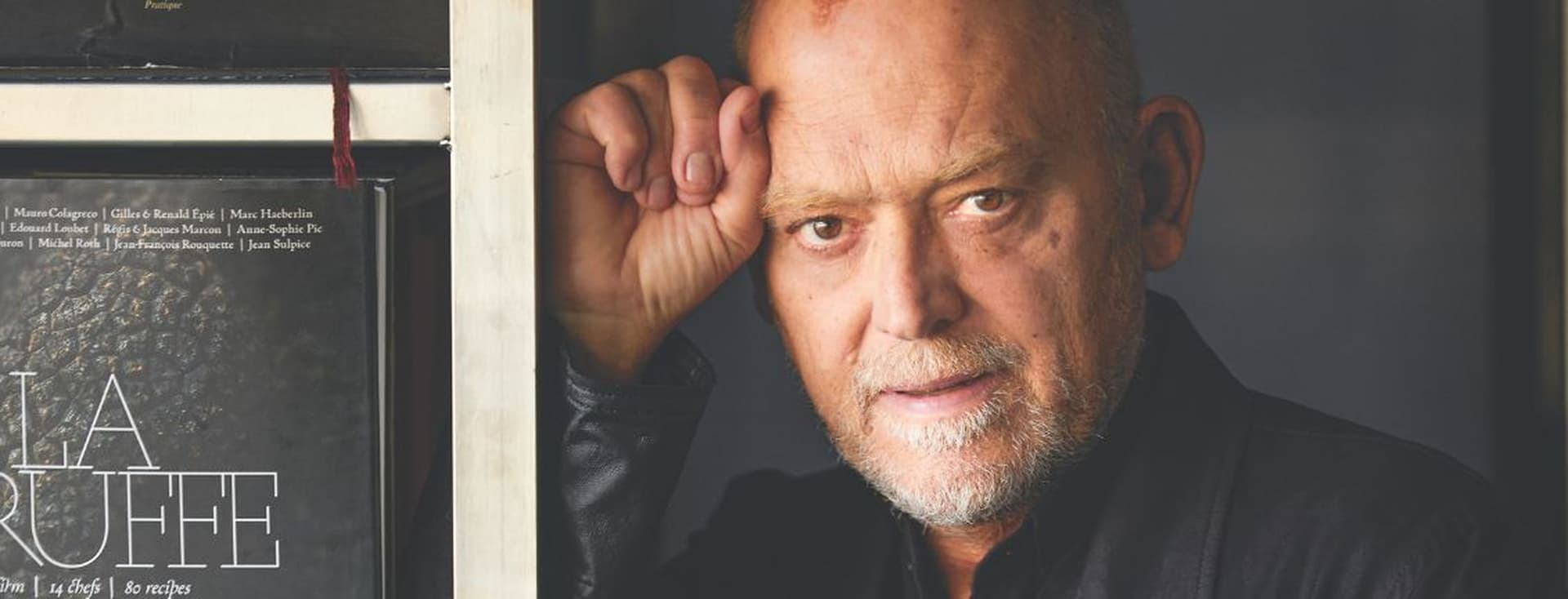
In his aesthetic, he converses with Tadao Ando. Minimalism, light, silence. His favorite color is blue-in all its shades. It reminds him of the sea. “I think it pairs beautifully with the color of chocolate,” he says with a smile. If he were a dessert himself, he would be an Opera: minimal in appearance, multidimensional in essence, technically demanding. And if there is one flavor he always returns to, it is pastry cream. The base. The beginning. And when he works alone, he listens to calming music. No distractions. Just as he creates.
A quiet presence with lasting influence
There are creators who do not need intensity to assert themselves. Their presence is understated, almost discreet, yet their influence is deep and enduring. Stelios Parliaros belongs precisely to this category. He has never been loud. He has never followed trends for validation. Instead, he built an entire school of thought around pastry-one grounded in memory, discipline, and aesthetic precision.
His roots and the formation of his aesthetic
Born and raised in Constantinople, in an environment where cultures, flavors, and aromas coexisted naturally, he carries from an early age a cultural imprint that extends far beyond the kitchen. East and West do not coexist in his work as a theoretical concept, but as lived experience. “It was inevitable,” he says, “that when I entered pastry, all those memories would surface from within me.” As for his aesthetic, it was innate - but he cultivated it, worked on it; he did not invent it afterward. His first shop, at just 23 years old, was minimalist - completely at odds with the spirit of the time. Not as a statement, but as an inner necessity.
From architecture to the workshop
Pastry was not his original goal. Like many creators, he imagined himself elsewhere - in architecture, to be precise. Not by chance. His thinking has always been structural. But he didn’t want to simply sit at a desk. So the workshop drew him in almost instantly. His first day at the Papaspirou pastry shop proved decisive. “When I found myself surrounded by butter, sugar, and flour, it was as if all the memories of the past came rushing back. I knew this was the profession I would follow.” It wasn’t a romantic impulse. It was recognition.
Discipline, evolution, and a personal language
France came next, as a natural progression. There, he encountered pastry as a strict system, a science of precision, discipline, technique, tools, and ingredients he had never known before, such as passion fruit, pastry rings, and thermometers. It was a different world. Returning to Greece was not easy. It took time for the environment to “learn” what he had already internalized. He did not compromise. He adapted without losing himself. He retained the precision, left behind what did not suit him, and began building his own language. Television, often dismissed as superficial exposure, became for him a kind of school. “It made me better,” he admits. The interaction with people, the questions, the need to explain, to communicate, to remain clear and precise, all of it helped him grow. Thirteen years of television presence did not distance him from the essence. On the contrary, it brought him closer to it. Still, the workshop remained the center of his world.
The philosophy of quality and the essence of creation
Today, with decades of experience, his choice of raw ingredients is non negotiable. Cost does not concern him, only quality. He is constantly searching for the best, not as a luxury per se, but as a responsibility. Tradition, after all, is not a burden to him. It is a tool. “If you don’t understand tradition, you cannot evolve a dessert.” Knowledge must precede experimentation. Only then does innovation have meaning.
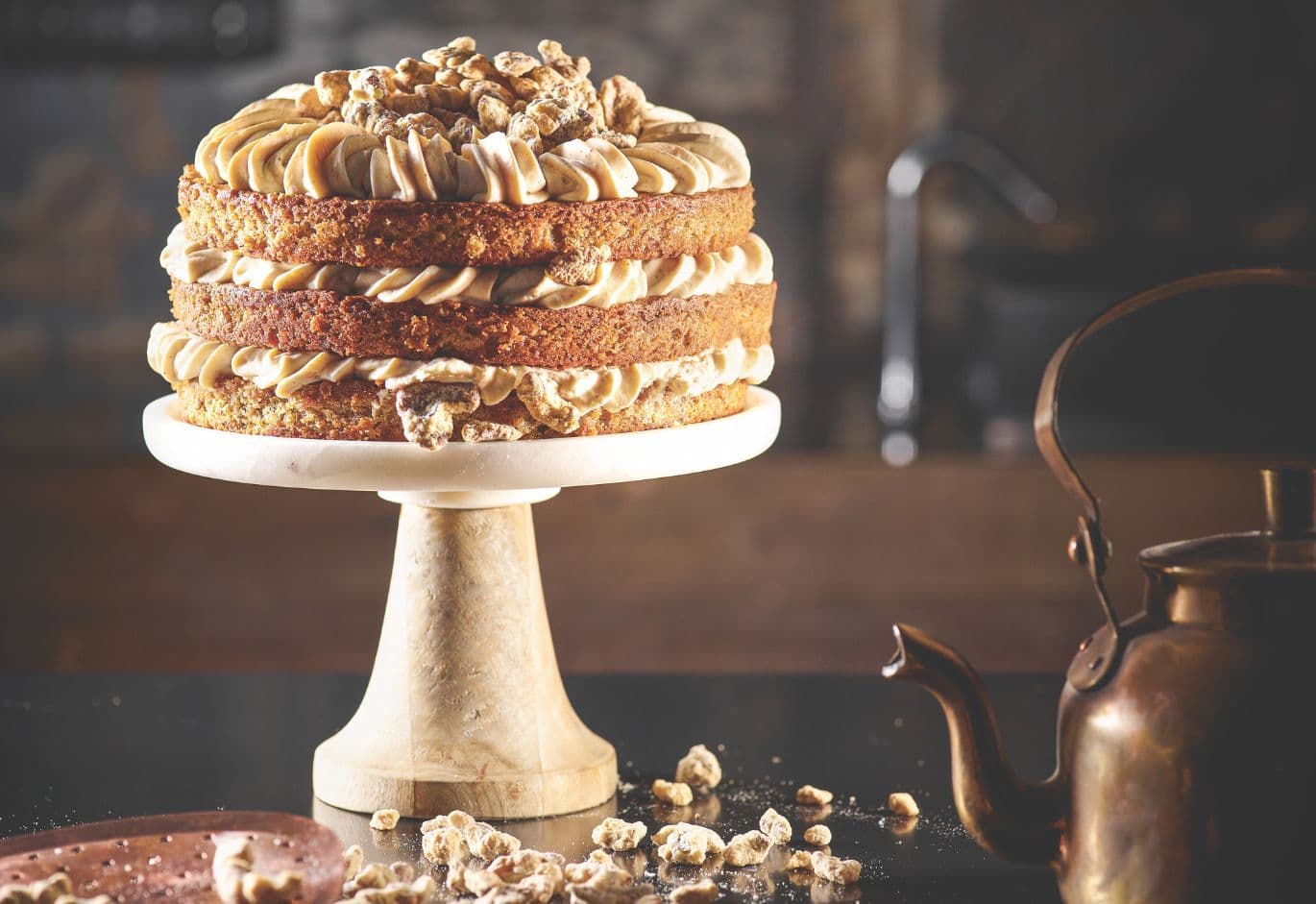
Parliaros speaks of his desserts as narratives. Sometimes the idea comes first, other times the flavor. He might wake up with a sensation in his mouth and rush to the workshop. He might be inspired by a building, a tree, a person, or a piece of music. Inspiration has no hierarchy, it only demands honesty.
When it comes to international trends, he remains critical. He believes Greek pastry often gets carried away by fashions, forgetting its own roots. The example of the ubiquitous “Dubai chocolate” concerns him. Still, he has deep faith in the new generation, in those who have the vision and the willingness to revisit tradition with clarity.
If he had to pass on one value to a young pastry chef, it would not be technique. It would be discipline, love, dedication, and time. The time to experiment. To fail. To rise again. “You need persistence and determination,” he says. “In pastry and in life.”
Stelios Parliaros continues to work tirelessly for longevity, for that quiet recognition built through consistency, knowledge, and inner measure. And perhaps that is precisely where the essence of the elegance of his almost architectural work lies, in the way each of his creations defines space, strict, minimal, open to experience, illuminated from within. Like any architecture that stands the test of time.
GG Magazine exclusive content
GG is an independent magazine at the highest level. Exploring the world of architecture, lifestyle, design, fashion, yachting, luxury living and travel. We seek out the most exciting topics and personalities for you and invite you to get to know them from a fresh new angle. In GG, you will meet successful architects, interesting designers and exciting artists who are the talk of the town from London to New York and Berlin to Hong Kong.
See original article