New
Panorama, Central Macedonia, Greece
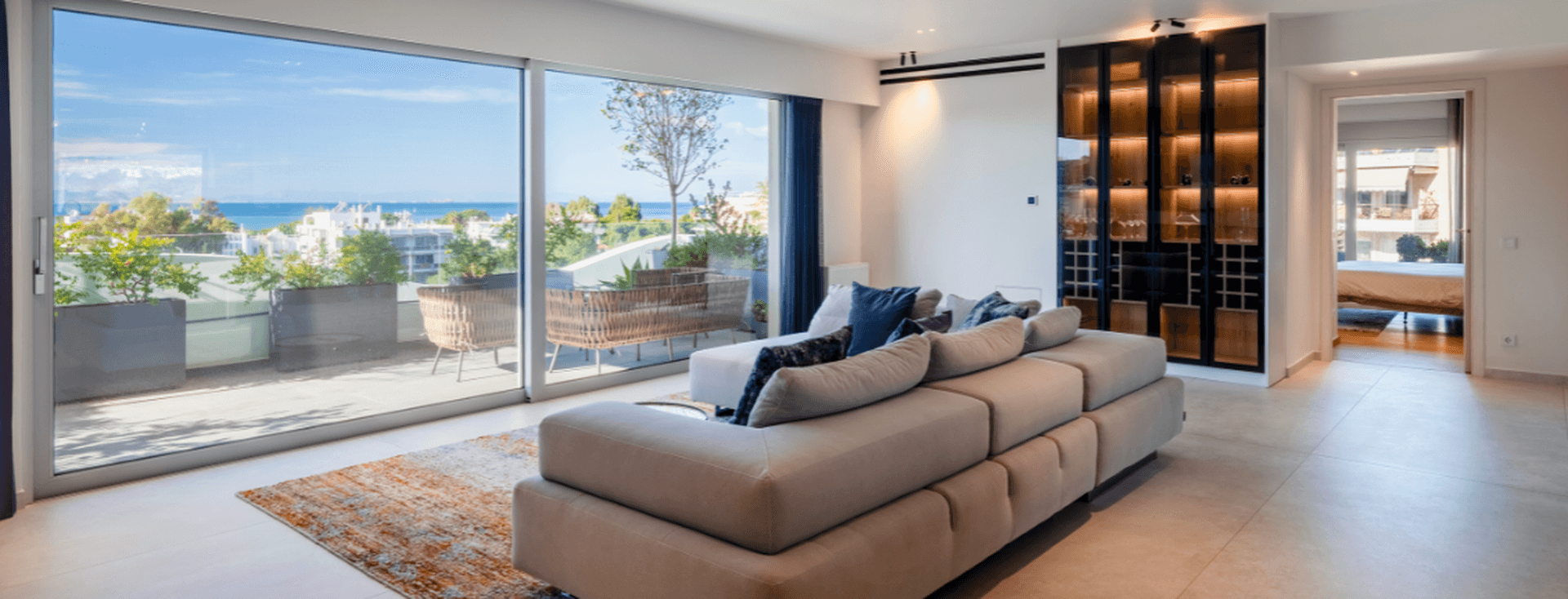
Corner apartment with a unique view in Panorama center
Price
€465,000
- 3 Bedrooms
- 2 Bathrooms
- ~121 m² Living area
GG Greece Second Home Edition 2026 Read it online
The House Manager Report, also known as a Home Management Binder, is the home’s operating manual. It brings together contacts, instructions, routines and critical information in one place so daily life can continue smoothly even when you are away.
To be truly effective, it needs to cover three levels: people, processes and infrastructure - where things are and how they work.
A home’s autonomy is not just about organization. It is significantly enhanced when the report is aligned with smart solutions such as thermostats, shading systems and security, as well as passive cooling and energy-saving practices.
Security is part of functionality. Passwords, Wi-Fi and smart home access must be stored properly and updated regularly, otherwise the manual itself becomes a risk.
Think of a home as a living organism with multiple systems running in parallel: energy, water, heating and cooling, security, supplies, cleaning, maintenance, recurring payments and even the small habits that keep daily life balanced.
The House Manager Report is a centralized document that captures these systems in a clear and structured way, allowing someone else to run the home without needing to call you for every detail. The idea of a tech-free binder for organizing essential information is widely used because it reduces search time in critical moments.
It is especially useful if you travel frequently, own a second home, rely on third-party support such as cleaners or babysitters, have children or pets, or simply want a continuity plan for unexpected situations. In remote property management, having reliable partners and proper coordination is essential - and this is exactly where a well-organized report becomes the central hub that speeds up decisions and actions.
The key is to treat it not as a nice-to-have document but as an operational tool: concise, clear, updated and easily accessible to the right people.
Many assume this kind of manual is only relevant for large luxury properties or households with staff. In reality, every home has the same needs, just on a smaller scale.
An apartment in central Athens requires a House Manager Report just as much as a villa in Mykonos or a holiday home in the Peloponnese. The only difference is the number of pages.
In Greece in particular, where many families own second homes, the need becomes even more obvious. Holiday houses often remain closed for months and then reopen quickly before vacations, with no one remembering whether the boiler was serviced or where the local plumber’s contact is.
Panorama, Central Macedonia, Greece
Price
€465,000
Thessaloniki, Central Macedonia, Greece
Price
€95,000
Voula, Attica, Greece
Price
€900,000
Efkarpia, Central Macedonia, Greece
Price
€470,000
Glyfada, Attica, Greece
Price
€2,500,000
Voula, Attica, Greece
Price
€2,100,000
Voula, Attica, Greece
Price
€2,400,000
Voula, Attica, Greece
Price
€2,100,000
Nea Smyrni, Attica, Greece
Price
€220,000
Most reports fail for one reason: they have many pages but not the right information.
The foundation is always contacts and emergency information, organized to answer one key question: who do I call first and for what?
This section should not be a simple contact list. It should function as a decision-making tool. Include the plumber who responds quickly, the HVAC technician who knows the house, the locksmith, the nearest pharmacy or hospital, and family doctors or pediatricians.
Next to each contact, add short usage notes such as availability, whether they hold keys or if prior notice is required. These small details save time when something goes wrong.
Equally important is mapping the home. Where is the main electrical switch, the fuse box, the water shut-off valve, spare fuses, storage keys or garage access?
Without this knowledge, a minor issue like a leak can quickly turn into serious damage.
Another often overlooked but powerful section is the inventory of items and appliances, including serial numbers, receipts, warranties and photos. This is extremely useful for insurance purposes, helping both with coverage decisions and faster claims in case of damage or theft.

The second layer of the report is routines. The goal is not to document everything but to capture the essentials that keep the home running smoothly. Daily tasks such as pet care, plants, dishwasher use or waste disposal, along with weekly routines like cleaning, laundry or grocery planning, act as the small gears that maintain balance.
Instead of long lists, use a simple frequency system: daily, weekly, monthly or seasonal tasks, with space for notes such as “last filter change: date”. For finances, think of the report as a schedule of obligations rather than a storage space for sensitive data. Record payment dates and methods for rent, utilities, insurance and subscriptions.
For security reasons, avoid including full passwords or card details. Instead, refer to a secure digital vault or password manager. Maintenance is the third pillar. This is where the report becomes a service log.
Without history, problems are harder to manage. Record when filters were cleaned, when the boiler was serviced, who did the work, what parts were replaced and any observations. Regular maintenance is essential for efficiency. Dirty filters, for example, reduce performance and increase energy consumption.
Palaio Faliro, Attica, Greece
Total rent
€1,500
Saronida, Attica, Greece
Total rent
€1,500
Thessaloniki, Central Macedonia, Greece
Total rent
€850
Papagou, Attica, Greece
Total rent
€1,800
Peristeri, Attica, Greece
Total rent
€950
Heraklion, Attica, Greece
Total rent
€1,300
Melissia, Attica, Greece
Total rent
€2,450
Papagou, Attica, Greece
Total rent
€1,950
Kifisia, Attica, Greece
Total rent
€4,300
If the House Manager Report is the manual, automation is the system running it.
A home’s autonomy is built on two pillars: smart systems and passive practices that reduce energy needs.
Smart thermostats are often the central control point. These Wi-Fi devices automatically adjust heating and cooling for optimal performance. Features like remote control via smartphone and geofencing should be clearly explained in the report, including which app is used, who has access and what the default settings are when the home is unoccupied.
Shading systems also play a key role. Automated blinds, shutters or awnings can significantly reduce heat gain. Even without automation, properly used window coverings help control temperature, light and privacy.
Passive cooling strategies are equally important. A simple principle applies: prevent heat buildup during the day and ventilate during cooler hours.
This can be turned into a clear “summer protocol” in the report, outlining when to close shading, when to ventilate and which windows can safely remain open.
Smart home systems may also include irrigation systems, pet feeders, leak sensors or cameras. The report should explain how each system works in simple terms, including how to reset it or where to check notifications.
A House Manager Report often ends up containing the most sensitive “keys” to your home: Wi-Fi credentials, alarm codes, app access, children’s contact details and even patterns of presence and absence. Security is therefore not an add-on, it is a prerequisite.
In practical terms, this means three things:
First, separate operational from secret information. The report can indicate where passwords are stored, for example in a password manager or in a sealed envelope in a safe, without listing them all in one document.
Second, apply basic cyber hygiene practices such as regular software and firmware updates and, where possible, stronger authentication like two-factor authentication. These are widely recommended by cybersecurity organizations across Europe.
Third, take default passwords seriously. Guidance from the IoT Security Foundation highlights the importance of avoiding universal default passwords and explains why they increase risk. If one device is compromised, others may be exposed as well.
For homes with smart systems, security goes a step further. It is not only about passwords but also about privacy. The National Institute of Standards and Technology points out that while smart devices offer convenience, they also introduce security and privacy risks. Simple best practices include not reusing passwords, enabling multi-factor authentication where available, keeping devices updated and, importantly, separating smart devices on a different network from those that store sensitive data.
Finally, the report must remain up to date. The more consistent your update process is, the less likely you are to end up with a well-designed but useless document when you actually need it.
At Engel & Völkers, we understand that luxury is not only about aesthetics but also about ease of living. A well-organized House Manager Report allows you to enjoy your freedom, knowing your home runs seamlessly with or without you.