- 9 min read
- 16.06.2026
- by Martin Tschechne
Francis Kéré – What really matters
Issue
03/26
Location
Berlin, Germany
Photography
Kéré Architecture / Courtesy of Taschen: Building Stories. Francis Kéré.
A sense of security and community, curiosity, and respect for nature: Architect Diébédo Francis Kéré is bringing the traditions of his African homeland into the modern era, earning acclaim around the world.
A sense of belonging: Gando is my place
This is how his story begins – and will remain until the very end. Recognizing that even very simple concepts are sometimes difficult to translate into a different reality or foreign language, Diébédo Francis Kéré offers a series of impressions and memories to define my place: “Origin and destination, home and destiny, the place where my spirit once set out on its journey, and at the same time the place where it finds peace.”
Although his practice is now based in Berlin, with a portfolio reaching from Mali to Las Vegas, Kéré remains intimately familiar with every inch of his native soil. He knows every shortcut across the fields, every hut, the mosque, the market and every goat grazing among the dry stalks. He knows exactly when it is time to escape from the midday sun under the great neem tree; he can still smell the scent of rain on the savannah; he can even tell which path he is taking through his village with his eyes closed. Here, the fragrance of a blooming bush; there, the sound of a kitchen door opening.
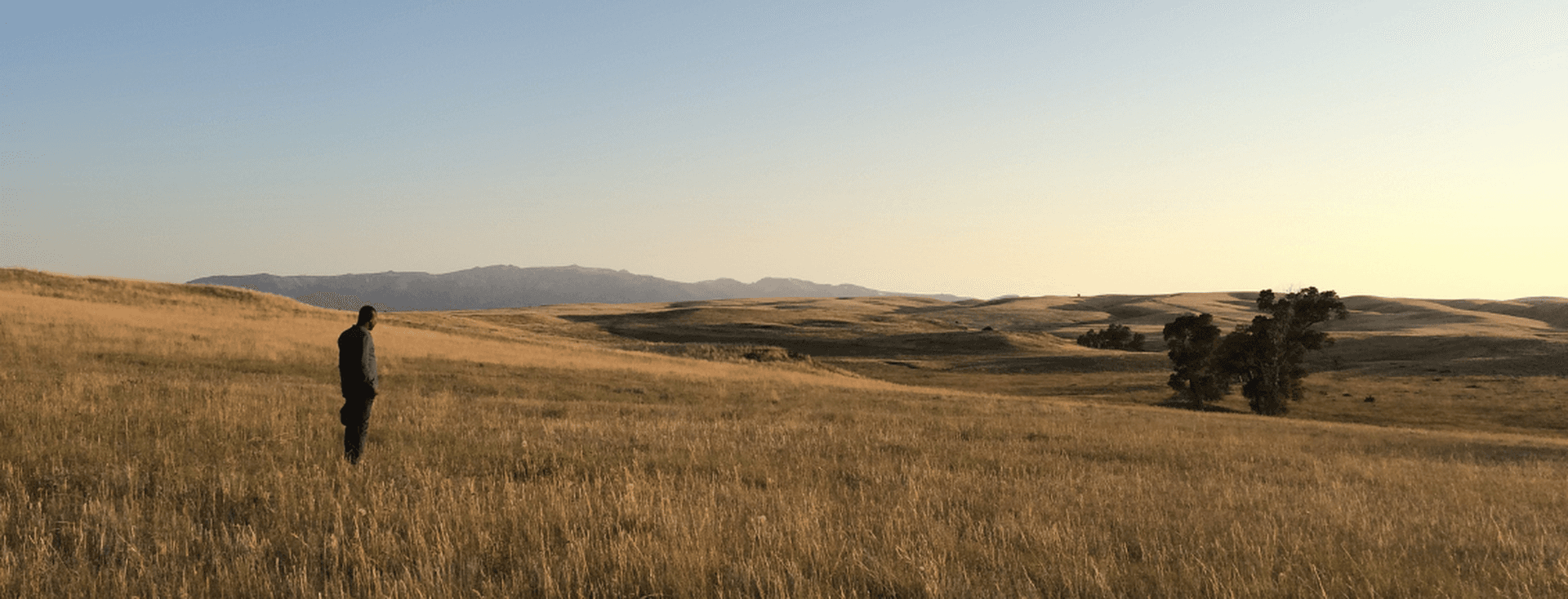
Gando is situated in Burkina Faso in West Africa, a good 15 kilometers from the provincial town of Tenkodogo and just under 200 kilometers from the capital Ouagadougou. The landscape is harsh, the vegetation sparse, but when Kéré draws a map of his homeland, bold blue arrows chart the winds, the range of hills protecting the village from Saharan dust, and the valley to the west where the summer rains arrive. A good builder has a feel for the ways of nature. And respect for them.
A Return with a Vision: The School in Gando
He was seven when his father sent him away from Gando. That was in 1972. His father was the village chief, an influential man, but the others didn’t understand him. “Why send him to school?” they asked. They thought the boy should be helping out at home instead. Many years later, his journey took him to Germany; first through a support program for young Africans and a carpentry apprenticeship, then through a series of odd jobs on construction sites while he studied for his university entrance exams. Finally, having earned a degree in architecture from the Technical University in cold, frosty Berlin, he returned to Gando – to build a school. He had experienced, in his own life, the opportunities that education affords. The building, completed in 2001, became his masterpiece. The first of many.
For the Serpentine Gallery in London’s Kensington Gardens, Kéré designed a spectacular pavilion, whose roof reaches up to the sky like a tree. He built a medical center with a sanatorium and staff accommodation for the provincial capital of Léo in Burkina Faso. He designed a visitor center for the national park in Mali, a memorial with a mausoleum for his country’s former president, Thomas Sankara, a revolutionary and national hero who was the victim of a coup in 1987. He built a house for his mother that translates Sankara’s vision of equality and communal responsibility into a practical model for village life, and perhaps for the whole country.
Relationships are always the theme of his architecture. Time and again, Kéré has designed spaces for learning and assembly. He designed additional buildings for Gando to meet the sudden surge in demand for education; a senior secondary school and technical college in Koudougou, Burkina Faso; a training and research center for building trades in Tenkodogo, and a start-up campus for young IT specialists in Kenya.
A school or residential building can be a place of community – and the foundation of a free society.
He still had a mental map of his home village, with its hills and valleys and cooling breezes. The plans were drawn up in Berlin. His teachers and colleagues perhaps failed to grasp the architectural challenges posed by the heat and the rainy season or by the termites that can strip a wooden structure to nothing in a matter of moments. Nor did they fully share his reverent appreciation for the power of education and community. But Kéré had learned to justify every step and every detail. He was persuasive. And so, sunlight and shade and moving air became building materials, as real as the granite from the quarry in the hills, the corrugated iron roof floating on stilts and the bricks pressed from the abundant clay.
Local resources, big impact
Diébédo Francis Kéré documents his recurring journey between West Africa and the wider world in a book rich with imagery. Its pages capture the essence of his process: People hauling stones, building walls together, smoothing floors side-by-side, their hard labor often dissolving into collective laughter. Occasionally, a handwritten note skips across the pages – a reminder that his life story is also an evolving project, one refined by constant revision and always open to new insights. A description that also applies to the architect’s approach to his first major building project.
This was a school for Gando – an institution rooted in the village’s culture and traditions yet designed to open up new horizons for its people. Kéré rejected the convenience of a quick, low-cost concrete structure. After all, everything they needed was already there. He did allow a limited admeasure of cement to fortify the mud bricks and extend their lifespan by several decades. And then, unusually, he designed a foundation for the building with a plinth rising from it. It was a clever way to keep the classroom floors dry during the pouring rain from May to September. At the same time, however, it sent a signal: Education stands on a figurative plinth, commanding the same respect as any other part of the community.
The teachers were settled into quality apartments near the school, not merely as a gesture of respect to the educators but also to underscore a vital truth: that education is a collective endeavor to be celebrated by all. Kéré constructed a large roof and placed it on a metal framework so that cooling breezes would pass underneath. He achieved natural ventilation by embedding clay pots with sawn-off bottoms into the walls and ceilings, repurposing vessels gathered from local households. He spaced the classrooms to create generous outdoor corridors, allowing lessons and play to spill outside into the shade beneath the expansive canopy of leaves.
Everyone was involved. That was how he had been raised. Kéré understands the power of community – the collective energy generated when every person plays their part, and the pride felt by those who have helped shape their own future. Some participants were a bit more industrious, others more laid-back. Some arrived early in the morning; others just grabbed a plate of beans at lunchtime. But the master builder was generous, and everyone stamped the ground in unison, as if in a communal dance. They pressed the bricks and carried them to the site, balanced on their heads, watching as Kéré wove them into an arch. Yet, it was only when the entire community stood on the structure that their doubts vanished, replaced by the realization that it could truly support the weight of their school roof.
Everyone should be involved, each in their own way. Kéré understands the power of community.
Years passed. Then came the phone call from Christoph Schlingensief, opera and theater director, author, filmmaker, performance artist, a man whose ideas had shaken up the cultural scene in Germany. He was terminally ill. Although doctors had given him just three months, he wanted to build a festival theater, a village for culture, in the middle of the West African savannah. The two hit it off immediately. Kéré had found an immediate resonance in Joseph Beuys’ concept of “social sculpture” – the belief that art only truly exists when it is shaped and shared by the entire community. He had seen Werner Herzog’s film “Fitzcarraldo,” in which a deranged Klaus Kinski hauled a ship through the Peruvian jungle. Why shouldn’t something like that work with an opera village, too?

From Backstage to Neighborhood
Schlingensief died in August 2010. The three months had become one year, but his legacy remained unfinished. Thirteen huge containers still sit, waiting to be unpacked. Inside are the components of the “Total Theater” originally designed in 1927 by Bauhaus founder Walter Gropius and director Erwin Piscator to take the medium into a new era – now reconstructed and donated by the Ruhr Triennale in Bochum, Germany. The plans are there. So is the realization that a theater like that requires an infrastructure that simply doesn’t exist on the outskirts of Laongo, Burkina Faso. At least not yet.
However, the village built for the opera has grown into a proper village, and many people from the region are grateful to have found a home again in the simple, modular houses following a catastrophic flood. A health center has been established, along with a school for 300 pupils from the region. Even a cinema and a dentist are now operating there.
Places of Belonging
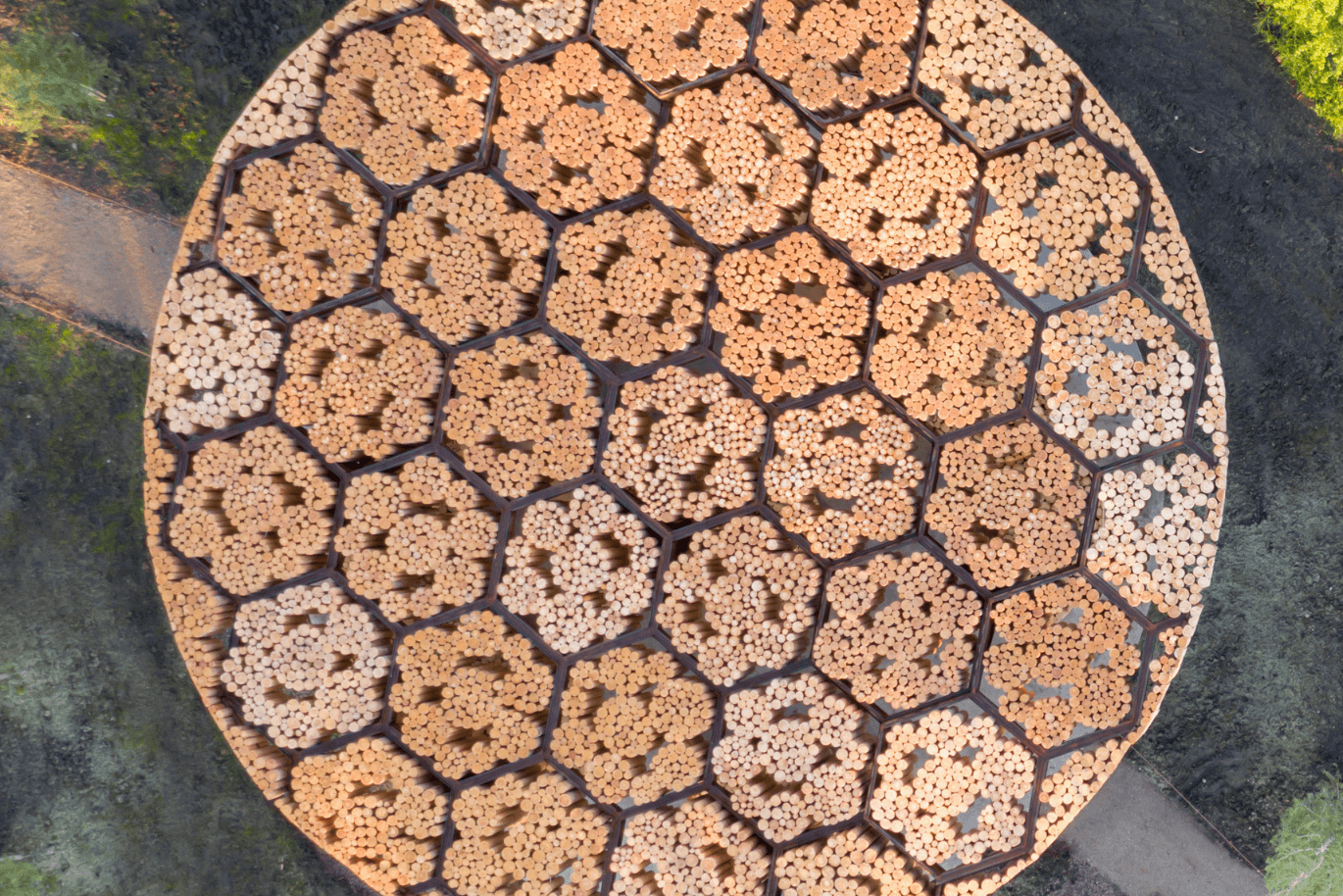
Kéré’s ideas of architecture for and by the community have long since spread throughout the world. In Las Vegas – nestled between luxury hotels and casinos and situated precisely on the dividing line that once separated wealthy neighborhoods from the slums of the day laborers – a museum of modern art is being built. Using loan objects from Los Angeles, it aims to create a place of social identity amidst the wasteland of concrete and neon, the only one of its kind in a metropolitan area of nearly three million inhabitants. Time and again, the architect draws on this familiar structure: a tree offering both shelter from the elements and a mystical space for conversation and contemplation. The motif is present in Gando, in the Nevada desert, in the windswept north of the USA, and in Porto Novo, where Kéré’s design for the massive Parliament of the Republic of Benin is modeled directly on nature. In Fishtail, Montana, he set hundreds of pine logs in a pattern to create a vast canopy over a gathering place for visitors at the Tippet Rise Art Center. Much like the savanna of his childhood, the view from beneath this sheltering shade stretches toward a vast and endless horizon.
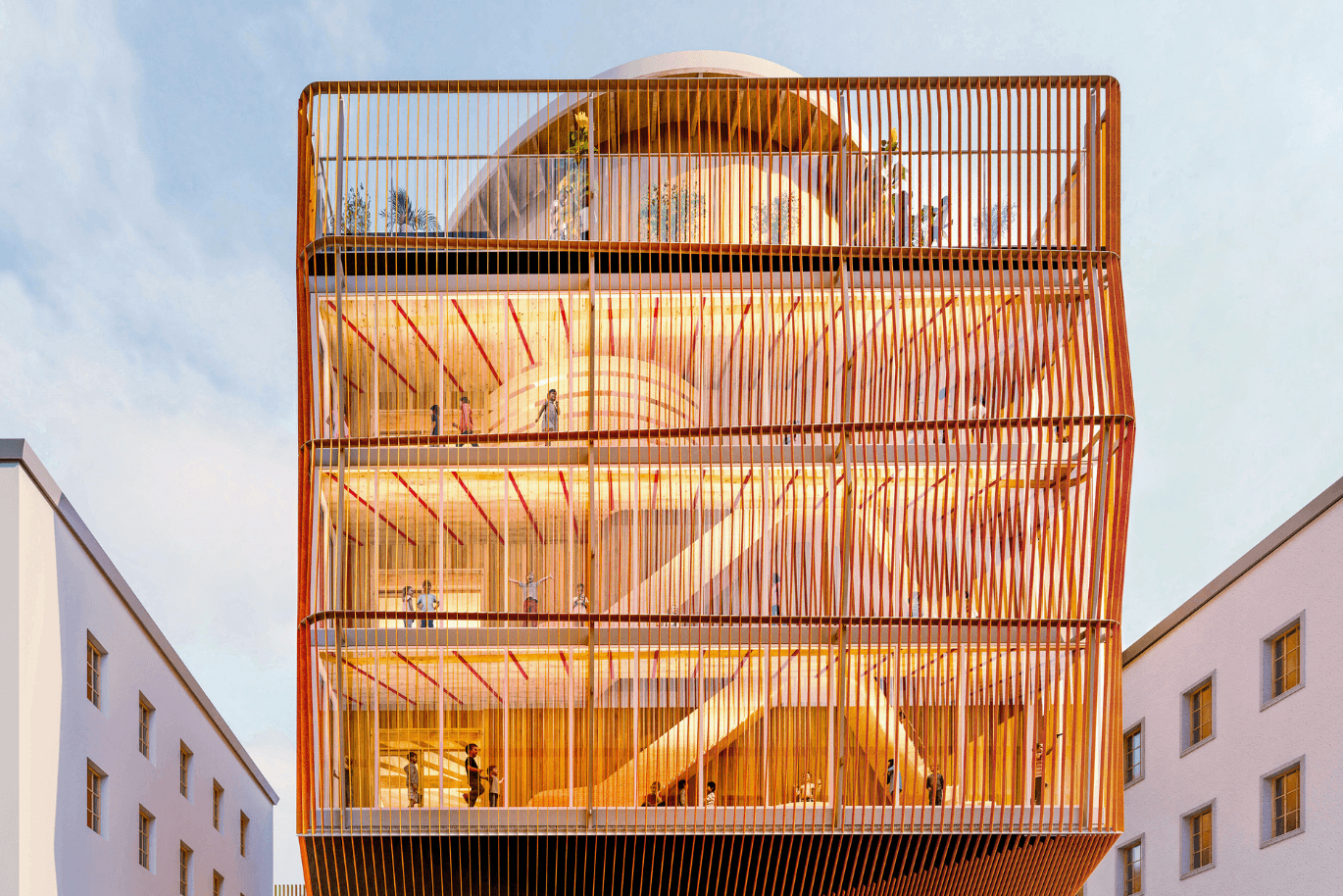
At the Technical University of Munich, Kéré is building a daycare center with a rooftop garden, tucked into its surroundings on Gabelsberger Strasse, yet set apart from the city noise like an oasis: a sanctuary of security, play and community. His museum for the painter and filmmaker Alfred Ehrhardt in Plüschow, Mecklenburg, honors the former Bauhaus student while paying homage to North German architectural tradition. Built with rammed earth and timber, echoing the local half-timbered style, its gabled roof offers visitors a sense of security while doubling as a habitat for endangered flora and fauna. And of course, it would not be Kéré’s idea of participation and autonomy if the process had not begun with a town hall meeting – a dialogue of doubts and encouragement that culminated in the joy of a shared project. Just like in Gando.
The architect set out from one world where heat and tropical rain drive people to seek shelter, and arrived in another where architecture is urgently needed to rediscover community. In 2022, his work was honored with the Pritzker Prize, the Nobel Prize of architecture. For Diébédo Francis Kéré, however, this represents less of a happy ending and more of a lifelong responsibility.
Today, Francis Kéré lives and works primarily in Berlin.
Find your dream home
- New
- New
- New
- New
You may also be interested in
 Philippine Leroy-Beaulieu: “I wish I could have enjoyed that moment sooner.”
 Beaded Beauty – an interview with Marijke de Cock
- 2 min.
- 05.06.2026
 Going deep – an interview with freediver Guillaume Néry
- 2 min.
- 5.6.2026
 Mariko Mori – The Visionary of Light
- 8 min.
- 05.06.2026
 The fashion label Zeus+Dione: Threads of Force
- 5 min.
- 26.05.2026
 The Hand of the Visionary – Designer Kelly Wearstler
- 5 min.
- 14.04.2026
 Art in Karat – Up-and-coming goldsmith Luca Sonnentag on his passion
 Art on the floor – Carpets by cc-tapis
- 4 min.
- 05.03.2026
GG Magazine exclusive content
GG is an independent magazine at the highest level. Exploring the world of architecture, lifestyle, design, fashion, yachting, luxury living and travel. We seek out the most exciting topics and personalities for you and invite you to get to know them from a fresh new angle. In GG, you will meet successful architects, interesting designers and exciting artists who are the talk of the town from London to New York and Berlin to Hong Kong.