- 5 min read
- Published: 17 Jan 2026
Top 8 Upcoming Dubai Mega Projects Shaping the City’s Future
Key Takeaways:
Dubai mega projects extend far beyond individual towers, encompassing large-scale infrastructure, transport networks, and master-planned districts that will shape the city over decades.
Projects such as Al Maktoum International Airport, the Dubai Metro Blue Line, and Etihad Rail are redefining connectivity, population flows, and economic activity across Dubai and the wider UAE.
New artificial islands, including Palm Jebel Ali and Dubai Islands, are set to introduce entirely new waterfront destinations, expanding Dubai’s residential, tourism, and hospitality footprint.
Together, these mega projects support the Dubai 2040 Urban Master Plan, reinforcing long-term growth, sustainability, and quality of life rather than short-term development cycles.
Dubai has long been defined by its ability to think at scale. From transport infrastructure to master-planned districts and environmental initiatives, the city’s most impactful developments are not individual buildings, but projects that reshape how people live, work, and move across the emirate.
Rather than focusing solely on what may be completed in a single year, this guide looks at the Dubai mega projects that will define the city’s next growth cycle, many of which will unfold over the coming decade and beyond. These initiatives are already influencing investment decisions, infrastructure planning, and urban development across Dubai and the wider UAE.
The Scale of Dubai’s Mega Project Vision
Dubai’s approach to mega projects is closely tied to long-term national planning. These developments are typically characterised by multi-phase delivery, government backing, and integration across transport, housing, employment, and sustainability goals.
Unlike conventional real estate projects, Dubai mega projects often span:
tens of kilometres of infrastructure
entire new districts or coastlines
multiple economic sectors, including logistics, tourism, technology, and residential development
The following projects represent the most significant examples currently shaping Dubai’s future.
List of Top 8 Dubai Mega Projects in 2026
Al Maktoum International Airport Expansion & Dubai South
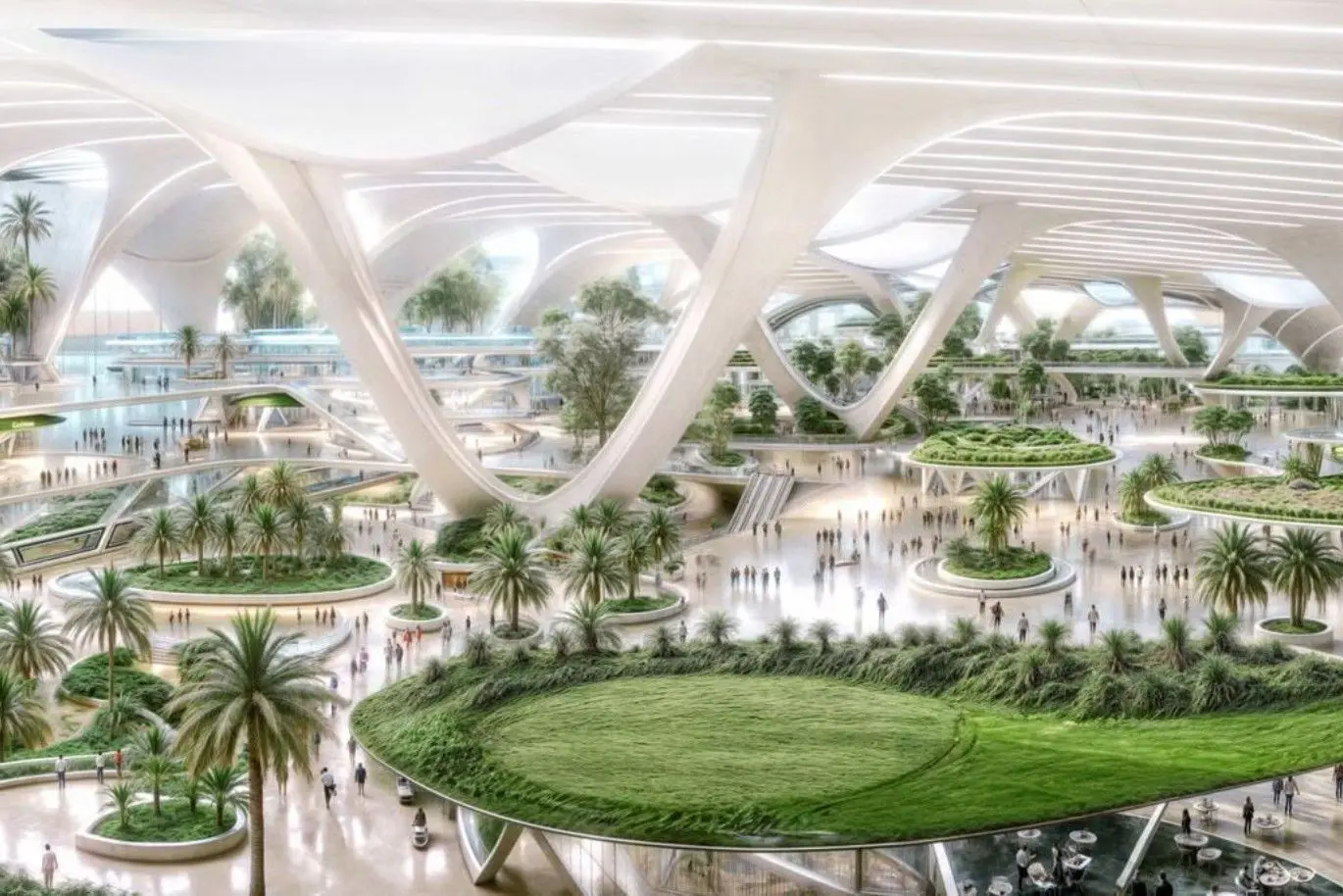
The expansion of Al Maktoum International Airport (DWC) is one of the largest aviation infrastructure projects globally and a key part of the Dubai Vision 2030. Once fully developed, the airport is expected to handle up to 260 million passengers per year and around 12 million tonnes of cargo, positioning it as the world’s largest airport by capacity.
This mega project is part of Dubai South, a vast master-planned district spanning 145 square kilometres. Designed to support aviation, logistics, commercial activity, and residential communities, Dubai South is expected to accommodate up to one million people and thousands of jobs over time, representing a long-term shift in population growth and economic activity toward Dubai’s southern corridor.
Dubai Metro Blue Line
The Dubai Metro Blue Line is one of the most important transport mega projects under the Dubai Urban Plan 2040. The project will add around 30 kilometres of new track and 14 new stations by 2029, connecting key growth areas including Dubai Creek Harbour, International City, Dubai Silicon Oasis, Academic City, Mirdif, Al Warqa, and Ras Al Khor to the existing metro network.
Designed to reduce congestion and support long-term population growth, the Blue Line strengthens access to residential, commercial, and academic hubs and is expected to play a lasting role in shaping mobility, land use, and urban density across Dubai. Future phases are also planned to enhance connectivity towards Dubai International Airport (DXB).
Etihad Rail
Etihad Rail is the UAE’s national railway network, developed to connect key cities, ports, and industrial zones across the country. The network spans approximately 1,200 kilometres, linking Dubai with Abu Dhabi, the Northern Emirates, and the Saudi border, with freight services already operational on major sections.
Passenger rail services are planned in future phases, with expected journey times of 30-50 minutes between Dubai and Abu Dhabi. As a long-term infrastructure project, Etihad Rail strengthens national connectivity, supports industrial growth, and integrates Dubai more deeply into a unified UAE transport and logistics system.
Palm Jebel Ali
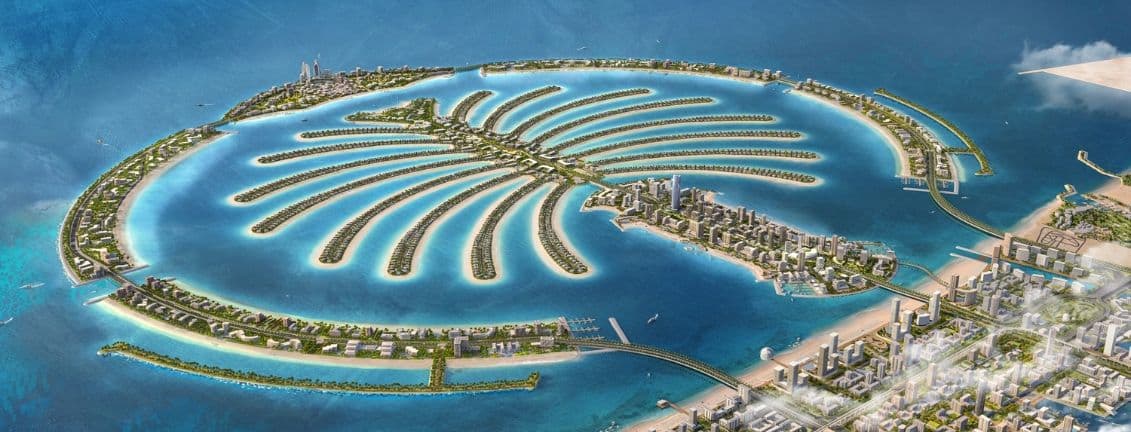
Palm Jebel Ali represents one of Dubai’s most ambitious waterfront mega projects, covering an area of approximately 13.4 square kilometres, more than twice the size of Palm Jumeirah. The project will add over 100 kilometres of new coastline, significantly expanding Dubai’s luxury residential, hospitality, and leisure offering.
The master plan includes a mix of residential villas and apartments, hotels, lifestyle destinations, and public spaces, delivered in multiple phases over the coming decades. Palm Jebel Ali is positioned as a long-term addition to Dubai’s premium waterfront supply rather than a short-term development cycle.
Dubai Creek Tower & New Mega Mall at Dubai Creek Harbour
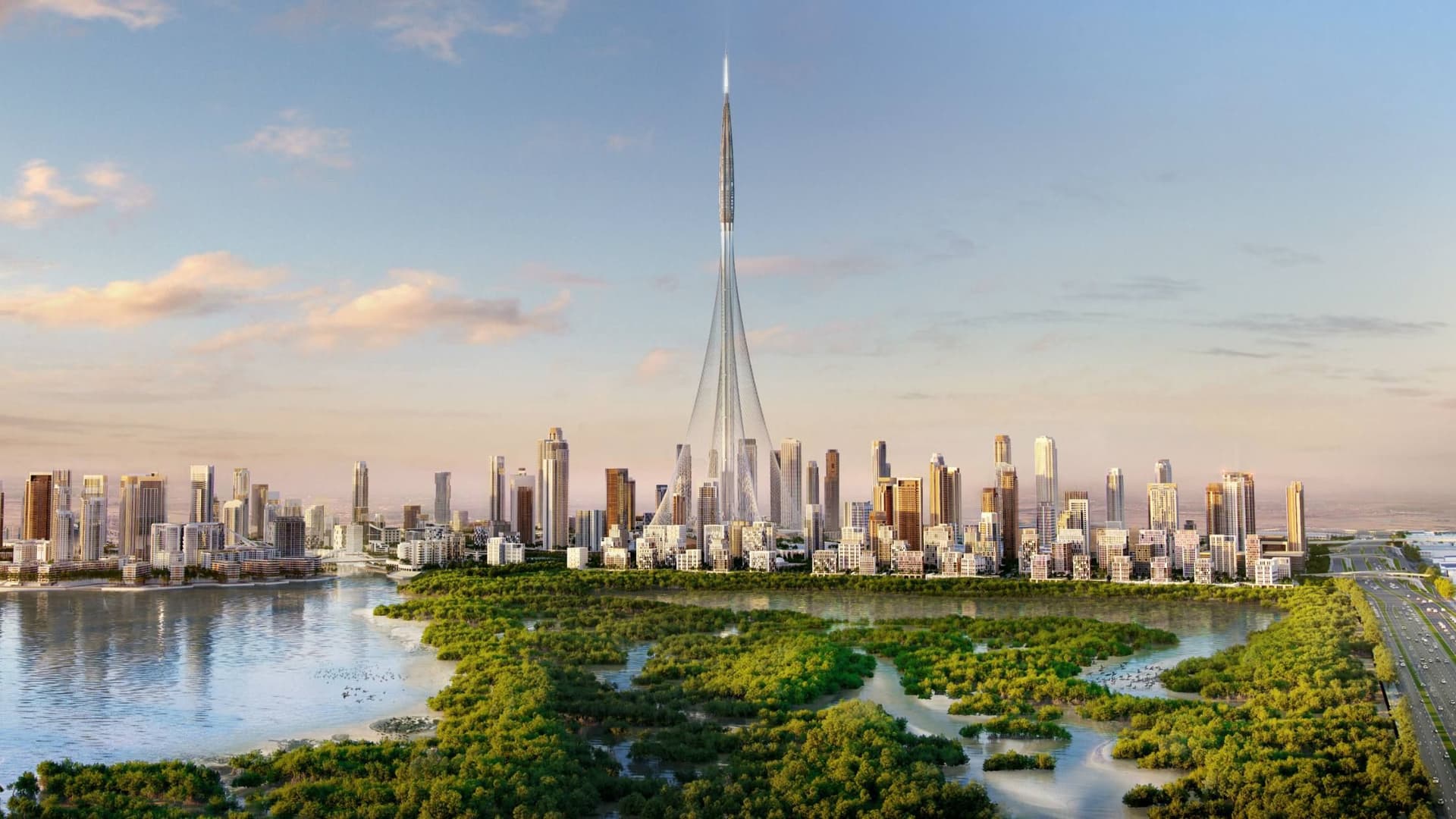
Dubai Creek Harbour is one of the most significant Dubai mega projects, planned as a new urban centre anchored by Dubai Creek Tower and Dubai Square, a large-scale retail and entertainment district developed by Emaar Properties. In January 2026, Emaar confirmed that a tender for the newly redesigned Dubai Creek Tower will be issued within three months, formally reviving the project after it was paused for design revisions.
At the heart of the district is Dubai Square, launched in late 2025 and currently under construction, with an expected opening in approximately three years. Spanning around 2.6 million square metres, the project is set to become the region’s second-largest retail and entertainment destination, conceived as an “indoor city” integrating retail, dining, and leisure with AI-enabled navigation, electric vehicle accessibility, and a world-first drive-through retail concept.
Together, Dubai Creek Tower and Dubai Square position Dubai Creek Harbour as one of the most ambitious UAE mega projects.
Dubai Islands
Dubai Islands, formerly known as Deira Islands, comprise a group of five man-made islands located off the northern coast of the city. The project is focused on tourism, hospitality, mixed-use development, and urban regeneration, with plans for beaches, resorts, cultural attractions, and residential zones.
Covering several kilometres of new coastline, Dubai Islands aim to extend Dubai’s waterfront offering while supporting economic diversification and revitalisation of surrounding districts. Development is structured in phases, reflecting its scale and long-term urban role.

Dubai Reefs
Dubai Reefs is one of the world’s largest marine regeneration initiatives, with plans to install millions of artificial reef modules across Dubai’s coastal waters. The project is designed to enhance marine biodiversity, support fisheries, and strengthen coastal resilience.
Beyond its environmental impact, Dubai Reefs reflects a broader shift toward sustainability-led mega projects, integrating ecological preservation into long-term urban and tourism planning rather than treating it as a standalone initiative.
What Dubai Mega Projects Mean for the City
Taken together, these Dubai mega projects illustrate a long-term strategy centred on infrastructure-led growth rather than isolated real estate cycles. Airports, rail networks, artificial islands, and sustainability initiatives are being developed in parallel, ensuring that population growth, employment hubs, and lifestyle destinations evolve in a coordinated way.
This approach allows Dubai to expand capacity ahead of demand, rather than reacting to it. Improved connectivity, diversified economic activity, and carefully planned districts help maintain competitiveness as the city continues to attract residents, businesses, and visitors from around the world.
Dubai Mega Projects vs Traditional Developments
Traditional developments typically focus on individual buildings or communities, often delivered within a defined sales and construction cycle. Dubai mega projects, by contrast, operate at a city-wide or national scale and are delivered over multiple phases spanning many years.
Key differences include long planning horizons, government-led coordination, and integration across transport, employment, housing, and sustainability objectives. These projects are designed to reshape how the city functions, not just to introduce new supply to the market.
Considerations Before Engaging With Mega Projects
While Dubai mega projects present long-term opportunity, they also require patience and perspective. Phased delivery means infrastructure, amenities, and surrounding districts may evolve gradually rather than immediately.
Buyers, investors, and businesses engaging with areas influenced by mega projects should understand where each initiative sits within its lifecycle, the expected timeline for supporting infrastructure, and the broader urban context rather than focusing solely on short-term milestones.
Alignment With the Dubai 2040 Urban Master Plan
All of the projects outlined above align closely with the Dubai 2040 Urban Master Plan, which prioritises sustainable growth, efficient transport networks, enhanced public spaces, and improved quality of life.
By investing heavily in infrastructure, mobility, and environmental resilience, Dubai is laying the foundations for a more connected, liveable, and economically diverse city over the coming decades. Mega projects are a central mechanism through which this vision is being realised.
Conclusion
Dubai’s long-term growth story is being shaped not by individual buildings, but by large-scale infrastructure, transport networks, and master-planned districts that redefine how the city functions. The Dubai mega projects outlined above, from Al Maktoum International Airport and the Dubai Metro Blue Line to Palm Jebel Ali, Dubai Creek Harbour, and Dubai Reefs, reflect a coordinated approach to urban expansion that extends well beyond short-term development cycles.
These Dubai upcoming mega projects are central to the emirate’s economic resilience, supporting population growth, mobility, sustainability, and global connectivity in line with the Dubai 2040 Urban Master Plan. Collectively, they highlight how UAE mega projects are being used as strategic tools to future-proof cities, diversify economies, and enhance quality of life over the coming decades.
For anyone seeking to understand Dubai’s future direction, whether from an urban planning, infrastructure, or real estate perspective, tracking these mega projects provides valuable insight into where growth, opportunity, and transformation are most likely to unfold next.
Speak to an Engel & Völkers investment advisor
Discover exceptional, high ROI opportunities with our expert guidance.
Frequently Asked Questions
Dubai uses mega projects to support long-term economic growth, improve connectivity, and maintain global competitiveness through large-scale, coordinated infrastructure investment.
No. These projects influence transport, employment, tourism, sustainability, and overall urban planning, affecting residents, businesses, and visitors alike.
Most are delivered in phases over many years. Timelines can evolve depending on scale, complexity, and strategic priorities.
They align with the Dubai 2040 Urban Master Plan by promoting sustainable growth, integrated transport, and higher-quality urban environments.
You may also be interested in
 Dubai vs Abu Dhabi: Cost of Living & Property Market Comparison (2026)
- 5 min.
- Updated: 4 Mar 2026
 Top 12 Villa Communities in Dubai for Luxury Living (2026)
- 5 min.
- Updated: 25 Aug 2026
 10 Benefits of Buying Off-Plan Property in Dubai
- 5 min.
- Updated: 27 May 2026
 12 Most Expensive Houses in Dubai: A Glimpse of Ultra-Luxury Living
- 5 min.
- Updated: 1 May 2026
 15 Most Famous Buildings in Dubai: Iconic Landmarks That Define the Skyline
- 5 min.
- Updated: 26 May 2026
 Dubai 2040 Urban Master Plan: How it Aims to Enhance Quality of Life
- 5 min.
- Updated: 28 Aug 2026
 Is Dubai’s Real Estate Market in a Bubble? A Mid-2026 Outlook
- 5 min.
- Updated: 9 Sep 2026
 Dubai Residential Areas: Best Neighborhoods to Live in Dubai
- 5 min.
- Updated: 9 Sep 2026
Contact
Contact your personal advisor



Engel & Völkers Dubai
7th Floor, Al Khail Plaza
Jumeirah Village Triangle, Dubai, UAE
Tel: +971 4 4223500