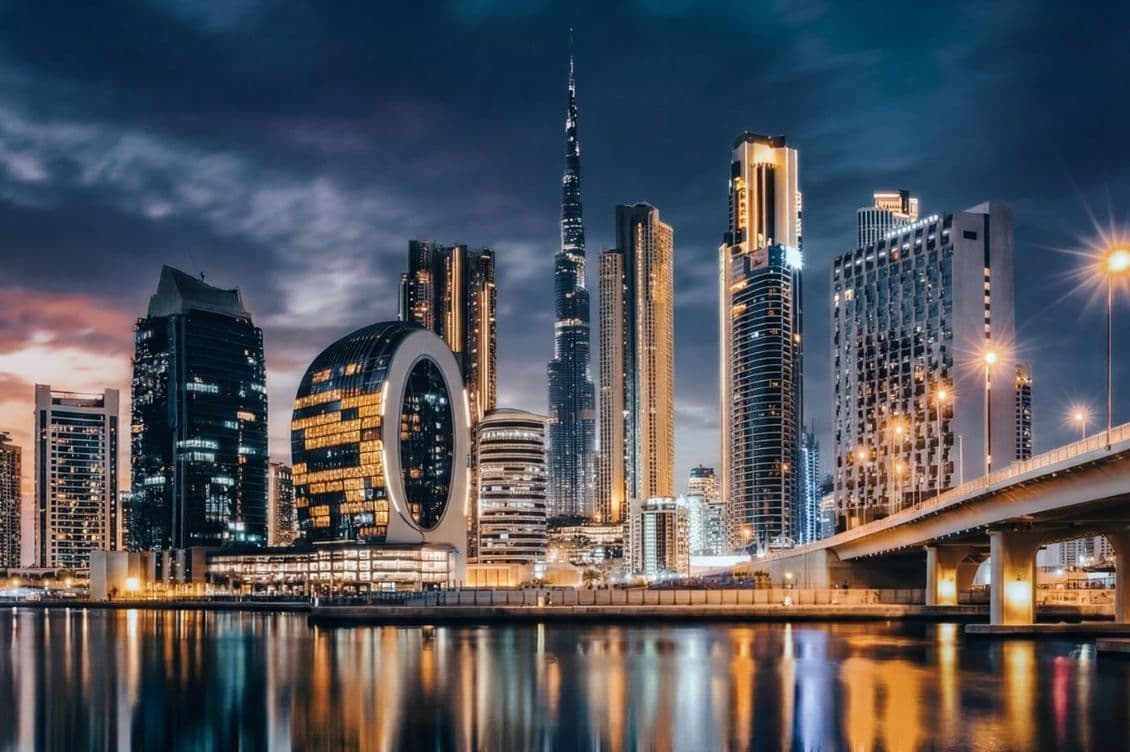
Don't Let Headlines Drive Your Decisions
Get a clear picture of where the Dubai property market actually stands, based on real transaction data and on-the-ground expertise.
The new GG website: Inspiring personalities, extraordinary places and exceptional properties. Discover now

Key Takeaways:
The Dubai real estate index tracks share price movements of publicly listed property developers, not real estate prices
The recent 30% decline in the Dubai real estate index reflects equity investor sentiment, not real estate market performance
Property prices are driven by transactions, supply and demand, not stock market movements
If you saw headlines earlier this year about the Dubai real estate index falling around 30%, you may have wondered what that meant for property prices.
The short answer: far less than you might think.
The Dubai real estate index does not track property prices. It measures the share-price performance of publicly listed real estate companies on the Dubai Financial Market. While the index has recovered from some of the sharp volatility seen in March 2026, it remains well below its pre-conflict level, highlighting how differently equity markets and the underlying property market can behave.
Understanding this distinction is essential. This guide explains what the Dubai real estate index measures, why it is often misunderstood, and what it actually tells you about the Dubai property market.
Table of Content
What is the Dubai real estate index?
Why the Dubai real estate index is often misunderstood
Why the index does not reflect Dubai property prices
Why it is not a reliable indicator of market strength
What actually reflects the Dubai property market
What the recent decline in the index really means
Conclusion
The Dubai real estate index is a stock market index that tracks the performance of publicly listed real estate companies on the Dubai Financial Market.
It includes developers such as Emaar Properties, Emaar Development, Deyaar and Union Properties. The index moves based on changes in share prices and is weighted by market capitalisation, which is each company's total market value. This means that share price movements in Emaar, as the largest company in the index, have a greater impact on the index price than those of smaller companies.
A significant portion of the index weighting is concentrated in a small number of large developers. Its performance is therefore heavily influenced by a limited group of companies.
In simple terms, the Dubai real estate index reflects how investors value listed real estate businesses, not how properties themselves are priced or traded.
There is sometimes an assumption that the Dubai real estate index tracks Dubai property prices.
The term "real estate index" suggests a broad view of the market. Buyers and investors often assume it tracks residential and commercial price movements across Dubai. So when the index fell by roughly 30% following the sharp market disruption in March 2026, it understandably raised concerns that Dubai property prices had experienced a similarly dramatic decline.
However, this is not what the index does.
The index captures the performance of a small group of listed companies. The wider market includes thousands of transactions between private buyers, sellers, and landlords, none of which are reflected in the index.
This gap between perception and reality is the source of most confusion.
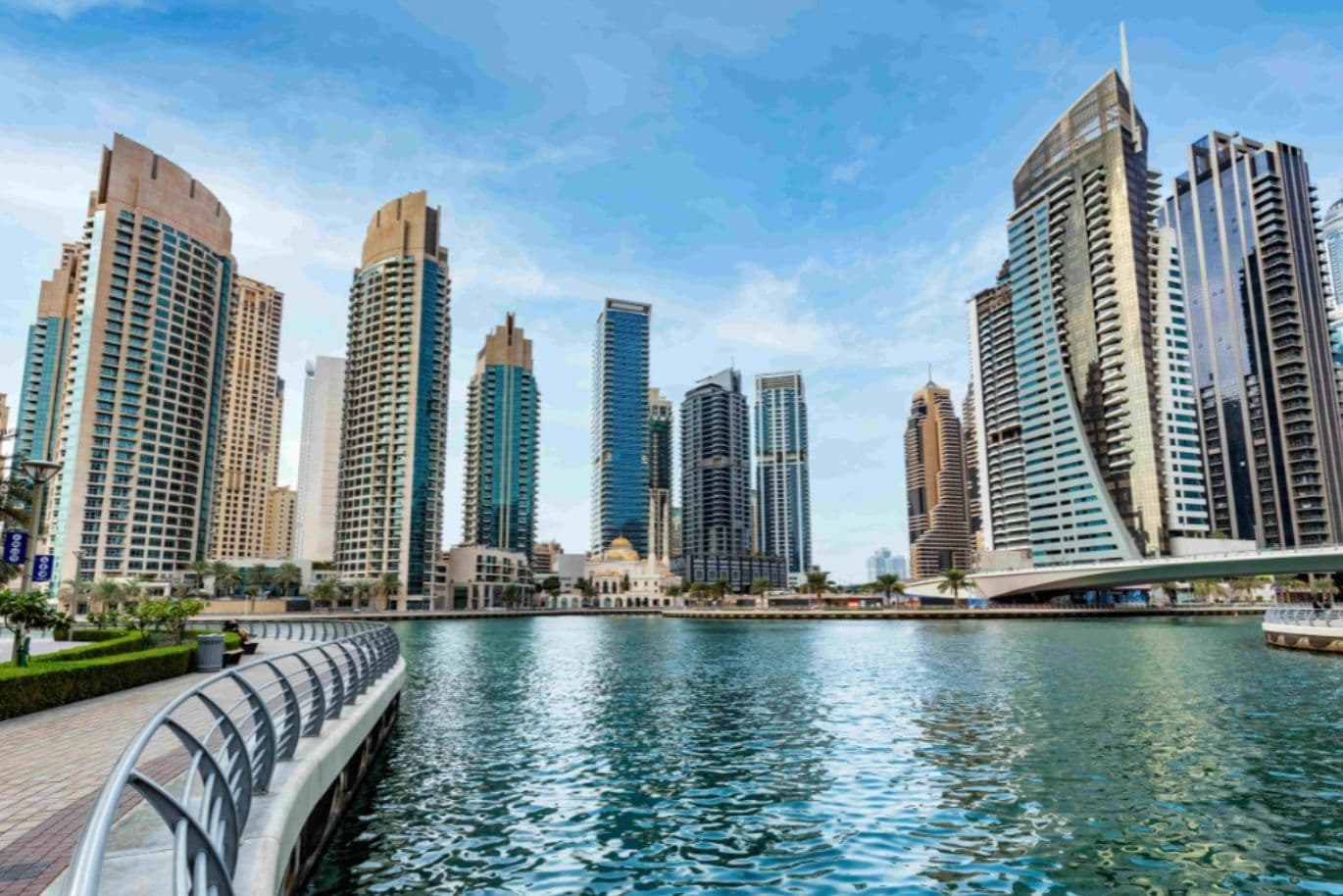
The performance of listed real estate companies does not translate into movements in property prices.
Developers represent only one segment of the market. A large share of transactions in Dubai takes place in the secondary market between private buyers and sellers. These transactions define actual pricing and are not captured in the index.
Stock markets are also forward-looking. Share prices reflect expectations about future growth, project pipelines, and economic conditions, rather than the current level of transactions.
This distinction is particularly important in the context of Dubai's recent market cycle.
Over the past few years, the Dubai real estate market has experienced a period of strong growth, supported by rising demand, population inflows, and sustained investment activity. Share prices of listed developers have reflected not only this growth, but also expectations that it would continue at a similar pace.
The recent decline in the Dubai real estate index represents a shift in expectations amongst investors, not buyers or sellers in the real estate market itself.
In many cases, financial markets adjust faster than the underlying real estate market, as they price in future expectations rather than current conditions.
This change in the Dubai real estate index indicates that investors are taking a more measured view of future growth, rather than signalling a reversal in current market conditions. This is a normal part of any market cycle, particularly after a period of rapid expansion.
Property prices, by contrast, are determined by real transactions, supply levels, and buyer demand. These factors evolve more gradually and are not subject to the same short-term repricing seen in equity markets.
A decline in the Dubai real estate index does not indicate weakness in the underlying property market.
Stock prices are influenced by a wide range of external factors that do not directly affect property transactions. These include global interest rate expectations, liquidity conditions, and shifts in investor sentiment towards emerging markets. These factors can change quickly and often impact share prices independently of local real estate fundamentals.
Listed developers are also operating businesses. Their valuations reflect not only demand for property, but also costs, margins, financing conditions, and future earnings expectations. Changes in any of these variables can lead to movements in share prices, even when the level of real estate activity remains stable.
In contrast, the property market is driven by transaction volumes, supply levels, and buyer demand. Pricing is based on actual deals being completed and tends to adjust more gradually over time.
This difference in behaviour means that the price of the Dubai real estate index can move rapidly, while the property market remains relatively stable.
This can be seen in how quickly sentiment can shift. On 8 April, the Dubai real estate index increased by over 10% in a single day following an easing of geopolitical tensions.
Such movements highlight how sensitive the index is to changes in investor sentiment and global events, rather than underlying property market conditions.

To understand the true direction of the Dubai real estate market, it is more effective to focus on transaction-based data.
Key indicators include price per square foot, total transaction volumes, rental performance, and the balance between supply and demand. These metrics provide a direct view of how the market is performing across different property types and communities.
Data from the Dubai Land Department is based on real transactions and offers a far more accurate picture of pricing trends and buyer behaviour than equity market movements.
Dubai residential transaction data for H1 2026 underscores this distinction. During the first six months of the year, 80,509 residential sales were recorded with a combined value of AED 226.5 billion, making it the second strongest first half on record by sales value.
Activity did moderate from the exceptional levels recorded in H1 2025, and buyers became more selective during parts of the period, but the underlying property market remained highly active. This transaction-based data provides a much more direct measure of Dubai real estate conditions than movements in listed developer share prices.
The sharp decline in the Dubai real estate index earlier in 2026 reflected a significant change in investor sentiment towards listed developers, driven in large part by heightened geopolitical uncertainty and wider equity-market risk.
Since then, the index has experienced periods of recovery as well as further volatility, but it remains significantly below the levels reached before the March sell-off. This does not mean Dubai property values have moved by the same amount.
Instead, it shows that financial markets continue to price changing expectations around future growth, risk, earnings and economic conditions. Equity markets can reprice these expectations almost immediately, while property prices are driven by completed transactions, supply and buyer demand and typically adjust much more gradually.
The index therefore provides useful context on investor sentiment towards listed real estate companies. It should not be used as a direct measure of Dubai property-price performance.
The Dubai real estate index offers a useful view of how financial markets value Dubai’s publicly listed property developers. It does not measure property prices and should not be treated as a proxy for the wider real estate market.
The sharp volatility seen in 2026 demonstrates why that distinction matters. Equity markets can reprice expectations almost immediately in response to geopolitical events, interest rates and changing investor sentiment, while property values are determined by actual transactions, supply, demand and the individual characteristics of each market segment.
For buyers, sellers and property investors, transaction data therefore provides a much stronger basis for assessing current market conditions than short-term movements in listed real estate shares.
If you are reviewing your current position or considering your next move, Engel & Völkers advisors use Dubai Land Department transaction data alongside local market expertise to assess where the property market actually stands.
Don't Let Headlines Drive Your Decisions
Get a clear picture of where the Dubai property market actually stands, based on real transaction data and on-the-ground expertise.
The Dubai real estate index itself is not directly investable as a product. To gain exposure to the companies it tracks, you would need to purchase shares in individual listed developers such as Emaar Properties through the Dubai Financial Market. Some investors also access this exposure through funds or ETFs that include GCC equities. This is distinct from investing in Dubai property directly, which involves purchasing a physical asset rather than a financial instrument.
That depends on your investment objectives, risk tolerance, and view on equity markets. Share prices of listed developers are influenced by global sentiment, interest rate expectations, and earnings outlooks, all of which can shift rapidly. Anyone considering equity investment should do careful research and consider independent financial advice, as this is a different decision to buying property.
No. The index only includes developers that are publicly listed on the Dubai Financial Market. The majority of developers operating in Dubai are privately held and are not represented in the index at all. This is one reason why the index reflects only a narrow slice of overall market activity.
The index updates in real time during Dubai Financial Market trading hours, which run Monday to Friday.
Engel & Völkers publishes detailed market reports which include insights into overall sales and rental prices and community-level price movements across Dubai, which can be found in our Dubai Real Estate Research section. For a current assessment of a specific area or property type, speaking with an agent who works with this data regularly will give you a more grounded view than any index.
You may also be interested in








Natalie White
Natalie White is Head of Brokerage – Secondary Sales at Engel & Völkers Dubai, overseeing the company’s secondary residential sales business. Working in Dubai real estate since 2015, she has completed more than 300 transactions and developed extensive expertise across Dubailand and the wider residential market. Natalie combines hands-on market knowledge with a clear, service-focused approach, supporting clients through complex property decisions while also providing leadership and strategic direction to Engel & Völkers Dubai’s secondary sales team.
Contact



Engel & Völkers Dubai
7th Floor, Al Khail Plaza
Jumeirah Village Triangle, Dubai, UAE
Tel: +971 4 4223500