
Get Your Free Investment Guide
Learn how to maximise returns and make informed decisions in Dubai’s property market.
The new GG website: Inspiring personalities, extraordinary places and exceptional properties. Discover now
Key Takeaways:
REITs allow investors to gain exposure to income-generating real estate without buying and managing property directly.
Dubai’s listed REIT market now spans residential and commercial real estate, offering investors greater choice, diversification and liquidity.
Dubai Residential REIT became the GCC’s largest listed REIT following its 2025 IPO and owns more than 35,700 residential units across Dubai.
REITs are subject to different regulatory frameworks depending on where they are established and listed, so investors should understand the structure of each fund before investing.
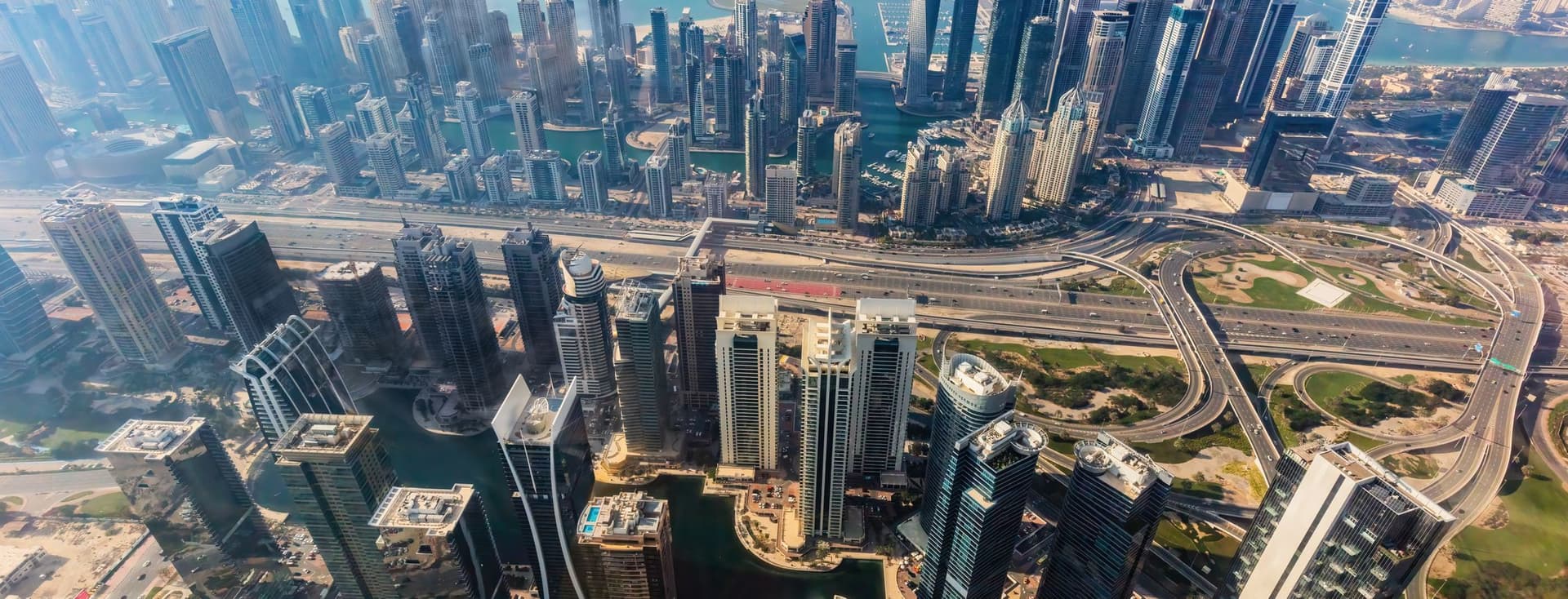
Real estate remains one of Dubai’s most prominent investment sectors, but investors do not necessarily need to purchase an apartment, villa or commercial property directly to gain exposure to the market. Real Estate Investment Trusts, or REITs, provide another route by allowing investors to own units in professionally managed portfolios of income-generating property.
Dubai’s REIT market reached an important milestone in 2025 with the listing of Dubai Residential REIT on the Dubai Financial Market. The IPO raised AED 2.145 billion and attracted more than AED 56 billion of demand, making it the largest listed REIT in the GCC. Its subsequent performance has further highlighted the scale of Dubai’s institutional residential market.
In this guide, we explain how REITs work in Dubai, their potential benefits and risks, the major listed REITs available to investors and how this segment of the property market is evolving in 2026.
Table of Content
What Is a REIT?
How Do REITs Work in Dubai?
Types of REIT Properties in Dubai
Benefits of Investing in REITs in Dubai
How to Invest in REITs in Dubai
List of REITS in Dubai
REITs vs Direct Property Investment
Dubai’s REIT Market in 2026
Risks and Considerations When Investing in REITs in Dubai
How REITs Are Impacting Dubai's Real Estate Market
Conclusion
A Real Estate Investment Trust (REIT) is a company that owns, operates, or finances income-generating real estate assets. In Dubai, REITs allow individuals and institutions to invest in large-scale properties such as shopping malls, office buildings, hotels, and residential buildings without purchasing or managing the properties themselves.
One defining feature of REITs is their requirement to distribute a significant proportion of their income to investors. Under both the DFSA framework for REITs established in the DIFC and the UAE’s federal SCA framework for public REITs, at least 80% of annual net income or profits must be distributed to investors. This income-distribution requirement is one reason REITs are commonly used by investors seeking regular income from real estate.
Key characteristics of REITs include:
Diversification: REITs typically invest in multiple properties across various sectors, giving investors diversification through a single investment.
Liquidity: Unlike direct property investments, which can take a long time and be expensive to sell, REIT shares are often traded on stock exchanges, giving greater flexibility.
Income Distribution: REITs distribute much of their income to shareholders as dividends, which can provide regular returns.
If you’ve wondered what a REIT is, it is a simplified way to invest in real estate that reduces some risks and challenges of direct ownership.
Dubai’s listed REITs operate under different regulatory frameworks depending on where the fund is established and listed. REITs established in the Dubai International Financial Centre (DIFC), such as Emirates REIT and ENBD REIT, are regulated by the Dubai Financial Services Authority (DFSA) and listed on Nasdaq Dubai.
REITs established under the UAE’s federal framework, including those listed on the Dubai Financial Market (DFM), are regulated under the Securities and Commodities Authority (SCA) investment fund regulations. Both frameworks set requirements covering areas such as income distribution, investment strategy and fund governance.
Despite these structural differences, listed REITs generally give investors exposure to professionally managed portfolios of income-generating real estate through securities that can be bought and sold on an exchange.
Here’s how they function:
Acquisition of Properties: REITs acquire income-generating real estate assets, such as commercial buildings or residential complexes.
Revenue Generation: Rental income and property appreciation contribute to revenue.
Dividend Distribution: The majority of profits are distributed to shareholders as dividends.
Stock Market Trading: Investors can buy or sell REIT shares on the stock exchange, similar to publicly listed companies.
Dubai’s regulatory framework ensures transparency and investor protection, making REIT investing a viable option for many.
REITs in Dubai can provide exposure to several types of income-generating real estate, with individual funds differing significantly in their investment strategies and portfolio mix.
Common REIT property types include:
Residential: Apartments, villas and residential communities generating income through long-term leasing.
Offices: Commercial office buildings in established business districts and free zones.
Retail: Shopping centres, community retail and other leased commercial spaces.
Hospitality: Hotels and other hospitality-focused real estate.
Alternative assets: Properties such as schools, student accommodation, healthcare facilities and other specialist real estate.
Some REITs specialise in one sector, while others hold diversified portfolios. Dubai Residential REIT, for example, focuses exclusively on residential communities, while ENBD REIT holds office, residential and alternative assets.
There are several potential benefits of REITs, making them an appealing option to a range of investors.
| Benefits of REITs | Explained |
|---|---|
Low Entry Barriers | Unlike buying physical property, investing in REITs typically has a low minimum investment, making them more accessible to a range of investors. |
Income Potential | REITs can distribute rental income to investors through regular dividends, although distributions are not guaranteed. |
Diversification | Spreading investments across multiple properties can reduce risk. |
Liquidity | Shares can typically be easily traded on public exchanges, providing additional flexibility. |
Professional Management | Property acquisition, leasing, maintenance and portfolio management are handled by the REIT’s professional management team. |
Hands-off Investment | REITs do not require the investor to have expert real estate market knowledge and all ongoing responsibilities, such as property maintenance and rent collection, are handled by the investment company. |
Beyond the traditional benefits of REITs, Dubai’s market combines high growth potential with the city’s world-class real estate infrastructure, a strong draw for investors.
Investing in Dubai’s REITs is relatively straightforward and accessible for most investors. Here’s a step-by-step guide:
Research publicly listed REITs such as Emirates REIT and ENBD REIT.
Analyze their performance, property portfolios, and dividend history.
Open an account with a broker authorized to trade on NASDAQ Dubai.
Invest in REIT shares through your brokerage platform.
Regularly review financial reports and market conditions.
Learning how to choose REITs involves understanding the type of properties they focus on, management expertise, and growth potential.
Dubai’s growing REIT market includes some well-known options that investors can consider. Knowing how to choose REITs is essential for aligning your investment goals with the right opportunities. Here are some prominent REITs in Dubai:
Listed on the Dubai Financial Market in May 2025, Dubai Residential REIT is the GCC’s largest listed REIT and the region’s first listed pure-play residential leasing REIT. Its portfolio comprises more than 35,700 residential units across 21 communities in Dubai, spanning premium, community, affordable and corporate housing. Its IPO raised AED 2.145 billion after attracting more than AED 56 billion in demand.
The REIT reported a strong first full year following its listing, with revenue reaching AED 1.95 billion and net profit before changes in investment-property fair value reaching AED 1.28 billion in 2025. Average occupancy stood at 98.3% for the year and increased to 98.9% during Q1 2026.
Emirates REITwas the first Sharia-compliant REIT incorporated in the UAE and is listed on Nasdaq Dubai. Its portfolio includes commercial and education assets, including properties in Dubai International Financial Centre and major schools in Dubai. The fund is registered and regulated by the DFSA.
ENBD REITis a Sharia-compliant REIT managed by Emirates NBD Asset Management and listed on Nasdaq Dubai. Its diversified portfolio provides exposure to several property sectors, including offices, residential and industrial real estate. The fund is established in the DIFC and regulated by the DFSA.
Launched in 2021, Al Mal Capital REITwas the first REIT listed on the Dubai Financial Market. It invests in income-generating real estate assets across the UAE and GCC and is licensed by the UAE Securities and Commodities Authority.
REITs and direct property ownership both provide exposure to real estate, but they work very differently. A REIT allows investors to own units in a professionally managed property portfolio, while direct investment involves purchasing and owning an individual property.
| Factor | REITs | Direct Property Investment |
|---|---|---|
Investment required | Investors can purchase individual REIT units | Requires sufficient capital to purchase a property and cover associated costs |
Diversification | Can provide exposure to multiple properties through one investment | Investment is typically concentrated in one or a small number of properties |
Liquidity | Listed REIT units can generally be bought and sold through an exchange | Selling a property typically takes considerably longer |
Management | Properties are professionally managed by the REIT | Owners are responsible for managing the property or appointing an agent |
Control | Investors have no control over individual property decisions | Owners have direct control over their property |
Returns | Can include dividend income and changes in the value of REIT units | Can include rental income and capital appreciation |
Neither approach removes investment risk. The right option will depend on factors including the investor’s available capital, income objectives, desired level of control and investment timeframe.
Dubai’s REIT market entered 2026 with considerably greater scale and visibility following the listing of Dubai Residential REIT. Its performance also provides an insight into the strength of Dubai’s institutional rental market.
Dubai Residential REIT recorded AED 1.95 billion in revenue during 2025, up 9% year-on-year, while average occupancy reached 98.3%. In Q1 2026, occupancy increased further to 98.9%, with revenue rising 8.4% year-on-year.
The significance extends beyond one fund. Dubai Residential REIT’s IPO attracted more than AED 56 billion in demand and was 26 times oversubscribed, demonstrating substantial institutional and retail appetite for listed exposure to Dubai real estate. For investors, the growth of the REIT sector provides another way to participate in the city’s property market alongside direct ownership, crowdfunding and real estate tokenisation.
Whilst there can be several benefits to REIT investing, investors must be aware of the potential risks and considerations associated with this asset class. These include:
Market Volatility: Share prices can fluctuate based on market conditions and asset values.
Interest Rate Sensitivity: Rising interest rates may impact property values and dividend yields due to the increased cost of borrowing.
Economic Risks: Like with many asset classes, REITs could be impacted by economic uncertainty.
Regulatory Changes: New laws could affect the REIT’s operations.
Limited Control: Shareholders have no direct say in property management decisions.
Weighing up these risks against the benefits of REITs is essential for anyone considering investing.
Dubai’s REITs can play a significant role in shaping the market and its future growth. Here are some ways they impact the real estate market:
Increased Accessibility: REITs allow smaller investors to access high-value properties.
Institutional Investment: REITs can channel larger pools of institutional and retail capital into professionally managed real estate portfolios.
Encouraging Transparency: REITs must follow stringent reporting standards, increasing investor trust.
Global Appeal: International investors gain access to the Dubai market, increasing investment in the region, without needing to gain local knowledge or commit time to managing the assets.
REITs offer a different way to participate in Dubai’s real estate market, providing exposure to professionally managed property portfolios without the capital commitment and ongoing responsibilities associated with buying property directly.
The sector has also become considerably more significant following the 2025 listing of Dubai Residential REIT. Its scale, strong investor demand and high portfolio occupancy demonstrate how listed real estate is becoming a more established part of Dubai’s investment landscape.
REITs are not a substitute for every property investment strategy. Their prices can fluctuate, dividends can change and investors do not have direct control over the underlying properties. However, for investors seeking liquidity, diversification and access to institutional-quality real estate, they provide an increasingly relevant alternative to direct ownership.
Get Your Free Investment Guide
Learn how to maximise returns and make informed decisions in Dubai’s property market.
A REIT is an investment fund that owns income-generating real estate and allows investors to gain exposure to property through tradable units or shares.
Major listed REITs include Dubai Residential REIT, Emirates REIT, ENBD REIT and Al Mal Capital REIT.
Dubai Residential REIT is the GCC’s largest listed REIT, with a portfolio of more than 35,700 residential units across Dubai.
Dubai REITs can provide investors with diversified real estate exposure, regular dividend income and greater liquidity than direct property ownership, but returns and risks vary between individual REITs.
Investors can buy units in listed REITs through a brokerage account that provides access to the relevant exchange, such as DFM or Nasdaq Dubai.
REITs can distribute income generated by their property portfolios to investors as dividends, although the amount and frequency depend on the individual fund.
Not necessarily, as REITs reduce some of the costs and concentration risks of direct property ownership but introduce risks such as market-price volatility and limited control over the underlying assets.
Buying property gives you direct ownership of a specific asset, while a REIT gives you an investment in a professionally managed portfolio of properties with greater liquidity and a much lower entry cost.
Under both DFSA and SCA regulations, REITs must distribute at least 80% of their annual net income or profits to investors, subject to the requirements of the applicable regulatory framework.
Yes, non-UAE residents can invest in publicly listed Dubai REITs where they meet the relevant exchange, broker and investor account requirements.
You may also be interested in





Contact



Engel & Völkers Dubai
7th Floor, Al Khail Plaza
Jumeirah Village Triangle, Dubai, UAE
Tel: +971 4 4223500