
Get Your Free Investment Guide
Learn how to maximise returns and make informed decisions in Dubai’s property market.
Access exclusive properties and get in touch for personal advisory: Explore Private Office.
Key Takeaways:
Smart homes in Dubai integrate technology for comfort, energy efficiency, and security, transforming modern living across apartments and villas.
Installation costs range widely, from AED 2,500 for basic systems to over AED 250,000 for full automation in luxury villas.
Automation trends for 2026 include AI-driven control, interoperability, and wellness-focused features such as air quality monitoring.
Well-designed smart homes can increase property value and rental appeal, but require careful planning, secure systems, and maintenance.
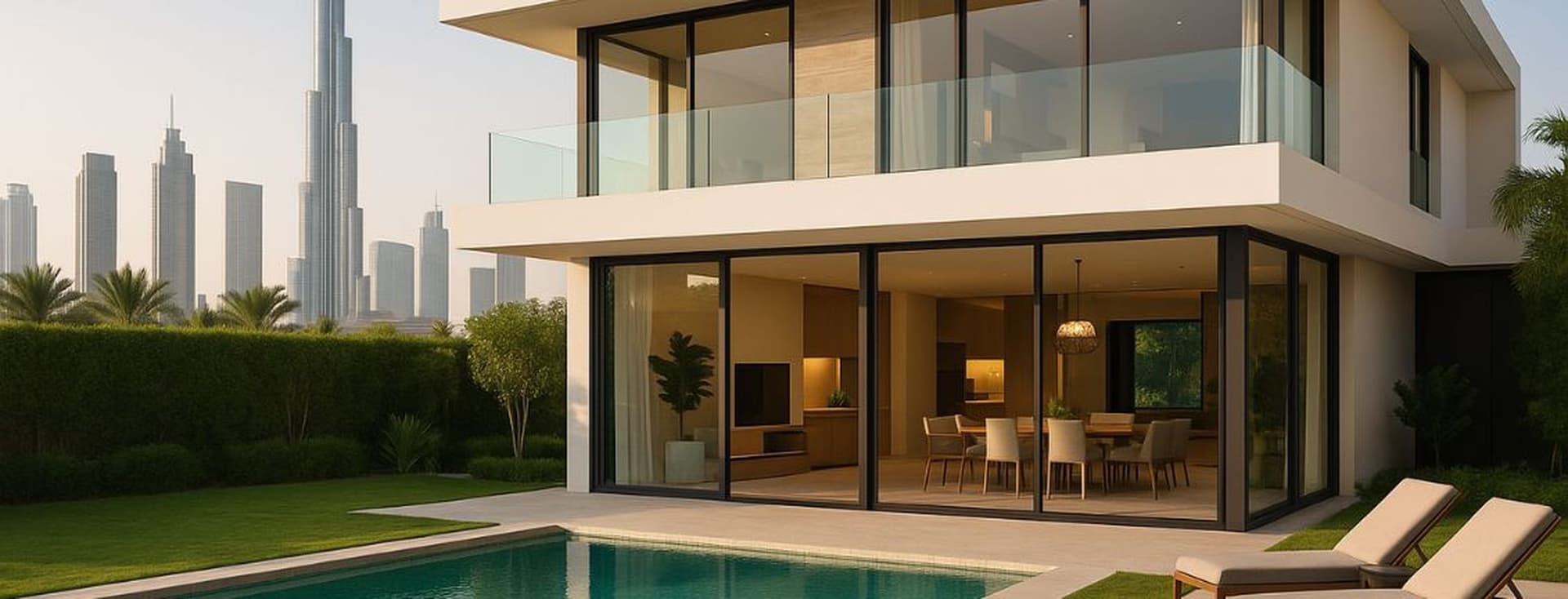
Dubai’s combination of luxurious lifestyle and highly competitive real estate market means consumers and real estate developers are constantly looking for new ways to innovate their homes. One of the latest key trends is the rise of smart homes in Dubai. Whether for villas or apartments, smart home automation goes beyond premium finishes, allowing a home to adapt, protect and conserve.
This guide explores what is smart home technology, how Dubai is leading the way, and whether it’s worth the investment in your next property.
Table of Content
What are Smart Homes?
Top Smart Home Features in Dubai
Cost Breakdown: What Smart Home Installations Cost in Dubai
Trends & Smart Home Innovation in Dubai 2026
Benefits and ROI of Smart Homes
Drawbacks & Limitations of Smart Homes
Smart Home Communities & Properties in Dubai
Conclusion: Is a Smart Home Worth It in Dubai?
So what is smart home technology? Put simply, smart home technology is a system that allows you to remotely control elements of your home from an app, enhancing comfort, control and convenience.
A smart home in Dubai is a residential property that has been fitted with sensors, controllers and connectivity technology that lets systems communicate, automate and be managed remotely. This can include:
Lighting and shading (automatic dimming, blackout modes)
Climate control (zoned air conditioning, smart thermostats)
Security (CCTV, smart locks, motion sensors)
Energy monitoring and optimisation
Entertainment and AV integration
Water leak detection, garden and irrigation control
Dubai’s most sought-after smart home features combine energy efficiency, security, and comfort, from automated lighting and climate control to voice-activated systems and integrated surveillance.
When evaluating properties, buyers of smart homes in Dubai increasingly look for:
Zoned climate / smart thermostat systems — essential in hot weather
Voice controls (Arabic + English) via Alexa, Google or local platforms
Automated lighting & shading for energy savings and ambience
Smart locks and biometric access tied to security systems
Integrated CCTV & remote monitoring
Energy dashboards & appliance monitoring
Smart audio and scenes (e.g. “Evening mode”)
Solar + battery integration (especially in villa developments)
Smart home installations in Dubai can range from AED 2,500 to over AED 250,000. These costs depend on property size, system complexity, and level of automation.
Some system operators offer bundle packages based on the property size (1-bed, 2-bed etc). For example, Avario, one vendor, quotes AED 24,500 for a complete smart home kit for a one-bed apartment, before discounts.
In ultra-high-end homes, smart home automation costs can exceed AED 500,000, depending on the scale of the project.
Typical costs can be split into tiers as follows:
| Tier | Typical Scope | Approx Range (AED) |
|---|---|---|
Entry/Starter Kit (compact apartment) | Basic lighting and climate control | 2,500 - 5,000 |
Mid-Range (2-3-bed apartment, townhouse or smaller villa) | Full lighting, shades, locks, CCTV, HVAC zones | 8,000 - 45,000 |
Premium Villa/Full Automation | Wired backbone, AV, solar, battery, scenes | 45,000 - 250,000+ |
As we look ahead, these trends are shaping smart homes in Dubai:
| Smart Home Trends | Explained |
|---|---|
AI and predictive automation | Homes that learn your habits and can adjust lighting, cooling, and even shading in advance based on your preferences. |
Interoperability | Devices that can communicate across different technology platforms, like Apple, Amazon and Google. |
Energy and sustainability integration | Homes will more deeply connect to solar, battery storage, and smart grid functions (e.g. exporting excess power). |
Wellness and health features | Indoor air quality sensors, circadian lighting, and humidity control |
Smart-ready builds | New developments that embed infrastructure like wiring to make smart upgrades easier. |
Get Your Free Investment Guide
Learn how to maximise returns and make informed decisions in Dubai’s property market.
Ultimately, smart homes in Dubai are rapidly shifting from a novelty to an expectation, especially in premium segments.
Smart home automation can offer several benefits to homeowners in Dubai. These include:
Energy savings: more efficient cooling and lighting control
Security & peace of mind via remote monitoring
Convenience & lifestyle: control systems via app or voice
Asset appeal: smart homes can attract premium buyers/tenants
Property value uplift: smart homes often command a premium
For investors, well-implemented smart-home technology can increase rental yield whilst reducing operating costs.
Whilst there are clear benefits to smart home technology, the significant cost means its crucial to think about your expected return on investment. ROI considerations include:
Energy savings alone may not justify the cost of smart-home technology
Many potential benefits are intangible, such as lifestyle improvements
The value uplift can depend on the property type and buyer preferences
Despite their advantages, smart homes come with challenges around compatibility, cost, security, and long-term maintenance.Specific drawbacks for smart homes in Dubai can include:
System fragmentation: mixing devices from different brands can create closed systems
Upgrade risk/obsolescence: newer technology may outpace older systems
Retrofit complexity & cost in existing homes
Network reliability & latency issues
Cybersecurity & data privacy risk if not secured properly
Initial capital outlay can be high
While smart systems bring many perks, buyers should weigh them against cost, maintenance, and longevity.
Whilst smart home automation is a relatively new trend in Dubai, there are already several communities that have embraced smart technology. These include:
The Sustainable City: energy management, renewal, data dashboards
Tilal Al Ghaf: smart-home technology enabled in many new phases
Silicon Oasis / Dubai Digital Park: positioned as “tech districts”
Developer projects by Emaar now often advertise “smart home ready” units
Many upgraded villas in ultra-luxury areas like Palm Jumeirah and Emirates Hills now come fully automated
As more properties are renovated and upgraded across Dubai, and developers increasingly look for ways to stand out, smart-home technology is expected to increase in adoption across the city and become the standard much more frequently in mid to high-end homes.
Smart homes in Dubai are no longer a rarity. Adoption is increasing, and for those in the premium and luxury segments, automation can deliver measurable lifestyle, security and value benefits.
But, if you’re considering implementing smart home automation into your home, success depends on making smart choices. Selecting the right technologies, defining your scope clearly, and future-proofing are all crucial. When well executed, a smart home Dubai becomes more than a lifestyle feature, it becomes a selling point and differentiator.

Speak to a Real Estate Specialist
Contact us today for expert guidance and all your property questions answered.
Expect AED 2,500 to 5,000 for a basic 1-bed setup. Mid-tier apartments may range from AED 8,000-45,000, and fully automated villas are often AED 45,000–250,000+.
Luxury buyers most often request advanced HVAC zoning, automated shading, AI-driven scenes, biometric access, solar + battery integration, and wellness sensors (air quality).
Yes, but it is more complex and costly than with a new development. Wireless systems minimize disruption, while full KNX or structured solutions may require rewiring and planning.
While precise numbers vary, some agents suggest a 5–10 % premium in high-end segments, plus stronger rental appeal.
Increasingly, yes. Some now offer “smart-enabled” or “smart-ready” homes (pre-wired infrastructure). But full automation is still often optional or in premium tiers at an additional cost.
You may also be interested in






Contact



Engel & Völkers Dubai
7th Floor, Al Khail Plaza
Jumeirah Village Triangle, Dubai, UAE
Tel: +971 4 4223500