Find the Right Property in Dubai
Looking for a sustainable home or investment property in Dubai? Speak to an Engel & Völkers real estate expert for guidance tailored to your goals.
Access exclusive properties and get in touch for personal advisory: Explore Private Office.
Key Takeaways:
Sustainable homes in Dubai are becoming increasingly prominent due to energy efficiency, climate resilience, and growing demand for eco-friendly living.
Al Barari, DAMAC Hills 2, and The Sustainable City are notable examples of Dubai communities incorporating green spaces, energy-efficient features, and sustainability-focused infrastructure.
Sustainable homes can offer investment advantages through lower running costs, growing buyer and tenant demand, and stronger long-term resilience to changing building standards.
Dubai’s Al Sa’fat Green Building System is driving more sustainable real estate development through requirements covering energy efficiency, water conservation, building systems, materials, and waste.
Sustainable homes in Dubai are becoming an increasingly important part of the city’s real estate market, as developers, buyers and government initiatives place greater emphasis on energy efficiency, resource conservation and greener communities.
From established communities such as The Sustainable City and Al Barari to Dubai’s wider green building standards, sustainability is influencing how homes are designed, built and evaluated.
In this guide, we explore what makes a home sustainable in Dubai, the developments leading the shift, the role of green building standards and what sustainable real estate could mean for buyers and investors.
Table of Content
Why Sustainability Is Becoming Important in Dubai Real Estate
How Dubai’s Climate Makes Sustainable Homes Different
Dubai Developments Leading the Shift Towards Sustainable Living
How Sustainable Living Goes Beyond the Home
The Role of Green Building Standards in Dubai Real Estate
Sustainable Homes as an Investment Opportunity in Dubai
The Future of Sustainable Homes in Dubai
The Future of Sustainable Real Estate in Dubai
Sustainability is no longer simply a buzzword in Dubai real estate. Rather, it has made its way into the heart of Dubai’s property market and is impacting conversations, government policies, buyer preferences, and upcoming project pipelines.
There are several key drivers around the concept of sustainable homes in Dubai, from building climate resilience to achieving energy efficiency. Let’s take a closer look:
As awareness of climate change and its impact on the planet reaches more people, the need to build sustainable properties that lower carbon footprints and reduce damage to the environment becomes an important criterion for many homebuyers and investors. Collective action to build sustainable homes can help prepare Dubai for a more climate-resilient future.
A major advantage of sustainable living homes is their energy efficiency mechanisms. Not only can these mechanisms reduce environmental impact, but they can also help property owners reduce their utility bills.
To promote more sustainable development in the city, the Dubai government has implemented several forward-thinking initiatives, including green building standards that require developers to meet sustainability requirements in new projects.
Located in an arid desert climate, Dubai experiences hot, dry conditions for much of the year, with particularly high temperatures during summer. Dubai’s climate makes energy-efficient and climate-conscious design particularly important for homes in the city.
Here is how Dubai’s hot climate impacts the design and execution of sustainable living homes:
Determining a property’s orientation while keeping the sun in mind is an important component of architecture in Dubai. Developers can plan sustainable properties to maximise natural light while limiting excessive solar heat gain.
Where developments incorporate natural water features or extensive green spaces, these can become an integral addition to the design of a structure. This can provide sustainable properties with additional natural shading and contribute to a more comfortable environment.
Dubai’s climate can also bring periods of high humidity, particularly in areas close to the coast. Architects can use passive design principles such as building orientation, shading, and cross-ventilation to improve airflow and reduce reliance on mechanical cooling.
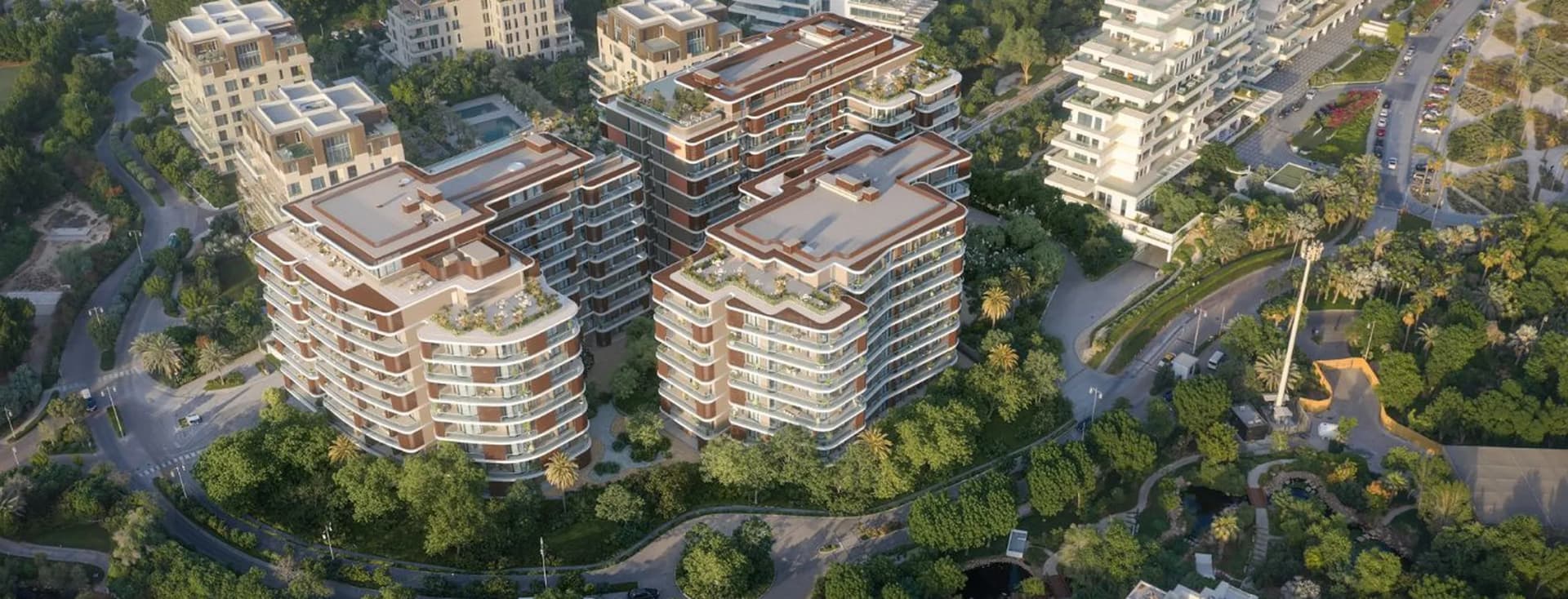
You will find a growing number of sustainable living examples through newer and upcoming areas and developments across Dubai. Several developers are spearheading this change with projects that are making eco-friendly living a practical reality.
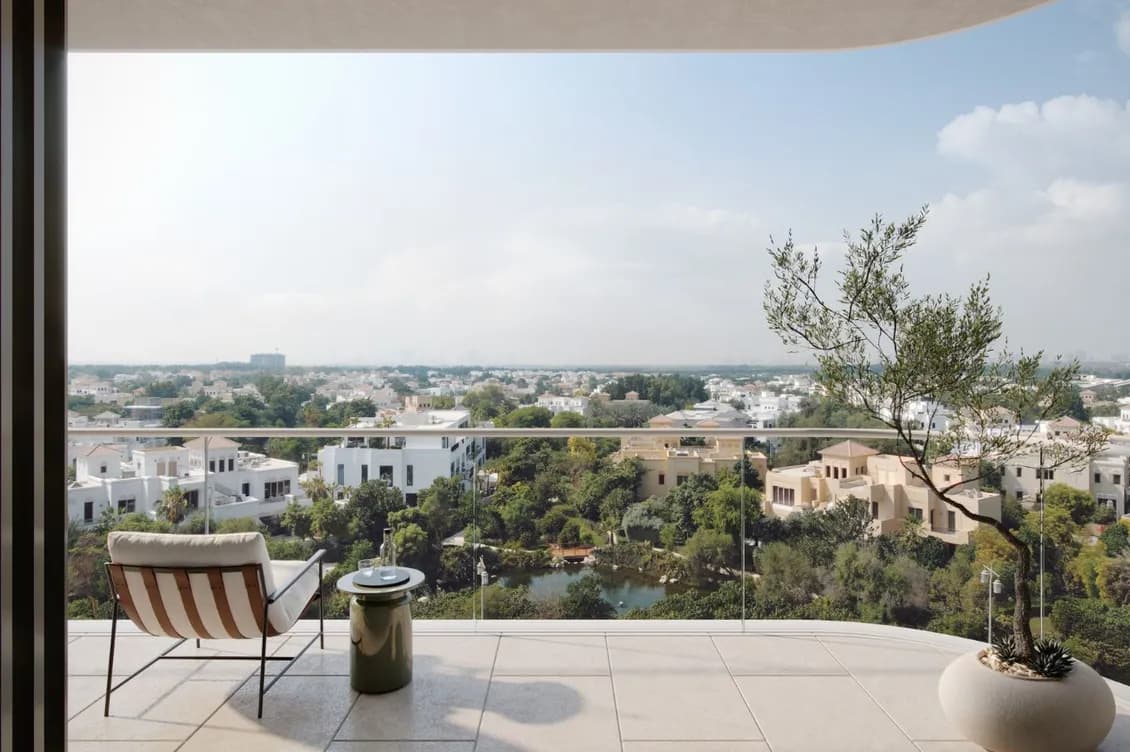
The embodiment of sustainable living in Dubai, Al Barari has preserved more than half of its 15.3 million-square-foot community as green space. It boasts a holistic wellness community, themed gardens and parks, outdoor spaces, and a wide range of apartments and villas for people seeking green living.
DAMAC Hills 2 is a prime sustainable living example for families, with a master-planned community that combines residential neighbourhoods with extensive outdoor and leisure spaces. Park Greens, one of its residential clusters, is built around 5.1 million square feet of parkland, while sustainability-focused features can also be found across parts of the wider development.
The Sustainable City is one of Dubai’s best-known sustainable communities and was the first operational sustainable development of its kind in the Middle East. The community incorporates solar panels on homes and parking areas, car-free residential clusters, EV charging, smart irrigation, water-saving systems, and extensive green spaces.
As sustainable development becomes more prominent in Dubai, its impact increasingly extends beyond individual homes.
As more developers focus on building sustainable homes and eco-friendly architecture, it can create a wider impact in terms of reducing carbon emissions, increasing energy efficiency, and conserving resources. Sustainable living goes beyond the home by implementing technology to harness renewable energy, educating future and current generations about building climate resilience, and inspiring collective action to safeguard cities and countries from the risks posed by climate change.
The government has played a pivotal role in bolstering sustainable development across Dubai, primarily through its initiatives and regulations. These regulations ensure that developers comply with standards designed to improve building efficiency, reduce environmental impact, and support Dubai’s wider sustainability goals.
Dubai’s green building requirements now sit within the Al Sa’fat – Dubai Green Building System, which establishes mandatory sustainability requirements for new buildings and higher standards for projects seeking advanced ratings.
The system addresses a range of areas relevant to sustainable development, including:
Energy efficiency and building performance
Water conservation and efficient water use
Building systems, ventilation, and indoor environmental quality
Sustainable materials and waste management
These requirements form part of Dubai’s broader efforts to reduce energy and water consumption and improve the environmental performance of its built environment.
Sustainable homes are not just a lifestyle choice, but can also offer advantages from an investment perspective. Energy-efficient technologies can reduce ongoing utility costs, while growing awareness of sustainability among buyers and tenants may support demand for properties with strong environmental credentials.
Here are some factors that can strengthen the investment case for sustainable homes in Dubai:
Lower energy and water consumption can reduce ongoing utility costs.
Energy-efficient homes may become increasingly attractive to tenants as running costs become a greater consideration.
Green building standards can help future-proof properties as Dubai continues to strengthen its sustainability requirements.
Communities built around sustainability, green space, and lower-density living may appeal to buyers seeking both environmental and lifestyle benefits.
As with any property investment, performance ultimately depends on factors including location, purchase price, supply, rental demand, and the quality of the individual development.
The future of sustainable homes in Dubai is being charted with a mix of government policies, buyer demands, and developer innovation. As green certifications and standards become more important for buyers and renters, the government is continuing to promote more sustainable construction practices, while developers are adopting new technologies and methods to build greener properties.
This could strengthen the long-term appeal of sustainable homes, particularly as building standards evolve and buyers become increasingly aware of energy efficiency, running costs, and environmental performance.
Sustainable homes are becoming an increasingly important part of Dubai’s real estate market. Government building standards, advances in energy-efficient technology and changing buyer expectations are encouraging developers to place greater emphasis on energy use, water conservation, green space and environmental performance.
For buyers and investors, sustainable properties can offer benefits beyond their environmental impact. Lower running costs, energy-efficient features and growing demand for greener communities can all contribute to the long-term appeal of a property.
As Dubai continues to pursue its wider sustainability goals, sustainable real estate is likely to play an increasingly prominent role in how new communities are planned and built. For anyone buying property in Dubai, understanding a development’s sustainability credentials is therefore becoming an important part of assessing its long-term quality and investment potential.
Find the Right Property in Dubai
Looking for a sustainable home or investment property in Dubai? Speak to an Engel & Völkers real estate expert for guidance tailored to your goals.
Sustainable homes are properties built with energy efficiency, resource conservation, and reduced environmental impact in mind, often incorporating eco-friendly materials and technologies.
Features such as water-efficient systems, energy-efficient HVAC technology, renewable energy, insulation, shading, and passive ventilation can make a home more sustainable.
Sustainable properties can help homeowners reduce energy and water consumption, lower utility costs, and increase the appeal of their property to sustainability-conscious buyers and tenants.
Sustainable homes can carry a higher upfront price where they incorporate advanced energy-efficient technologies, premium materials, or green certifications.
Sustainable features can support property values by reducing running costs and increasing appeal to environmentally conscious buyers, although performance ultimately depends on the individual property and market.
You may also be interested in




Contact



Engel & Völkers Dubai
7th Floor, Al Khail Plaza
Jumeirah Village Triangle, Dubai, UAE
Tel: +971 4 4223500