
Invest Smartly in Dubai Real Estate
Download our free investment guide to maximise returns and make informed decisions in Dubai’s property market.
The new GG website: Inspiring personalities, extraordinary places and exceptional properties. Discover now
Key Takeaways
Wine collecting for investment is a growing alternative asset trend that combines passion, craftsmanship, and potential long-term returns.
The fine wine investment market has delivered historically steady performance, averaging around 8–10% annually over the past two decades, but it remains cyclical and illiquid.
Learning how to invest in wine means understanding provenance, storage, and timing, factors that separate successful collectors from casual enthusiasts.
Wine collecting for investment blends the art of connoisseurship with the discipline of financial strategy. Once restricted to seasoned collectors, fine wine investment has opened up to a wider audience and been recognised as a tangible asset class that offers diversification, global demand, and potential for long-term value growth.
For high-net-worth investors used to investments like real estate and stocks, fine wine provides an interesting addition. As an investment, it is finite, globally traded, and emotionally rewarding. But, like property, the returns depend on careful selection, patience, and a clear understanding of market dynamics.
In this guide, we’ll explore how wine collecting as an investment works, review its historical performance, highlight the factors that drive value, and outline practical steps, risks, and tips for those considering fine wine as part of a diversified portfolio.
Table of Content
How Wine Collecting as an Investment Works
Historical Performance of Fine Wine as an Asset Class
Factors That Drive Wine Value
How to Start Wine Collecting for Investment
Risks of Wine Collecting as an Investment
Tips for Successful Wine Investment
Long-Term vs. Short-Term Returns in Wine Investment
Conclusion: Is Wine Collecting Right for You?
The principle of fine wine investment is simple: purchase bottles or cases with strong provenance, store them in professional conditions, and sell once they have matured and scarcity drives up prices. Unlike speculative trading, success lies in quality, patience, and preservation.
Here’s how it typically works:
Acquisition: Investors purchase high-quality wines directly from producers, auctions, or established brokers.
Storage: Wine is held “in bond” at climate-controlled warehouses, ensuring ideal temperature and humidity while deferring duties and taxes.
Holding period: Over time, as bottles are consumed globally and supply diminishes, the remaining stock can appreciate in value.
Valuation: Market benchmarks such as Liv-ex track performance across regions, labels, and vintages.
Exit: Investors sell through auctions or trading platforms, often to other collectors, restaurants, or luxury buyers.
The process shares characteristics with real estate investment: selecting prime assets, maintaining condition, and timing the market effectively.
Over the past two decades, fine wine investment has emerged as one of the best-performing alternative assets.
Historical data from Liv-ex shows that blue-chip wines from Bordeaux, Burgundy, and Champagne have averaged 8–10% annual returns over the long term, often outperforming gold and art.
However, like any investment, returns are cyclical, with periods of rising and falling asset values. For example:
From 2004 to 2024, a diversified wine portfolio achieved an average annualised return of around 8.8%, with relatively low volatility compared to equities.
Between 2013 and 2023, several top-tier labels tripled in value, reflecting growing global demand, particularly from Asia.
In contrast, 2024 to 2025 saw a modest correction of roughly 9–10% across key indices, reminding investors that, like any market, wine cycles between expansion and consolidation phases.
Overall, historic returns have suggested that fine wine behaves less like a speculative commodity and more like an appreciating collectable, offering relative stability and diversification potential alongside traditional holdings such as property or equities.
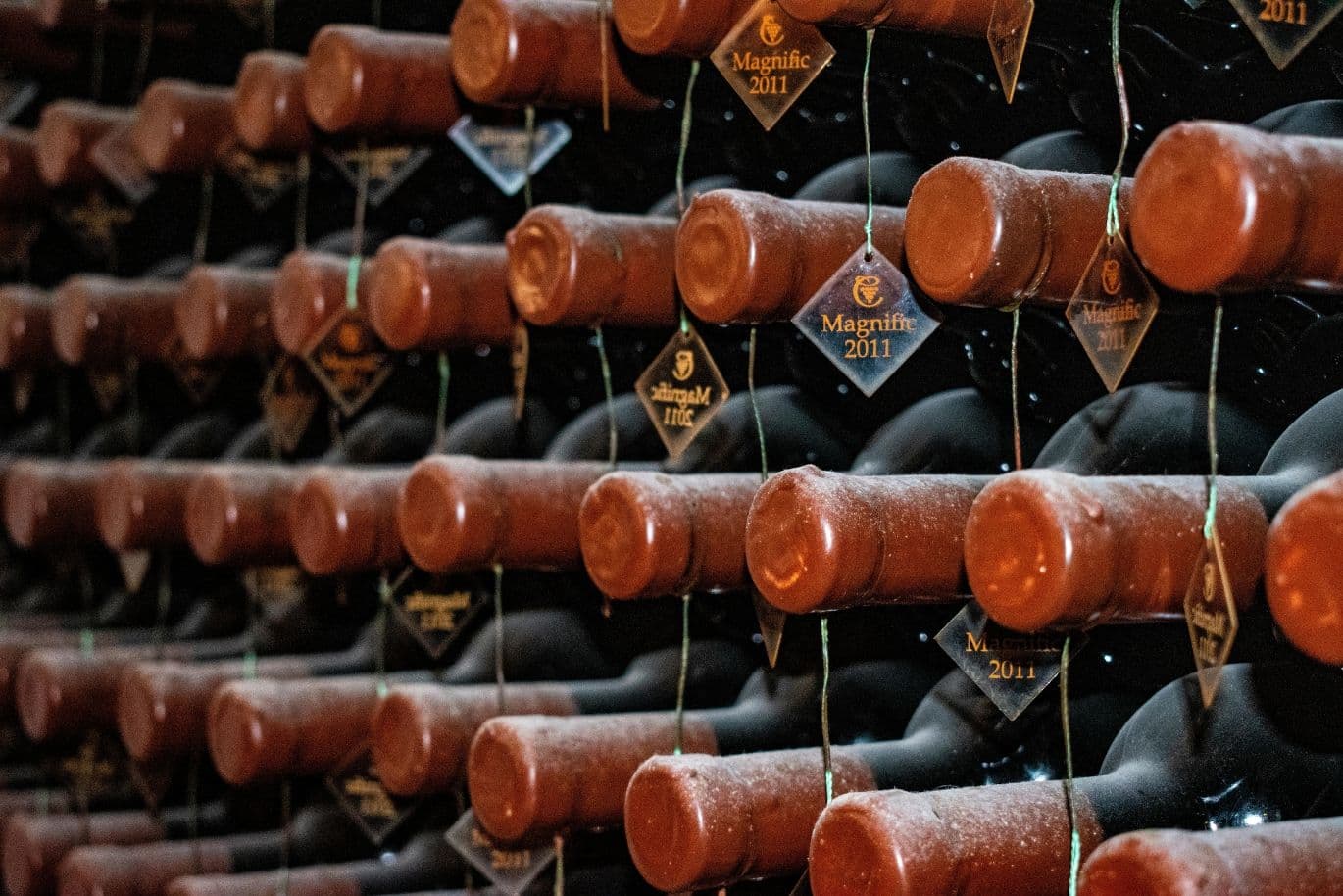
Like real estate, a wine’s value is impacted by location, quality, and reputation. Understanding what drives performance is essential for informed investment and deciding the best wines to invest in.
Iconic estates, such as Château Lafite Rothschild, Domaine de la Romanée-Conti, and Screaming Eagle, are globally renowned and maintain exceptional demand regardless of economic cycles. Their reputation ensures scarcity and price resilience.
Each harvest is unique. Exceptional weather conditions create vintages that collectors covet. For instance, Bordeaux 2016 or Burgundy 2019 have shown superior appreciation due to balance, ageing potential, and critical acclaim.
High scores from renowned critics, such as Robert Parker, Wine Spectator and Decanter, can immediately lift value. Even a one-point increase can add thousands to a case’s resale price.
Perfect storage and clear provenance are non-negotiable. Bottles stored in professional bonded warehouses with full documentation command significant premiums.
Unlike other assets, fine wine becomes rarer as it is consumed. Each bottle opened increases scarcity, and with it, the value of what remains.
Wine is a cultural luxury. Demand from mature collectors in Europe and North America is now joined by growth in Asia and the Middle East, expanding market depth and long-term sustainability.
Together, these factors define a wine’s “investment grade”. This is a combination of heritage, quality, and scarcity that fuels ongoing demand and value creation.
Invest Smartly in Dubai Real Estate
Download our free investment guide to maximise returns and make informed decisions in Dubai’s property market.
Understanding how to invest in wine takes research, structure and patience, but the process can be highly rewarding.
Put simply, the process for beginning a wine collection includes:
Defining your objective. Decide whether your goal is passion-driven enjoyment, portfolio diversification, or both. Determine your time horizon and liquidity needs.
Choosing the right platform. Work with reputable brokers, merchants, or dedicated investment platforms that specialise in fine wine. Avoid informal secondary markets without verification.
Setting a realistic budget. Entry levels vary; serious investors often begin with a budget of around $10,000 – 25,000, but smaller portfolios can still perform well if carefully curated.
Buying investment-grade bottles. Focus on the best wines to invest in, such as first-growth Bordeaux, top Burgundy, prestige Champagne, Super Tuscans, or cult Napa labels.
Prioritising professional storage. Bonded warehouses provide stable conditions (12–14 °C, 70% humidity) and verified chain-of-custody records.
Maintaining full documentation. Keep invoices, storage certificates, and critic ratings to protect value and simplify resale.
Staying informed. Follow Liv-ex data, auction results, and global demand trends to adjust your strategy.
While the potential rewards are compelling, wine collecting for investment carries distinct risks, including liquidity risk, market fluctuations, improper storage and counterfeiting.
| Risks Of Wine Collecting | Explained |
|---|---|
Liquidity risk | Selling fine wine takes time and patience. It doesn’t offer the same liquidity of listed assets like equities. |
Market fluctuations | Prices can go up and down, depending on vintage reputation, economic sentiment and global demand. As with any investment, investors should be prepared for market corrections. |
Storage & conditions | Poor temperature or humidity can irreversibly damage wine and erode its value. Always use professional facilities. |
Time horizon | Most returns materialise over 5–15 years. Short-term speculation is rarely a successful strategy. |
Counterfeiting | The luxury nature of the market makes it a target for fraud. Work only with verified sellers and insist on provenance checks. |
Carrying costs | Annual storage, insurance, and broker fees reduce net returns and must be budgeted for. Most returns materialise over 5–15 years. Short-term speculation is rarely a successful strategy. |
Cash flow | Unlike real estate and equities, which offer rental or dividend returns, wine collecting for investment doesn’t offer any cash flow until sold. |
In general, these risks make wine a potential complement, rather than a replacement, for traditional investments like real estate and stocks. For many investors, it is approached as a passion investment and opportunity for diversification and enjoyment rather than guaranteed profit.
If you are considering fine wine investment, these tips could help you to make the right decisions:
Focus on quality over quantity: A small, well-curated collection of blue-chip labels can outperform a broad, inconsistent mix.
Buy by the case: Full, original wooden cases (OWC) retain value better than individual bottles.
Diversify by region and vintage: Spread exposure across Bordeaux, Burgundy, Champagne, and Tuscany to mitigate regional risk.
Monitor market timing: Purchasing during softer market cycles, like 2025’s correction, can enhance long-term upside.
Leverage expertise: Partner with specialists who understand authentication, storage, and resale logistics.
Document everything: Provenance, storage history, and purchase records are your proof of value.
Wine collecting for investment often rewards a long-term outlook. Just like equities and stocks, value can compound over years, rewarding those who are patient with their approach.
Short-term: 1–3 years - prices can fluctuate with critical ratings, economic sentiment, or regional supply.
Medium-term: 5–10 years - wines enter optimal drinking windows; scarcity begins to lift values.
Long-term: 10–20 years - mature vintages become truly rare, often achieving exponential appreciation.
One example of a short-term vs long-term outlook is the market performance between 2005 and 2025.
From 2005 to 2023, the Liv-ex Fine Wine 100 index increased by more than 270%.
But, from 2024-2025, the index dropped by roughly 10%, highlighting the cyclical nature of the market, especially in the short-term.
For discerning investors seeking diversification beyond real estate and equities, wine collecting for investment offers an appealing mix of tangible value, cultural prestige, and long-term potential. But it remains a niche market that is highly illiquid, specialist, and best suited to those with a true passion for wine who appreciate both the risks and potential rewards.
If you value craftsmanship, scarcity, and legacy, fine wine can complement a property-led portfolio beautifully. Treat it with the same discipline you bring to real estate: rigorous due diligence, expert guidance, and a commitment to quality.
At Engel & Völkers Dubai, we understand that wealth creation extends beyond property. Our focus remains real estate, but we recognise the growing interest among our clients in alternative assets that blend lifestyle with investment opportunity. Whether expanding your portfolio or exploring new frontiers, fine wine investment deserves consideration for both its enjoyment and its enduring value.

Live Exceptionally. Invest with Confidence.
Discover Dubai’s luxury real estate market, where world-class living meets long-term opportunity.
You may also be interested in








For investors with long-term horizons, market knowledge and proper storage, fine wine can offer steady returns and diversification. However, it is not risk-free and should form only a small part of a diversified portfolio.
Fine wine investment budgets typically start from $10,000–$25,000, though some investment platforms allow you to begin with less.
First-growth Bordeaux, top Burgundy, prestige Champagne, Super Tuscans, and cult Napa Valley labels consistently lead the market due to limited supply and global demand.
Yes, if they focus on provenance, storage, and advice from experienced brokers. Patience and education are key; the most successful investors treat it as a long-term pursuit.