Exclusive
Begur, Catalonia, Spain
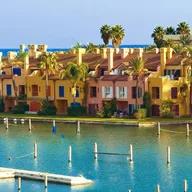
Semi-detached house with tourist license in Sa Tuna
Price
€795,000
- 3 Bedrooms
- 3 Bathrooms
- ~166 m² Total surface
- ~268 m² Plot surface
The new GG website: Inspiring personalities, extraordinary places and exceptional properties Discover now
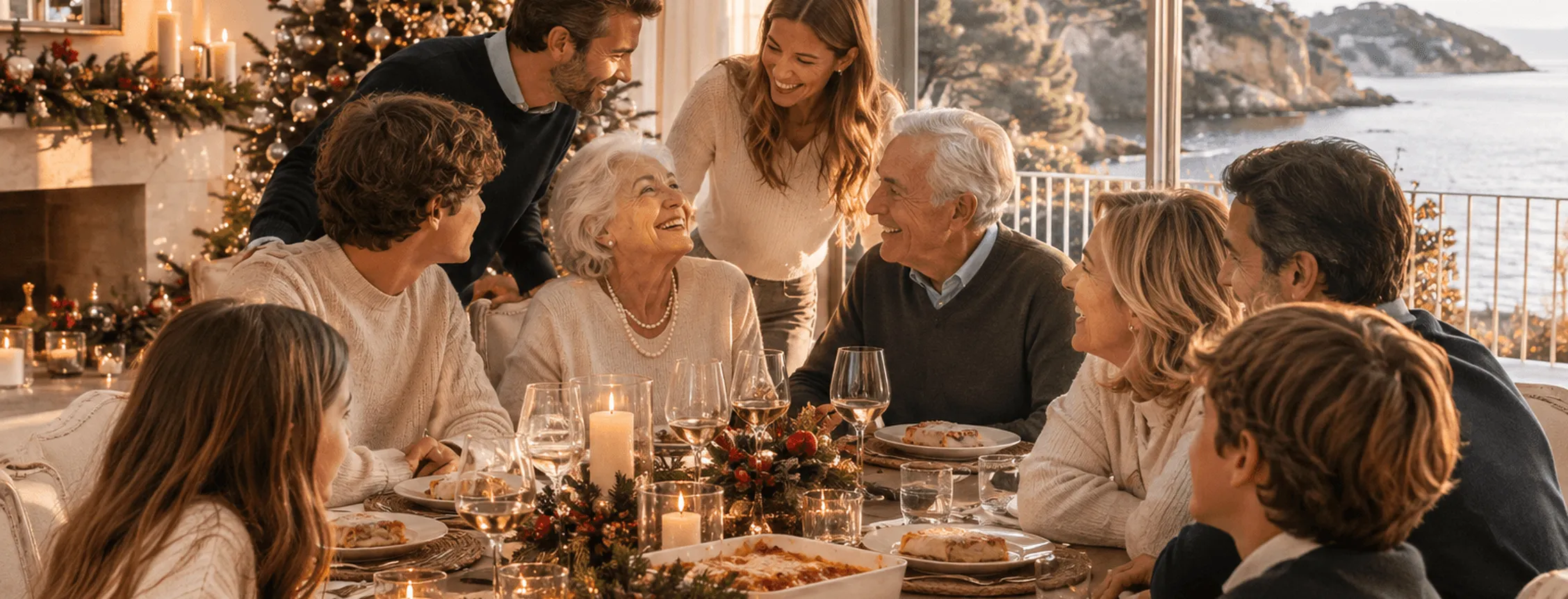
Christmas on the Costa Brava and in Catalonia is something special. In December, the towns fill with lights, shop windows dress up for the festive season, and kitchens once again smell of recipes handed down from generation to generation. On the Costa Brava, this time of year is experienced in its own particular way: among medieval villages, small markets, family meals and walks by the sea.
Although winter brings shorter days and cooler temperatures, life does not stand still. On the contrary, it is a perfect time to discover another side of the Costa Brava, quieter and more authentic, and to get closer to some of the traditions that are part of Catalan identity.
Table of Content
Catalan Christmas traditions: discover the customs of Christmas on the Costa Brava
Christmas gastronomy on the Costa Brava: recipes to share
Markets, fairs and living nativity scenes at Christmas on the Costa Brava
The “Pessebre Vivent” of Castell d'Aro: a tradition of more than 60 years on the Costa Brava
Discovering the Costa Brava in winter too
If there is one thing that defines Christmas on the Costa Brava and in Catalonia, it is the number of customs that stay alive year after year. Some have centuries-old origins, while others are simply part of those small family rituals that make this time of year special.
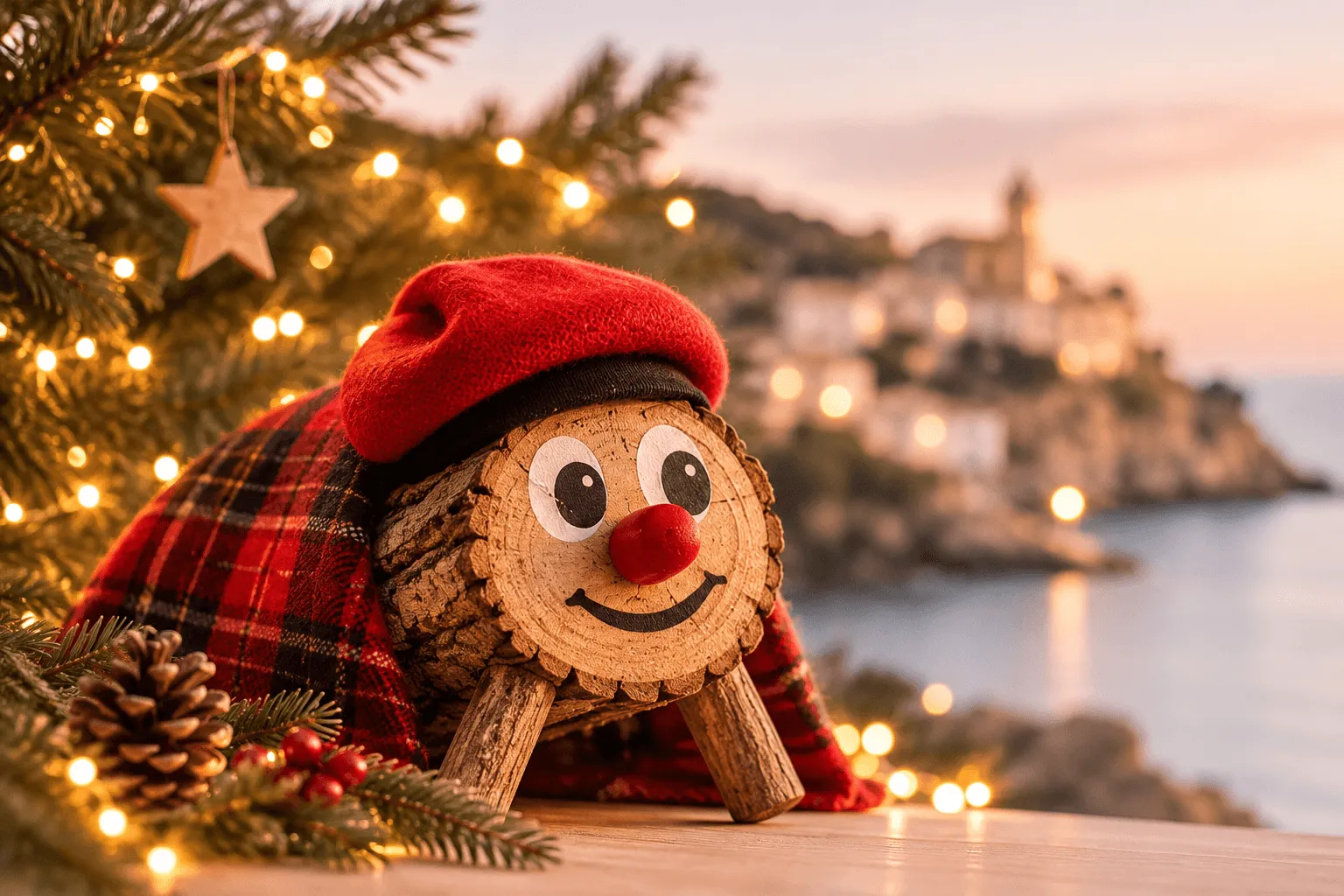
Few Catalan Christmas traditions excite children as much as the “Tió de Nadal” (Christmas log). It is a wooden log with a smiling face, a blanket to keep it warm and a red barretina, the traditional Catalan cap.
In the days leading up to Christmas, the youngest children take care of feeding it, usually fruit or bread, so that it is well fed. When Christmas Eve or Christmas Day arrives, depending on each family's customs, the most anticipated moment comes: the children beat the log with sticks while singing traditional songs so that it “poops” sweets, small gifts and nougat.
It is one of those traditions passed down from parents to children, and it continues to hold a very special place in Catalan homes.
Another essential figure of Catalan Christmas is the “caganer”. He is often found hidden among the figures of the nativity scene, in his characteristic crouching position and, traditionally, dressed as a peasant wearing a barretina.
Although it may surprise those visiting Catalonia for the first time, this figure has a meaning linked to the fertility of the land, prosperity and good luck for the year ahead.
Over time, the “caganer” has also adapted to modern times. Today there are versions of sportspeople, artists, politicians and well-known personalities. Finding him among the houses, the trees and the figures of the nativity scene has become one of the most fun games of this season.
On 26 December, Catalonia celebrates Sant Esteve (St Stephen's Day), a festive day that extends the family gatherings of Christmas Day. It is a tradition especially rooted in Catalan culture and has a particularity: while in many places the Christmas celebrations end on the 25th, in Catalonia Christmas lasts one more day.
Traditionally, Sant Esteve was the time to get together with those relatives with whom it had not been possible to share the Christmas meal. Families would sit down around the table once again to enjoy another special meal, linger over the after-dinner conversation and keep sharing the festivities.
This day is also closely linked to one of the best-known recipes in Catalan gastronomy: Sant Esteve cannelloni, which were traditionally prepared using the leftover meat from the roast and the escudella of the previous day.
On the Costa Brava, Christmas is also celebrated around the table. These are days of long after-dinner conversations, traditional recipes and dishes that are rarely missing from family gatherings.
Catalan Christmas gastronomy has a very distinctive identity, with dishes that take time and that, in many homes, are still prepared following the traditional recipes.
On Christmas Day, 25 December, there is an undisputed culinary star: the escudella i carn d'olla.
This traditional recipe begins with a broth slowly simmered with different meats, bones, vegetables and pulses. The result is a comforting soup that is usually served with “galets”, a large pasta shape that in some homes is also stuffed with meat.
Next comes the carn d'olla, where the meats and vegetables used to prepare the broth are served. It is a hearty dish, designed to be shared and enjoyed without hurry.
The meal usually ends with nougat, “neules” and a glass of cava. A combination that sums up the spirit of this festive season very well.
On 26 December, the day of Sant Esteve, is once again an important date around the table. In Catalonia, it is traditional to prepare cannelloni, a dish that originated as a way of using up the leftover meat from the Christmas meal.
The meat from the escudella and the “rostit” was minced and used as a filling, accompanied by béchamel and a gratin of cheese.
Although the traditional recipe is still very popular, today it is common to find versions with mushrooms, truffle or different combinations of meats. In any case, Sant Esteve cannelloni remain one of those family meals that many people look forward to all year long.
The “rostit de Nadal” is another of the traditional dishes of Catalan cuisine. It is prepared with different types of meat, usually chicken, butifarra sausage, rabbit or even duck, slowly cooked with onion, garlic, tomato, aromatic herbs and, in some recipes, a touch of rancio wine or cognac.
The secret lies in slow cooking, which allows the meat to become tender and absorb all the aromas of the sofrito.
Every family has its own way of preparing it, and that is precisely where part of its charm lies: it is a recipe that speaks of tradition, family gatherings and a cuisine that remains closely tied to the land.
Catalan Christmas does not really end until 6 January, when Three Kings' Day arrives. And, as could not be otherwise, the celebration has its own culinary star: “the Tortell de Reis”.
It is a sweet-dough pastry, usually ring-shaped, decorated with candied fruit and filled with marzipan, cream or custard, according to each family's preference.
Two surprises are hidden inside: a small figure of a king and a dried bean. Tradition says that whoever finds the figure becomes the king or queen of the celebration and may wear the crown that comes with the “tortell”. Whoever finds the bean, on the other hand, has to pay for the sweet.
It is a simple custom, but one that every year brings families and friends together around the table to bid farewell to the festivities with one last shared moment.
Christmas is a special time to discover the villages of the Costa Brava from a different perspective. During December, many towns in the Empordà and along the Girona coast organise Christmas markets, craft fairs and traditional activities that fill their streets and squares with atmosphere.
Among the most interesting options are some events that have become part of the region's Christmas calendar:
Sant Feliu de Guíxols Christmas Fair: takes place on the Rambla Antoni Vidal and brings together stalls with crafts, decorations and Christmas products. It also usually includes children's workshops, activities related to the Tió and gastronomic offerings.
Fira de Nadal de Tossa de Mar: takes place around the Platja Gran. It is a good opportunity to find handcrafted products and Christmas items, as well as to enjoy workshops and tastings.
Nadal al carrer de Pals: the municipality organises Christmas activities on Carrer Enginyer Algarra, where the festive atmosphere lets you discover the charm of its historic centre.
Girona Christmas Market: although it is somewhat further inland, it makes an interesting excursion from the Costa Brava. It is set up in the Plaça de la Independència and features stalls with crafts, decorations, nativity figurines and food products.
These celebrations are a good excuse to explore the towns of the area and get to know their traditions. It is advisable to check the programmes of each town council or the official agenda of the Costa Brava Tourist Board before planning your visit, as dates and activities may vary from one edition to the next.
Living nativity scenes are one of the most special traditions of Christmas in Catalonia. In various villages, local residents take part in open-air performances that recreate scenes of the birth of Jesus, reviving old trades and customs of rural life. Some take place in historic centres, others in rural settings or next to medieval buildings.
On the Costa Brava, one of the most emblematic is the Pessebre Vivent de Castell d'Aro, a celebration with a long history that every Christmas transforms the municipality's historic centre into a stage full of tradition.
It is also worth getting to know the Pessebre Vivent de Pals, which is staged in the old town of this medieval village and forms part of its Christmas programme.
If there is one Christmas tradition worth a visit on the Costa Brava, it is the Pessebre Vivent de Castell d'Aro, considered the oldest in Catalonia. Its first performance took place in 1959 and, since then, it has become one of the most deeply rooted Christmas events in the Baix Empordà.
The performance takes place along the streets of the historic centre of Castell d'Aro and in the natural setting of the Vall de la Coma. Along the route, visitors discover different scenes that recreate biblical episodes, old craft trades and situations from rural life in times gone by.
One of its greatest attractions is the involvement of the town's own residents, who take part voluntarily to bring this performance to life. Hundreds of extras make it possible for this tradition to remain part of the local identity year after year.
Its cultural importance was recognised in 2011 with the award of the Creu de Sant Jordi by the Generalitat de Catalunya. A chance to get to know Castell d'Aro from a different perspective and to discover how traditions remain very much present in the life of the Costa Brava's villages.
The Costa Brava is usually associated with summer, crystal-clear coves and long days by the Mediterranean. However, those who know the area well know that the Costa Brava also has a special charm in winter, when the landscape regains its calm and allows you to enjoy its towns and natural spaces at a different pace.
It is an ideal time to walk the camí de ronda coastal path of S'Agaró, which links Sant Pol beach with Sa Conca, and enjoy its sea views, small coves and viewpoints. It is also worth strolling along the coast from Calella de Palafrugell to Llafranc, a route that is especially pleasant for discovering the Mediterranean landscape outside peak season. (Discover some of the most beautiful coastal paths on the Costa Brava).
The quieter months also invite you to discover towns such as Sant Feliu de Guíxols, Palamós or Begur, stroll through their historic centres, enjoy the local cuisine and get to know the life of their inhabitants first-hand. In winter, moreover, gastronomic traditions and local celebrations offer an opportunity to connect with the essence of the Empordà.
For those looking to make their home here, these little things also count. Living on the Costa Brava means enjoying the sea and the landscape all year round, but also being part of a community, discovering its customs and finding new reasons to enjoy every season.
At Engel & Völkers Costa Brava Sud we know the appeal of this region beyond the summer months. If you are thinking of finding a home to enjoy this lifestyle all year round, we would be delighted to help you in your search for your next property.
Begur, Catalonia, Spain
Price
€795,000
Lloret de Mar, Catalonia, Spain
Price
€355,000
Sa Tuna, Begur, Catalonia, Spain
Price
€850,000
Sant Joan de Palamós, Catalonia, Spain
Price
€595,000
Begur, Sa Riera, Catalonia, Spain
Price
€883,000
Platja d'Aro i S'Agaró, Catalonia, Spain
Price
€1,200,000
S'Agaró, Catalonia, Spain
Price
€8,500,000
L'Escala, Catalonia, Spain
Price
€975,000
Platja d'Aro i S'Agaró, Catalonia, Spain
Price
€1,495,000
The main public holidays are 25 December (Christmas Day), 26 December (Sant Esteve), 1 January (New Year's Day) and 6 January (Three Kings' Day).
It is a Catalan Christmas tradition in which children beat a log decorated with a blanket and a barretina with sticks so that it “poops” sweets and small gifts.
You can visit Christmas markets, attend living nativity scenes and explore charming towns such as Pals, Tossa de Mar, Begur or Castell d'Aro, as well as enjoy the local cuisine.
Most take place between late November and December, although dates vary depending on the municipality. It is advisable to check local tourist event listings.
One of the most emblematic is the Pessebre Vivent de Castell d'Aro, which has been staged in its historic centre since 1959. The one in Pals is also noteworthy.
It is celebrated on 26 December and is a festive day traditionally devoted to family gatherings. Its most characteristic dish is Sant Esteve cannelloni.
Winter brings generally mild temperatures during the day and cooler ones at night. It is a good time to stroll through the villages, walk the coastal paths and discover the Mediterranean landscape.
You may also be interested in
Contact provider
Page content provided by: Geoss Real Estate S.L.
License partner of Engel & Völkers Franchise and Trademark GmbH