16th arrondissement, Paris, Île-de-France, France
Paris 16th - Exceptional house - South-facing exteriors - Private alley - Chaillot
Price
€2,370,000
- 3 Bedrooms
- 2 Bathrooms
- ~140 m² Living area
- ~115 m² Plot surface
The new GG website: Inspiring personalities, extraordinary places and exceptional properties. Discover now
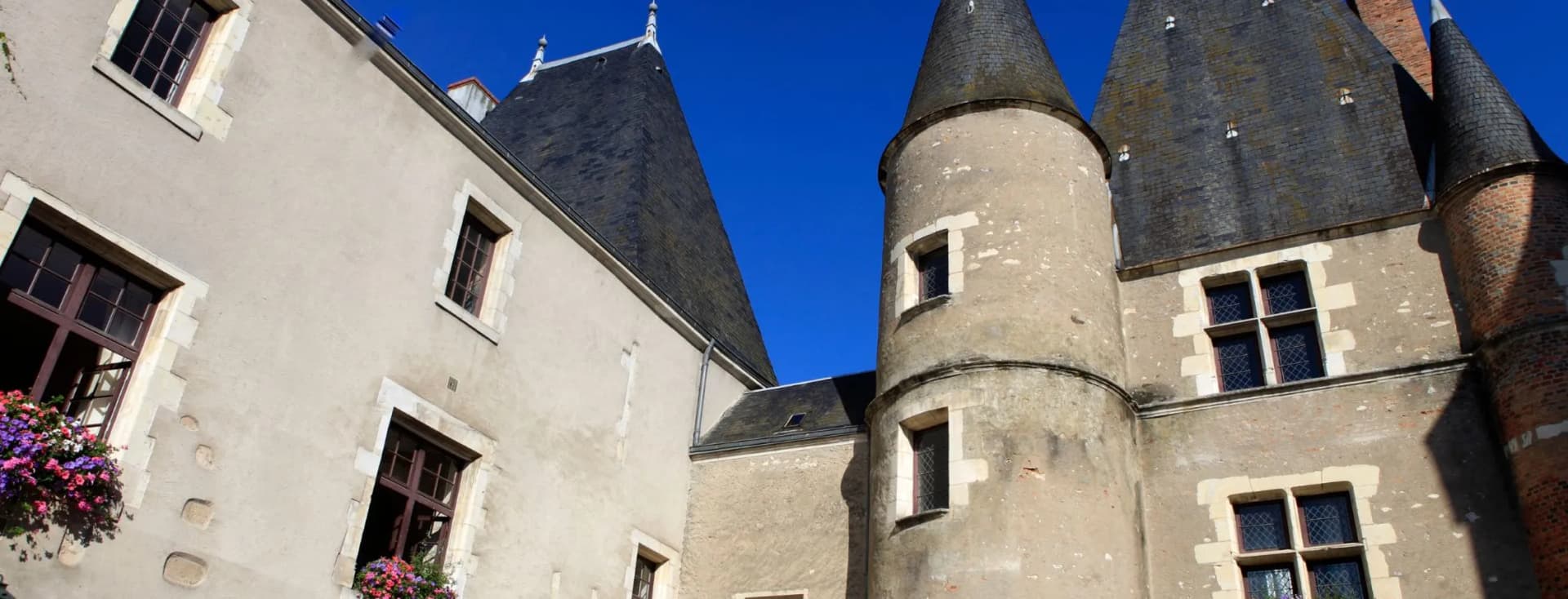
With nearly 45,000 châteaux across France, the market offers an exceptional diversity of properties, from small châteaux requiring extensive restoration to fully renovated historic estates. In 2026, available estimates indicate several hundred transactions each year, with sales often taking longer in this highly specialised market. Buying a château therefore requires looking beyond the acquisition price: location, condition, renovation requirements, maintenance, taxation and intended use all need to be considered together.
France has an exceptional concentration of historic residences. Châteaux, manor houses, gentilhommières, maisons de maître and rural estates reflect very different architectural styles depending on their period and region.
Buying a château means acquiring far more than a home. A property may include several buildings, a park, outbuildings, a swimming pool, a pond, land or remarkable architectural features. For some buyers, the heritage dimension is at the heart of the project; for others, the possibility of creating a family residence or professional venture is the main motivation.
The distinction between a château and a manor house is also worth examining before beginning a search: architecture, history, floor area and maintenance requirements can vary considerably.
The first criterion to define is not necessarily the architectural style, but the intended use.
As a primary residence, a château can offer generous living spaces, several reception rooms and a private setting. For a second home, proximity to a high-speed train station, airport or major city can become a decisive factor.
A commercial project requires a different analysis. Guest rooms, events, tourism, hospitality or equestrian activities require consideration of accessibility, permits, facilities and the estate's ability to support the intended activity.
The right château is therefore first and foremost the one whose configuration matches the owner's plans.
An estate can also be developed as an income-generating activity. Seasonal rentals, guest rooms, weddings and private events or seminars may all be possible depending on the property's characteristics and the applicable regulations.
The presence of outbuildings can be a significant advantage: former stables, barns, caretaker's houses or agricultural buildings may sometimes be converted into accommodation or event spaces.
This perspective must, however, be incorporated into the financial analysis from the outset. Potential income should never be considered separately from renovation, staffing, maintenance, insurance and operating costs.
16th arrondissement, Paris, Île-de-France, France
Price
€2,370,000
17th arrondissement, Paris, Île-de-France, France
Price
€6,560,000
4th arrondissement, Paris, Île-de-France, France
Price
€510,000
18th arrondissement, Paris, Île-de-France, France
Price
€429,000
12th arrondissement, Paris, Île-de-France, France
Price
€392,000
20th arrondissement of Paris, Paris, Île-de-France, France
Price
€1,590,000
16th arrondissement, Paris, Île-de-France, France
Price
€5,650,000
8th arrondissement, Paris, Île-de-France, France
Price
€12,900,000
17th arrondissement, Paris, Île-de-France, France
Price
€2,780,000
Two châteaux with a similar floor area can have significantly different values.
The condition of the roof, timber frame and façades is a major consideration. The potential cost of extensive restoration can quickly alter the overall economics of the project. The number of buildings to maintain, the size of the grounds, heating systems, utilities and outbuildings must also be taken into account.
Location plays an important role. Proximity to Paris, a high-speed train station, an international airport or a major tourist destination can influence both the property's value and its potential use.
Historic Monument status is another specific consideration. It may provide access to certain tax provisions and grants, but it can also involve specific conservation and renovation requirements.
Deux châteaux présentant une surface comparable peuvent avoir des valeurs très différentes.
L'état de la toiture, de la charpente et des façades est déterminant. Le coût potentiel d'une restauration lourde peut rapidement modifier l'économie globale du projet. Le nombre de bâtiments à entretenir, la superficie du parc, les systèmes de chauffage, les réseaux et les dépendances doivent également être intégrés.
La localisation joue un rôle majeur. La proximité de Paris, d'une gare TGV, d'un aéroport ou d'une destination touristique internationale peut renforcer la valeur et le potentiel d'exploitation du domaine.
Le statut de monument historique constitue enfin un élément spécifique. Il peut ouvrir certains dispositifs fiscaux et aides, mais implique également des contraintes particulières en matière de conservation et de travaux.
Le prix affiché n'est qu'une partie du budget nécessaire à un achat château.
Il faut prévoir les frais d'acquisition, les éventuels frais de financement, les diagnostics et audits, puis les travaux immédiats. À cela s'ajoutent les dépenses récurrentes : chauffage, toiture et façades, entretien du parc, piscine, assurances, sécurité, personnel et maintenance des dépendances.
Les estimations professionnelles disponibles évoquent, pour certaines grandes propriétés, un budget annuel d'entretien pouvant représenter plusieurs dizaines de milliers d'euros. Une source spécialisée estime notamment qu'il peut être pertinent de provisionner plusieurs pourcents de la valeur d'acquisition pour couvrir les charges courantes et les gros travaux à venir, mais ce ratio varie fortement selon le bien.
Before making an offer, it is therefore preferable to establish a three-level budget: acquisition, restoration and annual operating costs.
The Loire Valley is an essential reference for anyone considering buying a château in France. The region contains an exceptional concentration of historic properties, ranging from Renaissance châteaux to more discreet family estates.
Accessibility from Paris, particularly via the rail network, is an additional advantage for a second home or tourism project.
Prices vary significantly depending on proximity to major tourist attractions, the property's condition and the quality of the estate. Fully renovated properties or those with significant historical value naturally occupy the higher end of the market.
Nouvelle-Aquitaine offers a wide variety of properties, particularly in Dordogne, Charente and the historic territories of Poitou.
Buyers are often attracted by generous floor areas, extensive grounds and rural surroundings that can support a tourism or family project.
Dordogne is one of the areas where the supply of châteaux is particularly developed. Entry prices can remain accessible for properties requiring renovation, while renovated estates with outbuildings, swimming pools or an existing tourism business can reach considerably higher price levels.
Occitanie also presents a highly varied market. Former seigneurial residences, vineyard châteaux, maisons de maître and rural estates make up a particularly diverse offering.
Some areas offer more accessible entry prices than the most sought-after markets of the Loire Valley or Île-de-France. Airports in Toulouse, Montpellier and Carcassonne can also facilitate access to a second home for international buyers.
However, tourism potential must be assessed locally: destination appeal, seasonality, road and air connections and competition from existing accommodation all need to be considered.
Normandy is particularly attractive for its proximity to Paris, architectural heritage and access to the coast. Brittany offers equally varied properties depending on their location, from rural manor houses to estates near the sea.
Burgundy is another option for buyers looking for historic residences, particularly estates associated with the wine industry.
In all these regions, accessibility should be assessed on a property-by-property basis: travel time from Paris, nearest high-speed train station, international airport, road quality and distance from local amenities can all influence the future use of the château.
Saint Seurin - Fondaudège, Bordeaux, Nouvelle-Aquitaine, France
Price
€1,880,000
Camblanes-et-Meynac, Nouvelle-Aquitaine, France
Price
€840,000
Eysines, Nouvelle-Aquitaine, France
Price
€850,000
Saint Seurin - Fondaudège, Bordeaux, Nouvelle-Aquitaine, France
Price
€2,650,000
Mérignac, Nouvelle-Aquitaine, France
Price
€1,117,000
Langoiran, Nouvelle-Aquitaine, France
Price
€2,295,000
Lestonat - Monséjour, Mérignac, Nouvelle-Aquitaine, France
Price
€745,000
Hôtel de Ville - Quinconces, Bordeaux, Nouvelle-Aquitaine, France
Price
€1,150,000
Bouliac, Nouvelle-Aquitaine, France
Price
€1,480,000
Before starting property viewings, establish precise criteria.
Determine the required living area, number of bedrooms, architectural period, acceptable level of renovation and minimum land area. Add elements related to your project: swimming pool, stables, outbuildings, staff accommodation, tourism activity or agricultural land.
It is also essential to distinguish the acquisition budget from the overall project budget. A less expensive château requiring several years of renovation can ultimately represent a greater investment than a property that is immediately habitable.
A first viewing should assess both the property's appeal and its constraints.
Viewing checklist :
roof and timber frame condition;
façades, stonework and render;
signs of damp or water infiltration;
windows and joinery;
electrical and plumbing systems;
heating system;
drainage and sanitation;
water supply;
condition of outbuildings;
walls, fencing and access;
trees and condition of the grounds;
swimming pool and outdoor facilities;
potential easements;
listing or registration as a Historic Monument.
A viewing does not replace a professional survey. It helps identify the areas requiring further investigation before making a final commitment.
For a historic property, a technical audit is an essential step.
An architect, project manager or specialist contractors can be appointed to assess and price the required works. The roof and timber frame require particular attention, as do damp issues, foundations, utilities and heating systems.
If the château is protected as a Historic Monument, the level of oversight is even more important. Works beyond routine maintenance on a listed or registered building are subject to specific rules and, depending on the level of protection, prior authorisation may be required.
Once the property has been selected and the main checks completed, the notary helps secure the transaction.
The preliminary sales agreement sets out the terms of the transaction and may include conditions precedent appropriate to the project. For a château, particular attention may be required for easements, cadastral status, rights relating to land and buildings protected as heritage assets.
The final deed formalises the transfer of ownership. For a complex heritage acquisition, the notary may need to work alongside other professionals involved in the project, including a tax adviser, architect, technical expert or heritage specialist.
Renovating a château requires careful prioritisation.
Making the building watertight and weatherproof should generally take precedence over comfort-related improvements. Roofing, timber frame, façades and damp issues may represent priority works. Utilities, heating, electricity, bathrooms and interior design follow.
For an historic building, retaining certain existing elements may also be more appropriate than replacing them. Materials, proportions and decorative features contribute to the property's architectural value.
The budget should therefore be established with professionals experienced in historic buildings and supplemented by a contingency for unforeseen costs.
Owners of properties protected as Historic Monuments may, subject to certain conditions, apply for grants from the State through the relevant DRAC services. Grants are not automatic: they depend in particular on the nature of the works, their heritage significance and available funding.
Eligible expenditure may include works required for the conservation, repair, restoration or safety of protected parts of the building. Applications should be anticipated before works begin.
The classification or registration of a château as a Historic Monument can have significant tax implications. Subject to certain conditions, property expenses relating to these buildings may benefit from specific tax treatment, particularly when the property does not generate taxable income.
In return, renovation works on a protected monument are subject to specific rules. Owners must incorporate heritage conservation into their plans and obtain the necessary authorisations before carrying out certain works.
The applicable tax treatment depends on the property's status and use. The Malraux scheme does not automatically apply to every historic château: it concerns certain property restoration operations in designated heritage areas and other legally defined locations, subject to specific conditions.
Historic Monuments are subject to a different tax regime. Owners of listed or registered properties may, under certain conditions, benefit from specific rules governing the deduction of property-related expenses.
The tax implications should therefore be assessed on the basis of the specific property, its heritage status, its intended use and the buyer's individual tax situation.
Certain listed or registered Historic Monument properties may qualify for an exemption from inheritance and gift taxes, subject to specific conditions.
The provision set out under Article 795 A of the French General Tax Code applies in particular to protected buildings and certain movable assets that form part of their historical or artistic heritage. It is notably subject to the conclusion of an agreement setting out conditions relating to conservation and public access.
This benefit should therefore not be interpreted as an automatic exemption applicable to every château. A dedicated legal, tax and estate-planning analysis is essential before pursuing this strategy.
Buying a château requires an approach that differs from a conventional residential transaction. The rarity of these properties, the confidentiality surrounding certain sales, technical complexity and heritage dimension of the project require specialised support.
Engel & Völkers Private Office assists buyers looking for exceptional properties, with particular attention to confidentiality, market knowledge and coordination with the specialists required for the project.
Support can also begin before the search itself, helping define precise requirements and identify properties that genuinely correspond to the buyer's budget and intended use.
Buying a château requires an approach that differs from a conventional residential transaction. The rarity of these properties, the confidentiality surrounding certain sales, technical complexity and heritage dimension of the project require specialised support.
Engel & Völkers Private Office assists buyers looking for exceptional properties, with particular attention to confidentiality, market knowledge and coordination with the specialists required for the project.
Support can also begin before the search itself, helping define precise requirements and identify properties that genuinely correspond to the buyer's budget and intended use.
Engel & Völkers has an international network specialising in the luxury real estate market. This presence enables the company to work with both French and international clients looking for exceptional properties in France.
For an international buyer, questions relating to acquisition structures, taxation, financing and wealth management should be assessed with the appropriate professionals. Engel & Völkers can support the property search and facilitate coordination throughout the project.
Looking to buy a château in France? Our experts can help define your project and identify properties matching your requirements.
Yes, some properties may be available below €500,000, particularly gentilhommières or châteaux requiring significant renovation. However, the purchase price should never be considered in isolation: extensive restoration can represent several hundred thousand euros in additional costs. Properties that are immediately habitable and well located generally command higher prices.
There is no standard figure. Costs depend on the size of the property, number of buildings, grounds, heating system, roof condition, facilities and whether staff are employed.
Some professional estimates place annual maintenance costs for large estates at several tens of thousands of euros. The most reliable way to establish the required budget is to prepare a forecast based on the property's actual operating expenses and the works identified during the technical audit.
Yes, foreign buyers can purchase property in France. The transaction remains subject to the French rules applicable to the purchase, taxation and financing.
For an international acquisition, it is advisable to anticipate questions relating to tax residence, ownership structure, financing and estate planning. Appropriate legal and tax advice can complement the real estate support provided during the acquisition.
Looking to buy a château in France?
Contact


Engel & Völkers France
170 Rue du Faubourg Saint-Honoré
75008 Paris
Tel: +33145643030