Varese, Lombardy, Italy
Varese, Bellavista: The perfect harmony of Classic and Contemporary with a magnificent view
Price
€3,200,000
- 23 Rooms
- 5 Bathrooms
- ~650 m² Living area
- ~4,500 m² Plot surface
The calculation of the commercial area provides an objective parameter useful for the correct estimate of the value of a property.

In a sale, the calculation of the commercial property area is a fundamental step to correctly determine the value of a home. This calculation allows the property to be placed on the market at the right price, avoiding harmful underestimates that could compromise the seller's income or distort the value of the property for the buyer.
But let's see how the commercial area is calculated and what the reference legislation is.
Having to give a definition of immovable commercial surface, it is possible to say that it is equal to the sum of all the surfaces of which a property is composed, be it an entire building or a part of it.
The usefulness of the commercial property area calculation is given by the fact that it represents an objective parameter, offering a basis for correctly evaluating a property. The principle adopted is contained in the D.P.R. 23 March 1998, n. 138, attachment C which assumes the square meter of cadastral area as the unit of measurement of the consistency of urban buildings for ordinary use.
It is often confused with the walkable surface or net useful surface which, in fact, represents the sum of all the internal surfaces that can actually be used and for which a simple technical survey is enough. For the purposes of homogenizing the value of the sales, for several years, according to the practice of the OMI (Real Estate Market Observatory), the commercial area is assimilated to the cadastral area, which instead indicates the consistency of the property useful for tax purposes and calculated according to the parameters established by the aforementioned Presidential Decree no. 138/98 - annex C.
Varese, Lombardy, Italy
Price
€3,200,000
Casciago, Lombardy, Italy
Price
€2,350,000
Cantello, Province of Varese, Lombardy, Italy
Price
€2,300,000
Tradate, Lombardy, Italy
Price
€2,200,000
Galliate Lombardo, Lombardy, Italy
Price
€1,800,000
Luvinate, Lombardy, Italy
Price
€1,750,000
Venegono Superiore, Lombardy, Italy
Price
€1,700,000
Castello Cabiaglio, Lombardy, Italy
Price
€1,600,000
Magnago, Lombardy, Italy
Price
€1,600,000
The reference tables with the coefficients are contained in the Property Valuation Code published by Tecnoborsa and the Revenue Agency. Specifically, according to the definition used by the Revenue Agency the calculation of the commercial property area is given by the sum of:
walkable covered surfaces, including internal and perimeter walls;
weighted surfaces for the exclusive use of terraces, balconies, patios and gardens;
surfaces of appurtenances such as cellars, uncovered and covered parking spaces, attics and attics.
To obtain the value, simply multiply the walkable square footage by the specific coefficient, identifying it from the following.
The calculation of the covered areas of a building must be carried out according to the following coefficients:
100% of the walking surfaces;
100% of the internal partition wall surfaces (not load-bearing);
50% of the internal and perimeter bearing wall surfaces;
In the case of independent properties or single-family houses, in the calculation of the surfaces, they can be evaluated at 100%, provided that this value does not exceed 10% of the sum of the walkable surfaces and internal partitions.
&w=1920&q=80)
For the calculation of the uncovered areas that contribute to the calculation of the commercial property area, the legislation suggests the following criteria:
25% of balconies and flat roofs;
35% of terraces and loggias;
35% of patios and porches;
40% of attic terraces;
60% of verandas, taverns and habitable basements;
75% of attics;
15% of apartment gardens;
10% of the gardens of villas and cottages.
Unless it is a single building unit, the surfaces relating to: areas of common use (such as meeting rooms) do not contribute to the calculation of the commercial area; common stairs, landings and galleries; technical rooms; gardens, green areas and walkways pertaining to the building; the main rooms and accessories with a height of less than 150 centimeters.
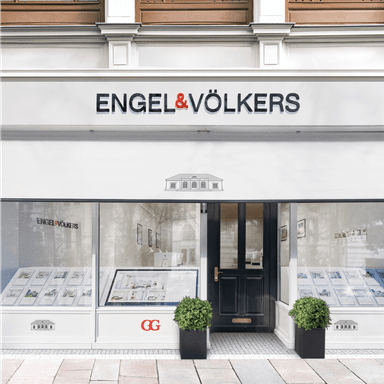
All clear? For any doubt, rely on the experience of the Engel & Völkers Varese agency ready to support you not only in the purchase of houses for sale in Varese and its province, but also in the sale of properties and in the correct evaluation of your home.
You may also be interested in

&w=1920&q=75)

&w=1920&q=75)

&w=1920&q=75)
Contact provider
Page content provided by: Elletre S.r.l.
License partner of Engel & Völkers Italia S.r.l.