Comporta, Setubal, Portugal
House with Pool in Comporta
Price
€1,800,000
- 4 Bedrooms
- 3 Bathrooms
- ~96 m² Living area
- ~396 m² Plot surface
Discover the challenges facing Comporta's beaches: limited concessions, reduced access and the urgent need for a sustainable plan for the Alentejo coastline
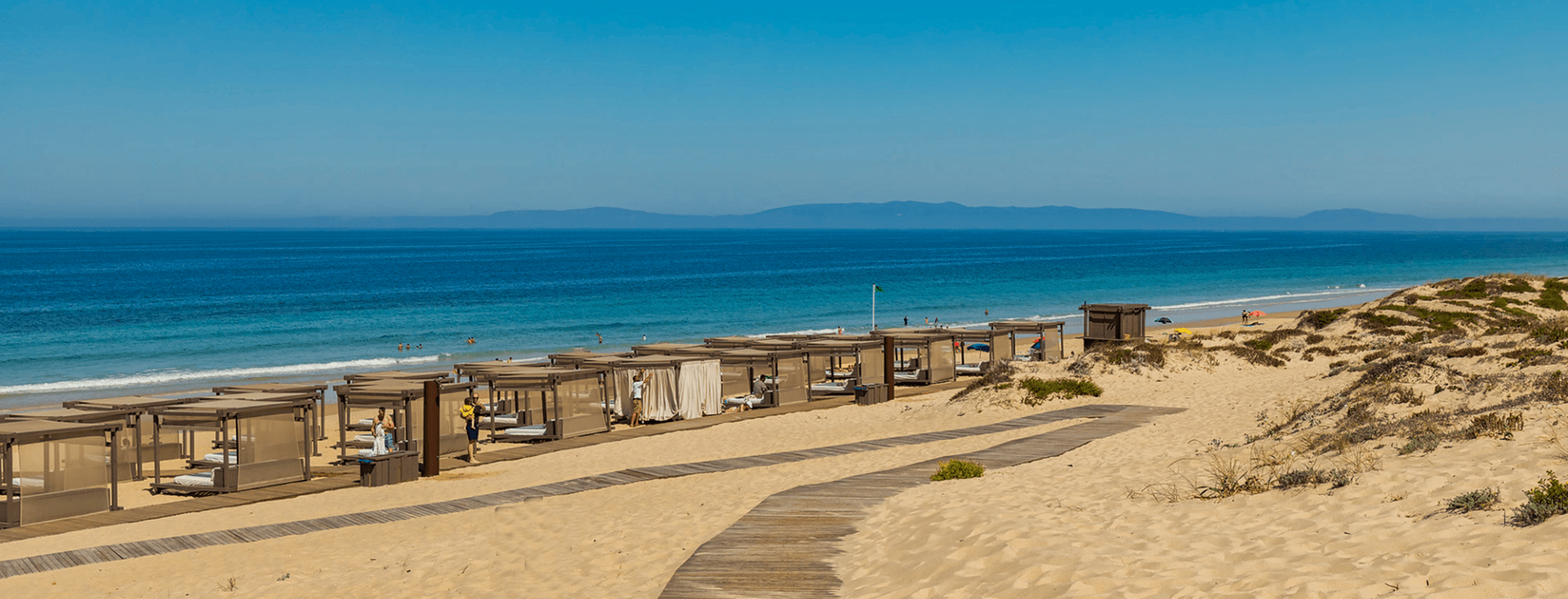
Between the Tróia Peninsula and Sines there are more than 60 km of sandy beach, white sand, calm and transparent sea — elements that make the Alentejo coast one of the most desirable beach tourism destinations in Europe. Its beauty speaks for itself. And ever since it has been widely mentioned by international media, its demand has increased noticeably.
The Guardian, The Telegraph, The New York Times, Forbes and many other publications have already spoken of this little corner by the sea, with so much still to explore.
Properties in Comporta
Comporta, Setubal, Portugal
Price
€1,800,000
Comporta, Setubal, Portugal
Price
€1,250,000
Comporta, Setubal, Portugal
Price
€2,700,000
Much of this territory remains wild, almost unexplored, allowing the more adventurous to look for idyllic landscapes that seem taken from a postcard. It is still possible to have the experience of being on a true virgin beach — just us and the surrounding nature.
At the same time, it is becoming increasingly common to find concession beaches, with a number of amenities available: pleasant parasols, beach bars with refreshing drinks and delicious food. For many, the sunset accompanied by good music, friends, and a drink in hand has already become a holiday classic in the region.
The Alentejo Coast is, today, a plural destination — capable of offering both simplicity and sophistication. And it is precisely this versatility that makes it so special.
The region no longer only attracts those seeking exclusivity and luxury. More and more tourists of different profiles choose this coast to rest, explore nature, or simply enjoy a quality day at the beach.
But, as with everything, there is always a “but”...
Between Tróia and Sines, along nearly 70 km of coastline, there are currently only 13 beach concessions. That translates into only 13 beaches with lifeguards, support services, easier access, and minimum infrastructure.
In such a vast territory, this scarcity of concessions limits visitors’ options and raises serious concerns in terms of safety, conservation, and accessibility.
It is true that much of the Alentejo Coast territory is classified as a natural reserve or included in protected areas, which naturally restricts human intervention. However, it is also true that, without organized alternatives, improvised paths multiply to reach remote zones — whether on foot or by motor vehicles.
These “wild” access paths degrade vegetation, threaten local fauna, create fire risks, and leave a visible trace on the land. Moreover, these beaches, though paradisiacal, do not offer safety conditions nor basic services.
Lack of planning ends up harming what one intends to protect. The sustainable development of Comporta thus depends on a balanced approach, with long‑term vision.
This is one of the most frequently asked questions, by both residents and visitors or owners of second homes: why are more beach concessions not created, with secure access and adequate conditions for all, without compromising the region’s sustainability?
The issue becomes even more relevant since tourism exploded in the region. After a long period of pause and uncertainty, the main tourist projects in the area have been revived — and some are moving forward quickly:
● DUNAS and TORRE (by Vanguard Properties)
● Comporta Beach & Golf Resort
These projects will bring new beach concessions, but many will be reserved and inaccessible to the general public.
So that everyone seeking the Alentejo coast — whether residents, tourists, or investors — can enjoy quality access to the beaches, it is essential that the competent authorities unite and create a long‑term strategic plan.
This plan should:
● Ensure respect for protected areas
● Provide for new beach concessions with clear and demanding rules
● Create organized and sustainable access points
● Promote rational land use
● Guarantee public and equitable access to the beaches
● Integrate local communities in the process
It is essential that environmental protection walk hand in hand with tourism quality, creating conditions that avoid overcrowding, lack of control, and exclusion.
Imagine a scenario where, instead of an average of 6 km between concessioned beaches, that distance is reduced — always maintaining the quality standards we find today in places such as:
● Comporta Café
● SAL
● Sublime Beach Club
● JNcQUOI Beach Club
The region would have even more capacity to attract demanding visitors without compromising its unique identity.
With more beach concessions, more sustainable access, and more well‑thought‑out services, the Alentejo coast can become a case study in responsible tourism. An international reference destination — not just for beauty, but for the intelligent and respectful way in which it developed.
Sustainable development of Comporta is not just an idea — it is an urgent necessity. A territory so valuable, with fragile ecosystems and constant growth in tourist demand, requires careful, balanced, and visionary planning.
Creating more beach concessions, ensuring organized access, protecting the environment, and promoting inclusion are not incompatible goals — they are, in fact, fundamental pillars of a more just, accessible, resilient, and responsible tourism model.
Comporta and its coast have everything to lead a new paradigm of tourism in Europe, where nature, sophistication, and sustainability go hand in hand. With vision, cooperation, investment, responsibility, and involvement of the local community, this unique corner can be more than a summer refuge: it can be an example to the world, recognized not only for its beauty but for how it chose to grow and preserve itself.
You may also be interested in
Contact provider
Page content provided by: Círculo Comum - Mediaçáo Imobiliária Lda.
License partner of Engel & Völkers Franchise and Trademark GmbH