Comporta, Setubal, Portugal
House with Pool in Comporta
Price
€1,800,000
- 4 Bedrooms
- 3 Bathrooms
- ~96 m² Living area
- ~396 m² Plot surface
Discover the differences between Comporta Style and Boho Chic in interior design applied to luxury real estate. Explore two aesthetics that define the lifestyle of exclusive homes in Comporta, with a focus on materials, design philosophy, visual identity, and contemporary luxury interior trends.
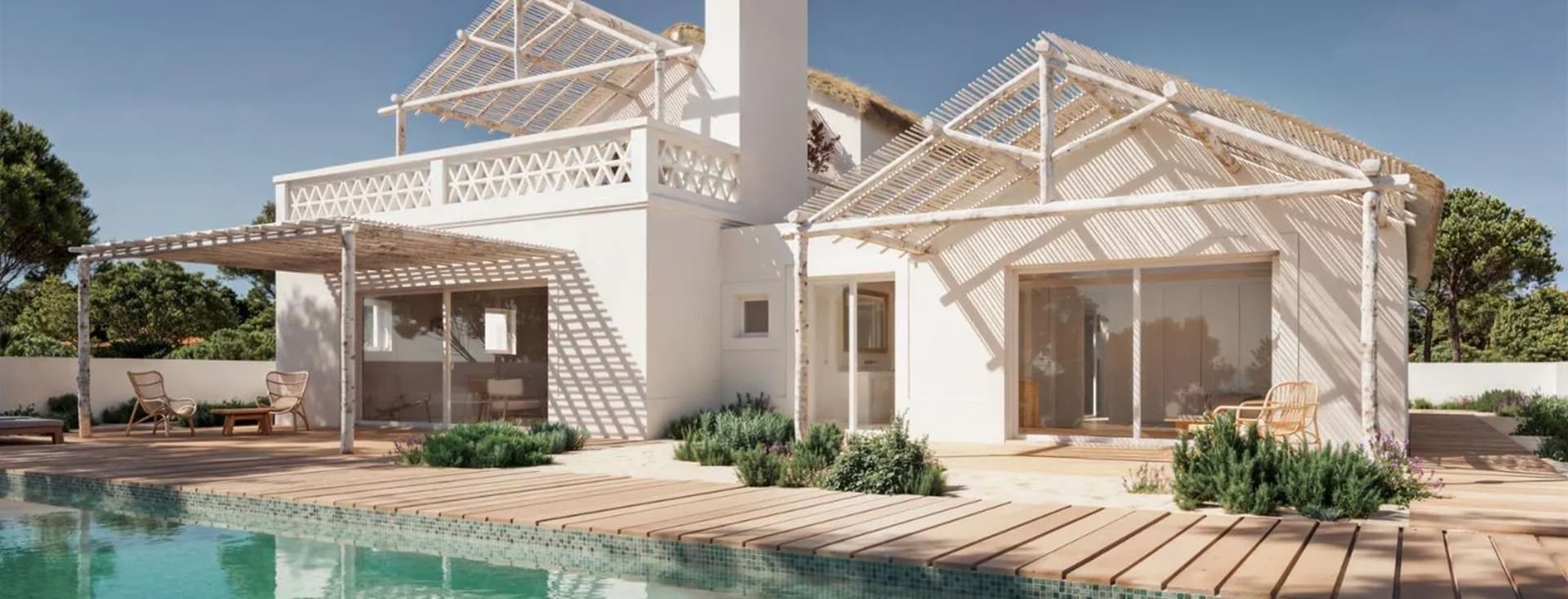
The Comporta Style and Boho Chic are two of the most popular interior design styles in contemporary architecture, particularly in holiday homes, luxury villas, and nature-integrated real estate projects.
Although both share a natural and relaxed aesthetic, they represent completely different philosophies in terms of design, materials, and lifestyle expression.
This guide explores their key differences in detail, including practical examples and current design trends.
Properties in Comporta
Comporta, Setubal, Portugal
Price
€1,800,000
Comporta, Setubal, Portugal
Price
€1,250,000
Comporta, Setubal, Portugal
Price
€2,700,000
Boho Chic (bohemian chic) is a global interior design style inspired by travel, cultural diversity, and free artistic expression. It does not follow strict rules and prioritises creativity over symmetry or minimalism.
It is especially popular in urban homes, creative apartments, and spaces with strong personality.
● Mix of patterns, colours, and textures
● Influences from Moroccan, Indian, African, and Mediterranean cultures
● Use of handcrafted and vintage pieces
● Abundance of plants and natural elements
● Visually rich and layered interiors
● Diverse, non-uniform furniture
The final result is:
● artistic
● relaxed
● personal
● eclectic
It conveys freedom and creativity, as if every object tells a story.
Boho Chic does not pursue perfection. Instead, it celebrates imperfection, contrast, and visual authenticity.
The Comporta Style originates from the Comporta region of Portugal, known for its natural landscapes, rice fields, and architecture deeply integrated with the environment.
It is a contemporary style of understated luxury, strongly associated with high-end villas, boutique hotels, and sophisticated holiday homes.
● Neutral palette: white, sand, beige, and soft grey
● Natural light woods and stone materials
● Organic fabrics such as linen and raw cotton
● Minimalist and uncluttered spaces
● Large windows and strong connection to natural light
● Seamless indoor-outdoor integration
● Carefully curated, minimal decoration
The atmosphere conveys:
● calm
● sophistication
● lightness
● understated luxury
It is a style that values visual silence and harmony with nature.
The Comporta Style follows the principle:
“less is more”
Everything is designed to create balance, openness, and serenity.
Although both use natural elements, the differences are clear:
● Boho Chic: personal expression, creative freedom, visual layering
● Comporta Style: harmony, minimalism, and refined natural elegance
● Boho Chic: vibrant colours, contrasts, and warm tones
● Comporta Style: neutral, soft, nature-inspired tones
● Boho Chic: mixed materials (rattan, metal, varied textiles)
● Comporta Style: natural wood, stone, linen, and raw cotton
● Boho Chic: eclectic, vintage, and asymmetrical pieces
● Comporta Style: minimalist, contemporary furniture
● Boho Chic: richer, more decorative interiors
● Comporta Style: open, light, and structured spaces
● Boho Chic: nature as decoration
● Comporta Style: nature as an extension of the living space
A boho chic apartment may include:
● colourful layered cushions
● overlapping rugs
● wall art and creative decor
● plants in every corner
● travel-inspired decorative objects
Result: a vibrant and artistic environment.
A Comporta-style home may include:
● white or neutral walls
● linen sofas in beige tones
● natural wood floors and ceilings
● minimal decoration
● large windows opening to nature
Result: a calm and sophisticated environment.
The rise of the Comporta Style is strongly linked to luxury tourism and villa architecture in the Comporta region of Portugal.
This style is now widely used in:
● premium holiday villas
● boutique hotels
● high-end real estate developments
Architects and designers use it to create homes that emphasise:
● privacy
● nature
● natural light
● sophisticated simplicity
● excessive decorative objects
● lack of visual coherence
● overly heavy colour combinations
● over-decoration
● breaking the neutral palette
● losing spatial simplicity
The choice depends on lifestyle preference:
Ideal for those who value:
● creativity
● colour
● personal expression
● artistic environments
Ideal for those who seek:
● calm
● understated luxury
● minimalism
● connection with nature
Boho Chic and Comporta Style represent two very different ways of living and designing interiors.
While Boho Chic celebrates freedom and cultural diversity, Comporta Style focuses on refined simplicity and harmony with nature.
Both reflect a global shift in interior design: living in a more natural, conscious, and balanced way.
You may also be interested in
Contact provider
Page content provided by: Círculo Comum - Mediaçáo Imobiliária Lda.
License partner of Engel & Völkers Franchise and Trademark GmbH