
- 5 min read
- Updated: 7 Sept 2026
- by Katarina Fields
Buying vs renting in Dubai: which is right for you?
Explore the pros and cons of renting versus buying a property in Dubai

Key Takeaways:
Buying vs renting in Dubai depends on your lifestyle, long-term plans, financial goals and need for flexibility
Buying a property can offer stability, ownership and potential capital growth, while renting provides greater flexibility
Buyers should consider upfront costs, mortgages and service fees, while renters should plan for deposits and annual rent payments
Dubai has long been one of the world’s most popular destinations for expatriates. Historically, many residents viewed the city as a short-term destination, meaning renting was often the preferred choice. However, as Dubai has continued to grow and mature, more people are choosing to build their long-term future in the city.
Supported by factors such as long-term residency visas, career opportunities, business growth, tax advantages and a world-class lifestyle, Dubai has become a place where residents increasingly look to establish roots. As a result, the decision between buying vs renting in Dubai has become more important than ever.
Both options offer advantages, and the right choice depends on your financial position, lifestyle and future plans. This guide explores the benefits, costs and key considerations of buying and renting property in Dubai to help you decide which option is right for you.
Factors to Consider: Buying Versus Renting in the UAE
From your finances and budget to your long-term residency plans, there are several facets that you must plan out before taking the big step of either renting or buying a property in the UAE. Here are a few factors to consider before deciding whether you will be a property renter or a buyer.
Duration of Stay in the UAE
The duration of your stay in the UAE can help you decide whether a mortgage or purchased property is cheaper than renting, or vice versa.
If a person is planning to live in the UAE for the long term (e.g. at least five years), they can consider buying a property (e.g. apartment/villa) to save on the amount of rent they would have to pay. It will also give you potential perks like the option to get a long term investor visa in the UAE.
If the plans to reside in the UAE are not absolute, renting a property might be a more suitable option. This will give you flexibility in terms of moving around and retaining your freedom without too many consequences.
Financial Position Assessment
Determining one’s budget for living in the UAE is an extremely important step, as it will help you select the correct property and opt for a suitable option.
If a person has the capacity to make the down payment on a property (the amount for expats is at least 20% of the property value) while being able to pay off the equated monthly installments (EMI) - buying a property might be a better option for them. It must be noted that the down payment of a property will be one of the biggest upfront costs to a potential buyer/mortgage buyer in the UAE.
As for potential renters who plan to reside in the UAE long-term, they can consider buying a property if they have a stable fixed income. Investing in a property in the UAE can have long-term perks; buyers can put their property up for rent and earn extra income.
If someone has taken a mortgage to purchase their property in the UAE as an investment, they can utilize the rent they receive to cover monthly mortgage payments.
Market Analysis
Depending on the emirate one wishes to reside in, conducting simple market research is a good idea. While Abu Dhabi and Ras Al Khaimah are attracting investors for their off-plan island developments, Dubai’s popularity is being boosted by an increasing population of both high-net-worth individuals and skilled workers.
Property prices and rents have risen significantly across much of Dubai in recent years, although market performance varies increasingly by community, property type and price segment. Buyers should therefore assess current pricing, future supply and expected holding period rather than assuming recent rates of growth will continue.
Like all real estate markets, the one in the UAE is also prone to fluctuations. Keeping up to date with the latest trends is advisable for potential buyers/renters, which is something an experienced real estate agent can help you with.
Control Over Property: Renting Versus Ownership
The UAE has strict laws and legal frameworks about property and ownership.
For example, owning a property in the UAE will give owners higher control over their property when it comes to factors such as renovations, modifications, and customizations. Renters, on the other hand, may have to face several restrictions throughout their contract’s validity and may even require an NOC from their landlord for minor changes.
Even in property ownership, there are two kinds; freehold and leasehold. Freehold property owners have perks such as passing on their property to an heir, complete ownership of their property and the land it is built upon, and freedom to make changes to their property - it may be an expensive investment.
Leasehold owners will have limited control over their property as they are technically leasing the property from the actual freehold owner. But, such properties are relatively more affordable.
It is to be noted that landlords and owners have to pay annual maintenance fees, service charges, and any repairs or renovations. Whilst tenants are typically liable for the cost of minor repairs and maintenance, they will not be responsible for major expenses like service charges.
Researching and Finding a Reliable Agent
A reliable real estate agent will make your property search much more streamlined and straightforward. Consulting with an agent who is accredited and an expert in the property type and location you are considering can be an enormous asset in your real estate journey.
New buyers often completely rely on their real estate agent to source suitable options and share market information. Therefore, it is important to spend time with the agent to understand their expertise and whether they can align with your wishes for a property.
Crunching the Numbers: Renting Versus Mortgaging Properties in the UAE
The financial difference between renting and buying depends on factors including the property price, rent, mortgage rate, deposit, service charges and how long you plan to stay.
The following example compares renting and buying a similar one-bedroom apartment in Dubai Marina over five years. The figures are illustrative and actual costs will vary by property, lender and transaction.
Cost Analysis: Renting a Property Over Five Years
Assume a one-bedroom apartment in Dubai Marina is rented for AED 95,000 per year, with no rent increases during the five-year period.
Estimated costs would include:
Rent: AED 95,000 × 5 years = AED 475,000
Initial agency commission: 5% of annual rent + VAT = approximately AED 4,988
Dubai Municipality housing fee: 5% of annual rent = AED 4,750 per year, or AED 23,750 over five years
Ejari registration: approximately AED 890 over five years, based on annual online registration at current rates
DEWA activation fee: approximately AED 130
A refundable DEWA security deposit would also normally be required but has not been included as a five-year cost because it can be recovered when the account is closed.
Estimated five-year rental cost: approximately AED 504,750
This assumes the annual rent remains unchanged. Any rent increases during the tenancy would increase the total.
Cost Analysis: Mortgaging a Property Over Five Years
Now assume a similar one-bedroom apartment is purchased for AED 1.95 million.
For an expatriate purchasing a first owner-occupied property below AED 5 million, a mortgage of up to 80% of the property value may be available, subject to lender approval.
Using an 80% mortgage:
Property price: AED 1,950,000
Down payment (20%): AED 390,000
Mortgage amount (80%): AED 1,560,000
Typical upfront costs could include:
DLD transfer fee (4%): AED 78,000
Agent commission (2%+VAT): AED 40,950
Registration Trustee fee: approximately AED 4,200
Mortgage registration fee (0.25% of loan): approximately AED 3,900, plus applicable administrative fees
Property valuation: approximately AED 2,500–3,500 + VAT
Mortgage arrangement fee: typically up to around 1% of the loan amount + VAT, depending on the lender
Including the deposit, the buyer should therefore expect to require around AED 535,000–540,000 in upfront funds for this illustrative purchase.
Mortgage repayments
Assuming a 25-year mortgage at an illustrative interest rate of 4.8%, repayments on an AED 1.56 million mortgage would be approximately:
Monthly mortgage payment: AED 8,940
Mortgage payments over five years: approximately AED 536,300
Of those payments, approximately AED 182,600 would reduce the mortgage principal, while the remainder would represent interest.
Actual mortgage rates and repayments will depend on the lender, product and borrower profile.
Service charges
Apartment owners are also responsible for annual service charges, which vary substantially between buildings.
For illustration, if service charges were AED 15 per sq. ft. on an 850 sq. ft. apartment:
Annual service charges: approximately AED 12,750
Five-year service charges: approximately AED 63,750
Renting vs Buying: The Five-Year Comparison
Based on this simplified example:
Renting: approximately AED 504,750 of expenditure over five years.
Buying: approximately AED 1.14 million of total cash outflow over five years, including the deposit, purchase costs, mortgage repayments and service charges.
However, these figures should not be compared as though the entire AED 1.14 million spent by the buyer is a cost.
The AED 390,000 deposit remains as equity in the property, while approximately AED 182,600 of the mortgage repayments would also have reduced the outstanding loan balance after five years.
Assuming the property value remained unchanged, the buyer would therefore have built approximately AED 572,600 in property equity, before accounting for any future selling costs.
Renting requires substantially less upfront capital and offers greater flexibility. Buying requires considerably more cash at the outset, but allows the owner to build equity and potentially benefit from future property price growth.
The better financial option will therefore depend on how long you plan to remain in Dubai, your available capital, mortgage costs, expected rental costs and how the property performs over your ownership period.
Down Payment Considerations
A down payment for mortgage buyers is the initial payment made to purchase a property. It is a requirement when buying any property using a mortgage that this downpayment be made.
According to the UAE Central Bank, any down payment made for a property that is being mortgaged must be at least 20% of the property value for residents and 15% for UAE nationals. Personal loans cannot be used to finance down payments for property investments.
Mortgage Repayment Details
This is important for mortgage buyers wondering if a mortgage is cheaper than renting an apartment in the UAE.
Mortgages are monthly installments paid to the bank towards the property's loan amount. In the UAE, the loan-to-value ratio/mortgage amount caps at 80% if a property is valued at less than AED 5 million. For properties valued over AED 5 million, the cap is set at 70% of the property value.
Typically, mortgage repayments will be less than the monthly rental payment that would be incurred on a like-for-like property, however this isn't always the case.
Initial Costs for Property Mortgaging in the UAE
Buyers looking to obtain a mortgage property in the UAE will have to bear several costs and fees when purchasing their property. These costs are approximately 6-7% of the property's value in upfront costs. Whilst this might sound high, it is actually much lower than the upfront costs in many other major cities globally.
Here is a list of other upfront costs for buying a mortgage property in the UAE:
Real estate agent fee: 2% of the property value plus 5% VAT
DLD transfer fee: 4% of the property value and administrative charges
Mortgage registration fee: 0.25% of loan value and administrative charges
Property registration fee: AED 2,000 and 5% VAT
Property valuation fee: AED 2,500-AED 3,500
Bank mortgage loan establishment fee: 1% of the loan amount and 5% VAT
Conclusion
In this article, we have outlined the key considerations and potential costs of both buying and renting a property in the UAE. Whilst we’ve addressed the question: 'is a mortgage cheaper than rent?', the answer is that this will depend heavily on your circumstances.
Our aim with this detailed information is to help you decide which path to take, but consulting a real estate professional is recommended to help you truly gauge your circumstances and the right approach for you.
While renting, buying, or mortgaging a property in the UAE all come with potential costs, long-term residents in Dubai often prefer buying a property. This provides long term stability, the ability to avoid rising rental prices, the potential for capital appreciation and the greater potential to build your net worth. However, buying a property is not suitable for everyone. For those looking to reside in the UAE for a short period of time only, or those looking for lots of flexibility, renting could be the preferred option.
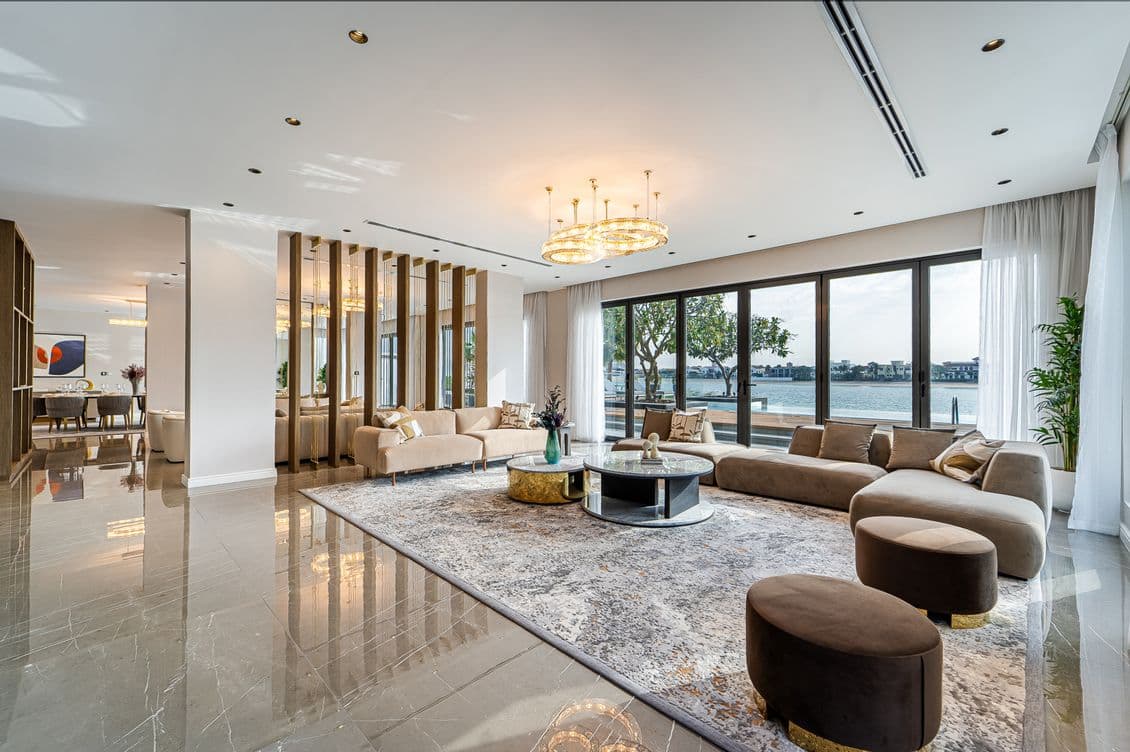
Discover beautiful homes with Engel & Völkers
Explore our extensive network of properties for sale or rent in Dubai
Frequently Asked Questions
Buying can be better for long-term residents looking for stability, ownership, and potential capital appreciation, while renting is often better for those who prioritise flexibility.
Renting usually requires lower upfront costs, while buying can provide stronger long-term financial benefits by building equity instead of paying rent.
Buying often becomes more financially attractive for residents planning to stay in Dubai for at least five years, although this depends on property prices, mortgage costs, and market conditions.
Buying property in Dubai offers benefits including ownership, protection from rental increases, potential capital growth, rental income opportunities, and long-term residency visa options.
Buyers should consider the down payment, Dubai Land Department fees, agency fees, mortgage costs, service charges, and ongoing maintenance expenses.
Expats planning to live in Dubai long term may benefit from buying, while those with uncertain plans or shorter stays may prefer the flexibility of renting.
You may also be interested in
 Rent-to-Own in Dubai Explained: What You Need to Know in 2026
- 5 min.
- Updated: 16 Dec 2025
 How to Get a Mortgage in Dubai: A Beginner’s Guide
- 5 min.
- Updated: 23 Oct 2025
 14 Reasons Why You Should Invest in Dubai Real Estate
- 5 min.
- Updated: 20 Aug 2026
 Dubai Rent Prices: What is the Average Apartment Rental in Dubai?
- 5 min.
- Updated 17 May 2026
 How To Buy A Property In Dubai As A Foreigner
- 5 min.
- Updated: 10 Sept. 2026
- How to Buy an Apartment in Dubai: A Step-by-Step Guide
- 5 min.
- Updated: 7 Sept 2026
 Cohabitation Laws for Dubai Residents: Rules and Regulations You Should Be Aware Of
- 5 min.
- Updated: 14 May 2026
 Difference Between Villa and Townhouse: Key Features You Should Know
- 5 min.
- Updated: 25 Aug 2026
 Fractional Property Ownership in Dubai Property Market: A Complete 2026 Guide
- 5 min.
- Updated: 23 Oct 2025

Katarina Fields
Katarina Fields is a Sales Manager at Engel & Völkers Dubai with over 14 years of experience in real estate across the UK and Dubai. With a background in law, finance and banking, she brings a detailed understanding of property transactions, negotiation and investment to her work with buyers and sellers. Katarina specialises in Dubai’s apartment communities, including The Greens, Jumeirah Village Circle and Jumeirah Lake Towers, and is known for her transparent, client-focused approach and commitment to helping clients make well-informed property decisions.
Contact
Contact your personal advisor



Engel & Völkers Dubai
7th Floor, Al Khail Plaza
Jumeirah Village Triangle, Dubai, UAE
Tel: +971 4 4223500