
Get Your Free Investment Guide
Learn how to maximise returns and make informed decisions in Dubai’s property market.
Access exclusive properties and get in touch for personal advisory: Explore Private Office.
Key Takeaways:
Zaha Hadid’s buildings in Dubai include The Opus in Business Bay and conceptual icons like Signature Towers and Dubai Opera House
Her fluid, futuristic designs reshaped Dubai’s architectural identity and inspired a new era of bold, sculptural development
Zaha Hadid’s legacy continues through projects like BEEAH Headquarters and Oystra Tower, blending innovation with sustainability
The Dubai skyline is home to some of the world’s most ambitious architectural projects, from the Burj Khalifa and Museum of the Future to Palm Jumeirah and the city’s ever-evolving collection of luxury developments. Among the visionary architects who have influenced Dubai’s design identity, few names stand out more than Zaha Hadid.
Known globally as the “Queen of the Curve,” Zaha Hadid transformed modern architecture through her futuristic forms, flowing structures, and ability to challenge traditional design principles. Her work across the UAE, including The Opus in Dubai, Sheikh Zayed Bridge in Abu Dhabi, and BEEAH Headquarters in Sharjah, reflects the innovation and creativity that continue to shape the region’s built environment.
This blog explores Zaha Hadid’s impact on Dubai and the UAE, including her completed projects, ambitious concepts, global architectural achievements, and lasting influence on contemporary design.
Table of Content
Who Was Zaha Hadid?
Zaha Hadid’s Completed Projects in the UAE
Conceptual and Unbuilt Projects by Zaha Hadid in the UAE
Other Zaha Hadid’s Projects Around the World
Architectural Features That Define Zaha Hadid’s Work
Zaha Hadid’s Influence on Dubai’s Architectural Scene
Conclusion: Zaha Hadid’s Architectural Legacy
Born in Baghdad, Iraq, with British heritage, Zaha Hadid found a home in Dubai and was one of the pioneers of the city’s early skylines. Architect Zaha Hadid challenged the male-dominated idea that only men can create buildings. She was the first woman to be awarded a Royal Gold Medal for architecture, and also had two Stirling Prizes, along with many other accolades.
She is known to have contributed designs not only for some of Dubai’s most well-known projects, but for global projects too, with over 1,000 completed projects in over 40 countries, including cities such as New York, London, Baku, Guangzhou, Copenhagen, Berlin, and more.
Architect Zaha Hadid is also called the ‘Queen of the Curve’ because of her signature flowing designs that avoided the normal straight-line architecture design. She was one of the pioneers of futuristic, contemporary designs and deconstructivism, with one of her most iconic lines being, “There are 360 degrees, so why stick to one?”
Although she passed away in 2016, her legacy remains immortal, as one of the most legendary contributors to the field of architecture.
| Project | Location | Completed |
|---|---|---|
The Opus | Dubai (Business Bay) | 2017 |
Sheikh Zayed Bridge | Abu Dhabi | 2010 |
BEEAH Headquarters | Sharjah | 2022 |
Let us dive into architect Zaha Hadid’s buildings across the UAE and how they are testaments to her skills, foresight, and creativity.
Built in Abu Dhabi, this is one of the most famous structures designed by Zaha Hadid. A homage to the founder of the UAE, this bridge took three years to complete and was inaugurated for use in 2010.
Its fluid design resembles the country’s iconic sand dunes and is a two-way, four-lane bridge that links Abu Dhabi to the northern Emirates. The bridge is reminiscent of her signature undulating, elegant curves, making it one of the city’s most prominent landmarks.
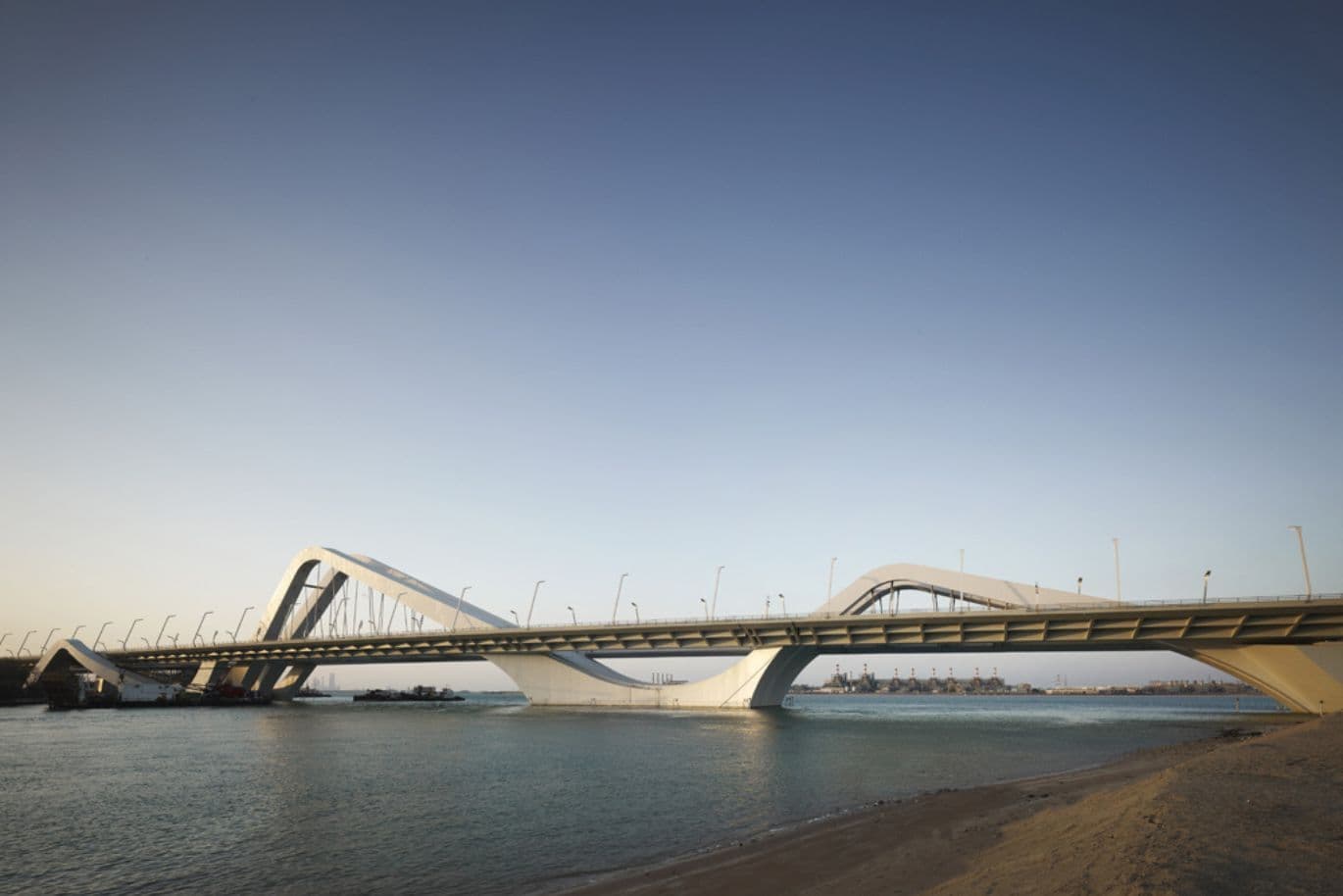
Photo Credit: Zaha Hadid
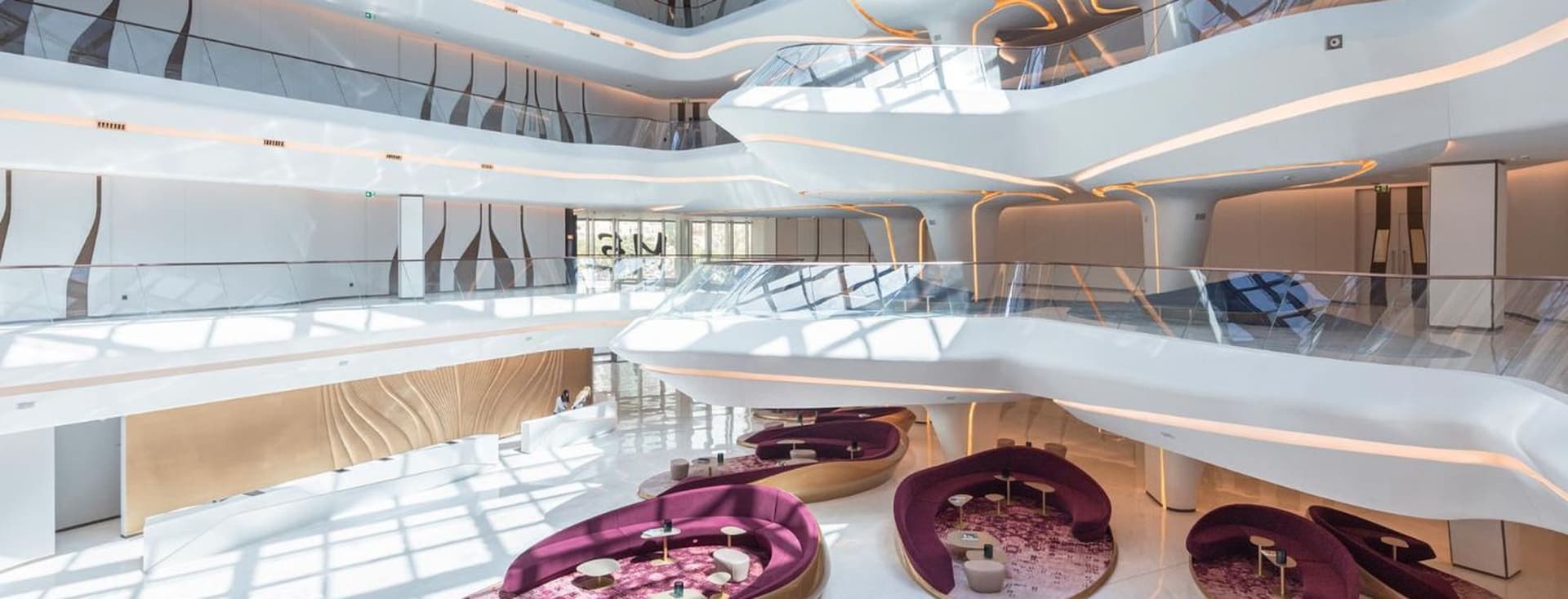
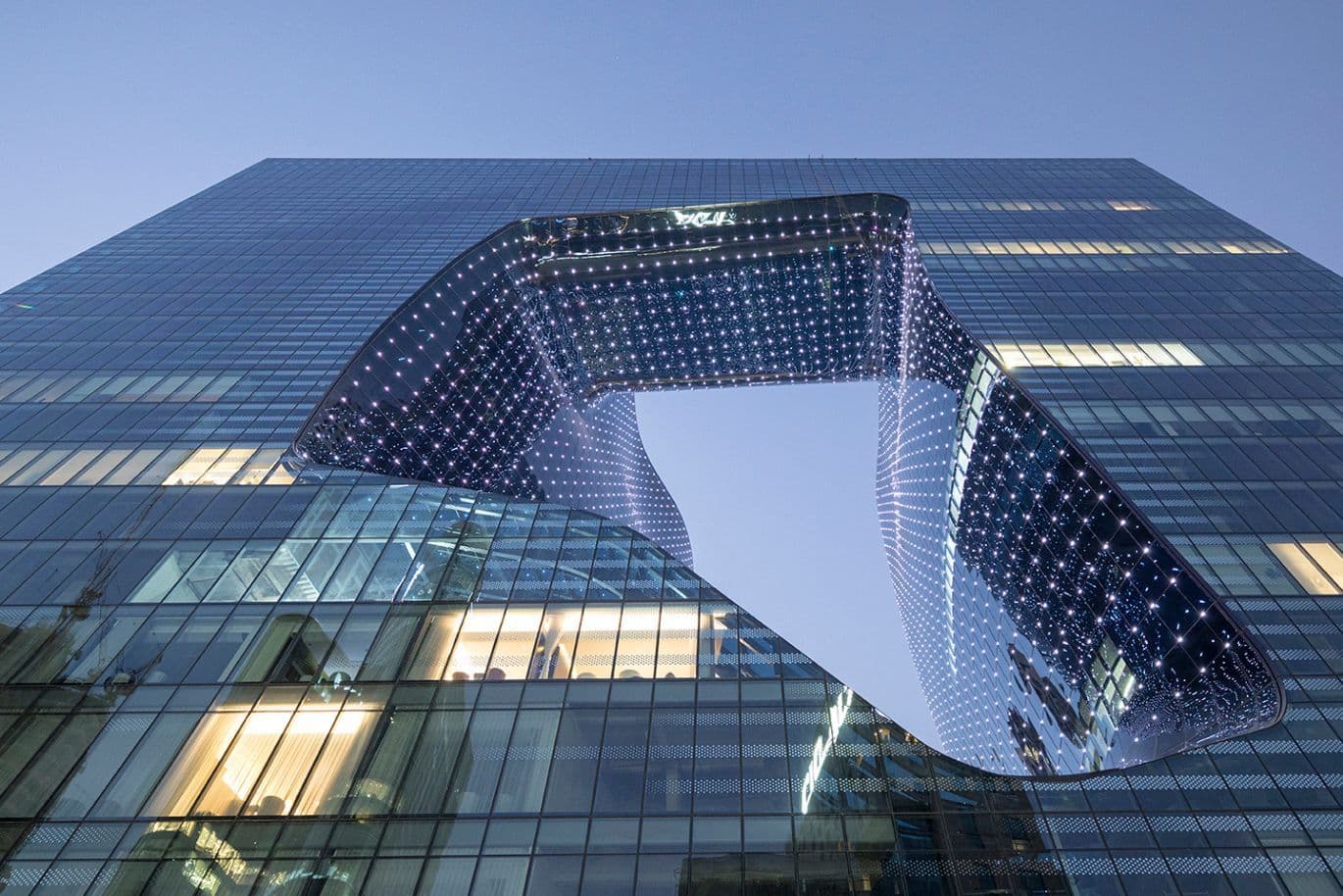
This is the only Zaha Hadid building in Dubai, which is next to the Burj Khalifa, another architectural wonder. With a void in the centre, the Opus gives unparalleled views of the nearby skyscrapers in the district and was awarded the Leisure & Hospitality Project of the Year at the Middle East Architect Awards 2017.
The behemoth of a building is a mixed-use property, featuring a luxury hotel, serviced residences, offices, restaurants, and commercial outlets. With its unique cube-like structure and central void, The Opus is one of Dubai’s most visually stunning buildings.
Inspired by Sharjah’s sand dunes, the BEEAH Headquarters was designed by Zaha Hadid for the BEEAH Group, which offers sustainable industrial solutions to the world. This is classic Zaha Hadid architecture, as it is structurally flowing and resembles the surrounding sand dunes. The building was designed to be solar-powered and has ample open spaces allowing sunlight to filter into it. The rounded edges of the building, the waves, and the asymmetrical roofs elevate the building’s look and catch the eye of any passerby.
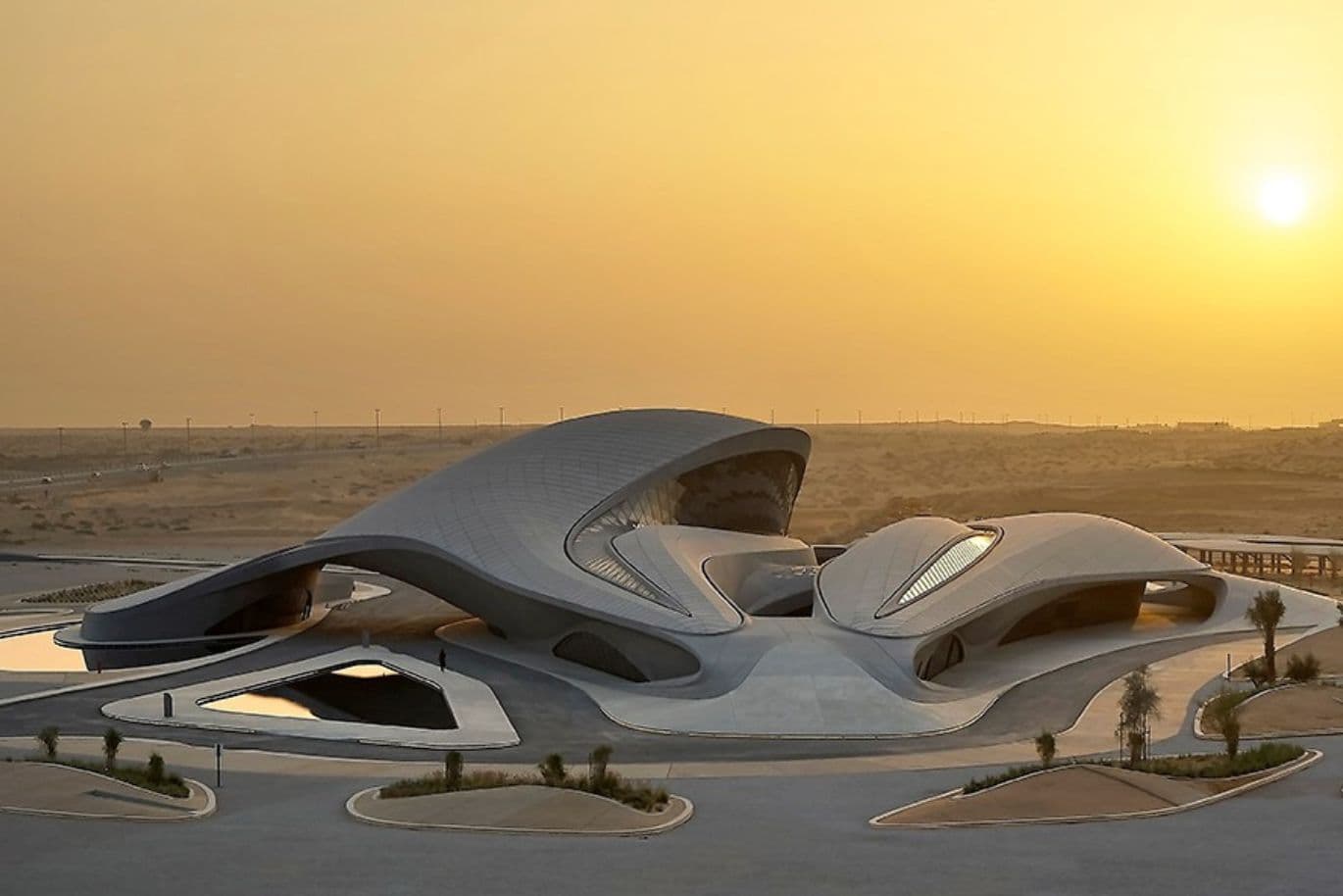
Photo by Hufton + Crow
Get Your Free Investment Guide
Learn how to maximise returns and make informed decisions in Dubai’s property market.
| Project | Location | Status |
|---|---|---|
Oystra Tower | Ras Al Khaimah | Under construction |
Signature Towers | Dubai | Planned/enabling works underway |
Dubai Opera House | Dubai | Cancelled |
Dubai Financial Market | Dubai | Unbuilt/no progress |
Whether it is Zaha Hadid’s Dubai projects or UAE projects, there are various projects she conceptualized but which did not come to fruition. Here are some of those projects:
Oystra Al Marjan Island is an architectural gem developed by Richmind in collaboration with the legendary designer Zaha Hadid. The first phase of the project introduces Tower C, rising 18 floors above ground with two basement parking levels.
Oystra Tower C presents a curated selection of 1, 2 and 3-bedroom apartments, each offering breathtaking views of the glittering sea. Just moments away from the Wynn Casino Resort, Oystra by Zaha Hadid at Al Marjan Island delivers an unparalleled lifestyle experience. With handover expected in 2029, it stands as Zaha Hadid’s first beachfront branded residence in the UAE.

What could have been another one of Zaha Hadid’s buildings in Dubai, Signature Towers, was a unique idea, aiming to showcase dancing skyscrapers. The concept was to intertwine three towers of different uses: residential, a hotel, and office spaces. It is said that the initial designs resembled the intertwined rays of the sun, with a dedicated retail area and a pedestrian bridge.
While architect Zaha Hadid presented this project in 2006 in New York’s Guggenheim Museum, the project is reportedly progressing with enabling works initiated in 2024.
This project was estimated to cost around 82 million pounds and would have been built on an island in Dubai Creek. This was Zaha Hadid’s Dubai vision, to build an opera house which would have been a symphony of sinuous curves and accommodate about 2,500 people with an 800-seat theatre, a 5000 square metre gallery, a themed hotel and a performing arts school.
Unfortunately, because of the 2009 global crisis, the developer for this project, Sama Dubai, cancelled this project, along with many others.
This would have been a cornerstone of Zaha Hadid's architecture and would have been attached to her Signature Towers project. While this concept was handed over to a developer in 2007, there has been no news of any development since then.
Designed as a heavy structure “floating” above a lighter volume of glass, this building would have been shaped like petals on top of water, with shop fronts for brokers and a central trading area.
| Project | Location | Type |
|---|---|---|
Guangzhou Opera House | China | Performing Arts |
One Thousand Museum | USA (Miami) | Residential Tower |
Heydar Aliyev Center | Azerbaijan (Baku) | Cultural Institution |
MAXXI National Museum | Italy (Rome) | Museum of Contemporary Art |
Galaxy SOHO | China (Beijing) | Mixed-use Development |
King Abdullah Petroleum Studies | Saudi Arabia | Research Center |
Eli and Edythe Broad Art Museum | USA (Michigan) | Art Museum |
Generali Tower | Italy (Milan) | Commercial Skyscraper |
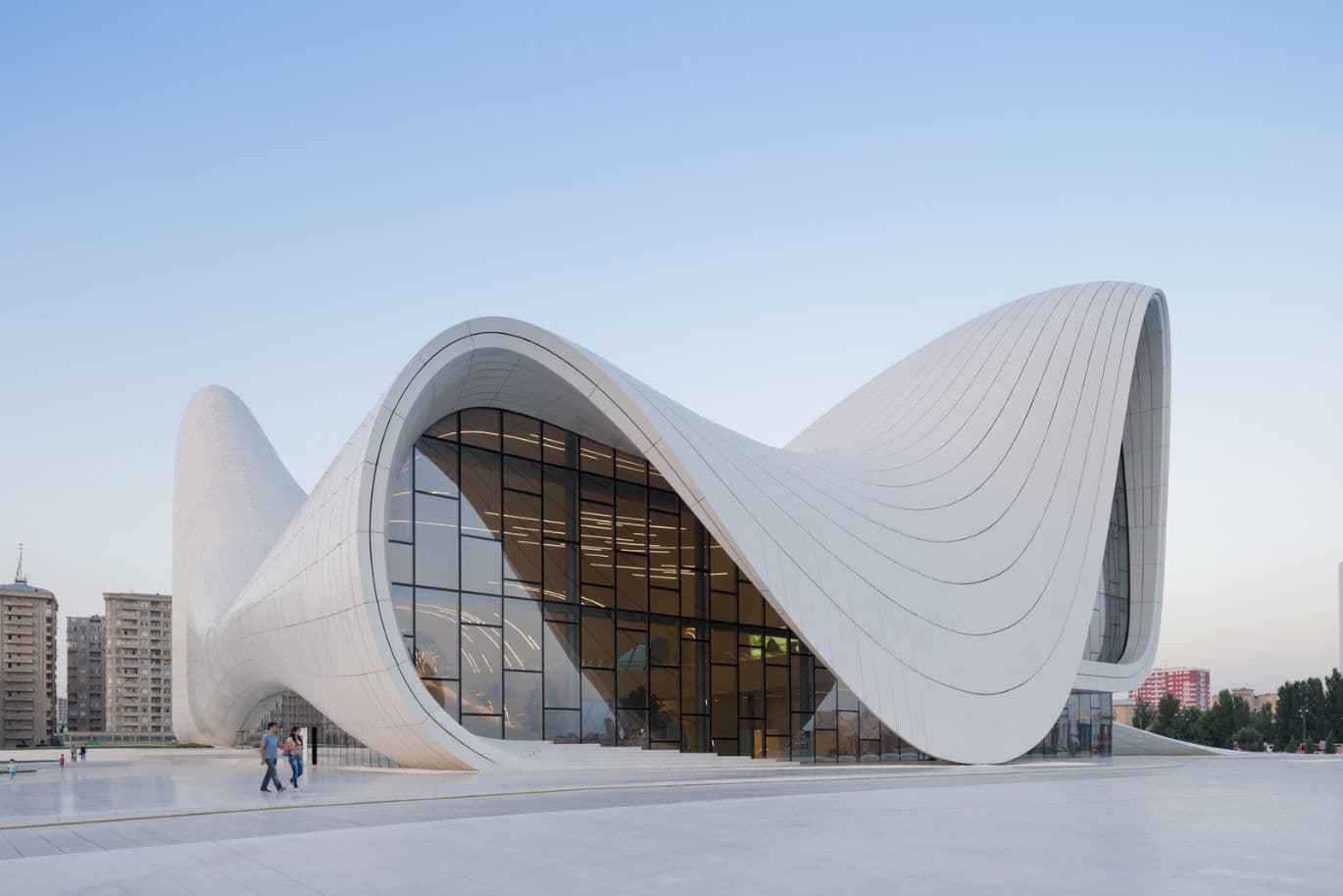
Located in Azerbaijan’s Baku, this building reflects classic Zaha Hadid architecture, with its curved, flowy design reflecting the country and region’s hilly topography. This structure won Hadid the London Design Museum’s Design of the Year Award in 2014, and is a multi-purpose space for educational events, science competitions, and the development of various industries, including economy, culture, sports, health, science, and education.
The iconic Guangzhou Opera House is a stellar example of architect Zaha Hadid’s buildings portfolio. Located next to the riverfront, the building seamlessly integrates with the location as the interior and exterior mirror nature and river valleys through their flowing design.
Combining materials such as glass, granite, and steel, the opera house is an ode not only to innovative architecture but also to he timelessness of nature and its inspiration across manmade structures.
This 62-storey residential structure designed by Zaha Hadid is known for its curving exoskeleton made of glass-fiber reinforced concrete. Located in Downtown Miami, it includes 84 residences, a duplex penthouse, and premium amenities including a rooftop helipad, spa, and sky lounge.
What about a building that screams, ‘Zaha Hadid Architecture’? The famous architect has several cornerstones in her architectural style that have defined the buildings she has created. Some of them include:
Integrating the structure with its surroundings so that it blends in seamlessly rather than sticking out like a sore thumb.
Avoiding straight lines and adding curvilinear design to her structures, such as undulations, curves, and flowing lines, to create a sense of dynamism.
Structures designed by Zaha Hadid often follow architecture’s deconstructivist principles, such as having non-Euclidean geometry and fragmentation in the design.
A lot of Zaha Hadid's architecture incorporated hard building materials such as steel and concrete, which was a paradox of sorts to the end structure, which would be flowy.
While the number of Zaha Hadid buildings in Dubai may be limited, her impact on the city's architectural identity is undeniable. Through visionary concepts and a commitment to challenging the norms of design, she helped set a precedent for what Dubai’s built environment could be.
From The Opus in Business Bay to unbuilt icons like the Signature Towers and Dubai Opera House, Zaha Hadid’s Dubai projects introduced a new architectural language, one that embraced fluidity, movement, and expression. Her work served as a catalyst for developers and designers to pursue bolder, more imaginative forms that now define Dubai's evolving skyline.
Her signature curvilinear forms and futuristic structural elements brought sculptural design into mainstream development, particularly in luxury real estate. As developers today place increasing emphasis on sustainability, biophilic design, and integration with the natural environment, Hadid’s principles remain more relevant than ever. Projects like the BEEAH Headquarters and the upcoming Oystra Tower C in Ras Al Khaimah exemplify how her approach continues to shape the region.
Whether through completed icons or visionary proposals, Zaha Hadid’s architecture in Dubai continues to inspire. She did not simply contribute a building or two, she expanded the possibilities of what architecture in the UAE could be. And in doing so, she helped pave the way for the city's emergence as a global hub of innovation, creativity, and architectural ambition.
For anyone interested in design, development, or investing in property in Dubai, Zaha Hadid's legacy offers a compelling lens through which to view the city’s transformation.
Zaha Hadid’s impact on Dubai and the wider UAE extends far beyond individual buildings. Her bold approach to architecture challenged traditional design boundaries and introduced a new era of fluid, expressive, and futuristic structures.
From completed landmarks such as The Opus to visionary concepts and upcoming projects inspired by her design philosophy, Zaha Hadid’s influence continues to shape the region’s architectural ambitions. Her legacy remains visible not only in the buildings she created, but in the creativity, innovation, and ambition that define modern architecture across Dubai and beyond.

Discover Architecturally Iconic Homes in Dubai
From striking curves to sculptural towers, Dubai is home to some of the world’s most visionary real estate. Whether you're inspired by Zaha Hadid's legacy or looking to invest in bold, design-led prop
Zaha Hadid was an Iraqi-British architect known for her futuristic designs, flowing architectural forms, and groundbreaking contributions to contemporary architecture.
Zaha Hadid is famous for pioneering a unique architectural style defined by curves, movement, and innovative structures. She was also the first woman to receive the Pritzker Architecture Prize.
Zaha Hadid’s UAE projects include The Opus in Dubai, Sheikh Zayed Bridge in Abu Dhabi, and BEEAH Headquarters in Sharjah, alongside several conceptual projects.
Zaha Hadid was born in Baghdad, Iraq, in 1950 before moving to the United Kingdom, where she studied architecture and established her internationally renowned practice.
Some of Zaha Hadid’s most famous buildings include the Heydar Aliyev Center in Azerbaijan, Guangzhou Opera House in China, MAXXI Museum in Rome, and The Opus in Dubai.
The Opus in Business Bay is the only completed Zaha Hadid-designed building in Dubai. It features her signature flowing architectural style and distinctive central void design.
You may also be interested in
Contact



Engel & Völkers Dubai
7th Floor, Al Khail Plaza
Jumeirah Village Triangle, Dubai, UAE
Tel: +971 4 4223500