- 3 min read
- 05.01.2026
- by Steffi Kammerer
Paragon of fine design – Christian Liaigre's Hôtel Costes
Issue
01/26
Location
Paris, France
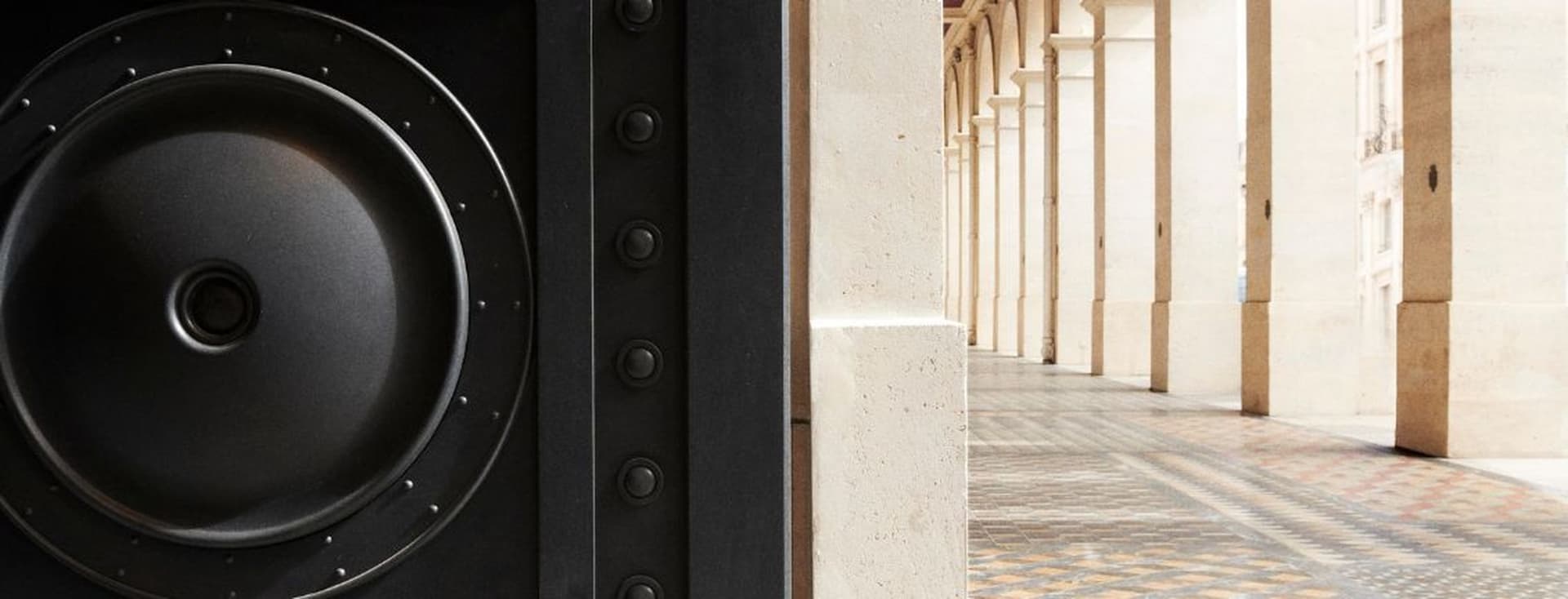
The Hôtel Costes extension, personally conceived by Christian Liaigre, became his final masterpiece.A monument to the exceptionaldesigner’s style, it turned the coolest location in Paris into a completework of art.
The secret behind the Costes myth
It all began outside a school building in Paris. Two fathers, taking their sons to the same elementary school, meeting every morning and exchanging pleasantries. Soon, the casual acquaintances became fast friends. One was Christian Liaigre, widely regarded as one of the world’s most influential interior designers. The other, seven years his senior, was Jean-Louis Costes, a man who had transformed a hotel in the heart of the French capital into a sought-after location within just a few years. Both men shared a unique sense for atmosphere and detail. Before long, they embarked on their first project together. In 2009, Liaigre created La Société for his friend Costes – an elegant Saint-Germain-des-Prés restaurant that quickly turned into a Left Bank hotspot. Also, most likely, because it drew guests from the opulent and alluring Hôtel Costes on the other side of the river. A place with an irresistible je ne sais quoi that has dominated Parisian nightlife ever since its opening in 1995. Fashion designers, models, musicians and Hollywood stars succumbed to its velvet sensuality, dim light and unmistakable fragrance. The hotel was the work of grand master Jacques Garcia, a designer whose baroque aesthetic was the polar opposite of Liaigre’s pure, clean lines.
Every morning, as Costes later recalled, they would have a coffee together, and Liaigre would say: “Jean-Louis, I want to redo your hotel.” By then, he was a regular guest. And Costes was not a man to rest on his laurels. In 2014 he bought the Hôtel Lotti – an esteemed, but aging establishment on the Rue de Castiglione next door. He wanted to expand his hotel, but wasn’t looking for more of the same. So he took a gamble that might have ended in spectacular failure if he and his friend hadn’t shared such deep trust. Like a matchmaker who knows that opposites attract and create the best unions, Costes went for the ultimate contrast. He chose as his interior designer Christian Liaigre, the master of proportion and restraint, who had already turned The Mercer in Manhattan into a cultural icon.
Christian Liaigre and the invention of quiet luxury
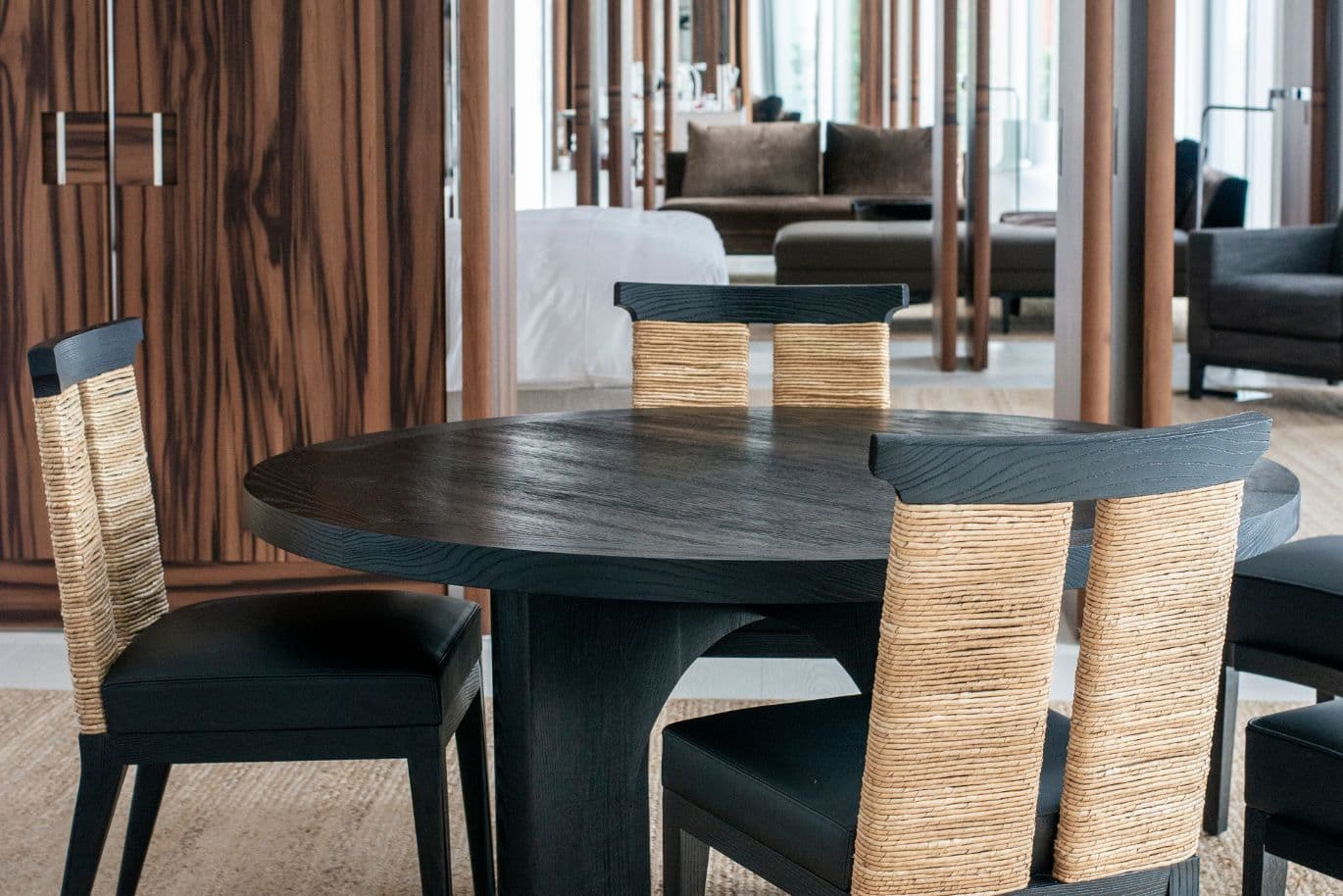
But Liaigre’s far-reaching influence didn’t stop at individual projects. In addition to designing hotels, yachts and private homes – including for luminaries such as Karl Lagerfeld and Calvin Klein – the Frenchman also redefined the term luxury as something quiet, free of excess and redundancy. No gold, no swagger. Instead, he created an equilibrium consisting of carefully placed objects made of the finest materials. In the 1990s, when many hotels still went in for pomp and grandeur, his style was groundbreaking. Since then, entire schools of interior design have been trying to capture Liaigre’s distinctive tone and nuanced but starkly contrasting color palette of cream, brown, khaki and navy blue with isolated deep dark accents – all inspired by the Atlantic coast where he grew up. Today, discreet luxury is a commonplace phenomenon, but it ultimately traces back to Christian Liaigre. To preserve his signature style into the future, the designer sold his studio to a group of investors in 2016. Today, Studio Liagre has offices in Paris, London and New York.
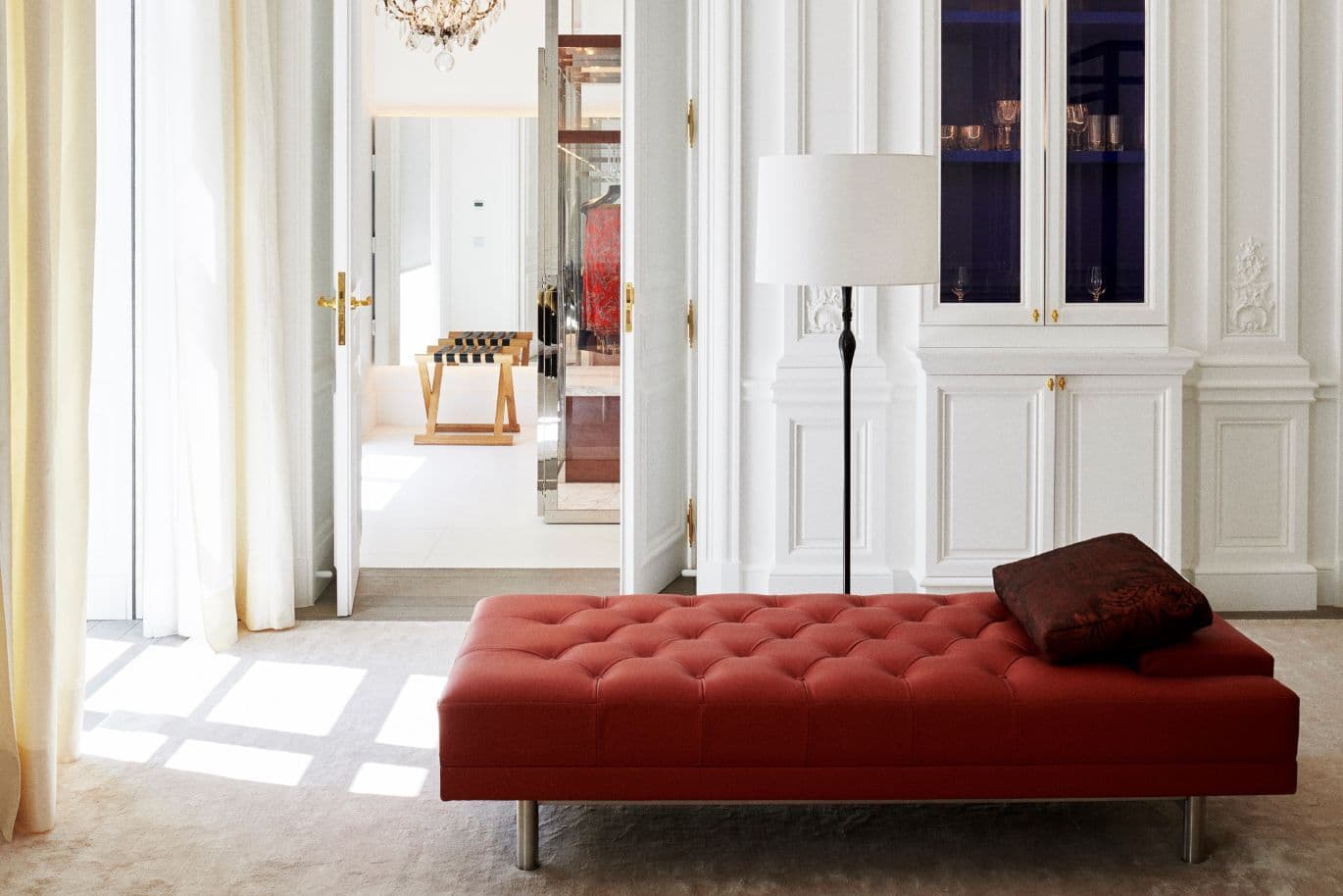
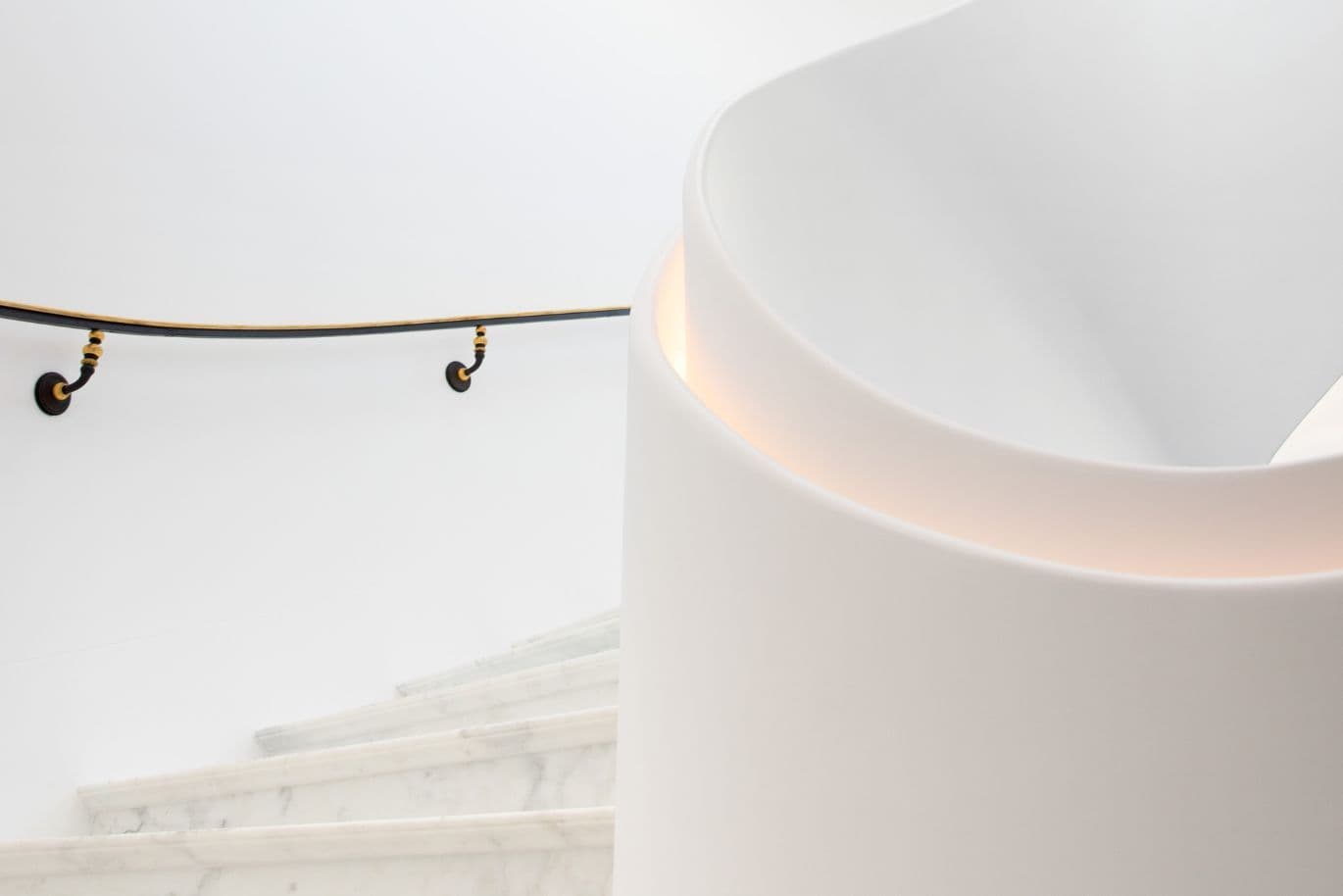
At the Costes, Liaigre proved himself the perfect counterpart to Garcia. Whereas the latter’s design emphasized exuberance and the night, Liaigre prioritized serenity. He created 35 rooms and suites in the Castiglione wing, each handsomely sized between 70 and 250 square meters and featuring white painted wood paneling, high ceilings, plenty of daylight and the quiet warmth that is so typical of Liaigre’s work. Despite their sobriety, the spaces he designs are never cold, but radiate harmony and generous light. He achieves this to an extent by awakening surfaces to life: using grained wood, patinated bronze, leather and natural stone – and playing with light and shadow. Studio Liaigre also developed a furniture series that matched the hotel. Today, these sofas, tables and lamps can be found in the Costes x Liaigre Capsule Collection.
Despite their sobriety,the spaces Liaigre designs are never cold, but harmonious and light.
Architecture of restraint
A corridor leads from the splendor of the original building to the light-filled austerity of the new one. The transition is almost cinematic – a change of scene from night to day, from seduction to tranquility. Bertrand Thibouville, Creative Director at Studio Liaigre and a close associate of Liaigre’s for many years, describes the guiding principle for this project as “a contrasting relationship between the world of Luchino Visconti’s films and that of a monastery. Sweet nostalgia and peaceful contemplation.” He says the designer sketched out his idea of the rooms like a deconstructed Parisian mansion early on – open, fluid, yet retaining their historic character. Redesigning the interior of the new wing took five years. The old building was gutted and completely rebuilt, with only the historic façade left standing. Liaigre created a succession of impressions, orchestrating a sense of well-being through a carefully staged dramaturgy. “Jean-Louis Costes and we wanted guests to be able to see their entire room as soon as they walked through the door,” Studio Liaigre has stated. “Large pivot doors made it possible to adjust the space to their liking – something completely new in a hotel. Similarly, we designed the dressing rooms as luxurious showcases, echoing the many fashion and jewelry boutiques on the Place Vendôme.”
The main entrance is no longer on the Rue Saint-Honoré but in the newly built wing. The lobby and reception desk belong to Liaigre’s world as well. From the moment you arrive, you sense that the hotel has changed; only after passing through the corridor into the historic part do you re-enter the old universe.
Find your property in Paris.
Offered properties
Details upon request
- Exclusive
When opposites make history
Now, at the Hôtel Costes, two very distinct styles exist side by side, complementing each other to perfection. Together, they make the hotel grander, multifaceted and more complex – which explains its fascination. In the history of interior design, the Costes is an absolute exception: Two illustrious masters of their trade left their mark in their home city in the same prominent hotel. And they did this in Paris of all places, a city that prefers to keep its institutions the way they’ve always been.
Christian Liaigre redefined the term luxury as something quiet.
In late August of 2020, 25 years to the day after the hotel’s initial opening, the “new” Costes was inaugurated. Five days later, as if he had only been waiting for this moment, Christian Liaigre died at the age of 77.
It was very courageous of Jean-Louis Costes to put his hotel into Liaigre’s hands. He must have known his friend well enough to realize that he would never imperil the myth. In fact, Costes scarcely intervened at all. “He gave us carte blanche, with very few restrictions,” says Thibouville, Christian Liaigre’s longtime associate. And the story isn’t over: After the visionary designer’s death, his team designed the pool, spa and fitness center at the Costes. Currently, they’re planning a new part of the hotel.
You may also be interested in
 Cool City Seattle – Emerald City
- 2 min.
- 4.8.2026
 Dolce far niente – a visit to the Adler Spa Resort Sicilia
- 2 min.
- 07.07.2026
 Four ultra-luxury yachts on the high seas
- 4 min.
- 09.06.2026
 Beaded Beauty – an interview with Marijke de Cock
- 2 min.
- 05.06.2026
 Going deep – an interview with freediver Guillaume Néry
- 2 min.
- 5.6.2026
 Francis Kéré – What really matters
- 9 min.
- 16.06.2026
 The fashion label Zeus+Dione: Threads of Force
- 5 min.
- 26.05.2026
 Cool City – Parisian Savoir faire
- 2 min.
- 27.04.2026
GG Magazine exclusive content
GG is an independent magazine at the highest level. Exploring the world of architecture, lifestyle, design, fashion, yachting, luxury living and travel. We seek out the most exciting topics and personalities for you and invite you to get to know them from a fresh new angle. In GG, you will meet successful architects, interesting designers and exciting artists who are the talk of the town from London to New York and Berlin to Hong Kong.