Exclusive
- 4 min read
- 05.03.2026
- by Merle Wilkening
Art on the floor – Carpets by cc-tapis
Issue
02/26
Location
Milan, Italy
Photography
cc-tapis
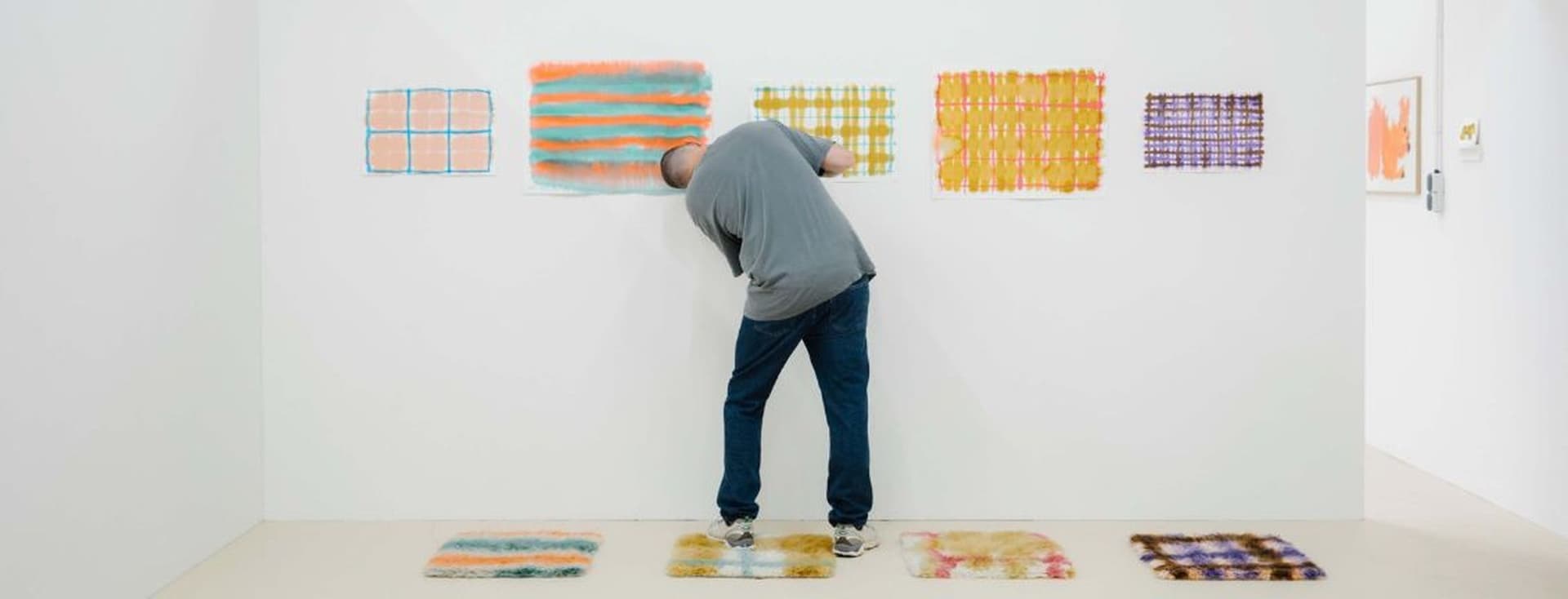
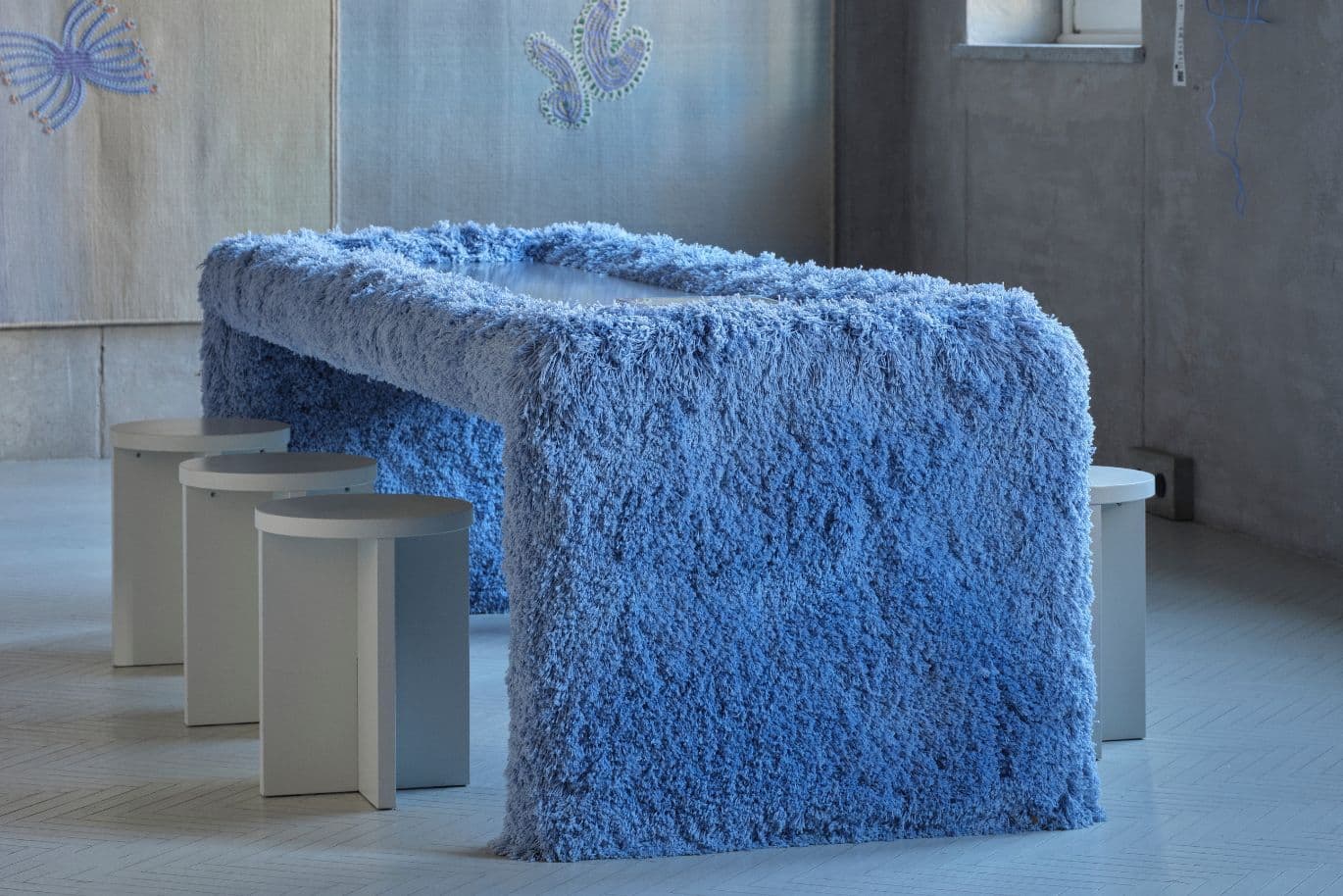
The Milan-based rugmaker cc-tapis brings a modern aesthetic to a centuries-old tradition. Knotted by hand in workshops in Nepal and India, the rugs reflect the brand‘s vitality and cultural depth in every fiber.
Origin and Identity
cc-tapis was born from a story of friendship, love, and collaboration. How has that personal dynamic shaped the DNA of the company?
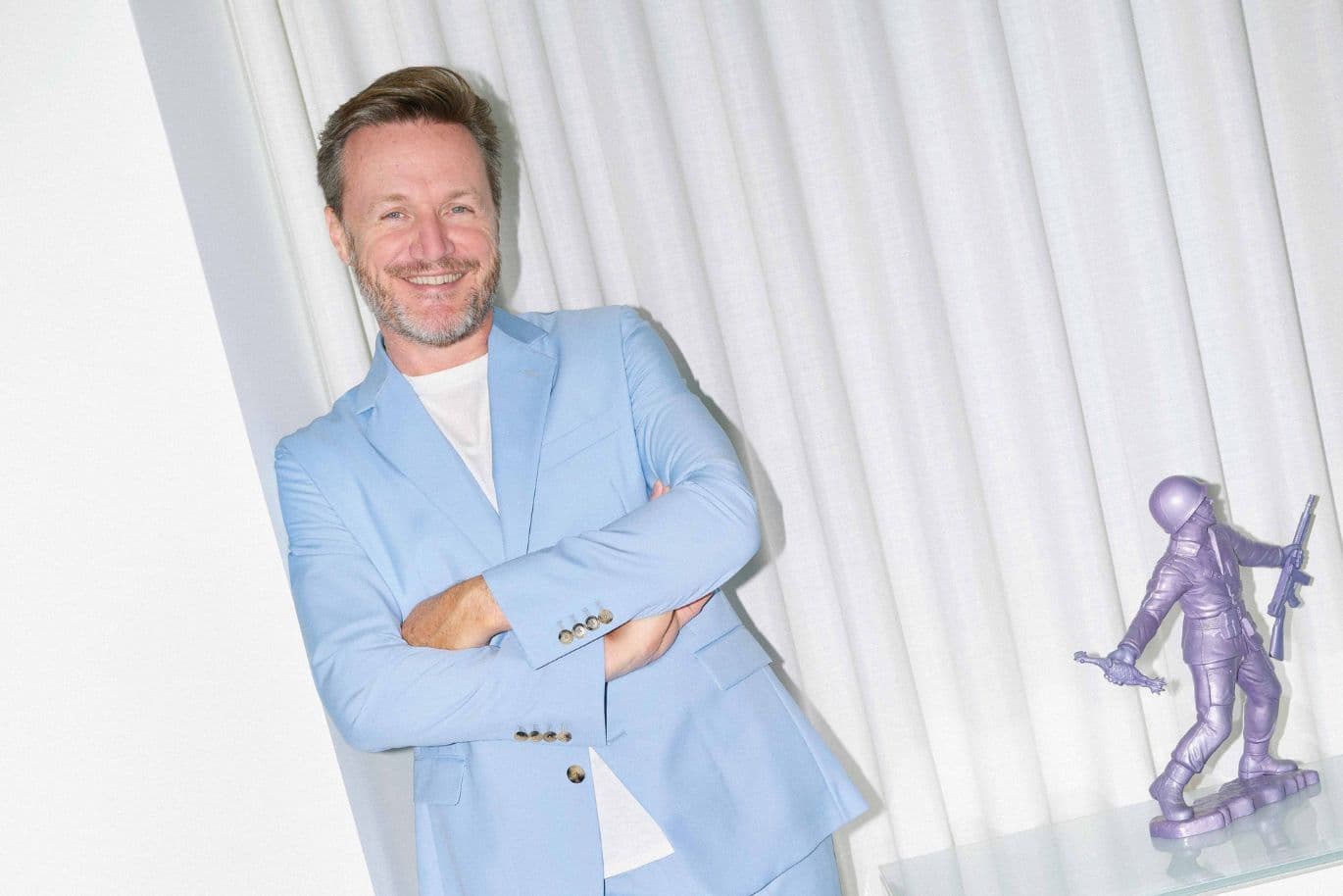
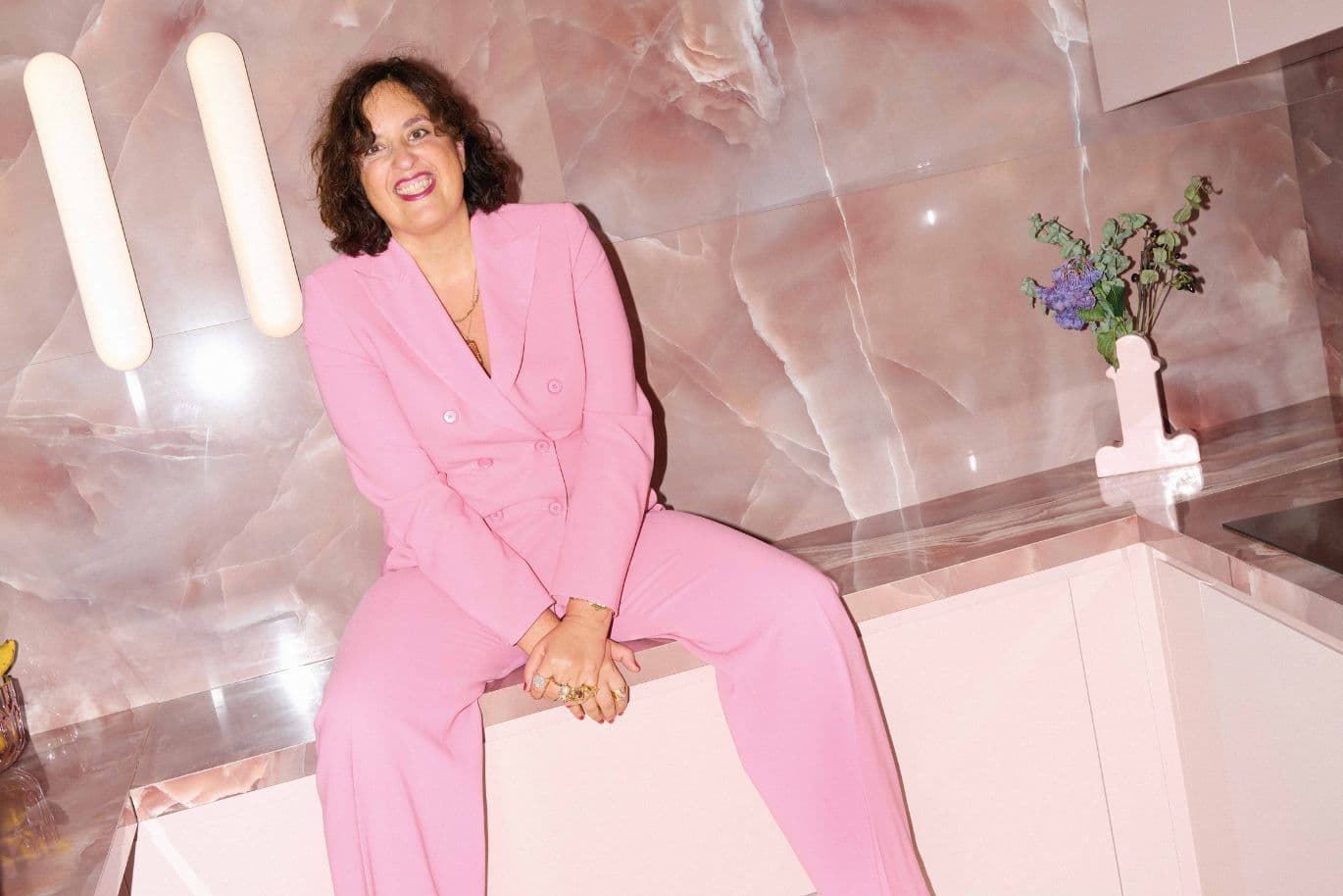
Fabrizio Cantoni: Your question already holds the essence of the answer. cc-tapis was born from a deeply personal story — a shared adventure between my wife and me. She is of Persian origin, so rugs quite literally flow in her blood, while I come from a hospitality background in the Italian Alps — a world that, at first glance, couldn’t be further from rug-making. Yet, somehow, our paths converged naturally.
Friendship soon entered the picture with Daniele, our third partner, and that sense of lightness, trust, and collaboration became the foundation of cc-tapis. From the very beginning, the company has carried this human energy — a mix of love, friendship, and curiosity — and I think that spirit still defines who we are today.
What was the original impulse to start cc-tapis, and how has the brand evolved from its beginnings in France to today’s base in Milan?
I firmly believe that, in some way, our lives have a designated course — an idea that comes from my father-in-law and is deeply rooted in Persian culture, which teaches that life has a path to follow, even if one must work hard along the way.
Although I grew up in the hospitality industry, I have always been deeply drawn to the world of architecture and design, in which I am completely self-taught. The hospitality business is a beautiful field, but for me, it often conflicted with family life. As hoteliers, Nelcya and I found it difficult to build the kind of family life we wanted, so we decided to change our path.
Originally, the idea was to open an Italian-French delicatessen in New York — but instead, it became a rug shop in Strasbourg, together with Nelcya’s father, whose business dated back to 1943.That period in Strasbourg gave birth to our desire to “speak a new language” while preserving the tradition of hand-knotted craftsmanship.
Since then, the company has evolved enormously, but our hunger to create rugs that speak different languages remains unchanged. Experimentation has always been at the heart of our brand’s DNA, and it continues to inspire our spirit today.
The name “cc-tapis” is now recognized around the world – what does it mean to you personally?
Over these fifteen years, everything we’ve achieved has been the result of genuine teamwork — a collective effort made possible by the dedication, passion, and creativity of everyone involved.
Of course, it fills me with pride — and, to be honest, a sense of wonder — to see how far the brand has come and how widely it’s now recognized. It was never something we planned or expected.
What I love most, though, is that cc-tapis has become a platform that allows me to connect and exchange ideas with some of the most inspiring creative minds of our time. Every collaboration, every conversation adds a new layer to our story — and that, to me, is the most rewarding part of it all.
Craftmanship and Production
For cc-tapis, craftsmanship is not a style but an essence. How would you describe your philosophy of handmade production?
A few years ago, right at the beginning of our journey, a journalist asked me what the style of cc-tapis was. And I remember answering — quite instinctively — that we don’t really have a style. We’re not a lifestyle brand that needs to create a coherent aesthetic across sofas, tables, or chairs. We’re a mono-product company: we only make rugs. And I believe our true “style” lies precisely in how we make them.
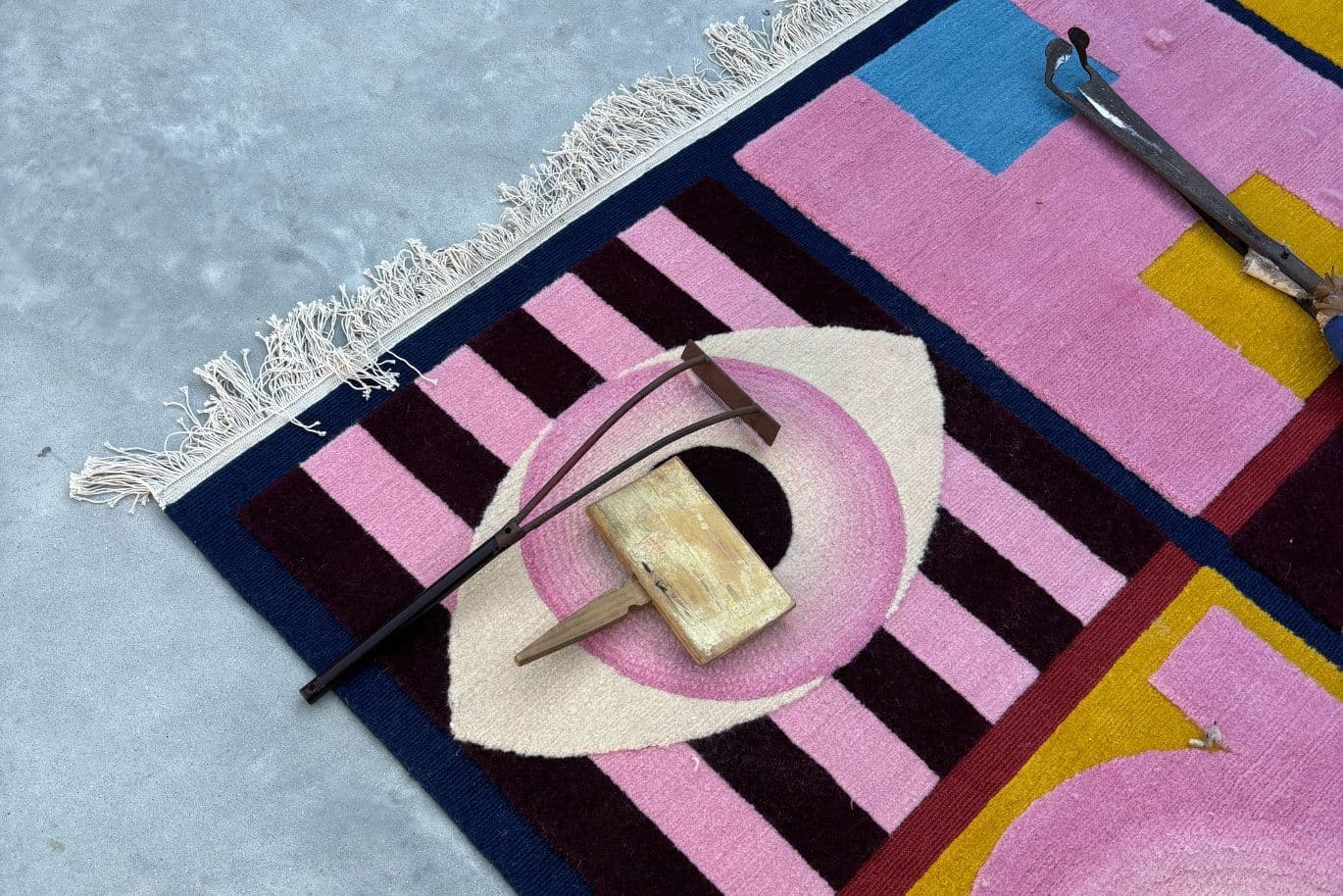
For each project, the technique — always handmade — becomes our way of interpreting the design, our personal signature. Every time, the process changes because every gesture, every artisan, every fiber gives life to something unrepeatable. That’s the beauty of craftsmanship: it’s never identical, it’s alive.
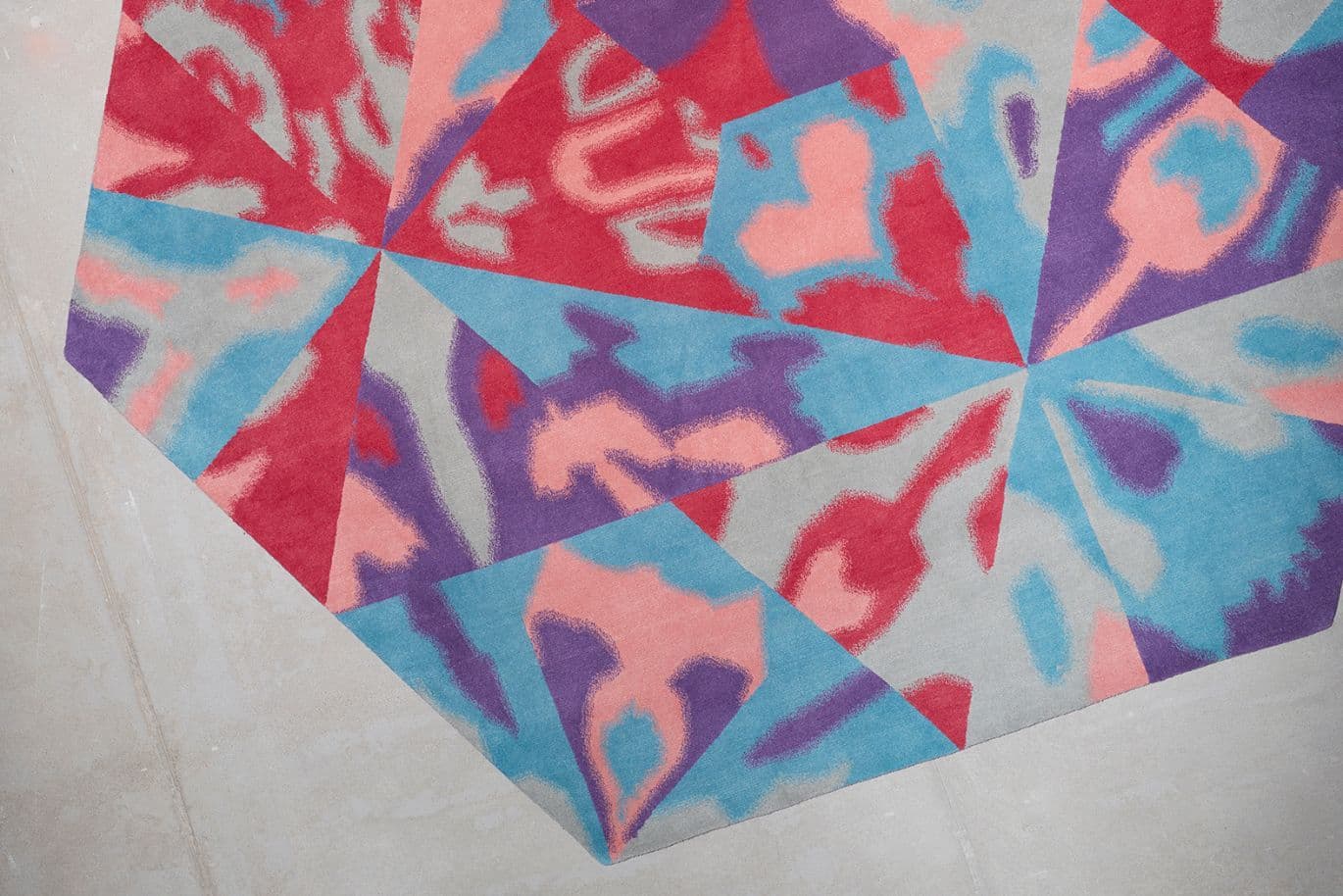
Personally, I don’t like rugs that simply lie flat on the floor. We work with colors, fibers, knotting methods, finishing, etc. — an entire vocabulary of gestures and materials that gives each rug its unique identity. That, to me, is where the essence of craftsmanship lies: in the constant experimentation and in the dialogue between tradition and creativity that defines our work.
You produce in Nepal, India, and Milan. How do these places differ in their craft traditions, and what do you learn from each context?
cc-tapis was born using exclusively the Tibetan hand-knotting technique, carried out in our own premises in Kathmandu. Being based there — together with our Nepalese partner, with whom we founded cc-tapis Nepal Pvt. Ltd. — allows us to experiment and internalize every
single step of hand-knotted rug production. We locally source the fibers, dye them, carry out the knotting, and handle all the finishing processes in-house. This enables us to control every phase directly and maintain the highest level of quality.
In India, our approach is different. The richness and diversity of handmade techniques in this country are truly unique — think of chain stitch, dhurrie flatweaves, pit looms, hand embroidery, and handloom weaving. In 2024, when we launched our RTB collections, we paired each project with a specific production technique. We then embarked on a kind of Grand Tour across the northern part of the country to find the villages where each technique was executed at its very best.
Milan is an entirely different story. There, we wanted to create a genuinely “Made in Milan” product. In this case, the focus is not on craftsmanship in the traditional sense, but rather on producing locally — a kilometro zero product. Our prototyping machine allows us to create one-of-a-kind pieces for specific installations and bespoke setups.
Time plays a major role in handcraft. How do you communicate the value of time and of slowness to an international audience?
Your question is spot on. In just a few days, we’ll actually be sharing a moving image project (Editor's note: see below), directed by Lorenzo Gironi, we shot in Nepal and Ladakh — an attempt to portray those people, those landscapes, and that culture in the most faithful and authentic way possible. It’s our way of showing that behind every rug, there’s a rhythm of life that can’t be rushed.
For us, time is not just a production factor — it’s a measure of quality, of care, of humanity. You can’t, and you shouldn’t, speed up the knotting process. Each knot takes its own time, guided by the artisan’s hands, by their breath, by their concentration. To interfere with that rhythm would mean losing the soul of what we do.
Of course, we’ve worked hard to optimize everything that surrounds the handmade process — we’ve standardized, where possible, the steps before and after the weaving to improve efficiency and delivery times. But the act of hand-knotting itself remains sacred. It follows its own tempo — slow, patient, and profoundly human — and that slowness is precisely what gives each rug its value, its beauty, and its timelessness.
Materials and Sustainability
You work with Himalayan wool, pure silk, and linen but also explore regenerated fibers. How do you balance tradition and innovation in your choice of materials?
The choice of fibers is always directly connected to the technique we use. For our hand knotted rugs, we work exclusively with natural materials such as Himalayan wool, pure silk, linen, hemp, nettle, or jute. These fibers carry a kind of nobility: they age beautifully, they soften with time, and they ensure that each rug can last a lifetime. When an object is made to endure, it deserves only the finest materials.
The approach changes when we design for the contract world — for hospitality or retail projects — where a rug naturally has a shorter life cycle. In those cases, we choose regenerated fibers, which allow the piece to be recycled at the end of its use. It’s our way of embracing a more circular economy, where beauty doesn’t come at the expense of responsibility.
For me, this balance between tradition and innovation is essential: it’s about honoring ancient techniques while staying curious, experimenting, and finding new ways to create sustainably in the world we live in today.
How do you ensure that materials are sourced locally and ethically – and what does “local” mean in such a global production network?
For us, “local” means staying as close as possible to the origin of our craft — to the places, materials, and people who keep this tradition alive. The wool we use is Himalayan, not imported from New Zealand, for example. Our silk comes from India or China, neighboring regions with centuries of textile expertise, while all the other fibers we work with are sourced and processed within the same geographical area where our rugs are made.
We’re fully aware that the global distribution of our rugs already has an environmental cost, and for that reason, we’re committed to reducing our footprint wherever we can. One of the ways we do this is by avoiding the unnecessary transport of raw materials across continents — keeping the entire production chain as close as possible to its roots.
Since 2022, we’ve proudly become completely carbon neutral in our deliveries — a small but significant step toward a more responsible and conscious way of working. For us, sustainability isn’t a slogan; it’s a daily exercise in awareness — a continuous effort to make choices that respect both the planet and the people behind every rug.
cc-tapis takes a holistic approach to sustainability, ecological, social, and economic. How do you translate that responsibility into action?
We’re lucky that our product is, by its very nature, sustainable. A hand-knotted rug is something made to last — it can be washed, repaired, and passed down through generations, so it’s never something that’s simply thrown away.
What we try to do is work on all the other aspects of our activity to ensure that the company’s ethics remain coherent with the product we create. For example, we don’t use acids in the finishing of our rugs; we source materials locally whenever possible; and we offset our carbon footprint for all deliveries. We’ve also rethought our packaging — developing a special fabric made from discarded clothes from the fast-fashion industry, which we now use to wrap our rugs.
In terms of social sustainability, we founded our own NGO, cc-for education, whose mission is to provide proper schooling for the children of our weavers.
I know all of this may seem like a drop in the ocean, but for us, it’s a sincere way to give back to the people and communities who make our work possible.
Design, Creativity and Collaboration
Many of your collections are created in collaboration with international designers. How do you decide whom to collaborate with?
When we started cc-tapis back in 2011, everything was designed internally. It was as if we first needed to understand who we were and define our own language before opening up to collaborations.
Milan, being the wonderful city it is, offered us countless opportunities once we were ready — and one of the first designers we worked with was Patricia Urquiola. Collaborations have been an integral part of cc-tapis ever since.
I would be lying if I said there’s a marketing strategy behind it all — everything we do comes from instinct, from the “gut”. The same goes for how we choose our collaborators. To give you an example: after working with Martino Gamper in his kitchen in London on our first project together, his wife, Francis Upritchard, told us we had to meet a friend of theirs. That friend turned out to be Bethan Laura Wood, who has since become a dear friend and with whom we’ve already created five collections.
We like to be quite iconoclastic in our approach: alongside major stars of the design world, we also collaborate with students, artists, stylists, architects — anyone who has something to say and whose vision we feel can be expressed through the cc-tapis language.
It’s funny how, even after all these years, I still feel like a “groupie” when I meet people whose minds I find so seducing.
What makes a collaboration truly successful – and how do you recognize when creative chemistry is there?
When it comes to defining what makes a collaboration successful, I think it’s important to question the very meaning of success. Of course, we’re a commercial brand, and we need to sell in order to sustain ourselves. But for me, a project is truly successful when the rug speaks a new language — when we manage to translate the essence of a creative’s vision through our craftsmanship, and in doing so, push the boundaries of what hand-knotted rug production can express.
I feel incredibly lucky, because over the years we’ve built sincere, lasting relationships with all the creatives we’ve worked with. There’s a shared respect and curiosity that keeps the dialogue alive. I honestly don’t think I could create a rug with someone I don’t like — collaboration, for me, is an act of trust and empathy as much as it is of design.
Which project or collection has surprised or moved you the most personally?
I can’t say I have a favorite project — they’re all my babies (laughs). Each one is different, with its own story, its own character, and eventually, it will find the interior that suits it best.
Every rug carries with it the memory of a journey: the conversations with the designer, the hands of the artisans, the experiments, the challenges, the small discoveries along the way. That’s what makes it impossible for me to choose — every project is born out of a shared process, and each one holds a fragment of the people who created it.
In the end, they all have a soul of their own, and perhaps that’s the most beautiful part of this work: realizing that what begins as an idea becomes something that lives, breathes, and continues its story in someone else’s space.
Innovation and the Future
In Milan, you have introduced robotufting technology to push the limits of rug production. What possibilities and what limitations do you see in this approach?
This is, somehow, a delicate topic. cc-tapis’ reputation is built on handmade production, so introducing robotufting technology might seem almost contradictory. But we approach this new technique with the same curiosity and openness that we bring to every form of craftsmanship. Right now, we’re testing and experimenting, pushing the limits of what this machine can do.
To be completely honest, I don’t yet know where it will lead us — but so far, the results are very encouraging. We’ve been collaborating with Formafantasma on a project using local wool discarded from the fashion industry; with Patricia Urquiola on artistic wall-hanging pieces made from Econyl, a nylon fiber derived from recycled plastic; and with the fashion brand Sunnei, creating a large recycled rug for their FW24 fashion show.
Let’s see what comes next — we’re still exploring, and that’s exactly what makes it so exciting.
How do you envision the future of craftsmanship in an increasingly technological world?
Luckily, our product itself is not technological at all. What we do is use technology all around it — to make the process as efficient and seamless as possible.
For now, AI is still a terrible designer (laughs), but it can be incredibly useful for improving all the internal processes that are often boring and time-consuming.
How do you hope to shape the future of the rug industry?
Good heavens, what a question! I’m already deeply surprised by what we’ve accomplished so far — so the idea of shaping the future of the rug industry feels a bit beyond my reach.
What I truly care about is maintaining the spirit that defines cc-tapis. I love this company because we treat everyone equally — I’m exactly the same person whether I’m speaking with designers, clients, or weavers, and I expect everyone who works here to share that same attitude.
For me, that’s already a great success: building a company where respect, curiosity, and humility are as important as creativity.
Personal and Inspirational
Which cc-tapis rug do you have at home – and why that one?
Since the founding of cc-tapis in 2011, I’ve changed homes five times — I love creating new interiors with my wife, Nelcya. Each house has had different rugs. For me, it’s the house itself that asks to be treated in a certain way — so, I’d say it’s actually the house that chooses the rug.
In the home where we live now, we’ve used rugs designed by Luke Edward Hall, from the Chateau Orlando collection. Their classical spirit blends beautifully with the aesthetic of the space. For our little pied-à-terre in Paris, the approach was more rock’n’roll — and since the cost of wooden flooring was prohibitive (laughs), we decided to go for a wall-to-wall leopard carpet instead.
What role does a rug play for you in a living space? Is it a decorative object, a design statement, or an emotional anchor?
First of all, I hate statements (laughs). Maybe the truly distinctive approach of cc-tapis, right from the beginning, was that we never treated the rug as a mere decorative object. For us, it’s always been an integral part of the whole project — something that contributes to the atmosphere, the dialogue, the balance of a space.
Of course, there’s always an emotional side to choosing a rug, but ultimately, it’s the project that leads the way. The rug follows the space — not the other way around.
Are there specific rituals, materials, or places that continue to inspire you?
Everything inspires me. I grew up in a Catholic family and was made to go to church every Sunday. Even today, I could describe in detail the marble floors, the statues, the paintings, the frescoes — all the architectural elements that surrounded me back then. Those early memories shaped my sensitivity to beauty, materials, and craftsmanship.
Today, what inspires me most is the dialogue I have with people. Exchange is fundamental to me — I need conversation, confrontation, connection. I think that if I were left alone for too long, I would simply dry up and fade away.
Find your dream property in Milan.
Offered properties
- Exclusive
- Exclusive
- AIExclusive
- AINew
You may also be interested in
 Beaded Beauty – an interview with Marijke de Cock
- 2 min.
- 05.06.2026
 Going deep – an interview with freediver Guillaume Néry
- 2 min.
- 5.6.2026
 Francis Kéré – What really matters
- 9 min.
- 16.06.2026
 The fashion label Zeus+Dione: Threads of Force
- 5 min.
- 26.05.2026
 The Hand of the Visionary – Designer Kelly Wearstler
- 5 min.
- 14.04.2026
 Art in Karat – Up-and-coming goldsmith Luca Sonnentag on his passion
 A class of its own – the limited edition Mercedes-Maybach V12
&w=1920&q=75) Leadership times two – the legendary Taschen publishing house
Leadership times two – the legendary Taschen publishing house- 5 min.
- 06.10.2025
GG Magazine exclusive content
GG is an independent magazine at the highest level. Exploring the world of architecture, lifestyle, design, fashion, yachting, luxury living and travel. We seek out the most exciting topics and personalities for you and invite you to get to know them from a fresh new angle. In GG, you will meet successful architects, interesting designers and exciting artists who are the talk of the town from London to New York and Berlin to Hong Kong.