Extramurs, Valencia, Valencian Community, Spain
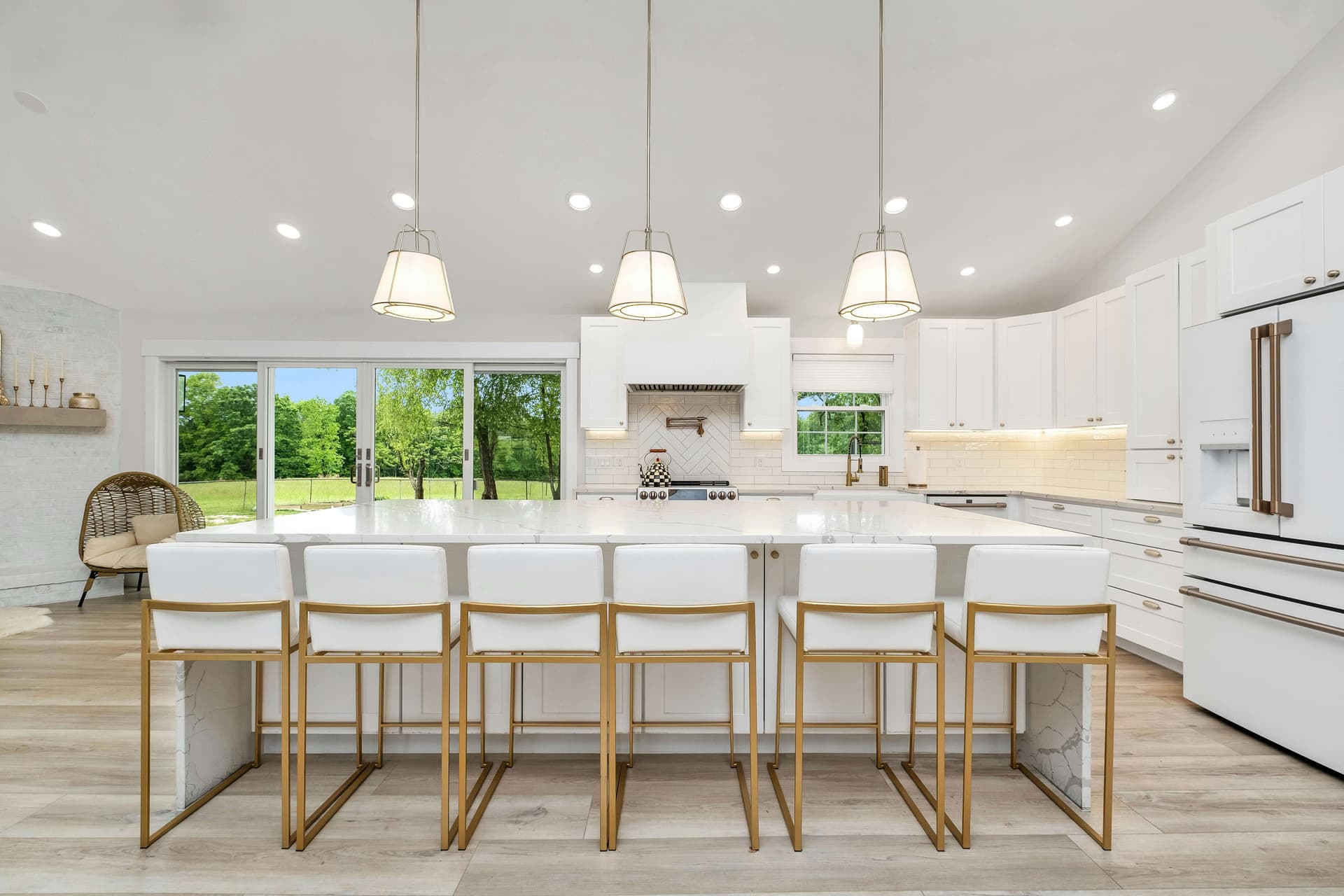
Bright, fully renovated home in the Finca Roja building
Price
€600,000
- 4 Bedrooms
- 2 Bathrooms
- ~131 m² Living area

Valencia is firmly establishing itself as one of Spain's most promising real estate markets, driven by an increasingly attractive balance between quality of life, property prices and buyer demand.
In recent years, the city has gained significant momentum among both domestic and international buyers, particularly those seeking an alternative to more competitive markets such as Madrid and Barcelona. This growing interest continues to fuel market activity, although growth remains more gradual and balanced.
Understanding how the market is evolving, which areas attract the strongest demand and what type of buyer is driving activity has become essential for making informed decisions. According to data gathered by our agents in the latest Engel & Völkers Annual Report 2025, Valencia continues to move towards a scenario of sustainable growth, with significant potential for further development remaining one of its greatest strengths.
Table of Content
How the Valencia real estate market is evolving
House prices in Valencia: Strong growth and clear differences between districts
Valencia's prime market: Consolidation in the city's key locations
An active buyer profile with strong domestic demand and financial strength
Limited supply and the growing importance of new-build homes
What buyers should consider in Valencia in 2026
What sellers should consider in Valencia in 2026
Outlook for Valencia's real estate market
Frequently asked questions about Valencia's real estate market in 2026
Valencia's real estate market continues to show strong upward momentum, supported by significant price growth and sustained demand from both domestic and international buyers.
According to data collected by our agents in the latest annual report, the average property price has reached approximately €3,570/m², representing year-on-year growth of almost 19%. This confirms both the strength of the market and its ability to absorb continued demand.
This positive performance has continued despite external events such as the 2024 DANA floods, which affected certain areas temporarily but did not alter the market's overall trajectory.
Current market activity is characterised by:
Sustained demand across different buyer profiles: Domestic buyers account for the majority of transactions (68%), while international buyers represent a significant 32% of demand.
Strong market absorption: Well-located properties continue to sell actively, reflecting robust buyer interest.
Growth supported by limited housing supply: The availability of residential property—particularly new-build homes—remains limited within the city itself.
As a result, Valencia has become one of Spain's most dynamic residential property markets.
According to our 2025 report, Valencia's residential property market displays a well-defined pricing structure, with clear differences between districts.
The city can currently be divided into three broad price segments:
Premium-priced districts: L'Eixample remains Valencia's most expensive district, with average prices reaching €4,427/m², followed by areas such as Camins al Grau and Ciutat Vella, where prices are around €4,050/m².
High-demand districts with mid-range prices: Areas including Quatre Carreres, Benimaclet, Extramurs and Pla del Real typically range between €3,400 and €4,000/m², combining strong demand with limited supply.
More affordable districts: Neighbourhoods such as Patraix, Jesús, Benicalap and Algirós record prices between €1,800 and €2,900/m², where demand is predominantly local and buyers are generally more price-sensitive.
These internal differences are one of the main factors explaining price behaviour across Valencia's residential market.
Growth in Valencia's property market is also evident across parts of the metropolitan area, where buyers seek a balance between affordability, residential quality and proximity to the city.
Municipalities such as Rocafort, Bétera and La Cañada continue to strengthen their position as highly sought-after residential locations, particularly among buyers looking for detached homes, outdoor living space and lower-density neighbourhoods.
At the same time, coastal areas such as Canet d'en Berenguer and other parts of the Valencian coastline continue to attract both primary residence buyers and second-home purchasers, supported by strong domestic and international demand.
This expansion demonstrates how part of Valencia's residential demand is gradually extending its search beyond the city itself towards well-connected suburban and coastal locations.
Valencia's prime residential market is concentrated in a number of well-established districts that combine excellent locations, high urban quality and sustained buyer demand.
According to data collected by our agents in the latest annual report, districts such as L'Eixample continue to command the highest values, particularly in neighbourhoods including Pla del Remei, Gran Vía and Ruzafa, where demand remains consistently strong among both domestic and international buyers.
Areas such as Ciutat Vella and Camins al Grau also continue to strengthen their position as highly desirable residential locations, attracting a broad range of buyer profiles.
The prime segment is characterised by several key trends:
Demand concentrated in established locations: Districts such as L'Eixample and Ciutat Vella continue to record a steady flow of transactions thanks to their strong positioning within the city.
Strong international demand in central districts: In areas such as Ciutat Vella, international buyers play a significant role, particularly in properties with historic character or prime central locations.
High levels of activity along key urban corridors: Neighbourhoods such as Ruzafa and Gran Vía continue to stand out for their dynamism and their ability to attract a diverse range of buyers.
Rather than expanding into new locations, Valencia's prime market is increasingly defined by the consolidation of its most established residential areas.
Valencia's buyer profile is defined by a combination of well-established local demand and a significant presence of international purchasers.
According to the latest data, 68% of transactions are completed by domestic buyers, while international purchasers account for the remaining 32%, making local demand the primary driver of the market.
At the same time, 65% of property purchases are completed without mortgage financing, reflecting a buyer profile with substantial financial resources and less reliance on borrowing.
Several factors define today's buyers in Valencia:
Domestic buyers continue to drive market activity: Unlike some other Spanish markets, local demand accounts for the majority of transactions and sets the pace of market activity.
International buyers remain influential in selected areas: Particularly in central districts and highly desirable residential locations, where overseas demand complements the domestic market.
A significant proportion of buyers have strong purchasing power: The high percentage of cash transactions reduces dependence on mortgage lending and allows for faster purchasing decisions.
A diverse range of purchasing objectives: Demand includes both owner-occupiers and investment buyers, helping to sustain overall market activity.
Valencia therefore benefits from a broad and diversified demand base capable of supporting the market even during more challenging economic conditions.
According to our 2025 market data, housing availability continues to be one of the key factors shaping Valencia's residential property market, particularly as buyer demand continues to grow.
Overall housing supply remains limited, with relatively few new-build properties entering the market.
Current supply is characterised by:
A limited share of new-build homes: Most available properties are resale homes, which largely determines the type of housing available to buyers.
Strong absorption of well-located new developments: Projects in areas such as Quatre Carreres and other urban expansion zones continue to achieve high sales rates.
A mismatch between supply and demand: The limited delivery of new housing makes it difficult to balance the growing volume of transactions.
Uneven distribution of available housing across the city: While some districts benefit from new developments, others rely almost entirely on existing housing stock.
This supply structure is expected to remain one of the defining characteristics of Valencia's real estate market, particularly while buyer demand remains strong.
Buying property in Valencia requires an understanding of a market where housing availability and the speed at which properties are absorbed directly influence purchasing decisions.
Certain property types—particularly new-build homes and properties in established neighbourhoods—continue to sell quickly, leaving buyers with less time to make decisions.
Key considerations for buyers include:
Identify opportunities within a market where supply remains limited: Housing availability varies considerably, making careful evaluation of each opportunity essential.
Understand the different sales dynamics across market segments: While some properties sell rapidly, others allow for a more measured purchasing process.
Anticipate competition in certain segments: Particularly for new-build developments and well-located homes, where buyer demand is often concentrated.
Act quickly when highly sought-after properties become available: In some cases, the speed of decision-making can directly determine whether a purchase is successful.
In a market where housing availability and sales velocity shape every transaction, expert local advice is invaluable in identifying genuine opportunities. Careful market analysis and professional guidance help buyers make well-informed decisions in today's competitive environment.
Successfully selling property in Valencia requires adapting your strategy to a market where absorption rates vary depending on both the type of property and its location.
As highlighted in the report, differences in transaction performance are largely explained by how well each property is positioned within its respective market segment.
For sellers, the following factors are particularly important:
Position the property correctly from the outset: A property's initial market positioning has a direct impact on buyer interest and the overall sales process.
Take advantage of demand in high-absorption segments: Particularly where supply remains limited and buyers respond quickly.
Set realistic expectations based on the property's characteristics: Not all homes perform equally in terms of marketing periods or negotiation potential.
Align the sales strategy with current market conditions: Effective planning and the right marketing approach significantly influence the final outcome.
In a market where positioning and strategy directly affect results, professional guidance plays a crucial role in maximising success throughout every stage of the sales process.
Valencia's real estate market is expected to maintain its positive growth trajectory, supported by active demand and limited housing supply across several market segments.
Future market performance will largely depend on the ability to increase housing supply while maintaining strong interest from both domestic and international buyers.
Current trends point towards:
Continued high levels of market activity, supported by broad and sustained buyer demand.
Ongoing price pressure in districts where housing availability remains particularly limited.
Continued strong absorption of well-located new-build developments.
An increasing need to analyse individual neighbourhoods, as differences between districts continue to shape market performance.
Valencia is firmly establishing itself as one of Spain's most promising real estate markets, with growth driven primarily by long-term structural factors rather than short-term market conditions.
Valencia's real estate market continues to demonstrate solid growth, supported by rising property prices, active buyer demand and a supply structure that plays a decisive role in shaping market activity.
Together, these factors create a market where performance is far from uniform and depends on variables such as location, property type and the timing of a property's launch to the market.
In this environment, both buyers and sellers benefit from analysing each transaction carefully, as understanding the market's specific dynamics is essential for making well-informed decisions.
If you are considering buying or selling property in Valencia, assessing your individual circumstances and understanding how they fit within today's market is the first step towards defining the right strategy.
Are house prices rising in Valencia?
Yes. According to the latest annual report, the market recorded year-on-year growth of almost 19%, bringing the average property price to approximately €3,570/m². This increase reflects strong buyer demand in a market where housing supply remains limited.
Which are the most expensive areas in Valencia?
Districts such as L'Eixample currently command the city's highest property prices, exceeding €4,400/m². Areas including Ciutat Vella and Camins al Grau also stand out, with average values of around €4,000/m², reflecting consistently strong demand.
Who is buying property in Valencia?
The market is primarily driven by domestic buyers, who account for approximately 68% of all transactions. International buyers represent the remaining 32%, particularly in central districts and the city's most desirable residential areas.
Are most buyers using a mortgage in Valencia?
Not necessarily. Around 65% of transactions are completed without financing, highlighting a significant proportion of buyers with strong financial resources and limited reliance on mortgage lending.
Is there enough housing supply in Valencia?
No. Housing supply remains limited, particularly in certain districts and within the new-build segment. This shortage is one of the main reasons behind both rising property prices and the rapid sale of many homes.
Is now a good time to buy property in Valencia?
Market activity remains strong, although the answer depends on both the type of property and the location. In some segments, limited housing availability means buyers may need to act quickly when suitable opportunities arise.
Engel & Völkers
Extramurs, Valencia, Valencian Community, Spain
Price
€600,000
Ciutat Vella, Valencia, Valencian Community, Spain
Price
€450,000
Extramurs, Valencia, Valencian Community, Spain
Price
€425,000
Camins al Grau, Valencia, Valencian Community, Spain
Price
€1,700,000
Ciutat Vella, Valencia, Valencian Community, Spain
Price
€1,650,000
You may also be interested in

&w=1920&q=75)


&w=1920&q=75)


&w=1920&q=75)


FOR MORE INFORMATION



Engel & Völkers Spain
Avenida Diagonal 640, 6B
08017 Barcelona, España
Tel: +34 900 747 281