New
Cogolin, Provence-Alpes-Côte d'Azur, France
Cogolin – Renovated contemporary property with pool and separate apartment
Price
€2,120,000
- 5 Bedrooms
- 3 Bathrooms
- ~387 m² Living area
- ~2,001 m² Plot surface
The new GG website: Inspiring personalities, extraordinary places and exceptional properties. Discover now
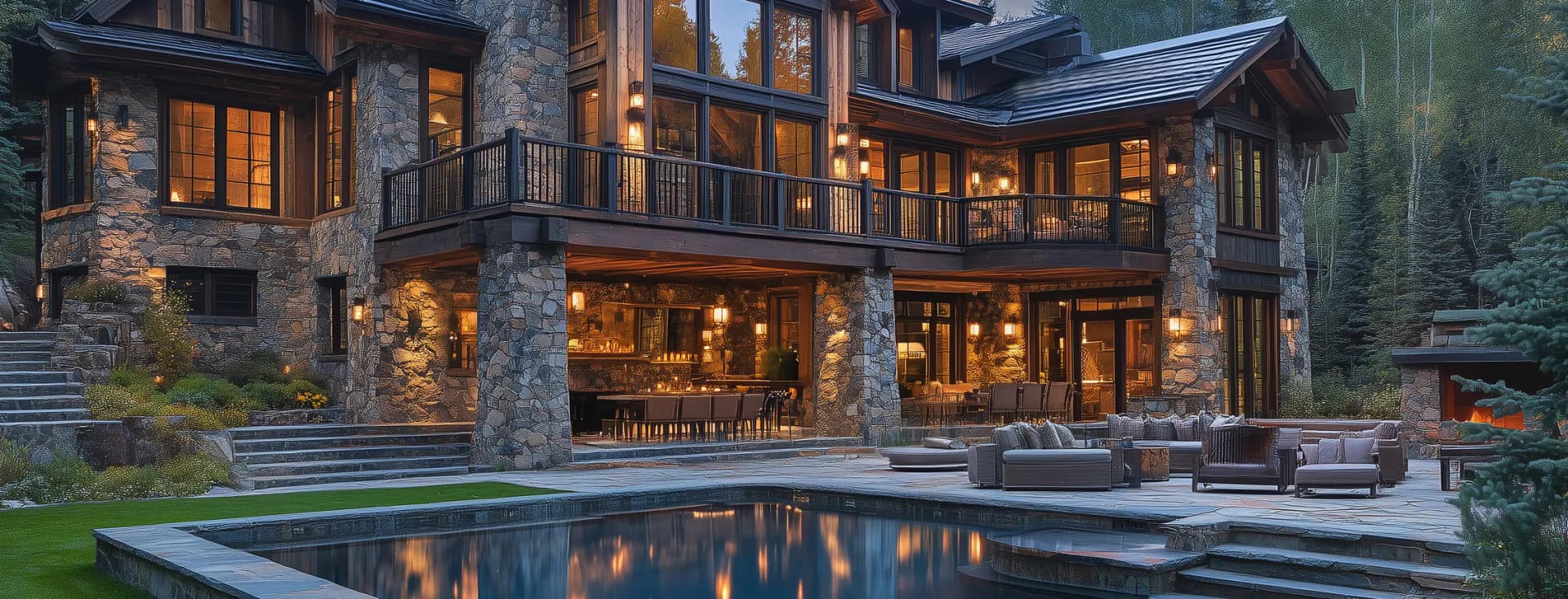
An hôtel particulier is a private urban residence originally designed for a single owner, generally in a prestigious city location. Found primarily in Paris but also in Bordeaux, Toulouse, Lyon and Aix-en-Provence, these properties now represent a rare category within the luxury real estate market. Their value lies not only in their location and generous proportions, but also in their architecture, history and heritage.
Around 400 hôtels particuliers are currently estimated to remain in Paris, compared with almost 2,000 at the height of their development. Today, these exceptional residences attract French and international buyers looking for prestigious properties, some of which are only available through highly confidential channels.
Table of Content
An hôtel particulier is a private residence built in a city for a single owner. Unlike a residential apartment building, it was designed as a complete residence, with reception rooms, private quarters and, depending on the property, outbuildings and outdoor spaces.
The layout reflected both the owner’s lifestyle and the social codes of the period. Reception rooms generally occupied a prominent position, while circulation areas, service rooms and outbuildings were organised to maintain a distinction between private life and formal entertaining.
In Paris, these residences were historically built in neighbourhoods where aristocratic families, wealthy owners and influential figures sought to establish their homes. The Marais, Saint-Germain and the Faubourg Saint-Honoré still contain several remarkable examples.
The word “hôtel” does not refer here to a property intended to accommodate travellers. It derives from the older term “hostel” or “ostel”, which referred to a residence or dwelling.
The expression “hôtel particulier” gradually came to distinguish these large private urban residences from public buildings and establishments intended for collective accommodation.
The term therefore relates directly to the building’s original function: an hôtel particulier was above all a private residence located in an urban environment.
Ces quatre types de propriétés correspondent à des réalités historiques et architecturales différentes. La distinction repose principalement sur leur localisation, leur fonction d’origine, leur environnement et leur organisation.
L’hôtel particulier est avant tout une demeure privée implantée en ville. Il est généralement conçu pour un propriétaire unique et peut comprendre une cour, un jardin, des pièces de réception et des dépendances. Le modèle parisien « entre cour et jardin » en constitue l’une des formes les plus caractéristiques.
Le château est généralement associé à un domaine plus vaste, souvent situé en dehors des centres urbains. Son architecture peut répondre à une fonction résidentielle, représentative ou, pour les édifices les plus anciens, défensive. Le parc, les dépendances et l’étendue du domaine font souvent partie intégrante de la propriété.
Le manoir désigne plutôt une demeure historique de dimension intermédiaire, généralement implantée dans un environnement rural ou périurbain. Historiquement associé à un propriétaire ou à un seigneur local, il se distingue du château par une échelle et une fonction généralement plus modestes.
La maison de maître correspond quant à elle à une grande demeure destinée à un propriétaire ou à une famille aisée. Elle peut être située en ville, dans un bourg ou sur une propriété rurale et est souvent associée à un jardin, des dépendances ou un domaine.
Ces catégories peuvent parfois se chevaucher selon l’époque et la région. Pour déterminer la nature exacte d’un bien, il faut donc examiner son histoire, son architecture, sa localisation et son usage d’origine.
Free, confidential and non-binding
Receive your digital valuation instantly
Based on data by Engel & Völkers
Architecture is one of the key elements used to identify an hôtel particulier. Historically, its design was based on a carefully organised relationship between private rooms, reception areas and service spaces.
The “between courtyard and garden” configuration is one of the most characteristic layouts of the Parisian hôtel particulier. The main building is positioned between a courtyard facing the street and a garden at the rear of the property.
This arrangement created a transition between public and private space. A porte cochère provided access to the courtyard, while the main rooms could be oriented towards the garden.
Depending on the property, outbuildings or secondary structures completed the ensemble. This organisation also made it possible to separate the owners’ living areas from the spaces dedicated to the daily operation of the residence.
The porte cochère is often the first notable architectural feature. It provided access for carriages to the private courtyard and signalled the property’s private and prestigious nature.
Facades can display a wide range of styles, from Classical and Neoclassical architecture to Renaissance influences and Haussmannian design. Cut stone, sculptures, mouldings, balconies and elaborate window surrounds all contribute to their architectural character.
The quality of the materials and craftsmanship remains an important consideration when assessing an hôtel particulier today.
Historic hôtels particuliers often feature generous proportions and interiors designed around formal entertaining.
Reception rooms could be arranged en enfilade, allowing guests to move from one salon to another according to a formal sequence. Grand staircases were another major architectural feature.
Wood panelling, fireplaces, original parquet flooring, mouldings and period decoration may have survived. When preserved, these features contribute significantly to the property’s heritage value and must be considered carefully when planning restoration work.
Cogolin, Provence-Alpes-Côte d'Azur, France
Price
€2,120,000
Saint-Raphaël, Provence-Alpes-Côte d'Azur, France
Price
€1,795,000
Goult, Provence-Alpes-Côte d'Azur, France
Price
€1,490,000
Grasse, Provence-Alpes-Côte d'Azur, France
Price
€2,290,000
Eysines, Nouvelle-Aquitaine, France
Price
€850,000
4th arrondissement, Paris, Île-de-France, France
Price
€510,000
Roquebrune-Cap-Martin, Provence-Alpes-Côte d'Azur, France
Price
€5,300,000
Saint-Didier-au-Mont-d'Or, Auvergne-Rhône-Alpes, France
Price
€1,149,000
Saint Seurin - Fondaudège, Bordeaux, Nouvelle-Aquitaine, France
Price
€2,650,000
The history of the hôtel particulier follows the development of France’s urban elites. Its architectural form evolved over the centuries in response to changing lifestyles, architectural styles and the transformation of cities.
The first large urban residences gradually appeared in French cities during the Middle Ages. They allowed powerful families to establish permanent residences within important urban centres.
During the Renaissance, architecture evolved under the influence of Italian models. Facades, courtyards and interior layouts became more elaborate. This period established several principles that would later be developed in the hôtels particuliers of the 17th and 18th centuries.
The 17th and 18th centuries were a defining period in the development of hôtels particuliers in Paris. The nobility and wealthy families sought residences suited to their social status while remaining close to political power and fashionable society.
The Marais and Saint-Germain became home to numerous remarkable residences. The Hôtel Lambert, Hôtel de Soubise and Hôtel de Cluny are examples of this architectural tradition.
Hôtels particuliers gradually became places of formal entertaining, social representation and family life.
During the 19th century, the transformation of Paris gradually altered the traditional hôtel particulier model. Major urban works and the development of rental apartment buildings profoundly changed the structure of the capital.
Haussmannian architecture increasingly favoured facades aligned directly with the street and collective residential buildings. Hôtels particuliers continued to exist in certain prestigious districts, however, with their architecture adapting to the new urban environment.
Many hôtels particuliers have changed function over time. Some now house museums, institutions or embassies, while others have retained their original residential purpose.
This diversity explains why hôtels particuliers now form such a varied architectural heritage. Some are open to the public, while others remain highly private residences.
Hôtels particuliers are not limited to Paris. Several major French cities have significant collections of historic urban residences, with architectural styles and price levels varying from one market to another.
Paris has the highest concentration of hôtels particuliers in France. Le Marais retains numerous examples dating from the 16th to the 18th centuries.
Saint-Germain and the Faubourg Saint-Honoré are also highly sought-after areas. Land scarcity, the heritage value of these buildings and their prestigious locations make this an exceptionally confidential segment of the property market.
A Parisian hôtel particulier can therefore represent both a prestigious residential acquisition and a long-term heritage investment.
Bordeaux also has a remarkable heritage of private urban residences. The Golden Triangle contains several historic properties in one of the city’s most sought-after environments.
Les Chartrons offer another expression of Bordeaux’s architectural heritage, with historic buildings closely connected to the city’s commercial development.
Toulouse retains numerous residences built for prominent local families. Aix-en-Provence is particularly known for its 17th- and 18th-century hôtels particuliers. Lyon also contains several historic properties in its older districts, while Nantes retains examples linked to its commercial and maritime history.
The market varies considerably according to the city, neighbourhood, state of preservation and heritage value of the property.
Cogolin, Provence-Alpes-Côte d'Azur, France
Price
€2,120,000
Saint-Raphaël, Provence-Alpes-Côte d'Azur, France
Price
€1,795,000
Goult, Provence-Alpes-Côte d'Azur, France
Price
€1,490,000
Grasse, Provence-Alpes-Côte d'Azur, France
Price
€2,290,000
Eysines, Nouvelle-Aquitaine, France
Price
€850,000
4th arrondissement, Paris, Île-de-France, France
Price
€510,000
Roquebrune-Cap-Martin, Provence-Alpes-Côte d'Azur, France
Price
€5,300,000
Saint-Didier-au-Mont-d'Or, Auvergne-Rhône-Alpes, France
Price
€1,149,000
Saint Seurin - Fondaudège, Bordeaux, Nouvelle-Aquitaine, France
Price
€2,650,000
Buying an hôtel particulier requires a different approach from purchasing an apartment or conventional house. The value of the property depends on both its real estate characteristics and its architectural heritage.
Prices can vary considerably depending on location. In Paris, the most sought-after hôtels particuliers can command several million euros. Outside the capital, the brief identifies an indicative range of approximately €500,000 to €2 million, depending on the city and property characteristics.
These figures are indicative only. Floor area, address, garden, condition, architectural features, outbuildings and renovation potential can all have a significant impact on value.
A property valuation based on comparable transactions and the specific characteristics of the residence can help determine the appropriate market positioning.
Hôtels particuliers available for sale represent an extremely limited market. Some owners prefer discreet marketing in order to preserve their privacy.
Opportunities may therefore circulate outside traditional property portals through off-market networks. For buyers, access to these properties often depends on the strength of their network and their relationship with a specialist real estate professional.
Several factors need to be assessed before buying an hôtel particulier.
The structural condition of the building is a primary consideration. Any heritage protection should also be examined, particularly where the property is listed or registered as a historic monument.
Planning regulations may restrict certain works. The legal status of the property, any co-ownership arrangements and restrictions affecting protected areas must also be reviewed before proceeding with a purchase.
For more information on the implications of heritage protection, see our article on the advantages and disadvantages of owning a listed historic property.
Renovating an hôtel particulier requires an approach adapted to its architecture. Restoring mouldings, wood panelling, historic parquet flooring or a cut-stone facade involves different requirements from those of a standard contemporary renovation.
Works may also require specific authorisations when the building benefits from heritage protection. The budget should therefore account for preliminary studies, restoration works and any technical or regulatory constraints.
Depending on the property’s status, certain grants or tax arrangements may also be available. Their application depends on the specific characteristics of the property and the renovation project.
The rarity of hôtels particuliers often requires a highly personalised search. Engel & Völkers Private Office supports clients looking for particularly exclusive properties, including opportunities that are not publicly marketed.
This approach combines discretion, market expertise and the ability to identify opportunities that closely match the buyer’s requirements.
Hôtels particuliers require both a real estate and heritage perspective. Location, architecture, condition, outdoor spaces, regulatory restrictions and potential for transformation all need to be assessed together.
Our international network also enables us to support French and international clients looking for prestigious properties in France.
Whether you are buying, selling or seeking a valuation, our advisers can assist you in assessing the property and positioning it within the market.
An hôtel particulier was historically designed as a private residence for a single owner. It may include a courtyard, garden, reception rooms and outbuildings organised around one principal residence.
An apartment building, by contrast, is designed to accommodate several independent homes or occupants. Some historic hôtels particuliers have nevertheless been divided over time and may now contain several apartments.
The price depends heavily on the address, floor area, condition, garden and quality of the architectural features. In Paris, the most sought-after hôtels particuliers generally command several million euros. The brief highlights the significant variation between individual properties.
A precise valuation therefore requires an assessment of the property itself and comparable market transactions in its specific area.
Yes, division may be possible in certain circumstances, but it is not automatic. The project must comply with applicable planning regulations, the legal status of the building and, where applicable, the co-ownership rules.
Any heritage protection may also restrict alterations. Before considering a division, a legal, technical and planning assessment of the property is therefore essential.
You may also be interested in
&w=1920&q=75)

&w=1920&q=75)

Contact


Engel & Völkers France
170 Rue du Faubourg Saint-Honoré
75008 Paris
Tel: +33145643030