Exclusive
19th arrondissement, Paris, Île-de-France, France
Apartment with balcony near Buttes-Chaumont Park
Price
€605,000
- 2 Bedrooms
- 1 Bathroom
- ~64 m² Living area
The new GG website: Inspiring personalities, extraordinary places and exceptional properties. Discover now
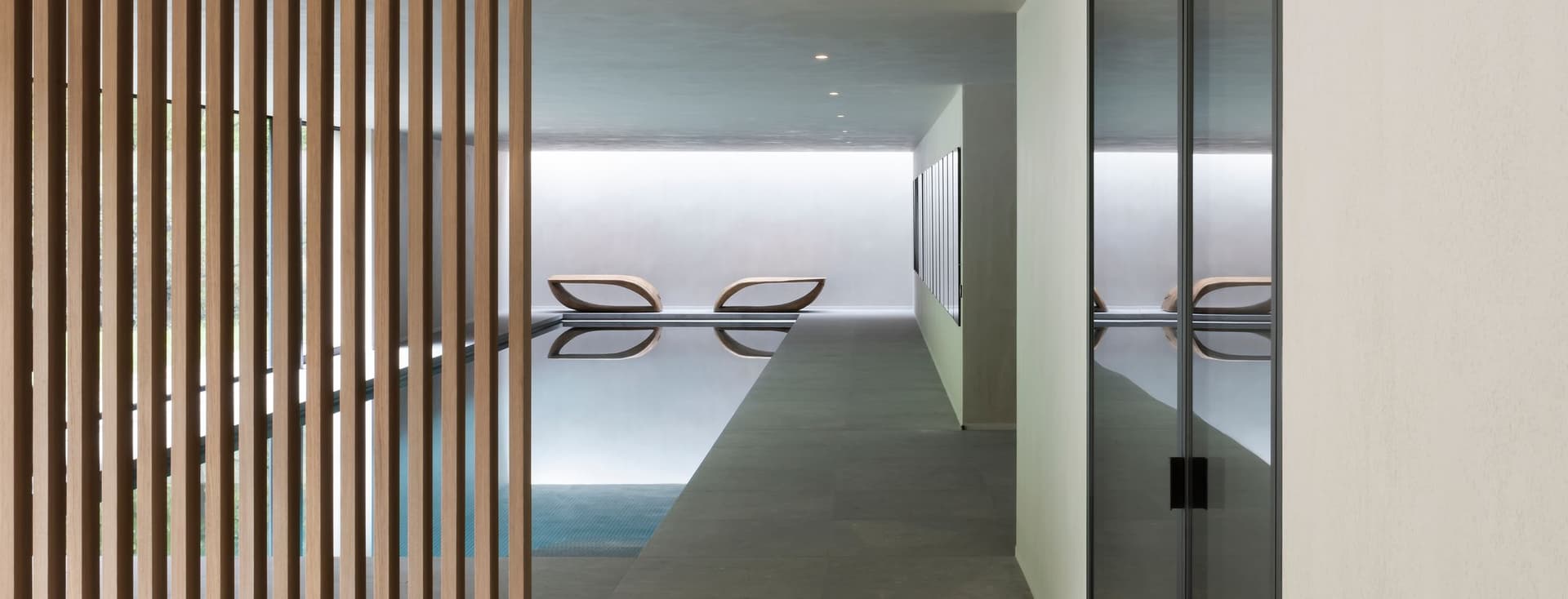
Buying a second home can serve several purposes: enjoying a private retreat for weekends and holidays, preparing for retirement, diversifying your wealth or creating an asset to pass on to your family. For a prime property purchase, however, choosing the right destination and property also requires careful consideration of financing, taxation, ownership structures and potential rental income.
In 2026, buying a second home can therefore be both a lifestyle decision and a long-term wealth strategy. The process begins by defining your budget and preferred destination, before assessing the property itself, choosing the most appropriate ownership structure and completing the legal and notarial stages of the transaction.
To further develop your project, explore our prime real estate investment advice and our analysis of the 2026 real estate market.
Discover properties for sale offered by Engel & Völkers
Key takeaways
Banks generally require a larger down payment for a second home than for a primary residence, often around 20–30% of the purchase price depending on the borrower and lender.
Several ownership structures are available, including direct ownership, co-ownership, a family SCI or a company.
Seasonal rental can help offset the cost of owning a second home, particularly under the French micro-BIC or actual-expense tax regime.
Buying in Spain or Italy requires an understanding of local taxation and regulations in addition to the obligations that may apply in France.
For an exceptional property, working with a local expert can facilitate the search, valuation and overall management of the acquisition.
Table of Content
What Is a Second Home?
How Should You Assess Your Budget for a Second Home?
Where Should You Buy a Second Home by the Sea or Abroad?
What Are the Legal Steps to Buying a Second Home?
How Should You Structure Your Purchase for Wealth Planning?
What Is the Right Age to Buy a Second Home?
How Can You Make Your Second Home Profitable?
What Is the Right Age to Buy a Second Home?
How Can You Make Your Second Home Profitable?
Engel & Völkers Support for Your Second Home
A second home is a property that is occupied periodically, typically during weekends, holidays or other periods of leisure, unlike a primary residence, which is the property where the owner normally lives.
The decision to purchase a second home can be driven by very different objectives. Some buyers are looking for a better quality of life and a private retreat, while others want a base for retirement, an asset capable of generating seasonal rental income or a property that can eventually be passed on to family members.
Taxation should also be considered from the beginning of the project. In France, the taxe d’habitation was abolished for primary residences in 2023 but remains applicable to second homes. In certain municipalities located in areas where housing demand is particularly high, the amount may also be increased by 5% to 60% when the local authority has decided to apply such a surcharge.
For buyers looking for a luxury second home, the acquisition can therefore form part of a broader wealth strategy, including considerations around luxury real estate as a safe-haven asset.
The budget required for a second home extends well beyond the purchase price. Buyers should account for their down payment, acquisition costs, potential renovation work and the recurring costs associated with owning and maintaining the property.
Banks generally expect a larger down payment for a second home than for a primary residence. A contribution of around 20% to 30% of the purchase price is a common reference point, although the actual requirement depends on the lender, the borrower's financial profile and the characteristics of the project.
Borrowing capacity is also determined by the borrower's debt ratio. In France, the High Council for Financial Stability (HCSF) sets a 35% debt-service threshold, including insurance, while taking existing loans into account. Potential future rental income may be considered by the bank, depending on the lender's assessment methodology.
The overall acquisition budget should also include:
approximately 7% to 8% in acquisition costs for an existing property;
approximately 2% to 3% for new-build property;
any applicable agency fees;
renovation and furnishing costs;
property tax;
the tax applicable to second homes;
condominium charges;
insurance;
maintenance and property management costs.
For a property located some distance from the owner's primary residence, maintenance can be more difficult to manage. A general allowance of around 1% to 2% of the property's value per year is sometimes used as a reference for anticipating maintenance expenditure, although the actual amount depends heavily on the property's type, size, age and condition.
Estimate the value of your current property to help prepare your financing
Free, confidential and non-binding
Receive your digital valuation instantly
Based on data by Engel & Völkers
The right destination depends on how the property will be used, the available budget, accessibility, local taxation and rental potential.
In France, the French Riviera, Atlantic coast and Corsica are among the destinations traditionally sought after for second homes. Buying a property by the sea nevertheless requires particular attention to planning regulations and environmental constraints. The French Coastal Law (Loi Littoral), for example, restricts construction within the 100-metre coastal strip outside already urbanised areas, while coastal erosion and shoreline retreat must also be considered in certain coastal municipalities.
Within the French Riviera itself, market conditions vary significantly from one location to another. Depending on the buyer's objectives, a project may focus on real estate in Cannes, real estate in Nice, real estate in the Gulf of Saint-Tropez or luxury real estate in the Var.
Spain is a popular destination for second-home buyers, particularly because of its climate, accessibility from France and potential for seasonal rental.
Foreign buyers generally need to obtain an NIE, the Spanish foreigner identification number, before completing the purchase. For existing properties, the transfer tax (Impuesto de Transmisiones Patrimoniales, or ITP) varies by autonomous community, with rates generally ranging from around 6% to 10% depending on the region. For new-build properties, VAT is generally 10%. Additional tax obligations may apply to non-resident owners.
In Italy, purchasing a second home generally involves an Italian notary. When buying an existing property from a private seller, the imposta di registro is generally 9% for a second home, compared with 2% under the prima casa regime when the relevant conditions are met. Second homes are also subject to IMU, the municipal property tax.
Beyond taxation, buyers should compare accessibility, infrastructure, quality of life, local regulations and rental potential before selecting a destination.
International buyers should also understand the rules that apply when purchasing property across borders. This is particularly relevant when considering buying property in France as a foreign buyer or buying property in Switzerland.
The purchase of a second home broadly follows the same major stages as a conventional property acquisition.
The process generally begins with an offer to purchase, setting out the proposed price and, where relevant, conditions precedent such as obtaining mortgage financing.
This is followed by the signing of a preliminary sale agreement, either a compromis de vente or a promesse de vente. For a non-professional buyer, French law provides a 10-day cooling-off period.
The required property diagnostics are then attached to the transaction file according to the property's characteristics. These may include the energy performance certificate (DPE), risk assessment, lead and asbestos assessments, termite assessment, electrical and gas inspections and sanitation information where applicable.
The final stage is the signing of the authentic deed before the notary. The purchase price and applicable costs are settled, ownership is transferred and the transaction is formally registered.
When purchasing abroad, the process is governed by the law of the country in which the property is located. Buyers should consider the local notary or public official, any certified translation requirements, local taxation and the tax treaty applicable between the country of purchase and France.
Understanding the most important real estate laws can also help buyers understand the broader legal framework surrounding a property transaction.
The appropriate ownership structure depends primarily on the intended use of the property, whether several people are buying together, the desired inheritance strategy and the level of rental activity planned.
Direct ownership is the simplest solution. The property is owned directly by the individual buyer, and the associated tax and inheritance consequences are linked to their personal situation.
Co-ownership (indivision) allows several people to own a second home together. It can be appropriate when family members or close partners jointly acquire a property. Depending on the decision concerned, French law provides for different majority or unanimity requirements. A co-ownership agreement can also define how the property is used, how expenses are shared and how an owner can eventually exit the arrangement.
A family SCI subject to French income tax allows the property to be held through shares in a company. This structure can facilitate long-term wealth planning and inheritance arrangements, including the gradual transfer of shares to family members. The company's articles of association can also establish rules governing management and use of the property.
A company subject to corporate income tax, or potentially a holding company as part of a broader wealth strategy, may be relevant for a primarily rental-oriented portfolio. However, this requires specific analysis when the property is also intended for personal use. Free occupation of the property by shareholders may have tax consequences, while the capital-gains treatment differs from the regime applicable to an individual owner.
The ownership structure should therefore be selected according to the intended use, inheritance objectives and planned rental activity, with advice from a notary or tax lawyer.
For certain wealth-planning strategies, the type of property itself may also influence the decision. Buyers may consider investing in historic monuments, buying a château in France or choosing between a mas, bastide or bergerie in Provence.
There is no universally ideal age to buy a second home. The right timing depends primarily on the buyer's lifestyle, borrowing capacity and broader wealth strategy.
Between 30 and 40, a second home may primarily be a lifestyle purchase, providing a place for weekends and holidays while allowing the buyer to benefit from a longer potential mortgage term.
Around the age of 50, the purchase may increasingly form part of a wealth-diversification strategy and retirement planning. The buyer may seek a property that can eventually become a primary residence or generate rental income.
After 60, the project may evolve towards a future primary residence or an intergenerational wealth-transfer strategy, potentially involving gifting or the separation of ownership and usufruct rights.
Age therefore influences the way a second-home purchase is structured. A buyer primarily seeking personal use may have very different priorities from an investor focused on rental income, capital preservation or inheritance planning.
19th arrondissement, Paris, Île-de-France, France
Price
€605,000
Cap d'Antibes, Antibes, Provence-Alpes-Côte d'Azur, France
Price
€4,500,000
Silly-Gallieni, Boulogne-Billancourt, Île-de-France, France
Price
€1,580,000
5th arrondissement, Paris, Île-de-France, France
Price
€525,000
20th arrondissement of Paris, Paris, Île-de-France, France
Price
€2,550,000
Pantin, Île-de-France, France
Price
€1,029,000
6th arrondissement, Paris, Île-de-France, France
Price
€949,000
Promenade des Anglais, Nice, Provence-Alpes-Côte d'Azur, France
Price
€850,000
7th arrondissement, Paris, Île-de-France, France
Price
€3,675,000
The appropriate ownership structure depends primarily on the intended use of the property, whether several people are buying together, the desired inheritance strategy and the level of rental activity planned.
Direct ownership is the simplest solution. The property is owned directly by the individual buyer, and the associated tax and inheritance consequences are linked to their personal situation.
Co-ownership (indivision) allows several people to own a second home together. It can be appropriate when family members or close partners jointly acquire a property. Depending on the decision concerned, French law provides for different majority or unanimity requirements. A co-ownership agreement can also define how the property is used, how expenses are shared and how an owner can eventually exit the arrangement.
A family SCI subject to French income tax allows the property to be held through shares in a company. This structure can facilitate long-term wealth planning and inheritance arrangements, including the gradual transfer of shares to family members. The company's articles of association can also establish rules governing management and use of the property.
A company subject to corporate income tax, or potentially a holding company as part of a broader wealth strategy, may be relevant for a primarily rental-oriented portfolio. However, this requires specific analysis when the property is also intended for personal use. Free occupation of the property by shareholders may have tax consequences, while the capital-gains treatment differs from the regime applicable to an individual owner.
The ownership structure should therefore be selected according to the intended use, inheritance objectives and planned rental activity, with advice from a notary or tax lawyer.
For certain wealth-planning strategies, the type of property itself may also influence the decision. Buyers may consider investing in historic monuments, buying a château in France or choosing between a mas, bastide or bergerie in Provence.
There is no universally ideal age to buy a second home. The right timing depends primarily on the buyer's lifestyle, borrowing capacity and broader wealth strategy.
Between 30 and 40, a second home may primarily be a lifestyle purchase, providing a place for weekends and holidays while allowing the buyer to benefit from a longer potential mortgage term.
Around the age of 50, the purchase may increasingly form part of a wealth-diversification strategy and retirement planning. The buyer may seek a property that can eventually become a primary residence or generate rental income.
After 60, the project may evolve towards a future primary residence or an intergenerational wealth-transfer strategy, potentially involving gifting or the separation of ownership and usufruct rights.
Age therefore influences the way a second-home purchase is structured. A buyer primarily seeking personal use may have very different priorities from an investor focused on rental income, capital preservation or inheritance planning.
Seasonal rental can help reduce the cost of owning a second home, particularly in tourist destinations such as coastal areas, seaside resorts and internationally recognised locations.
In France, furnished tourist rentals can fall under the micro-BIC regime, which provides a flat-rate allowance whose rules depend in particular on the property's classification and rental revenue. The regime was modified by the law of 19 November 2024, commonly known as the Le Meur Law, with changes applying to income received from 2025 onwards.
For a classified furnished tourist property, the brief retains a 50% allowance up to €77,700 in rental revenue, while an unclassified property benefits from a 30% allowance up to €15,000. Under the actual-expense regime, certain costs can instead be deducted and depreciation can be taken into account.
Since the 2025 Finance Law, depreciation deducted under the French non-professional furnished rental regime is taken into account when calculating the capital gain on resale. The appropriate tax regime should therefore be assessed according to rental income, expenses, financing and the expected holding period.
Seasonal rental also involves local requirements. Depending on the municipality, owners may need to register the property with the local authority, obtain a registration number and comply with condominium rules.
For owners living far from their second home, management can be delegated to a property manager or concierge service. The profitability calculation should therefore include management fees, cleaning, maintenance and periods when the property remains vacant.
For owners seeking a high-end positioning, luxury seasonal rentals on the French Riviera can be considered depending on the property's location, characteristics and target clientele.
Certain property types may also have distinctive rental potential, including an hôtel particulier or an attic apartment.
Engel & Völkers supports buyers looking for a second home through its international network of local offices and advisors specialising in prime and luxury real estate.
From the initial property search through to completion, our advisors support you in identifying suitable properties, assessing their value, negotiating the transaction and connecting you with the notaries and other professionals required for your project.
Our knowledge of local markets can also help identify destinations suited to your objectives, whether on the French Riviera and in the Var, or in Spain, Italy and Switzerland.
Contactez un conseiller Engel & Völkers pour un accompagnement sur mesure
Yes. In France, the taxe d’habitation has been abolished for primary residences but remains applicable to second homes. The amount depends in particular on the municipality and the property's taxable rental value. In certain municipalities located in areas of housing pressure, a surcharge of between 5% and 60% may apply where it has been introduced by the local authority.
Yes, although the conditions may be more demanding than for a primary residence. Banks generally require a larger down payment and take existing loans into account when assessing the borrower's debt ratio, which is capped at 35% including insurance under the HCSF framework. The mortgage rate offered will also depend on the borrower's financial profile and the characteristics of the project.
No. The acquisition is completed according to the law of the country where the property is located, before a local notary or public official where required. A French notary may nevertheless be involved in related matters, particularly succession, matrimonial property arrangements or the company holding the property.
It can be, depending on the circumstances. An SCI can organise the ownership, management and transfer of a jointly held property. Its articles of association can define how the property is used, how expenses are shared and the conditions under which an owner can exit the structure. The arrangement should nevertheless be tailored to the shareholders' specific wealth-planning and tax objectives.
The appropriate regime depends on factors including rental revenue, deductible expenses and the type of property. The micro-BIC regime applies a flat-rate allowance, while the actual-expense regime allows certain costs and depreciation to be taken into account. Because the tax consequences can vary significantly according to the owner's circumstances, individual advice from a tax professional is recommended.
You may also be interested in








Contact


Engel & Völkers France
170 Rue du Faubourg Saint-Honoré
75008 Paris
Tel: +33145643030