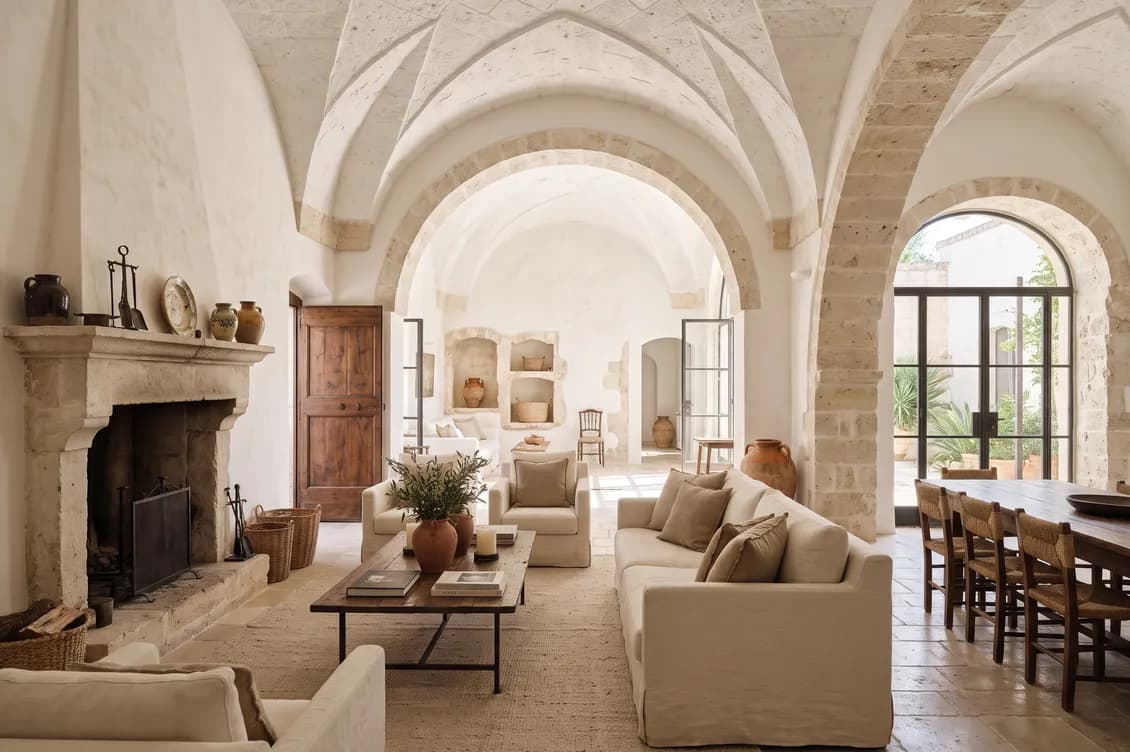
Are you looking for a masseria in Puglia as a second home or an investment property?
With Engel & Völkers, you have an experienced partner to guide you through every step, from selecting the property to signing the final deed.
The new GG website: Inspiring personalities, extraordinary places and exceptional properties. Discover now.
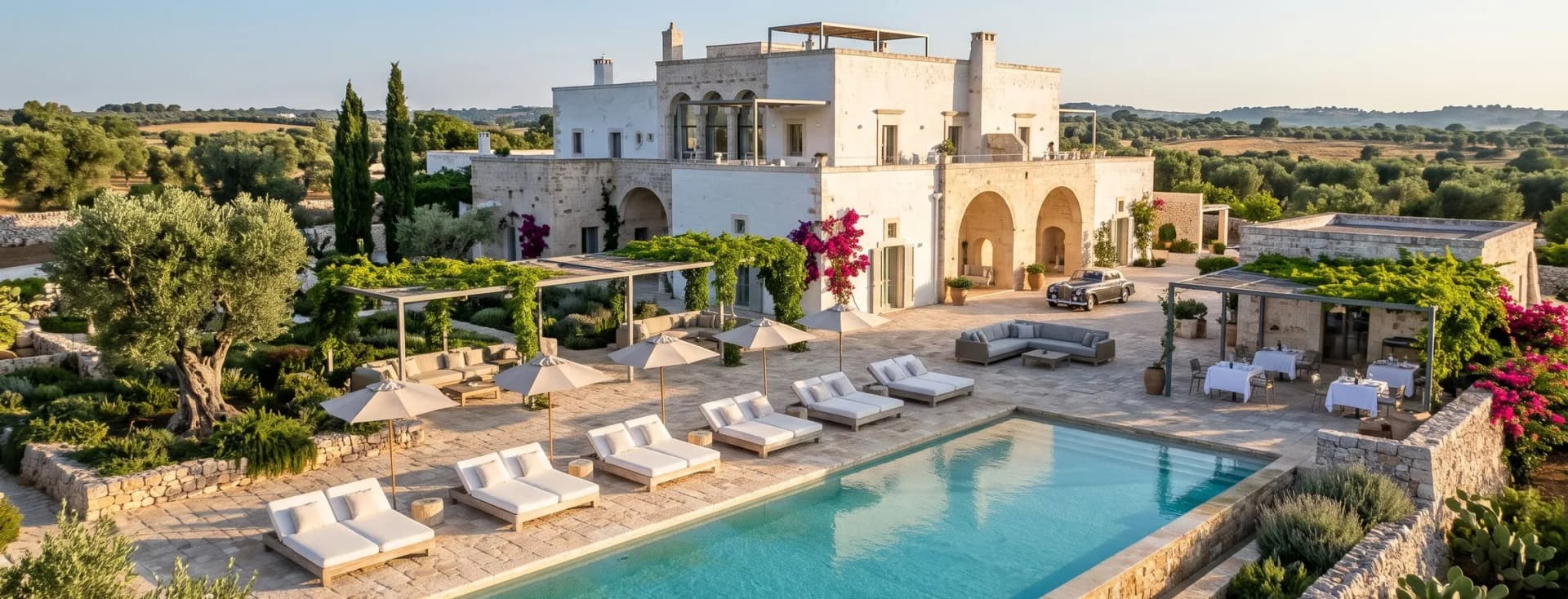
Anyone who has visited Puglia at least once knows that masserie are unforgettable. They appear unexpectedly along the white country roads of the Itria Valley, peek out from among the ancient olive groves of the Murge plateau, and open onto quiet courtyards where time seems to stand still. Yet, despite their growing presence in international architecture magazines and increasing appeal among foreign buyers, it is not always clear what exactly defines a masseria and what sets it apart from other types of rural residences.
A masseria is a traditional agricultural estate typical of southern Italy, originally conceived as a self-sufficient complex dedicated to cultivating the land and raising livestock. Its origins date back to the Middle Ages, when vast areas of the Apulian countryside were entrusted to noble families or religious orders, who built permanent settlements capable of accommodating workers, animals, storage facilities and buildings for processing agricultural produce.
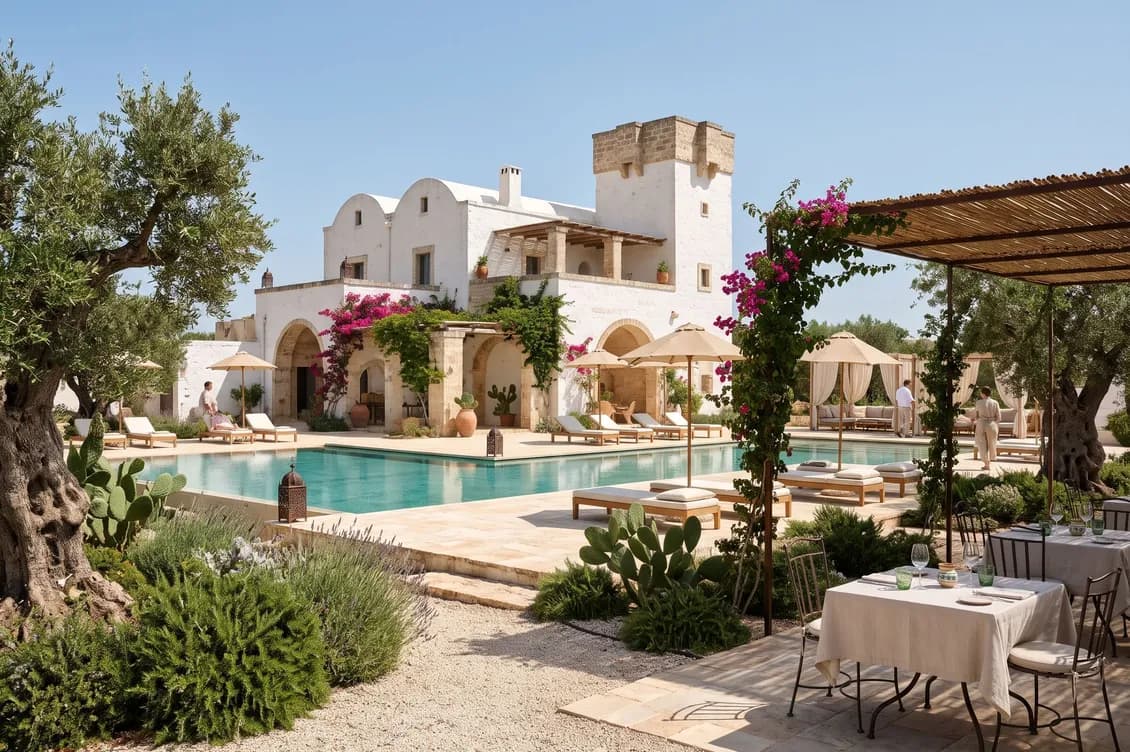
Over the centuries, particularly between the 16th and 19th centuries, masserie evolved and expanded. While some remained simple, functional agricultural complexes, others were enlarged and embellished until they became grand manor houses, complete with private chapels, loggias, gardens and reception rooms. It was during this period that the distinctive hybrid character that makes them so fascinating today began to emerge: structures originally built for work, transformed into elegant places to live.
What stands out about an Apulian masseria, even before learning about its history, is its architecture. A distinctive building style that is straightforward and understated, deeply rooted in the geology and climate of the region.
The predominant material is local limestone, extracted directly from the Apulian soil and worked by master stonemasons using techniques passed down through generations. The walls are thick, sometimes more than a metre, designed to keep interiors cool during the summer and retain heat in the colder months: an example of early bioclimatic efficiency that is now also recognised as an architectural asset.
The oldest masserie feature defensive elements that reveal the historical context in which they were built: corner or central towers, loopholes, massive wooden and stone gates, and moats. The inner courtyard is another recurring feature. It was the heart of the masseria's agricultural activities, where daily work took place, livestock was kept and produce was stored.
In some areas, particularly the Itria Valley, masserie incorporate trulli and lamie, stone structures featuring dry-stone vaulted roofs that have become some of Puglia's most recognisable architectural symbols.
With Engel & Völkers, you have an experienced partner to guide you through every step, from selecting the property to signing the final deed.
Masserie are not evenly distributed throughout Puglia: each area has its own distinctive features, landscape and property market.
The Itria Valley, with its trulli, white country roads and historic towns of Alberobello, Locorotondo and Cisternino, is the best-known area and one of the most sought-after by international buyers looking to purchase a property in Puglia. Masserie here tend to command higher prices and the property market is more competitive, but the area also offers the region's most iconic landscapes and a well-established network of local amenities.
The Murge plateau, a vast limestone upland stretching between Bari and Taranto, is home to some of the most impressive and historically significant masserie, often surrounded by olive groves and vineyards. It is a less touristy area, yet one of great charm, where the property market can still offer outstanding estates at attractive prices.
The Fasano area, between Fasano and Ostuni, combines prestigious masserie with proximity to the sea and high-quality infrastructure, making it particularly appealing to those looking for a second home that brings together countryside and coast.
Salento, at the southern tip of the region, has its own distinctive characteristics. Masserie here are often more compact, with architecture influenced by the Baroque traditions of Lecce. They are set in landscapes characterised by Mediterranean scrubland and proximity to both the Adriatic and Ionian seas.
Il mercato delle masserie pugliesi ha subito una trasformazione profonda negli ultimi vent'anni. Da proprietà agricole spesso abbandonate o sottovalutate, molte masserie sono diventate residenze di lusso, boutique hotel o agriturismi di pregio, innescando un processo di rivalutazione che ha attirato l'attenzione di acquirenti italiani e stranieri.
La domanda internazionale rimane solida e in crescita, sostenuta dalla reputazione della Puglia come destinazione lifestyle di primo piano. I prezzi variano considerevolmente in funzione della zona, delle dimensioni, dello stato di conservazione e del grado di ristrutturazione.
Chi valuta l'acquisto di una masseria deve considerare alcuni aspetti pratici non trascurabili. I vincoli paesaggistici e storico-architettonici imposti dalla Soprintendenza possono limitare le possibilità di intervento e richiedono iter autorizzativi specifici. I costi di ristrutturazione di un edificio in pietra di queste dimensioni sono generalmente elevati e devono essere valutati con attenzione prima di procedere. La destinazione d'uso (residenziale, ricettiva, agricola) influisce sulle possibilità di intervento e sulla fiscalità applicabile. Una due diligence approfondita, condotta con il supporto di professionisti esperti del territorio, è in questo contesto non una precauzione ma una necessità.
Buying a masseria requires specialist expertise: in-depth knowledge of the local property market, the ability to assess properties with distinctive architectural features, and familiarity with the regulatory framework governing historic and landscape-protected properties in southern Italy.
Engel & Völkers has been active in the prestigious property market in Puglia for many years, offering a selection of properties that includes historic masserie, valuable agricultural estates and exclusive rural residences. Our consultants support buyers at every stage of the process: from the initial property assessment and technical and legal due diligence to negotiating the best possible purchase terms.
With Engel & Völkers, you have an experienced partner to guide you through every step, from selecting the property to signing the final deed.
Frequently asked questions about Apulian masserie
A country house is a general term for any rural building of a certain size. A masseria, on the other hand, is an architectural complex originally designed for agricultural production, characterised by several buildings arranged around a central courtyard.
Yes, foreign nationals can purchase property in Italy, including masserie, without any particular restrictions. It is advisable to seek assistance from local professionals who are familiar with the legal framework and can manage the transaction safely and efficiently.
Yes. Masserie of historical or landscape interest are often subject to restrictions imposed by the Superintendency, which limit the types of renovation work permitted and require specific authorisations. It is essential to check the property's protection status before purchasing.
The areas with the highest concentration of prestigious masserie are the Itria Valley, the Fasano area, the Murge plateau and Salento. Each offers different landscape and property market characteristics, with varying prices and levels of international demand.