Do you want to work to standards that showcase every property at its best, from photography to international presentation?
Discover how you can grow your career with Engel & Völkers.
The new GG website: Inspiring personalities, extraordinary places and exceptional properties. Discover now.
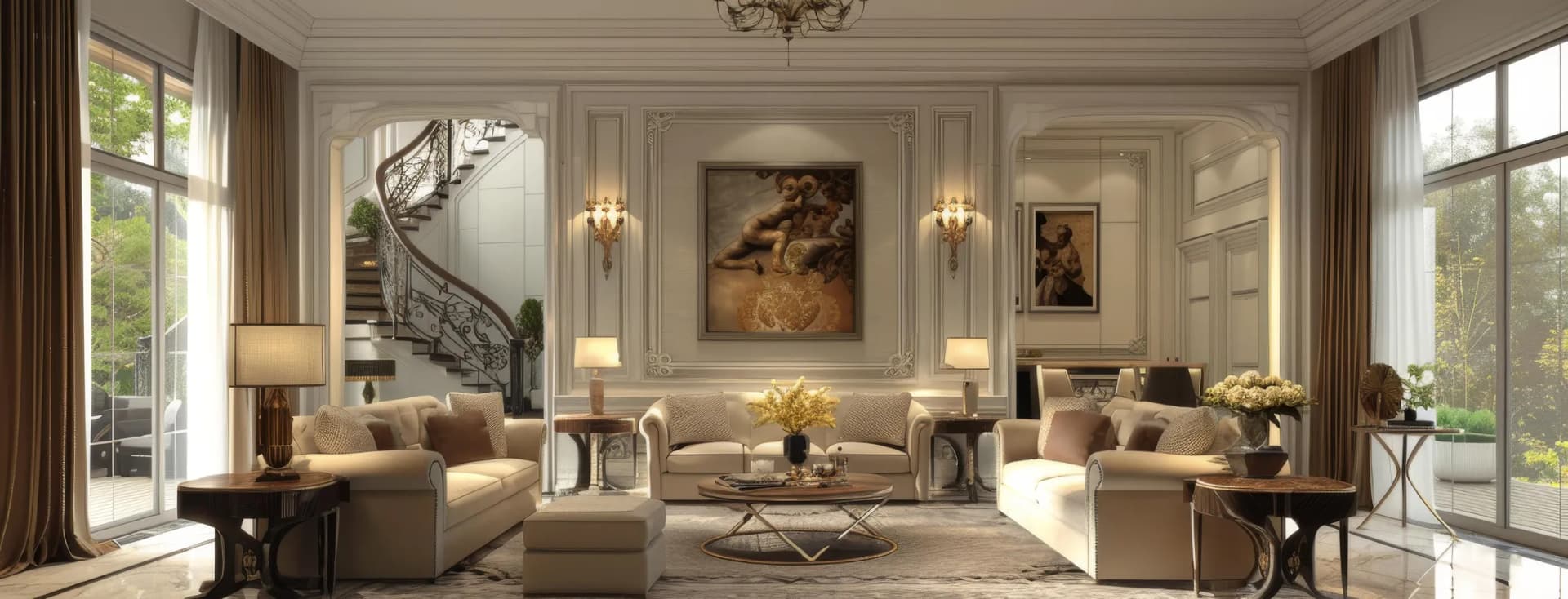
In the real estate market, the first viewing of a property takes place on screen. Buyers assess a listing within seconds and, based on that first impression, decide whether to find out more or continue their search elsewhere. This is where image quality matters more than any other element. For real estate agents, understanding what makes a good real estate photography is therefore a skill that directly affects the outcome of a sale, especially in the premium segment, where visual presentation is an integral part of the property's positioning.
In this article, we explore the key elements that determine the quality of a real estate photography shoot: preparing the rooms, managing light, composition, equipment, and knowing when it becomes essential to work with a specialised professional.
Property searches are now primarily conducted online, and photography is the first filter every property has to pass through. Buyers scroll through numerous listings and give each one only a few moments of attention. In that brief window, images determine whether a property makes it onto their shortlist of properties to view.
The impact can be measured on two levels. First, on the number of enquiries, because high-quality property photography can broaden the pool of potential buyers requesting a viewing, while poor-quality images can rule a property out regardless of its actual qualities. Second, on perceived value: a high-quality visual presentation conveys care and quality, making buyers more receptive to the asking price. Since first impressions tend to stick, a poorly presented property starts at a disadvantage throughout the entire negotiation process.
Discover how you can grow your career with Engel & Völkers.
No technical skill can compensate for an unprepared space: the preparation before the shoot is just as important as the photography itself. Decluttering, cleaning and depersonalising are essential prerequisites, just as they are in any property staging for sale: clear surfaces, tidy spaces and the absence of overly personal items allow buyers to envision themselves living in the property.
The goal is to showcase the property at its best, not to make it look unrecognisable compared with what buyers will actually find during a viewing. Particular attention should be paid to details that the camera tends to emphasise but that often go unnoticed in everyday life: an unwanted reflection in a mirror, visible cables or an item that looks out of place in the frame. These may be minor imperfections in reality, but in photographs they can become the first signs of neglect that buyers notice.
Lighting is the factor that can make all the difference in effective real estate photography. A well-lit room feels more spacious and inviting, while the same space under poor lighting can appear smaller and less welcoming.
The guiding principle is to make the most of natural light, photographing each room at the time of day when it receives the best exposure: east-facing rooms work best in the morning, while west-facing rooms are at their best in the afternoon. The soft, diffused light of an overcast day is often preferable to direct sunlight, which creates harsh contrasts and overexposed areas. Artificial lighting should be incorporated carefully, avoiding the combination of light sources with different colour temperatures, which can create unnatural colour casts. Correct white balance is therefore crucial: a yellow or bluish cast can make the photography look amateurish and negatively affect how the property is perceived.
The framing determines how a room comes across. Certain compositional principles specific to real estate photography play a key role in its effectiveness. Camera height affects proportions: shooting from approximately halfway up the room, rather than at eye level, creates a more balanced representation of the space. Vertical lines such as door frames, corners and walls should remain perfectly straight, as any perspective distortion can create a sense of instability. Finally, shooting from a corner of the room allows more of the space to be captured within the frame and conveys its actual dimensions more accurately.
The guiding principle behind every choice is to showcase the property without distorting it. An angle that suggests unrealistic proportions may offer a short-term advantage, but it can quickly turn into disappointment during the viewing and undermine the buyer's trust. The composition should include the elements that convey the quality and purpose of each room, while excluding anything that distracts from or detracts from its appeal.
The quality of a real estate photography shoot also depends on the equipment used. A wide-angle lens is a standard tool in real estate photography: it makes it possible to capture even smaller rooms with accurate perspective, conveying a sense of space that a conventional lens tends to compress. A tripod, often underestimated, ensures sharp images in less favourable lighting conditions and keeps horizontal and vertical lines perfectly aligned. Finally, post-processing allows brightness and contrast to be adjusted. This should always be done with restraint, as excessive editing can distort the property's true appearance and undermine its credibility.
There is a point beyond which professional photography is no longer a cost, but an investment proportionate to the property's value. In the premium segment, that point is effectively always reached: for a property of this calibre, high-quality photography is a non-negotiable part of its positioning on the market.
When choosing a photographer, specialisation in real estate photography is the most important criterion, as this field follows different principles from general photography. It is worth reviewing their portfolio, agreeing on how the rooms should be prepared and coordinating their work with the property's staging. For more prestigious properties, the service can also include a video tour, which conveys the flow and rhythm of the spaces, drone photography, particularly suited to properties where the surrounding setting or grounds are part of their appeal, and a 3D virtual tour, which allows buyers to explore the property remotely. These tools meet the expectations of clients accustomed to high standards and, for international buyers, often provide their first real point of contact with the property.
There is a point beyond which professional photography is no longer a cost, but an investment proportionate to the property's value. In the premium segment, that point is effectively always reached: for a property of this calibre, high-quality photography is a non-negotiable part of its positioning on the market.
When choosing a photographer, specialisation in real estate photography is the most important criterion, as this field follows different principles from general photography. It is worth reviewing their portfolio, agreeing on how the rooms should be prepared and coordinating their work with the property's staging. For more prestigious properties, the service can also include a video tour, which conveys the flow and rhythm of the spaces, drone photography, particularly suited to properties where the surrounding setting or grounds are part of their appeal, and a 3D virtual tour, which allows buyers to explore the property remotely. These tools meet the expectations of clients accustomed to high standards and, for international buyers, often provide their first real point of contact with the property.
Discover how you can grow your career with Engel & Völkers.
FAQs about photographing a property
Because the first impression of a property is formed online within seconds. Image quality determines whether buyers choose to find out more or move on, and it also helps support the asking price.
Light. A well-lit room appears more spacious and inviting. Natural light is preferable, making the most of each room’s best exposure times and favouring diffused light over direct sunlight.
By shooting from a corner of the room at mid-height and keeping vertical lines straight. The aim is to accurately convey the property's true dimensions, rather than creating the illusion of proportions that would disappoint buyers during a viewing.
In the premium segment, where high-quality photography is an integral part of the property's market positioning. A professional photographer's specialisation in real estate should be the primary selection criterion.
For the most distinctive or representative properties. Video conveys the flow of the spaces, aerial photography highlights the surroundings and outdoor areas, while a 3D virtual tour is particularly useful for international buyers.