Looking for a loft that combines architectural character with the confidence of a secure purchase?
Explore Engel & Völkers’ selection of unique properties in Italy’s major cities.
The new GG website: Inspiring personalities, extraordinary places and exceptional properties. Discover now.
The loft has a distinctive appeal: you might come across one in a TV series, an architecture magazine or during a property viewing, and it immediately conveys a sense of space, light and design freedom that sets it apart from a conventional apartment. Before being won over, however, it is worth understanding what truly distinguishes this type of property, not only in terms of aesthetics but also in the practicalities of living in and buying one.
This guide explores the origins and definition of a loft, its architectural features, the main approaches to interior design and an overview of the Italian property market.
Table of Content
The loft originated in New York in the mid-20th century, when artists and creatives began occupying the large spaces of disused factories and warehouses in neighbourhoods such as SoHo, attracted by their generous floor areas and affordable rents. This informal practice gave rise to a distinct type of housing, which evolved from its industrial roots into a feature of the high-end residential market in major cities, including those across Italy.
A precise definition helps avoid a common misconception. A loft is a single, open-plan living space, typically created by converting a property originally used for industrial or artisanal purposes. It is characterised by generous volumes and a floor plan without traditional internal partitions. It should not be confused with a simple open-plan layout: an apartment with an open-plan kitchen and living room remains a conventional home with an open layout, whereas a loft stands out for its non-residential origins, expansive proportions and distinctive structural features, which define its identity.
Explore Engel & Völkers’ selection of unique properties in Italy’s major cities.
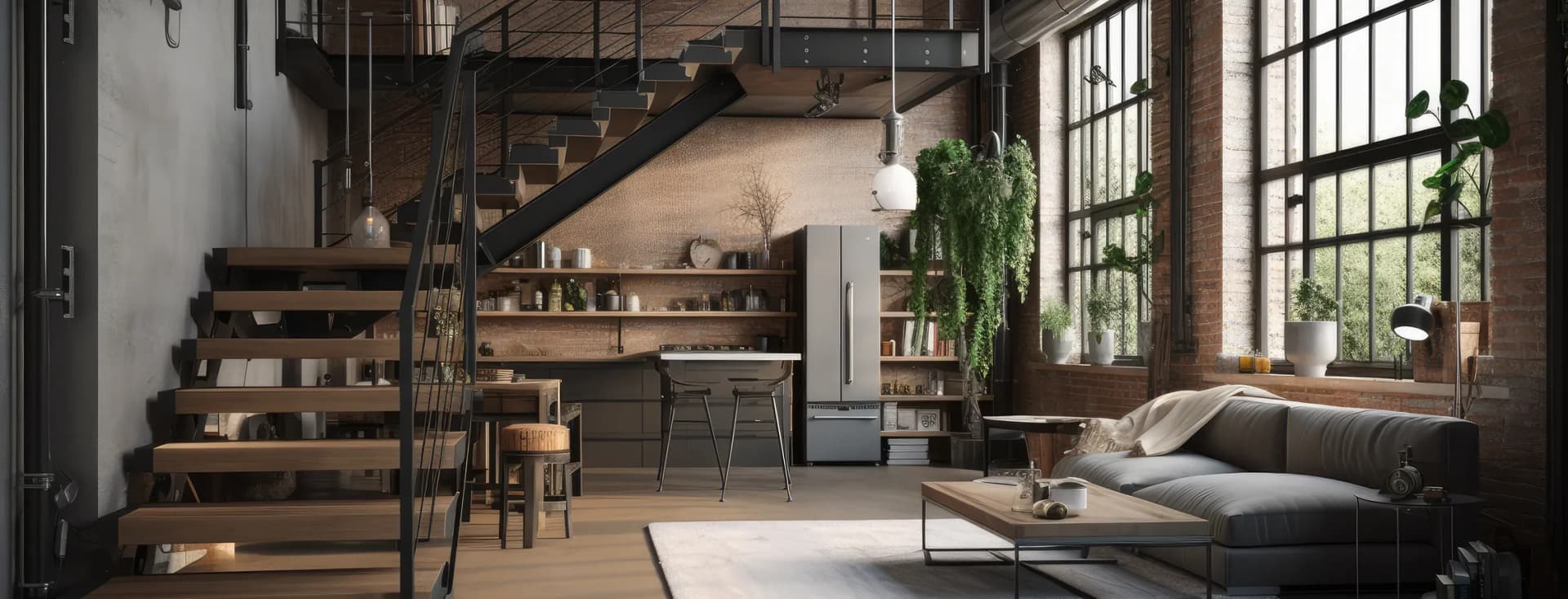
Certain recurring features help identify an authentic loft. The first is generous ceiling heights, well above those of a typical home, which create a sense of vertical spaciousness and often allow for the addition of mezzanine levels. These are complemented by exposed structural elements (beams, columns, utility pipes and brick walls, among others), which a loft showcases rather than conceals, turning them into defining stylistic features.
Large windows, often industrial in origin, provide abundant natural light, reflecting the original purpose of these spaces. Yet the most distinctive feature of all is the fluidity of the floor plan: the absence of traditional partition walls creates a continuous environment in which different functions coexist without breaking up the space. This sense of continuity, more than any individual detail, defines the loft living experience.
The term “loft” encompasses properties with very different cadastral classifications, so the first step is to check the property's classification and intended use.
Because of their origins, many lofts are registered under cadastral category C/3, which covers artisan workshops, or other non-residential categories. A property classified in this way is not designated for residential use: only category A covers residential properties. Living permanently in a C/3 property without first changing its designated use is unlawful and may result in penalties, as well as preventing you from registering it as your residence.
The practical implications are significant. A change of use from non-residential to residential is possible only if permitted by local planning regulations and municipal rules, and involves a complex procedure with no guaranteed outcome or fixed costs. From a tax perspective, purchasing a non-residential property is also subject to different rules, without the tax benefits available for a first home and with higher taxes. For this reason, before purchasing a loft, it is essential to verify its designated use and the feasibility of any potential change, with the support of a qualified professional and a notary.
Furnishing a loft means working with the space rather than filling it. Industrial style is the most natural fit for this type of property: it highlights original features and combines them with pared-back furnishings. Minimalist design focuses on clean lines and simplicity, allowing proportions and natural light to define the space. Contemporary style, meanwhile, blends different materials and design elements, pairing the industrial heritage with warmer, more homely touches.
Regardless of the style, the main design challenge is to organise different functions within a single space without compromising its sense of continuity. The sleeping area can be positioned on a mezzanine, where ceiling height allows, or defined using lightweight partitions, glass screens or furniture that creates separation without building walls. The kitchen is often integrated into the living area as a distinctive architectural feature, frequently centred around an island. The guiding principle is to distinguish between different areas while preserving the perception of an open space: separate by function, not by compartmentalising.
In Italy, the loft market is most developed in cities with an industrial past that has since been redeveloped. Milan is the main reference point, with neighbourhoods where the conversion of former industrial spaces has created an established market. Turin, Rome and Bologna follow, alongside other urban areas where the regeneration of former industrial districts has given rise to properties of this kind.
A loft's value depends on the usual factors, such as location, floor level, natural light and condition, but one additional factor is particularly important: its designated use. All other things being equal, a loft already approved for residential use and registered under cadastral category A will generally command a higher value and offer greater resale liquidity than a non-residential property, which is subject to use restrictions and the added complexity of a potential conversion. This factor can have a substantial impact on the asking price and should always be taken into account when assessing the investment.
Finding a loft that truly meets your expectations requires an in-depth understanding of the high-end urban residential market and its specific characteristics.
Engel & Völkers operates in this segment across Italy's major cities, offering a selection of lofts and unique properties, alongside dedicated advice for those seeking something out of the ordinary. When choosing a property where architectural appeal goes hand in hand with complex technical considerations, such as designated use, having a partner who can guide you through every aspect of the process helps you combine the aspiration of an unconventional living space with the confidence of making an informed purchase.
Find a space that reflects who you are. Explore our most captivating properties and let our experts guide you in finding your next loft.