- 5 min read
Where to invest in Rome in 2026: the most promising luxury segment neighborhoods
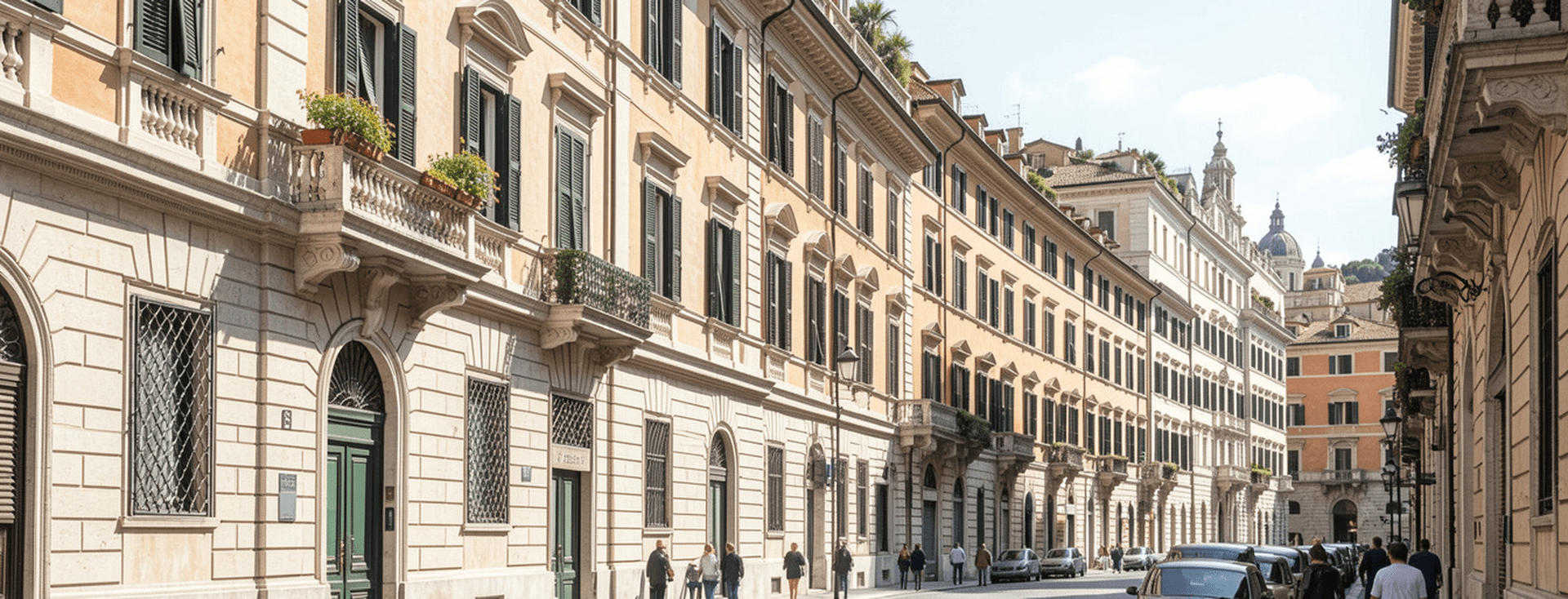
Rome has always been one of the most sought-after cities in the world for those looking for a luxury property. A capital that never stops attracting: every year, international events such as the Internazionali BNL d’Italia bring a wealthy and global audience to the city, and part of this audience ends up seeing Rome not only as a tourist or sports destination, but as a real estate investment opportunity. The Roman luxury real estate market, supported by growing demand and a selective supply, confirms its structural strength in 2026. In this context, the presence of Engel & Völkers at the Fan Village of the Internazionali BNL d’Italia also plays a role, as evidence of the constant dialogue between major international events and interest in the high-end property market. In this guide, we analyze the most promising neighborhoods for those who want to invest in Rome in the premium segment, with updated data and a district-by-district overview.
The luxury real estate market in Rome: trends and data 2026
The Roman premium real estate market in 2026 shows a picture of moderate but steady growth. Values are divided into three different segments: the mid-range segment lies between €1,900 and €3,800/m², the premium segment between €3,000 and €6,000/m², while the luxury segment reaches values between €8,000 and €12,000/m². Price changes reflect this structure: in the mid-range and premium segments growth is limited, around +1 to +3%, while the luxury segment records stronger increases, between +4 and +7%.
Demand is driven by a increasingly selective buyer focused on renovated or newly refurbished properties, with particular attention to terraces, energy efficiency, and parking availability—elements that increasingly influence perceived value and negotiations. The average selling times range between one and six months, depending on location and property quality.
A key aspect concerns international demand: around 20% of buyers come from abroad, a growing share that is mainly concentrated on high-quality assets in central areas. To learn more about the profile of international buyers, read our dedicated in-depth analysis.
Real estate investments in Rome: the most prestigious areas
Rome is not a uniform market. Each neighborhood has its own identity, its own demand profile, and price dynamics that reflect history, location, and ongoing transformations. Below is an overview of the areas that in 2026 are confirmed or emerging as the most promising for those who want to buy a home in Rome as a luxury investment.
Parioli
The Parioli have for decades represented the reference point par excellence of the high-end residential market in Rome. A district of Rome’s upper bourgeoisie, it stands out for its real estate stock, mainly consisting of historic buildings, villas, and large apartments, often featuring terraces and views over tree-lined streets. The architectural quality of the buildings, combined with the presence of exclusive services, international schools, and embassies, makes the area particularly attractive to wealthy families, diplomats, and international buyers seeking a primary or representative residence.
The Parioli market is characterized by a constant demand and a limited supply, factors that help maintain stable property values even during periods of general market slowdown. For long-term investors, it is one of the most solid areas of the capital, with above-average liquidity and a structurally present international demand.
Flaminio and Foro Italico
Flaminio and the Foro Italico area represent one of the most dynamic zones of Rome’s high-end real estate market. The district hosts some of the city’s most important sports and cultural hubs — from the Olympic Stadium to the Foro Italico Tennis Center, venue of the Internazionali BNL d’Italia where, also this year, Engel & Völkers will be present at the Fan Village with its own stand, as well as the Auditorium Parco della Musica and the MAXXI — combining urban vibrancy and quality of life in a way that is hardly replicable elsewhere in Rome.
The most prestigious properties are characterized by views over the Tiber or the surrounding parks, large layouts, and high-end finishes. Demand is supported both by residential buyers, attracted by the quality of the environment and the range of services, and by investors interested in the area’s rental potential, driven by the constant presence of an international audience.
Prati
Prati is one of the neighborhoods that in recent years has recorded the greatest increase in interest in the high-end segment, both in terms of purchases and rentals. Its location, just a few steps from the Vatican and the historic center, makes it particularly attractive to international buyers, professionals, and families seeking a high-quality residence in a central yet less congested setting compared to other areas.
The rental market is particularly active: rents for renovated homes in central areas are around €350/sqm/year, a figure that also makes Prati interesting for those investing for rental purposes. Demand is focused on newly renovated properties, with a preference for medium and large units featuring terraces or high-quality views.
Trieste-Salario
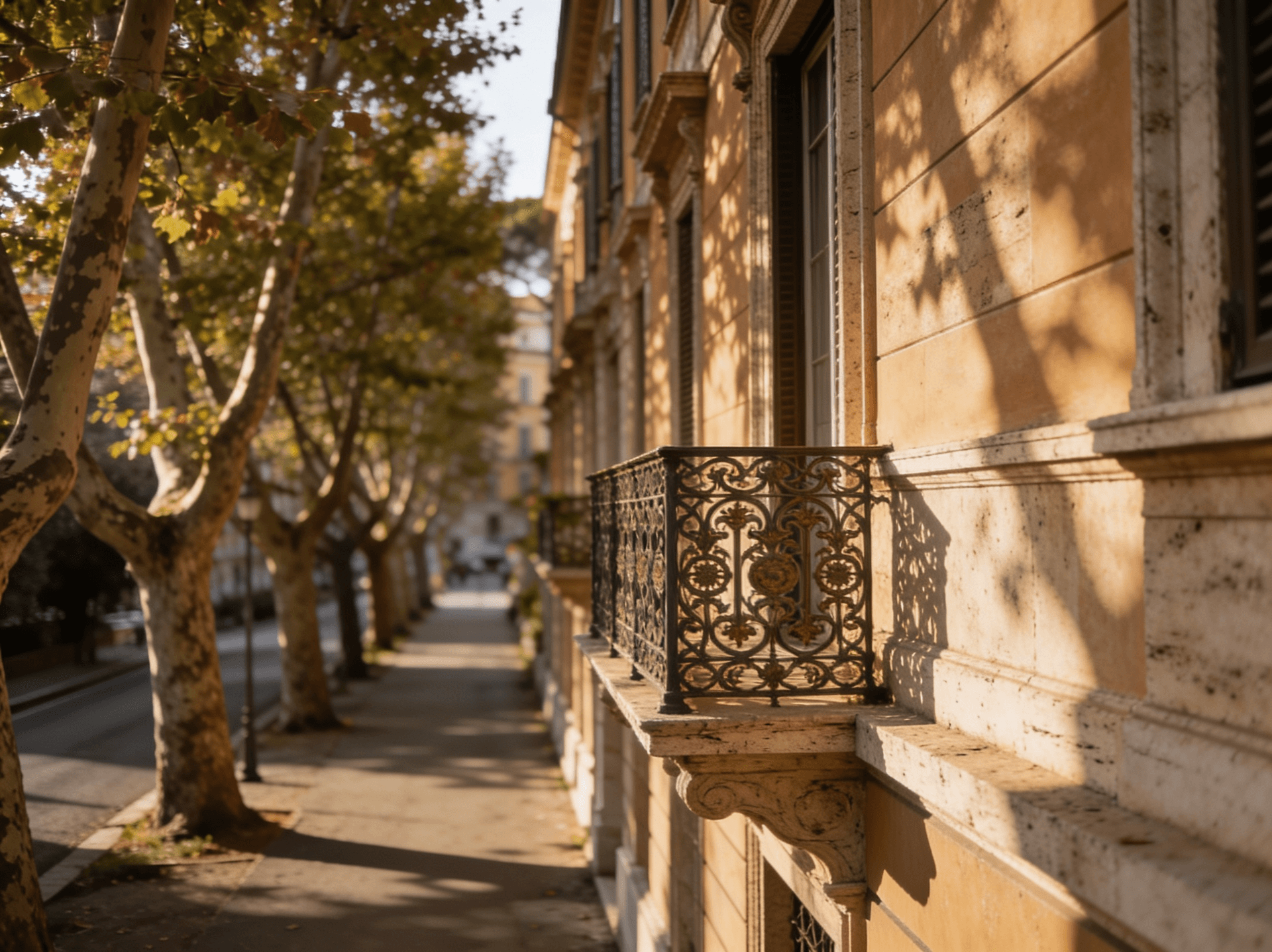
Trieste-Salario is one of the most interesting emerging neighborhoods in Rome’s luxury real estate landscape. Historically appreciated for the quality of its building stock, it is increasingly attracting the attention of investors and families seeking an alternative to more established districts, with still competitive values and concrete prospects for appreciation.
The demand profile is predominantly residential: affluent families, professionals, and international buyers looking for space, high construction quality, and a more intimate neighborhood setting compared to central areas. The good availability of services, the proximity to Villa Ada, and the transport network make it a solid choice both for those buying to live in and for those investing in the long term.
Ostiense
Ostiense is the neighborhood that perhaps more than any other embodies the ongoing transformation of Rome’s urban fabric. Once an industrial and working-class area, in recent years it has established itself as a growing residential and creative hub, thanks to significant urban redevelopment projects also supported by public investment programs. The presence of cultural hubs, coworking spaces, universities, and new residential developments has profoundly changed the neighborhood’s profile and the type of demand it attracts.
For investors, Ostiense today offers a still competitive value-for-money ratio compared to more established semi-central districts, with rental prices around €230/sqm/year for renovated homes. Rental demand is strong and diversified, and medium-term appreciation prospects are among the most interesting in the entire Roman market.
Why rely on Engel & Völkers to invest in Rome
Investing in the luxury segment requires market knowledge that goes far beyond aggregated data: each neighborhood has its own dynamics, each property its own history, and each negotiation its own specificities. Engel & Völkers operates in Rome with a well-established presence in the high-end segment and an international network that allows it to reach qualified foreign demand, which is increasingly relevant in a city like Rome.
Whether it is identifying the right property, assessing its appreciation potential, or managing a complex negotiation, the Engel & Völkers team supports the investor at every stage, from the initial analysis through to the signing of the deed.