Selling commercial real estate successfully
Realize the full value of your commercial property - with the leading partner for professional transactions.
Realize the full value of your commercial property - with the leading partner for professional transactions.
&w=1920&q=75)
Expertise, Experience, Excellence
Selling a commercial property is a complex transaction that demands deep expertise in each segment - whether it’s a mixed-use building, multi-family home, hotel, office, logistics, or retail space. Successful marketing requires foresight, strategic planning, and discretion. It’s about accurately assessing market value and engaging the right circle of qualified buyers. As a globally connected and locally rooted partner, we manage this process for you, guiding you personally every step of the way.
We leverage our global network to give you access to a financially strong, international pool of buyers.
We support you with market analysis and years of expertise to optimize your investment strategy.
We guide you personally, confidently, and with complete discretion through the entire process to a successful conclusion.
Six Steps to Success

A personal consultation is the foundation of every successful transaction. Together, we define your individual goals, analyse the optimal time to sell, and develop a tailored, data-driven strategy for marketing your commercial property. Our services also include non-binding advice on portfolio optimization and lease value management.

Our experts don’t just provide an estimate for your property. Based on thorough market analysis, comparable properties, and a detailed assessment of your asset’s potential, we create a reliable data foundation. This allows us to determine a realistic, market-oriented asking price for your property.
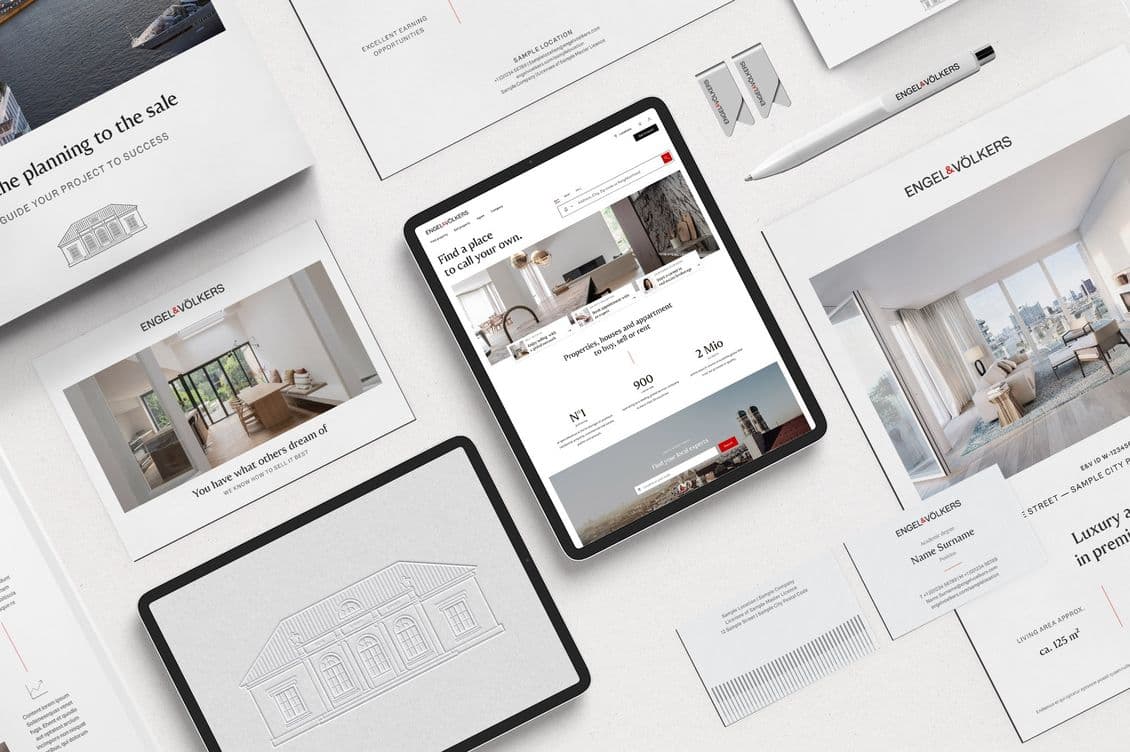
Our bespoke marketing strategy includes high-quality property brochures, data-driven target audience analysis, and strategic positioning of your commercial property - whether discreetly within our network or broadly on the global market. Additional marketing channels are selected individually, tailored to the specific requirements of each property.

The viewing phase is a critical part of the marketing process. We manage it reliably and discreetly, minimizing any disruption to ongoing operations. Our experts showcase your property in the best possible light, presenting it convincingly to pre-qualified, vetted prospects - either in your presence or independently.

Transparency is the foundation of our partnership. We provide continuous, proactive reporting on all marketing activities, target audience engagement, and the current status of negotiations. This ensures you are fully informed at all times and maintain complete control over the process.

We manage the entire process through to a successful closing. Our negotiation expertise safeguards your interests. We coordinate the drafting of the purchase agreement with the notary, oversee the property handover, and remain a trusted partner for all contractual matters—even after the transaction is complete.
1 out of 6

A thorough valuation is the foundation of every sales strategy. Start with our free online assessment for multi-family buildings, or request a detailed expert analysis.
Our property advisors are more than brokers - they are strategic partners with in-depth knowledge of the local market. This expertise forms the foundation for an accurate valuation of your commercial property. At the same time, they leverage access to our global network to connect your asset with financially qualified buyers. This combination of local excellence and international reach ensures an optimal sales process for your investment or commercial property.
FAQ – Answers to your most important questions
In Liechtenstein, a property qualifies as commercial real estate when it is primarily used for the purpose of conducting business activities. Often referred to as an operational or business premises property, its core function must be tied to economic activity. A defining factor in the Principality is the Grundverkehrsgesetz (Property Transfer Act). Unlike in neighboring countries, land acquisition is subject to exceptionally strict regulation. Commercial buyers must demonstrate a legitimate economic interest to obtain approval. Pure investment properties — particularly residential buy-to-let assets — are virtually inaccessible to non-Liechtenstein nationals, including companies under foreign control, due to the country’s rigorous property transfer laws. As a result, commercial real estate is often the only viable asset class that can be transacted at all, and only under clearly defined conditions tied to genuine business operations.
Liechtenstein operates as a true “island market”: pricing remains comparatively stable, yet transaction volume is limited. Timing a sale therefore requires a strategic assessment of several key factors:
Holding period and capital gains tax: Liechtenstein applies a capital gains tax with a holding period deduction. For every year you own the property, the taxable gain is reduced. The longer the holding period, the lower the effective tax burden on your profit — a material consideration when planning an exit.
Economic cycles in the Swiss franc zone: As Liechtenstein uses the Swiss franc, monetary policy is shaped by the Swiss National Bank (SNB). Interest rate levels directly influence financing conditions and investor appetite. A stable interest rate environment within the Swiss franc area typically creates favorable conditions for selling commercial real estate.
Zoning and development potential: With building land in extremely limited supply, zoning status is a decisive value driver. Properties located in designated commercial or industrial zones command strong demand. A sale becomes particularly attractive when the asset offers development or densification potential — in other words, the opportunity to increase usable floor area within existing planning regulations.
In Liechtenstein, discretion is paramount. Public listings for commercial real estate are highly uncommon. Transactions are typically handled confidentially — which makes professional representation not just advisable, but strategic.
Off-market network: The market moves within a small circle of decision-makers, law firms, and fiduciary offices. Access to this established network is critical. An advisor with strong off-market reach ensures your property is introduced directly to qualified buyers — without compromising confidentiality.
Property transfer expertise: Any formal error in the purchase agreement or incomplete documentation can result in rejection by the competent authority under the Grundverkehrsgesetz. Professional guidance safeguards the process, ensuring the buyer meets all regulatory requirements and the transaction structure complies with Liechtenstein’s strict property transfer framework.
Valuation in line with Liechtenstein standards: Commercial property valuations often apply a hybrid methodology combining asset value and income capitalization approaches. Given the scarcity of land, the underlying land value typically carries disproportionate weight. Accurate pricing therefore requires deep local market insight and technical valuation expertise.
In Liechtenstein, the sales dossier must meet the standards of both the property transfer authority and the financing banks — typically local institutions. Complete, accurate documentation is critical to avoid delays or rejection. The following documents are essential:
Land register extract: An official excerpt from the Land Registry Office in Vaduz confirming ownership, encumbrances, and legal status.
Zoning plan extract: Formal confirmation from the municipality detailing the property’s zoning designation (e.g., commercial or industrial zone).
Building insurance valuation: In Liechtenstein, mandatory building insurance and the official property valuation form a central reference point for lenders and authorities. The insured value and assessment must be up to date.
Energy performance certificate (LpG): An energy certificate in accordance with the Energy Performance of Buildings Act (LpG), documenting compliance with national energy efficiency requirements.
Operating and lease agreements: Full transparency regarding the economic use of the property, including existing tenancy or operating contracts, is required to assess income stability and operational purpose.
Proof of eligibility for acquisition: Documentation confirming the buyer’s eligibility under Liechtenstein property transfer regulations — either through domestic status equivalence or fulfilment of the relevant approval criteria.
In short: you cannot. Profits from the sale of real estate in Liechtenstein are subject to capital gains tax on property (Grundstücksgewinnsteuer).
Private ownership: For individuals, the taxable gain is calculated as the difference between the sale price and the acquisition costs, including qualifying investments. A holding period deduction applies: the longer the property is held, the lower the effective tax burden. While this reduces exposure over time, it does not eliminate taxation entirely.
Legal entities: For companies and other legal entities, gains from property sales are taxed separately from ordinary corporate income. This special property capital gains tax applies regardless of the company’s broader operating result.
Tax deferral: Deferral is possible only under narrowly defined conditions. This may apply, for example, in the case of reinvestment into a replacement property that is operationally required within the Principality, or in the context of inheritance or gifts. Outside these specific scenarios, the tax is due upon realization of the gain.
Under the VAT treaty with Switzerland, Liechtenstein forms a single VAT area with Switzerland. The substantive VAT rules are therefore aligned with Swiss legislation.
VAT exemption as a rule: The sale of real estate is generally exempt from VAT under Liechtenstein VAT law. In principle, no value added tax is charged on the transfer of a property.
Option to tax: However, sellers may opt to apply VAT at the standard rate. This is often done to avoid input tax adjustments — meaning the proportional repayment of previously reclaimed VAT on construction or renovation costs within the 20-year adjustment period. Such an option is only permissible if the buyer uses the property for taxable business activities.
Notification procedure (Meldeverfahren): Where a transfer qualifies as the sale of a going concern or part of a business — for example, a leased commercial property — the notification procedure under Article 38 of the Liechtenstein VAT Act may apply. In transactions exceeding CHF 11,000 in VAT and where both parties are registered taxable persons, the notification procedure is typically mandatory rather than optional.
Not every commercial property belongs on the open market. For high-value assets, operating businesses, or situations demanding the utmost confidentiality, a discreet marketing strategy is the superior choice. We present your property exclusively to a handpicked, pre-qualified, and financially strong buyer network from our global connections. This approach safeguards your asset’s value, prevents market overexposure, and enables efficient, targeted negotiations.
Every successful sale begins with a confidential, strategic conversation. Our advisors look forward to understanding your individual goals and presenting a tailored sales strategy for your property in a personal consultation.



Your Shop
Page content provided by: Engel & Völkers GmbH
License partner of Engel & Völkers GmbH